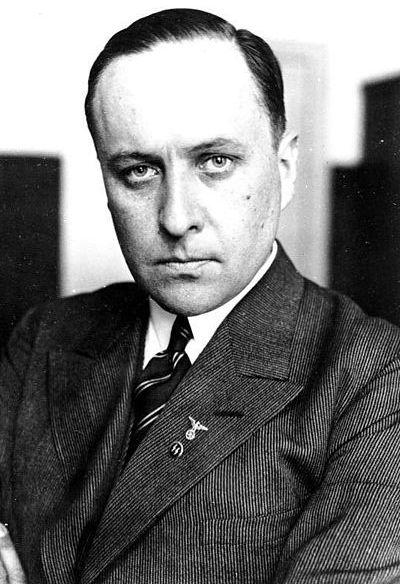
Richard Walther Darré was one of the leading Nazi “blood and soil” (Blut und Boden) ideologists and served as Reich Minister of Food and Agriculture. As the National leader (Reichsleiter) for agricultural policy, he was a high-ranking functionary in the Nazi Party and as a Senior group leader (Obergruppenführer) in the SS, he was the seventh most senior commander in that organisation.
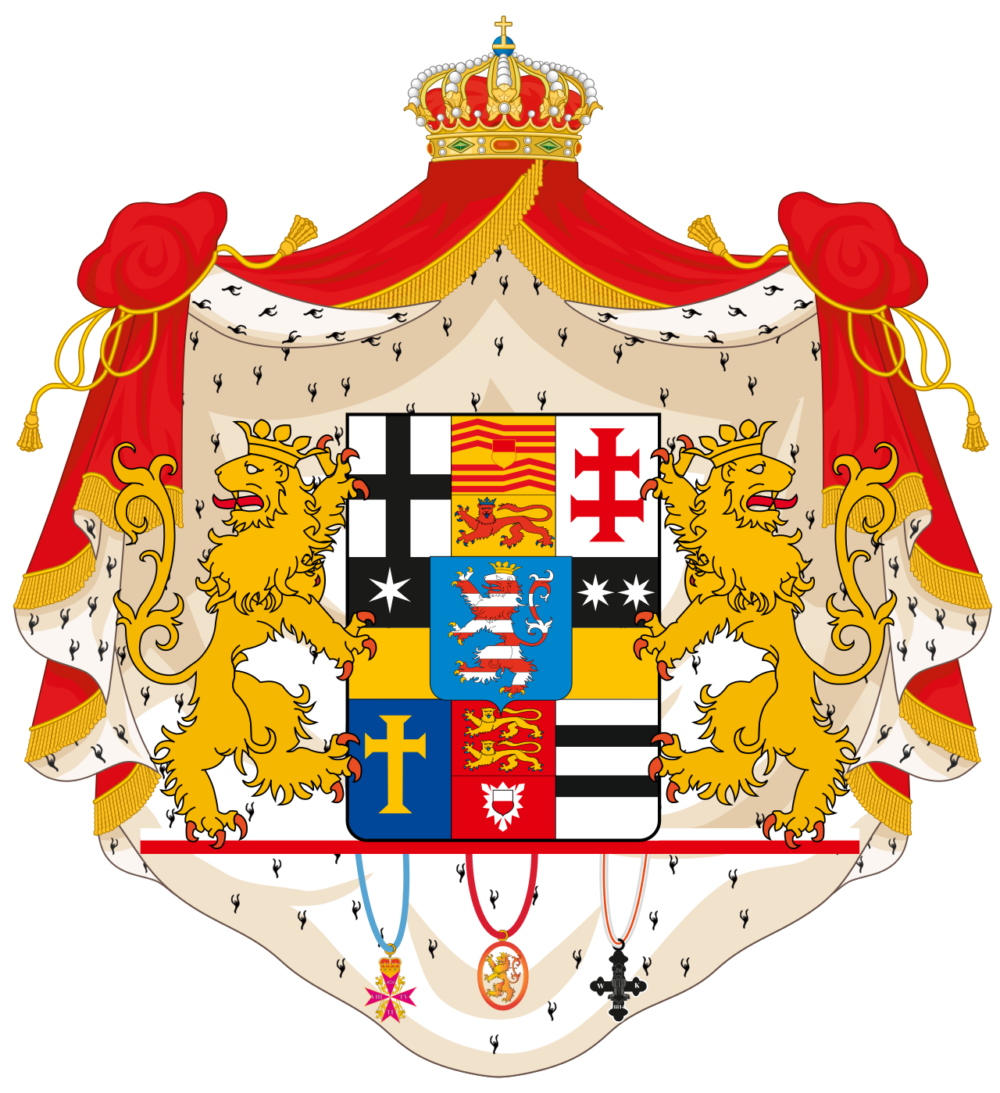
Kurhessen was the name widely used from 1815 for the Landgraviate of Hesse-Kassel, whose sovereign had been elevated to Elector (titular elector) in 1803. In a broader sense, Kurhessen or the Electorate of Hesse referred to the entirety of the territories ruled by the Elector, which were only placed under a unified administration with the administrative reform of 1821. Dissolved by Napoleon in 1807, the largest part of the area came under the Kingdom of Westphalia. The Electorate was restituted by the resolutions of the Congress of Vienna in 1814/15 and was then a member of the German Confederation until it was annexed by Prussia in 1866.
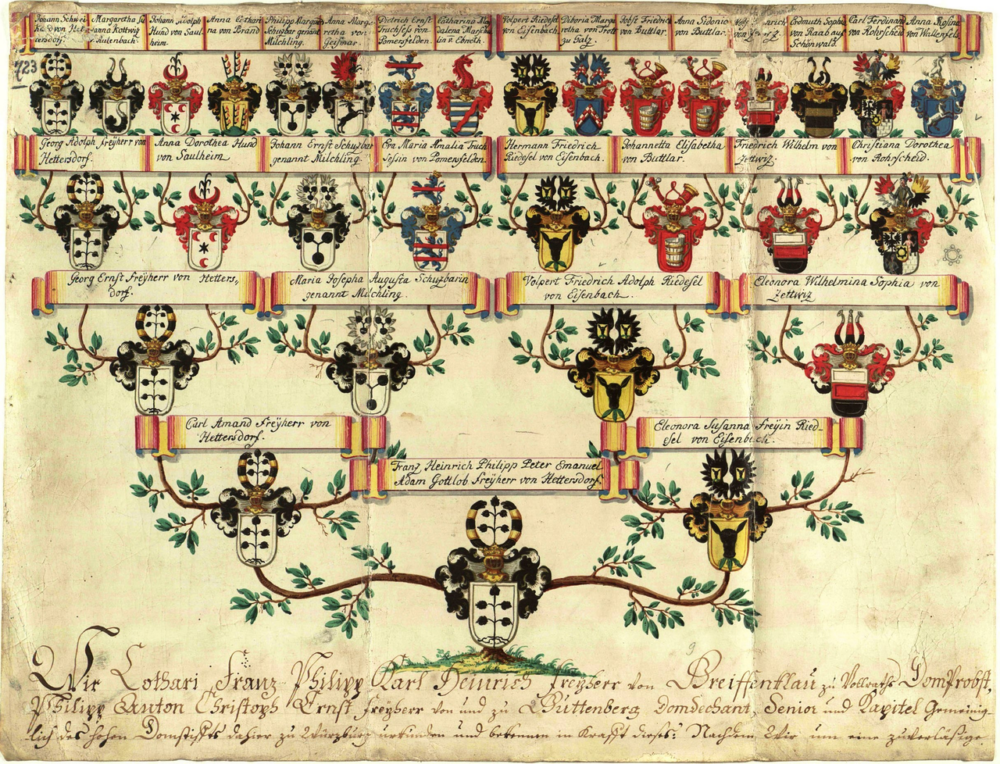
Quarters of nobility is an expression used in the bestowal of hereditary titles, and refers to the number of generations in typically an ahnentafel, in which noble status has been held by a family regardless of whether a title was actually in use by each person in the ancestral line in question.
For example, a person having sixteen quarterings (formally in heraldry Seize Quartiers), might have exclusively noble ancestry for the four previous generations (i.e., to the great-great-grandparent level): Given two parents per generation, four generations of uninterrupted nobility = 2⁴ = 16.
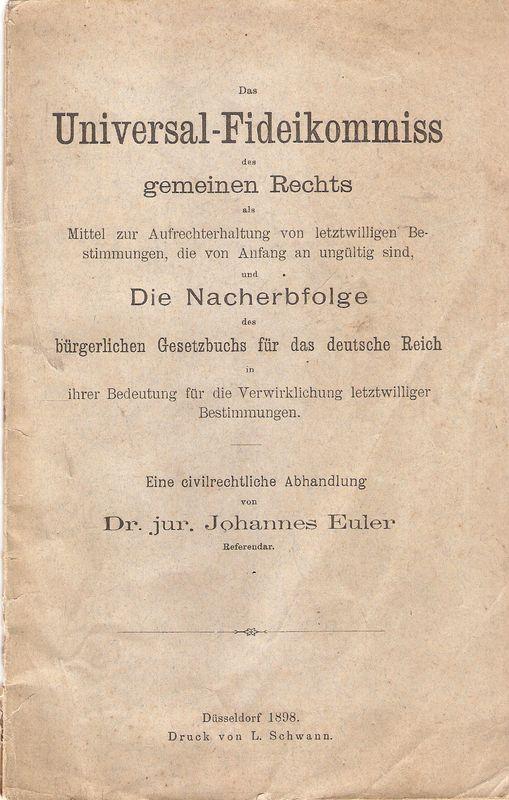
Fidei commissum (Latin ‘to leave in trust’) is an institution of inheritance and property law, according to which the assets of a family, usually land property, were to be preserved in perpetuity through a foundation and only one family member alone, the fidei commissum owner, held the usufructuary right. This is to be distinguished from the private property of a family member (the sovereign), the casket, which was subject to his free disposal during his lifetime and after his death.
The family fideicommissariat is similar to fiefs, ancestral estates and family foundations.
Standesherren in the German Confederation were members of those houses of the high nobility that lost their imperial immediacy and imperial status (and thus their relative sovereignty within the imperial union) after 1806 (end of the Holy Roman Empire) and 1815 (Congress of Vienna).
Article 14 of the German Federal Act of 1815 granted them a special legal status to be implemented in the provincial laws, namely membership of the high nobility, the right of equality with the sovereign houses and the continued existence of their special personal, family and property rights. In addition, they retained the right to administer civil and judicial justice, forest jurisdiction, forest police and supervision in church and school matters, over charitable foundations, as well as tax and jurisdiction privileges and exemption from military service. In the course of the 19th century, a large number of these privileges were lost, such as jurisdiction in 1848 and police rights after 1866.
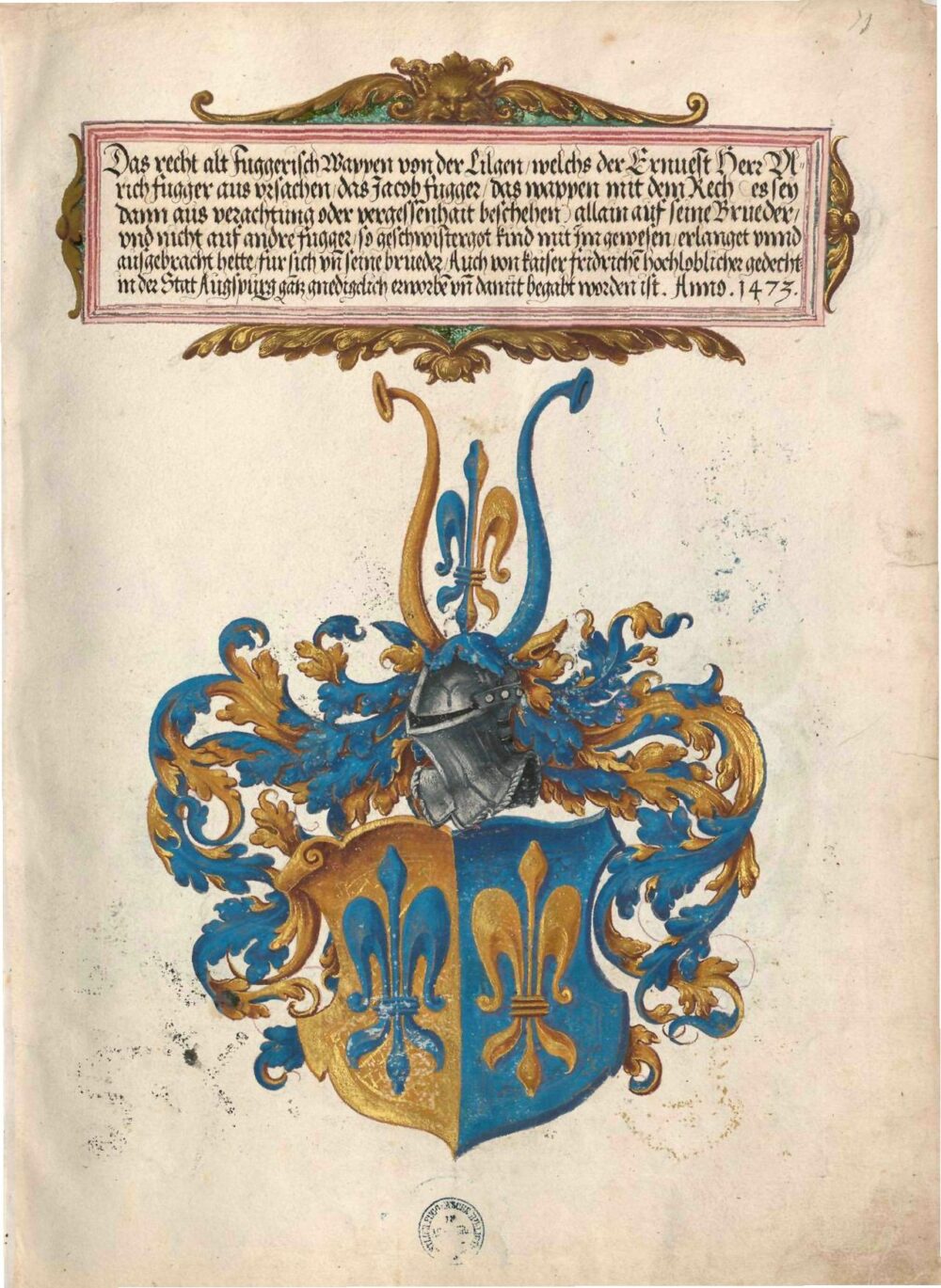
Fuggers are a Swabian merchant family.
Jakob Fugger “von der Lilie” (also known as “der Reiche”, Imperial Count from 1514) was the most important merchant, mining entrepreneur and banker in Europe between around 1495 and 1525. The name Fugger became synonymous with wealth throughout Europe.
The three Fugger families are still resident in Swabia today: the Princes Fugger von Glött at Kirchheim Castle, the Counts Fugger-Kirchberg at Oberkirchberg Castle near Ulm and the Princes Fugger-Babenhausen.
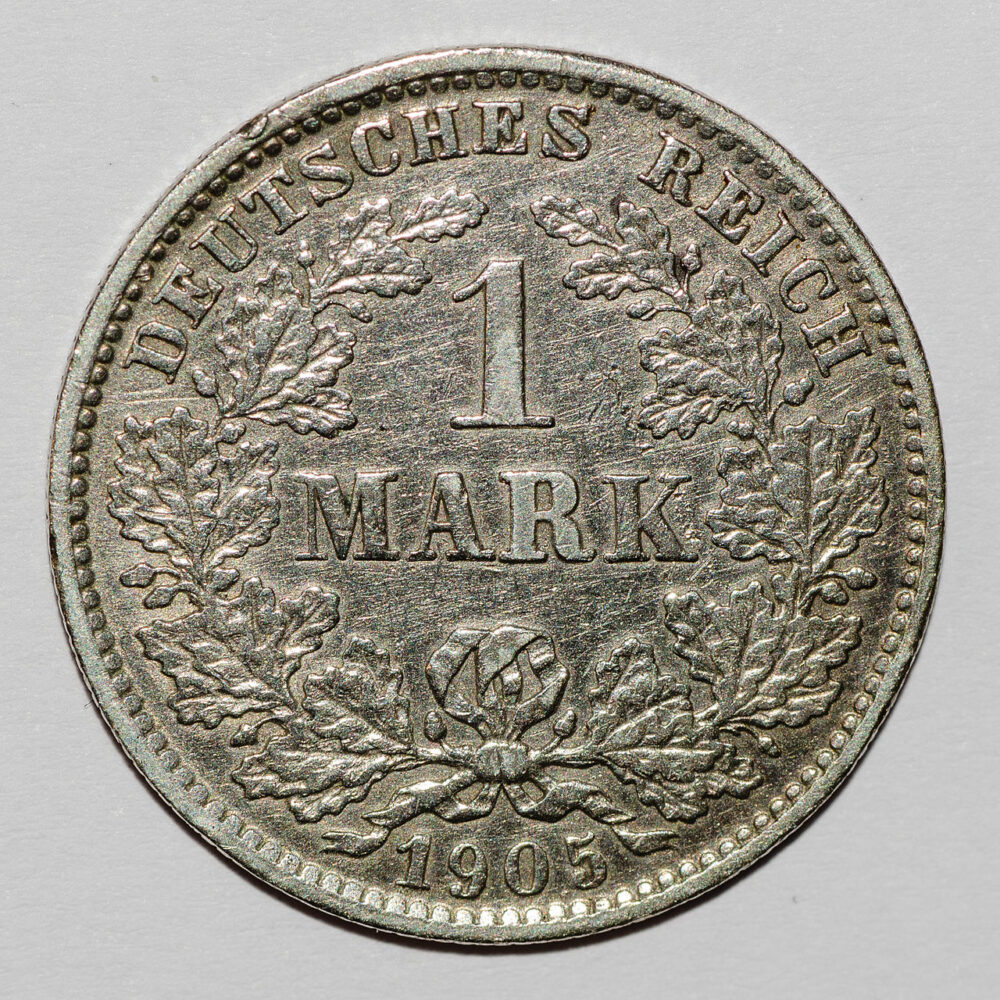
Mark (Mk or ℳ), retrospectively also Goldmark, was the unit of account and the coin denomination of the one-third gold-backed currency of the German Empire from 1871 (“Reichsgoldwährung”). It was the valid currency following the resolution of 4 December 1871, the first Imperial Coinage Act. In August 1914, with the beginning of the First World War, the issue of gold coins denominated in marks by the public treasury was discontinued.
Inflation-adjusted converson of 1000 Mark into 2024:
1916: 3828€ / 4114$ / 3269£
1922-36: 5529€ / 5943$ / 4722£
1937-38: 5954€ / 6399$ / 5084£
https://fredriks.de/hvv/kaufkraft.php
Deutsche Bank:
https://www.bundestag.de/resource/blob/459032/1d7e8de03e170f59d7cea9bbf0f08e5c/wd-4-096-16-pdf-data.pdf
https://www.bundesbank.de/resource/blob/615162/5a6229cebc0134fb82eba4055a927812/mL/kaufkraftaequivalente-historischer-betraege-in-deutschen-waehrungen-data.pdf
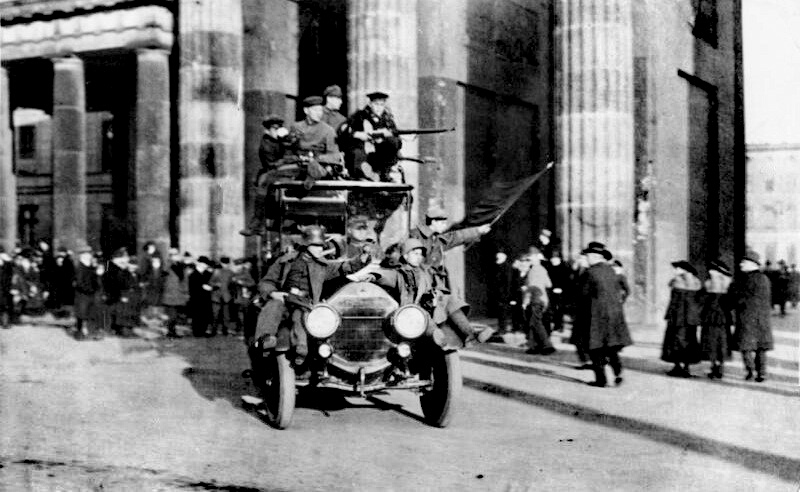
In the final phase of the First World War, the November Revolution of 1918/19 led to the overthrow of the monarchy in the German Reich and its transformation into a parliamentary democracy, the Weimar Republic.
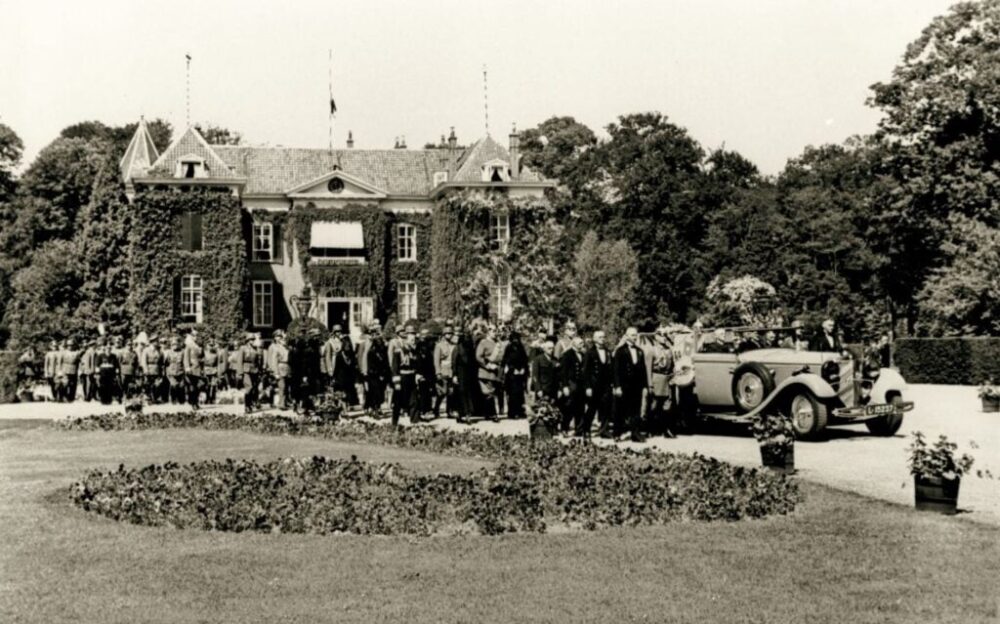
Doorn House, or Huis Doorn in Dutch, is a small castle in Doorn, a town in the Dutch municipality of Utrechtse Heuvelrug. The former German Emperor Wilhelm II lived here in exile from 1920 until his death on 4 June 1941.
Sturmabteilung (literally “Storm Division” or Storm Troopers) was the original paramilitary wing of the Nazi Party.
Its primary purposes were providing protection for Nazi rallies and assemblies, disrupting the meetings of opposing parties, fighting against the paramilitary units of the opposing parties, especially the Roter Frontkämpferbund of the Communist Party of Germany (KPD) and the Reichsbanner Schwarz-Rot-Gold of the Social Democratic Party of Germany (SPD), and intimidating Romani, trade unionists, and especially Jews.