Posted in Other

Pseudo-Aristotle de mundo

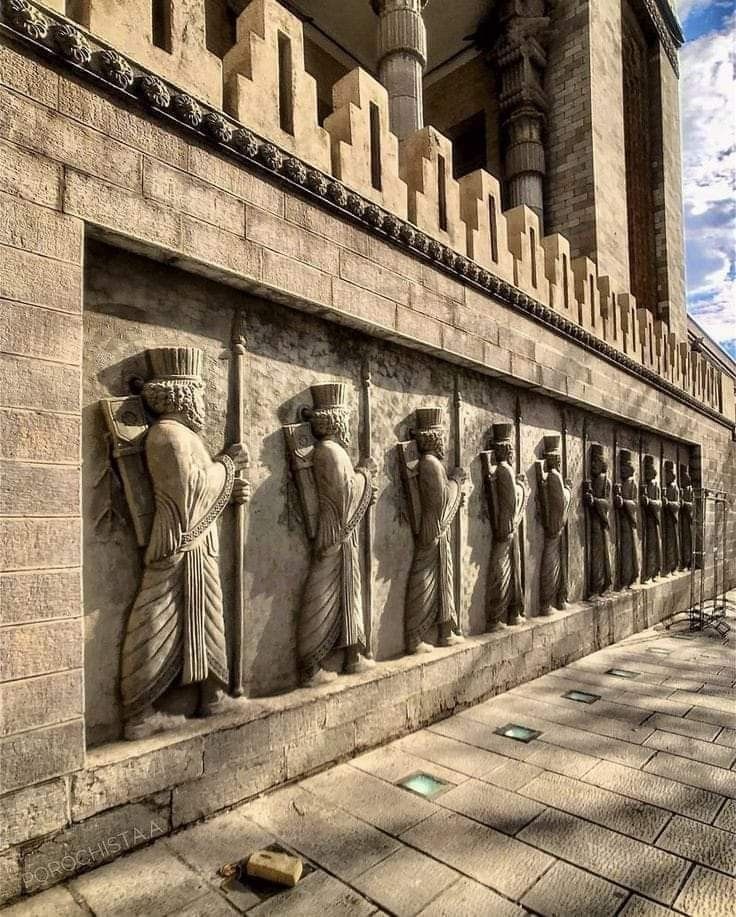
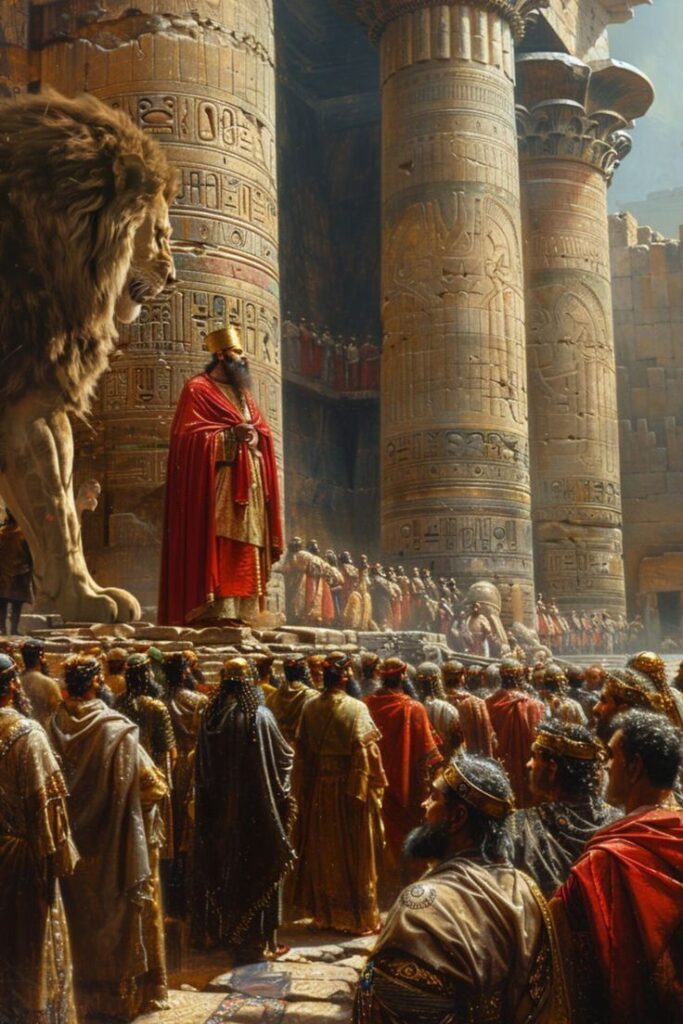
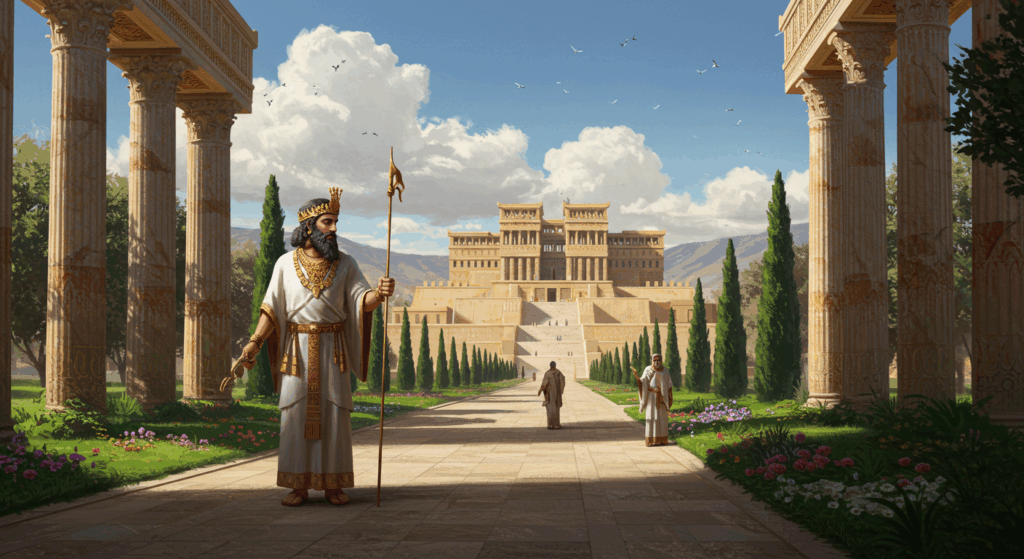
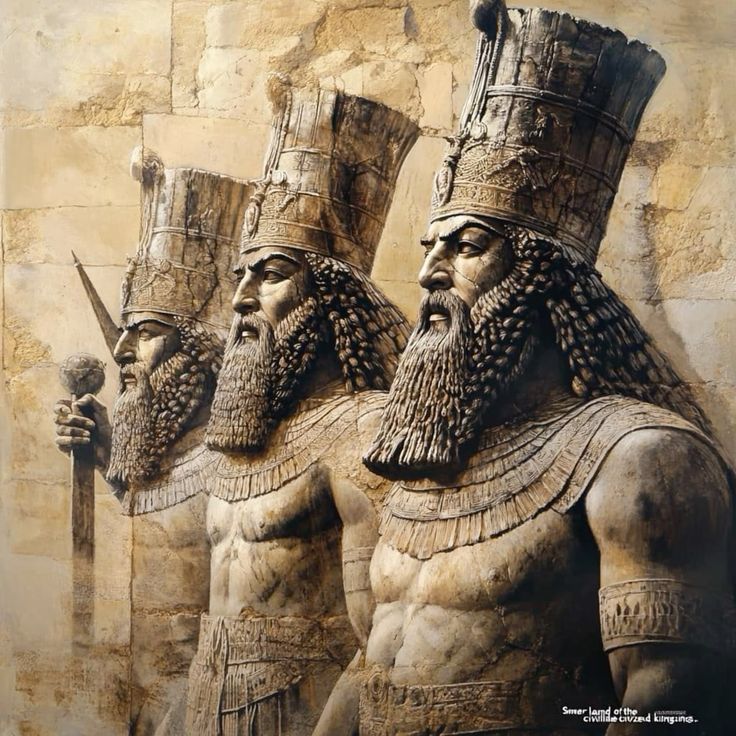
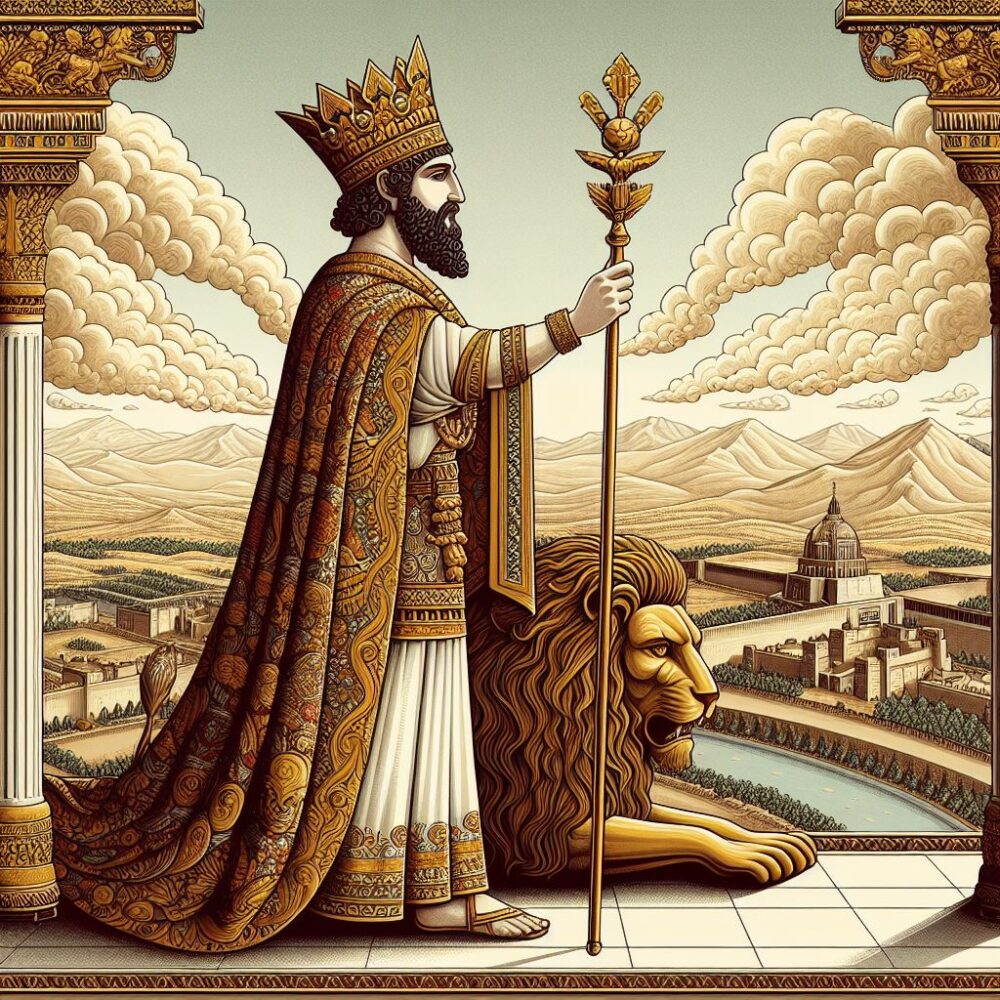
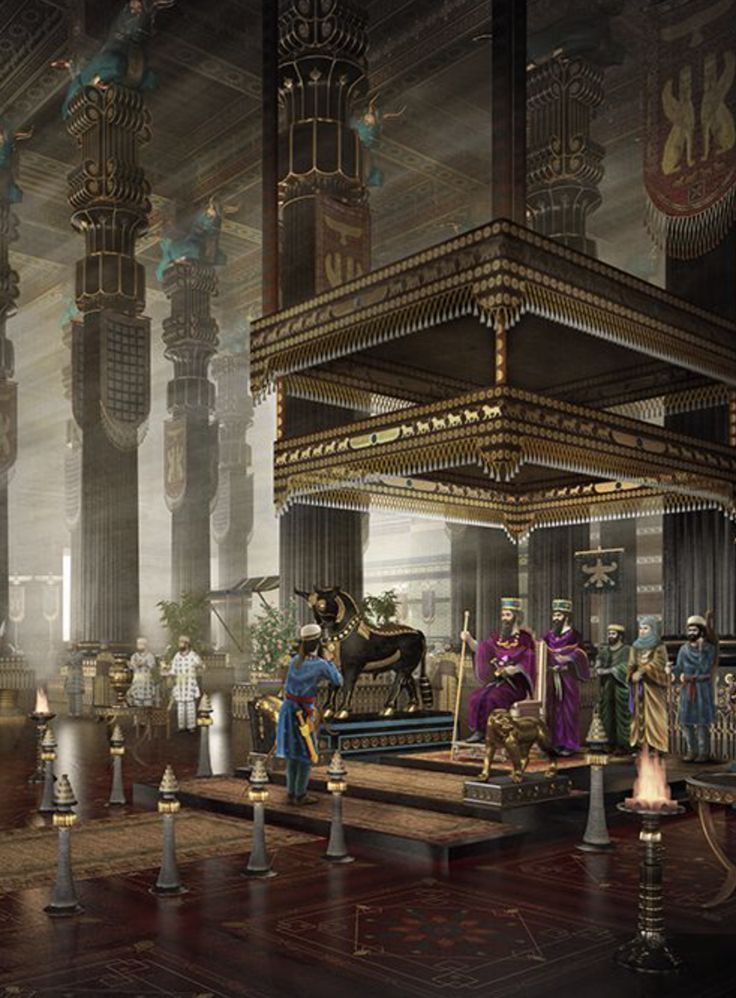
Rather, we must imagine God’s rule as similar to that of the Great King. The court of Cambyses, Xerxes, and Darius was so magnificently organized that it reached the pinnacle of majesty and sublimity. The ruler himself, as is reported, sat enthroned in Susa or Ecbatana, invisible to all, in a marvelous palace whose interior shone with gold, electrum, and ivory. There were many gatehouses, one after the other, and many courtyards, separated from each other by many stadia; brazen gates and mighty walls protected the whole. The most distinguished and experienced men were appointed to this task, some in the king’s immediate vicinity as his spearmen and his attendants, others as guards of the individual courtyards, as gatekeepers and so-called listeners, so that the king himself, the Lord and God—for so he was addressed—could see and hear everything. Separate from these, others were employed: administrators of state revenues, leaders in war and hunting, recipients of gifts, and officials for all other business related to the needs of the royal household.

And the entire dominion over Asia, extending westward to the Hellespont and eastward to the Indus, was divided among themselves by generals, governors, and kings according to peoples—they, too, were servants of the Great King, to whom others, such as runners, scouts, messengers, watchmen, and keepers of the fire signals, were subordinate.

Posted in Other

The Millenial Sovereign

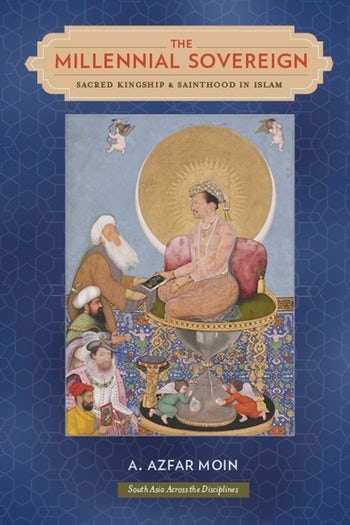
This book brings into dialogue two major fields of scholarship that are rarely studied together: sacred kingship and sainthood in Islam. In doing so, it offers an original perspective on both. In historical terms, the focus here is on the Mughal empire in sixteenth-century India and its antecedents and parallels in Timurid Central Asia and Safavid Iran. These interconnected milieus offer an ideal window to explore and rethink the relationship between Muslim kingship and sainthood. For it was here that Muslim rulers came to express their sovereignty and embody their sacrality in the manner of Sufi saints and holy saviors.
The Mughal dynasty of India (1526–1857) and the Safavid one of Iran (1501–1722) exemplified this mode of sacred kingship. The early and foundational monarchs of these two lineages modeled their courts on the pattern of Sufi orders and fashioned themselves as the promised messiah.
In their classical phases, both the Mughals and the Safavids embraced a style of sovereignty that was “saintly” and “messianic.” Neither a coincidence nor a passing curiosity, this similarity resulted from a common pattern of monarchy based upon Sufi and millennial motifs. There developed in this period an ensemble of rituals and knowledges to make the body of the king sacred and to cast it in the mold of a prophesied savior, a figure who would set right the unbearable order of things and inaugurate a new era of peace and justice—the new millennium. Undergirded by messianic conceptions and rationalized by political astrology, this style of sovereignty attempted to bind courtiers and soldiers to the monarch as both spiritual guide and material lord.

A. Azfar Moin – The Millenial Sovereign

The Millenial Sovereign
Posted in Other

An Afterlife for the Khan

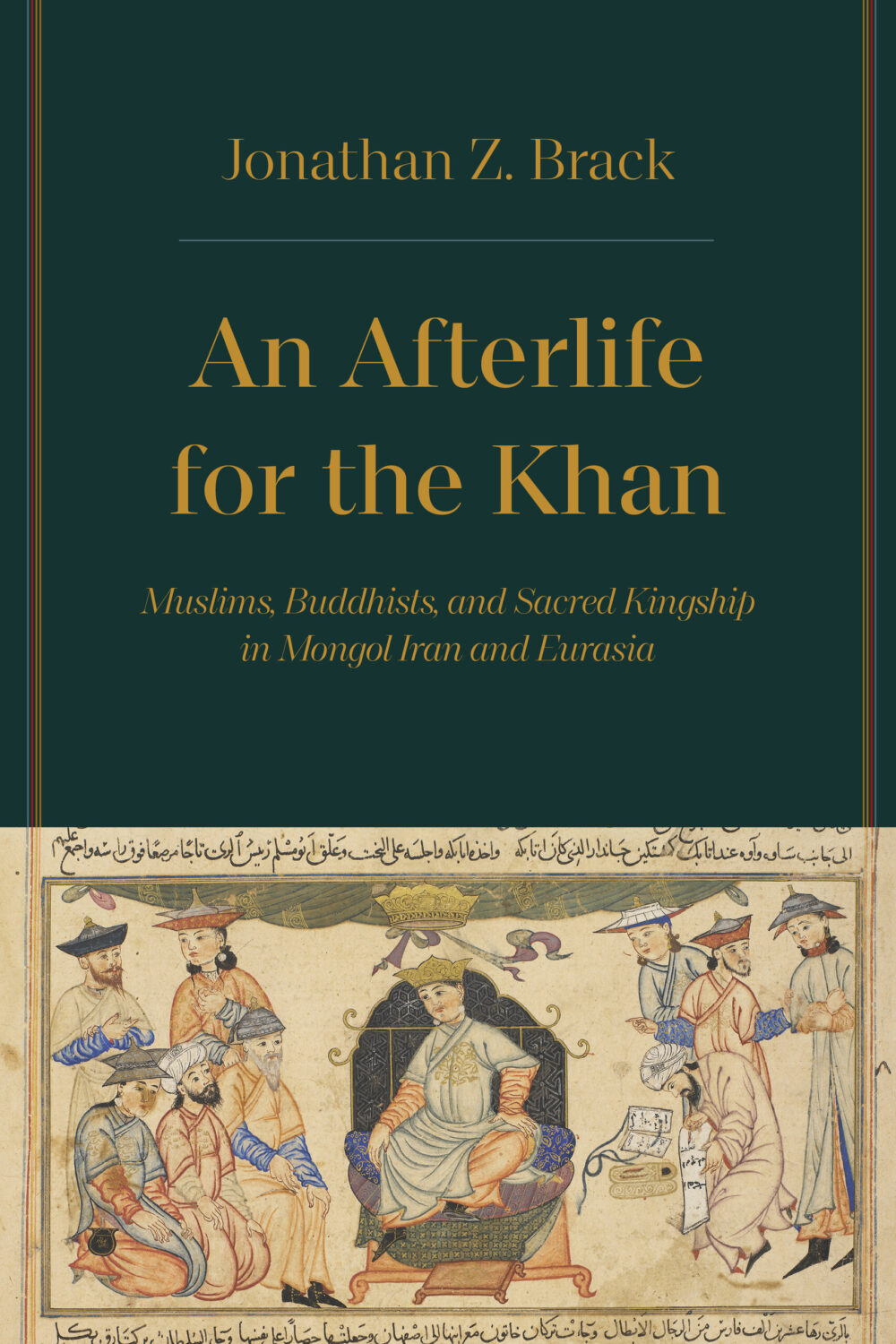
In 1254, after a long and anxious wait at the Mongol Empire’s capital of Qaraqorum, the Flemish friar and missionary William of Rubruck (ca. 1220–ca. 1293), finally got his wish to preach in person to the Mongol Qa’an Möngke (r. 1251–59). Before meeting the emperor, however, there was one final obstacle to overcome: outperforming his Muslim and Buddhist contenders in an interreligious debate. This multilateral court disputation was the first documented debate of its kind that included Christians (both Catholics and Nestorians), Muslims, and Buddhists. For William and for the Catholic Church more broadly, the encounter with Buddhism was entirely new. For the Muslim debaters, it was by no means the first interaction with Buddhists: Islam and Buddhism had a prolonged history of religious, intellectual, and commercial encounters and exchanges, but one that was fraught with friction and rivalry as well.
From our historical hindsight, however, this 1254 exchange in Mongolia can be seen as marking a new page in Muslim-Buddhist relations, not in the eastern territories of the Mongol Empire (China and Mongolia), but rather further west, at the other end of Mongol-dominated Eurasia, in Iran, which would shortly become the seat of the independent Mongol state of the Ilkhanate (1260–1335). Established by Chinggis Khan’s (r. 1206–27) grandson, Hülegü (r. 1260–65) in Iran, Iraq, and Azerbaijan—areas with a predominantly Muslim population—the Ilkhanate would become a destination for Buddhist monks from across Eurasia. These Buddhist experts would travel great distances to spread the Dharma and take advantage of the opportunities of patronage that the new Mongol rulers of Iran, the Ilkhans, offered.
In the late 1280s, some thirty years after William’s visit to Qaraqorum, the Ilkhanid court in Iran experienced the height of interfaith exchanges. Learned monks gathered at the court of Buddhist enthusiast Ilkhan Arghun (r. 1284–91), and debated with Muslims and possibly others. It is against this backdrop that this book’s protagonist, Rashid al-Din (d. 1318), then still a court physician and an up-and-coming bureaucrat, found himself embroiled in a disputation with one of the Mongol king’s cherished monks.
Rashid al-Din describes his exchange in a treatise written nearly two decades after the event, and under very different circumstances. He was at the height of his tenure as vizier, the most powerful civil servant in the Ilkhanid state, and Islam had already prevailed over Buddhism to become the official religion of the Ilkhanid rulers. Rashid al-Din does not name his contender and refers to him only as a bakhshī, Buddhist priest. The Buddhist asked Rashid al-Din the following question in Arghun’s presence: “What came first, the bird or the egg?” Rashid al-Din notes that this was a “famous fable” among the Buddhists. The monk indeed evoked a well-known Buddhist enigma that appeared in the “Questions of Mellinda,” a Pali dialogue between a Buddhist sage and the Greek king Menander of Bactria, probably composed between 150 BC and 100 AD. Rashid al-Din writes that while the monk believed that he would fail to solve the riddle, he was confounded by it for only a moment before God divulged to him the answer. He does not tell us what answer he ended up providing nor whether the Buddhist offered a rebuttal. Instead, Rashid al-Din downplays his Buddhist rival, dismissing the monk as ignorant of the true meaning of his own riddle. Yet he does not disregard the question itself as a catalyst of a theological inquiry. Rashid al-Din is “inspired” by it, and in the remainder of this treatise, he proceeds to contemplate Islamic philosophical points regarding issues such as the createdness of Adam and the divine source of primordial human knowledge.
Rashid al-Din’s account of this debate certainly differs from the Flemish friar William’s report to the Pope about his multilateral debate at Möngke’s court in Mongolia. For one, William provides more detail about how the debate with the Chinese Buddhist representative evolved and about the type of arguments that each party employed. We know they debated the existence and unity of God and the cause of evil. The differences between the Persian Muslim’s and the Flemish Christian’s accounts notwithstanding, there are also striking parallels between the two. Both downplay the intellectual fortitude of their Buddhist opponents. And both emphasize their recourse to their own scholastic traditions of rational argumentation to overcome the challenges mounted by their Buddhist contenders, rather than relying on Muslim or Christian scriptures. Whereas both might have underscored cultural and linguistic disparities, whether explicitly or implicitly, their accounts ultimately give the impression of a common vocabulary—that of rational argumentation.
Scholastic disputation indeed emerges from their reports as a shared currency enabling a certain exchange of ideas. Yet how far did such exchanges go? William’s account suggests that the debates went beyond the exchange of riddles and parables and could include hefty theological arguments. It also gives the impression, however, that the two parties remained ingrained in their own scholastic traditions. Rashid al-Din’s account, on the other hand, leaves more to the imagination. He gives the impression that few meaningful intellectual exchanges between Muslims and Buddhists took place under Mongol rule in Iran. And this impression is amplified by the general dearth of Muslim Ilkhanid descriptions of such exchanges, as well as the complete absence of any Buddhist textual documentation from the Ilkhanate.
Yet it is hard to reconcile this impression with what we know of the prevalence of Buddhism and the flourishing of the Buddhists during the Ilkhanate’s first four decades. As this book shows, a thorough examination of the Ilkhanid vizier Rashid al-Din’s extensive theological works demonstrates that Buddhist, Muslim, and Mongol exchanges have left deeper and more consequential impressions than the silence of contemporaneous Muslim authors implies. Muslims at the court were exposed to and made a considerable effort to respond to Buddhist concepts. These might not have been the finer points of the Dharma, but rather, as we will see, Buddhist methods of engaging with political authorities and conversion strategies.
An Afterlife for the Khan explores the Ilkhanid court of the late thirteenth and early fourteenth century as an arena of interreligious exchange and rivalry, where the conceptual differences and equivalences between various Eurasian structures of power and sacrality—Islamic, Buddhist, and Mongol—were debated and deployed. It unearths the various subtle ways in which cultural and religious agents employed their religious and political resources to accommodate, translate, manipulate, and subvert the symbols and structures of the religious Other.
Focusing on the theological-philosophical works of a Persian Muslim vizier active in the intellectual scene of the Ilkhanid court at the turn of the fourteenth century, An Afterlife for the Khan shows how the Persian-Muslim experience of Buddhism and its system of karmic-righteous kingship, on the one hand, and the accommodation of and resistance to the Mongol model of divinized kingship, on the other, generated and informed processes of creative experimentation in new modes of Islamic sacral kingship. Buddhists marketed concepts and models of karmic kingship as means of translating, reaffirming, and converting their Chinggisid patrons’ claims to deified kingship. The Islamic challenge entailed, therefore, not only winning their Ilkhanid patrons to the Muslim faith or cementing their commitment to Islam in the case of the Mongols who had already converted, but also uprooting their previous Buddhist education.
Jewish convert, Persian vizier, historian, and Muslim theologian Rashid al-Din stood at the center of the Muslim conversion efforts. In his theological and historical writings, invigorated by the lively atmosphere of an intellectually rigorous and religiously competitive royal court, Rashid al-Din not only engaged in the translation and assimilation of Buddhist narratives and concepts, or painstakingly attempted to dispute and disprove the Buddhist doctrine of reincarnation. He was also inspired and informed by his Buddhist competitors and their strategies of conversion and domestication of the Chinggisid rulers. To this end, he experimented with a model of Mongol-Muslim kingship that paralleled Buddhism’s structure of karmic-righteous rulership.
This book argues that Rashid al-Din’s Buddhist- and Mongol-informed experimentation in Islamic theological discourses formed a crucial, intermediate stage between the two more dominant frameworks for legitimizing Islamic, sultanic authority—the pre-Mongol phase of a restrictive, legalistic, and genealogical-based caliphal structure, and the post-Mongol independent model of universal and sacral Islamic rulership buttressed by saintly and messianic discourses. The Mongol occupation of Baghdad and the consequent elimination of the ʿAbbasid caliphate in 1258 represented a dramatic event that shattered the religiopolitical foundation of the Sunni majority’s world. This cataclysm inaugurated an era of unprecedented constitutional crisis that exacerbated after the collapse of the Ilkhanid state in 1335. In subsequent centuries, new strategies for legitimizing sultanic authority were formulated to resolve this crisis. To that end, Muslim intellectuals increasingly made use of and elaborated on an innovative, comprehensive, and compelling vocabulary of sovereignty that effectively shifted the discourse of sultanic legitimacy away from the pre-Mongol restrictive genealogical and juridical parameters of Sunni authority. In its place, there emerged a new discursive realm of universal Islamic kingship that referenced and interlinked a variety of intellectual fields—from philosophy and theology to astrology, mysticism, and the occult. Rashid al-Din’s works marked the end of caliphal authority and the beginning of this new age of Islamic authority. In the remainder of this introduction, we first explore the central theoretical foundation of this research into sacred kingship and the strategies of religious agents with the Mongol rulers.

Jonathan Z. Brack – An Afterlife for the Khan

Posted in Judeans in the Achemenid Period

Judean Identity and Ecumenicity

The Political Theology of the Priestly Document (P)

[…]

Von Rad suggested a three-part structure for P. He differentiated between “three big concentric circles . . . which move from the outside inwards towards the salvific mystery of God—the circle of the world, the circle of Noah, and the Abrahamic circle” (“drei mächtige konzentrische Kreise . . . die von außen nach innen fortschreitend in das Heilsgeheimnis Gottes einführen: der Weltkreis, der Noahkreis und der abrahamitische Kreis”).

[…]

The circle of Abraham includes “the Abrahamic household,” consisting of the Arabs (“Ishmael”), Israel (that is, “Samaria”) and Judah (“Jacob”), and Edom (“Esau”). Intermarriage within this circle is allowed: according to P, Esau marries—illegitimately (Gen 26:34, 27:46)—two “Hittite women” (Gen 26:34). Subsequently, Jacob receives advice from his parents to marry a woman from among his kin in Paddan Aram (Gen 27:46, 28:1–5). In response, Esau marries another woman, one of the daughters of his uncle Ishmael (Gen 28:6–9). Therefore, it can be concluded with de Pury that “according to P Jews are permitted to intermarry with Ishmaelite and Edomite women, but not with ‘Hittite’ or ‘Canaanite’ women.’” P furthermore records the genealogy of Ishmael’s descendants (Gen 25:12–18) as well as Esau’s (Gen 36:4–14), who possess a qualified theological nearness to Israel through this ethnic proximity. This Abrahamic circle is defined by the Abrahamic covenant of Genesis 17, which promises the participating covenant partners fruitfulness, land inheritance (which seems to imply a right to use rather than to possess), and proximity to God.
The circle of Israel narrows the focus down to the nation of God alone. It is generally concerned with the establishment of the sanctuary, which enables the sacrificial cult of Israel. This sacrificial cult alone is what allows Israel to achieve atonement. The sanctuary and the implementation of the cult seem to function as the partial restoration of  the initial creation, in the sense of a second “creation within creation.” The circle of Israel is not established by its own covenant because the foundational promise of the presence of God (“I will be your God”) was already given in Gen 17:7 (cf. Exod 6:7, 29:45–46). Nevertheless, the establishment of the sanctuary concretizes the presence of God specifically for Israel by locating God’s ׁ שכינה in the midst of his people (cf. Exod 29:45–46).

[…]

Whether the Priestly writer’s Abraham is aware of it or not, what he asks is that Ishmael become Yhwh’s priest; and it is that request that is denied to Ishmael and offered instead to the yet to be born Isaac. In this whole exchange (vv. 18–21), the question therefore is not whether Ishmael will be allowed to live in the land of Canaan—the right of Ishmael to live in Canaan has been settled once and for all in v. 8—but the question is only whether there is a need for a further son, i.e. for a further category among Abraham’s multi-nation descendants. And the answer to that question is yes. Sarah’s son Isaac will beget those descendants of Abraham who are destined to become Yhwh’s priestly nation.

[…]

The promises of fertility given to Abraham as a “covenant” and to Ishmael as a “blessing”, when considering their concrete arrangements, are drawn up quite similarly and seem nearly equivalent.
Therefore, it is much more likely that the function of vv. 19–21 is not the exclusion of Ishmael but rather in the inclusion of Isaac in the Abrahamic covenant. Ishmael’s inclusion in the covenant is clearly stated in Gen 17:7–8. Additionally, this section highlights the fact that the covenant with Abraham and his descendants, to which Ishmael belongs without a doubt, is an “eternal covenant.”
The need for an explicit inclusion of Isaac in vv. 19, 21 can be explained its position in the narrative, namely, that at the time of Genesis 17 Isaac had not yet been born. This makes the double appearance of “covenant” terminology in vv. 19, 21, with reference to Isaac, plausible: an extension of the covenant to a person who did not yet exist is a bold enterprise and therefore needs special terminological emphasis.
Nevertheless, the conclusion remains that Ishmael is not the same type of partner in the covenant of God as Isaac is. They are equal with re-gard to fertility and land holdings (in the sense of an ,אחוזה Israel will then signify its land in Exod 6:8 as ) מור ׁ שה  within the greater region of the “whole land of Canaan.” But they are not equal with regard to the possibility of cultic proximity (“living before God,” Gen 17:18b).
This proximity—as the narrative of the Priestly Document goes on to show—only belongs to Israel by means of the foundation of the sanctuary and is explicitly denied to Ishmael.

[…]

In Genesis 17, the Priestly Document apparently attempts to balance the theological prerogative of Israel with the political reality of Persian-period Judah: Judah lives in a modest province within “ecumenical” proximity to its neighbors. Perhaps the specific outline of Genesis 17, the creation of an “Abrahamic ecumenicity”, as Albert de Pury has put it, has to do with the fact that Abraham’s tomb of Hebron, which was in all likelihood venerated by Judeans, Arabs, and Edomites, was probably not part of Achaemenid Judah but part of Idumea as Ernst Axel Knauf and Detlef Jericke have convincingly argued. This means that P had to include Judeans, Arabs, and Edomites in a privileged position and therefore developed the notion of an “Abrahamic” covenant of the peoples living in the “whole land of Canaan.”

Posted in Judeans in the Achemenid Period

What Do Priests and Kings Have in Common?

While royal genealogies could serve to legitimize a line that was already established, like that of Cyrus, they could also give rise to new claims. This is manifest with Darius, who was not directly in line for the throne. The Behistun Monument clearly illustrates this in that he formulates a six-generation lineage back to the eponymous founder, Achaemenes.


I (am) Darius the great king, king of kings, king of Persia, king of the countries, the son of Hystaspes, the grandson of Arsames, an Achaemenid. Proclaims Darius, the king: my father (is) Hystaspes; the father of Hystaspes (is) Arsames; the father of Arsames (was) Ariaramnes; The father of Ariaramnes (was) Teispes; the father of Teispes (was) Achaemenes.
Proclaims Darius, the king: For this reason we are called Achaemenids; from ancient times we are noblemen; from ancient times our family has been kings. Proclaims Darius, the king: (There are) eight in my family who formerly have been kings; I (am) the ninth; (thus altogether) nine, now as ever, are we kings.

(Schmitt 1991: 49 lines 1–11)


This genealogy is particularly significant because Darius, like Cyrus, claims that his right to the throne is based on his family line. Also, like Cyrus, he claims that his family had been kings for a long period of time, in succession. What can one make of these statements? There are conspicuous absences in this genealogy, including Cyrus and Cambyses. Herodotus comments in a story concerning Cambyses in Egypt that Darius was a member of Cambyses’ guard and a “man of no great importance” (III.139–40). Thus, according to Herodotus, Darius was not in line for the throne, although he was of noble birth. Yet David Stronach argues that Darius’s ancestors may have had control of certain areas of Fars, and thus he was from a family of monarchs (2003: 256).
Hence, his claim is not necessarily a lie. What then is Darius attempting to do in his genealogy? There are clear examples of usurpers who did not attempt to create a genealogy in order to justify their right to the throne. The classic case is the Neo-Assyrian ruler, Sargon II, who never provides a genealogy to support his right to the throne. Yet Darius did not claim that he had no royal pedigree but, rather, justifies his right to the throne through his family. Still, he provides no specifics except for family names. Unlike Cyrus, he gives no geographical location for his ancestors’ supposed kingdom.
Hence, Darius attempted to redefine what it meant to be the rightful monarch through the use of his genealogy. Briant observes, “It was not because he was Achaemenid (in the clan sense) that Darius achieved power; it was his accession to royalty that allowed him to redefine the reality of what it meant to be ‘Achaemenid’” (2002: 111). Christopher Tuplin questions Briant’s interpretation, adding that Darius may not have been intentionally lying about his descent from Achamenes but rather is speaking in “symbolic terms” (2005: 230). Whether Darius is giving a faithful rendering of his family line or lying is unclear. But it is apparent that through the use of his genealogy, Darius, in essence, is undoing Cyrus’s rightful claim to the throne by taking his genealogy to the founder of the dynasty, Achaemenes, whereas Cyrus only connects himself to Teispes. Wilson adds that, in the case of the Achaemenid kings, “many . . . were engaged either in expanding the Persian Empire or protecting it from the threat of internal political chaos” (1977: 70).
Darius felt the need to construct this genealogy, whether real or imaginary, in order to show his family’s past claims to power.


In the biblical material, certain royal and priestly genealogies may point to periods when legitimizing one’s genealogy was particularly important. There are two examples of this, 1 Chr 3:1–24, the Davidic genealogy, and 1 Chr 8:33–40, the so-called Saulide genealogy. Both lineages focus on monarchs who had long been out of power. In the example of the Davidic genealogy in 1 Chr 3:1–24, this extensive genealogy continues for 26 generations in the MT, from David to the seven sons of Elioenai. It also builds on the Judahite genealogy in 1 Chronicles 2, which also connects David to Judah, Jacob, and beyond. 1 Chr 3:1–24 employs both linear and segmented formats that continue for over 600 years. The Davidic lineage begins with a segmented genealogy highlighting all of the first-born sons born to him in Hebron by his six wives and then moving on to the sons born to him in Jerusalem by Bath-shua. A linear genealogy is employed from the time of Solomon to Josiah (16 generations). The genealogy returns to a segmented format from the period of Josiah until the sons of Elioenai.  But this is not simply a genealogy of David’s dynastic line. It continues long past the Exile and Return, through the family line of Zerubbabel and down to the sons of Elioenai. Thus, the Davidic genealogy focuses on one line and its endurance and survival, even after the destruction of the Kingdom of Judah. Although the power of this family had long ago diminished, it is clear that this genealogy is attempting to position one branch of the Davidic family in line for power. And thus, in a period when they had long been out of power, as Gary Knoppers points out, the “careful demarcation of continuity among the descendants of David throughout periods of tremendous change demonstrates the dynasty’s resiliency and importance” (2004: 335–36). The genealogy functions as a way of authorizing one family line within the larger Davidic lineage to a position of power, if the occasion ever arose where power could be bestowed on them.
Another example of a royal genealogy found within the lineage of the Benjaminites is the so-called Saulide genealogy (1 Chr 8:33–40), which is really the Jeielite genealogy because it begins with Saul’s grandfather Jeiel. The Chronicler’s interest in the family of Saul acknowledges his earlier importance as well as his descendants’ continued importance during the postexilic period. The importance of Saul’s family is carried through Chronicles, where Saul and David are the two royal lines within the narrative of the monarchy. Unlike the Davidic genealogy, which highlights one particular family line, 1 Chronicles 8 highlights the importance of the Benjaminite clan and their position in their different territories, including Jerusalem and Gibeon. Saul’s genealogy, which begins in v. 29 with his grandfather Jeiel and continues for 17 generations, ends with the phrase “all these were from the descendants of Benjamin” (8:40), thus concluding the Benjaminite genealogy with Saul’s descendants.
Saul’s family clearly endures long after the loss of the monarchy, and the Benjaminite genealogy does not hide the character of Saul but rather honors him and his sons and holds them in a position of esteem, ending the lengthy Benjaminite genealogy with Saul’s particular family line of the Benjaminites. As a consequence of the antique Jeielite and Saulide genealogy, the tribe of Benjamin gained prominence. Further, the Benjaminites were an important tribe within postexilic Yehud and, for the Chronicler, a loyal subject of the Davidic monarchy. They were also an integral member of Yehud during the Achaemenid era, and thus past events or the genealogy legitimized their place in the Second Commonwealth by recourse to the ancient past through Jeiel and Saul, their most famous members.


Long genealogies were fairly uncommon in nonroyal material, save a few notable exceptions. One such example appears in Herodotus’s Histories. In book two, Herodotus recounts his visit to Thebes (Karnak), where he tells a story about Hecataeus of Miletus, the sixth-century historian (550–490 b.c.e.), who wrote works on geography, enumerating different regions of the known world, and also genealogies, in which he attempted to order the stories of gods and heroes (of these works, there are extant some 35 fragments). Hecataeus is also credited with revising a map of the world first created by Anaximander. Herodotus states that Hecataeus “had studied his own lineage and had traced his family history back to a divine ancestor in the sixteenth generation” (II.143). He continues his narrative, stating that the priests at Thebes did not believe Hecataeus’s claim that one could descend from the divine, and took him into the Temple of Amun and showed him the statues of the high priests, each representing a generation. The position was passed down from father to son. In the end, the priests showed Hecataeus 345 statues and claimed “that every one of the figures represented a piromis descended from a piromis [in Greek this would be a “man of rank”] . . . they did not connect any of them to either god or a hero” (II. 143). Herodotus questions this notion that one could trace a genealogy back to the gods, and indeed Herodotus states that he does not have a genealogy of his own family and thus this practice seems strange to him. This story is noteworthy because this is the only real evidence for the creation of long genealogies during this period in the Ionian world.”
Posted in Judeans in the Achemenid Period

The Absent Present

Cultural Responses to Persian Presence in the Eastern Mediterranean

[…]

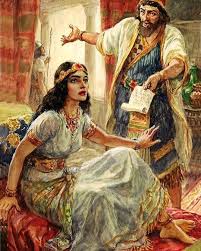
Throughout the book, the continued existence of Jewish communities in Persia is never questioned. Also, a return to the homeland is never debated and we encounter a cosmopolitan Judaism in Esther where—just as in Genesis 20—ethnic identity is no longer tied to the land. This, however, does not preclude any connection to Palestine. The ties of the Diaspora community at Susa with the people in Palestine and especially in Jerusalem are emphasized in the figure of Mordecai, who is introduced as a Benjaminite who had been exiled from Jerusalem in the group that was carried into exile with king Jeconiah of Judah, who had been driven into exile by Nebuchadnezzar, king of Babylon (Esth 2:5–6). Taken literally, Mordecai would then have been roughly 115 years old and hardly able to have a very beautiful niece. As in the case of Sarah in Genesis 20, too close a reading blinds us to the literary intention and purpose of the narrative. The genealogy of Mordecai stresses that he is both a יהודי and a member of the tribe of Benjamin and it is precisely this connection to which we need to draw our attention. In the book of Ezra (Ezra 1:5, 4:1), Judah and Benjamin (together with Levi) represent the continuation of the Southern Kingdom of Judah and are regarded as the only true community. This means by the parameter set by the book of Ezra, Mordecai is an authentic Jew of the Exile. With his genealogy, he fits the description of other prominent members of the Diaspora, because both Daniel (Dan 2:25) and Tobit (Tob 1:1–2) are described as being exiled from Judah or Israel. As is common in Diaspora discourse, status and identity are related to the level of connection with the homeland as well as with a certain expression of “cosmopolitanism.” As far as Jewish identity is concerned, we find a curious interplay between concealing and revealing one’s lineage. It starts with Mordecai’s order given to Esther to conceal her ethnic identity (Esth 2:10; cf. Esth 2:20), and she must have done it remarkably well, because the Persian king appears oblivious to the fact that he has taken a Jewish wife. When she finally reveals her identity (Esth 7:4), the king is untroubled by the fact. In contrast to Genesis 20, the authors of the book of Esther can imagine that a Jewish woman would have intercourse with someone outside her own ethnic group (the fact that Esther is unmarried might have helped here). All in all, the reader gets the impression that religion as an ethnic marker does not seem to matter anymore— this fact is clearly a cultural response to the (proposed) Persian setting, where theology is only the starting point for an otherwise secular political economy.
A further striking feature of the book of Esther is the virtual absence of God in the book. This has, of course, given rise to manifold speculation about hidden references, double entendres, and so on. On the other hand, it is incorrect to view the apparent “secular” nature of the book as an indication of the book’s being of lesser quality. I think, if we approach the Esther story with the remarks about God in mind that were made above when dealing with Genesis 20, some light will be shed on the issue. The personal God of the patriarchs was changed in Genesis 20 into a universal divine being to whom Israelites and pagans can speak and to whose universal laws even apparently foreign kings can adhere. This change from a personal to a universal God is taken a step further in Esther. Because none of the actions that lead to an endangerment of the Jews in Persia are explicitly linked to the religious factor, the absence of any direct divine intervention might be understandable. Only in passing can we mention that the apparent noninvolvement of Persia in the religious affairs of its subject people makes Persia an ideal setting for the legitimation of a new festival, which seems to defy the common notions of biblical festivals. For any issues of religion, the conflict between Mordecai and Haman reported in Esth 3:1–15 is often interpreted by drawing attention to Exod 20:1–5. True, חוה is used in the stipulation of Exod 20:5, but nothing in the text of Esther suggests that Haman had any divine quality, and only the Targum adds this aspect by stating that Haman wore a portrait of an idol on his clothes. [The motif of Haman’s divinity only occurs in Judg 3:8, where Nebuchadnezzar claims divine honors: “And he destroyed all of their sanctuaries and ravished their cultic groves. He was given the order to extinguish all the gods of the earth so that all people of the earth serve Nebuchadnezzar alone and all tongues and tribes should worship him alone as god”]
Despite Mordecai’s statement that he is a Jew (Esth 4:4bβ), we have instances in the Hebrew Bible in which it is perfectly acceptable to bow down before another man (see Gen 23:7, 27:29; 1 Kgs 1:31). The combination of the Hebrew verbs חוה and כרע is normally reserved for God (Ps 22:30, 95:6; 2 Chr 7:3), “but if idolatry is the cause of Mordecai’s noncompliance, the text is strangely silent about this. In addition it is difficult to see why the king commands that an underling be treated as god when he himself is not.” Esth 3:4bβ (כי הגיד להם אשר הוא יהודי ) seems to look forward to Esth 3:8–15 rather than serving as an adequate reason why Mordecai refuses to bow down.