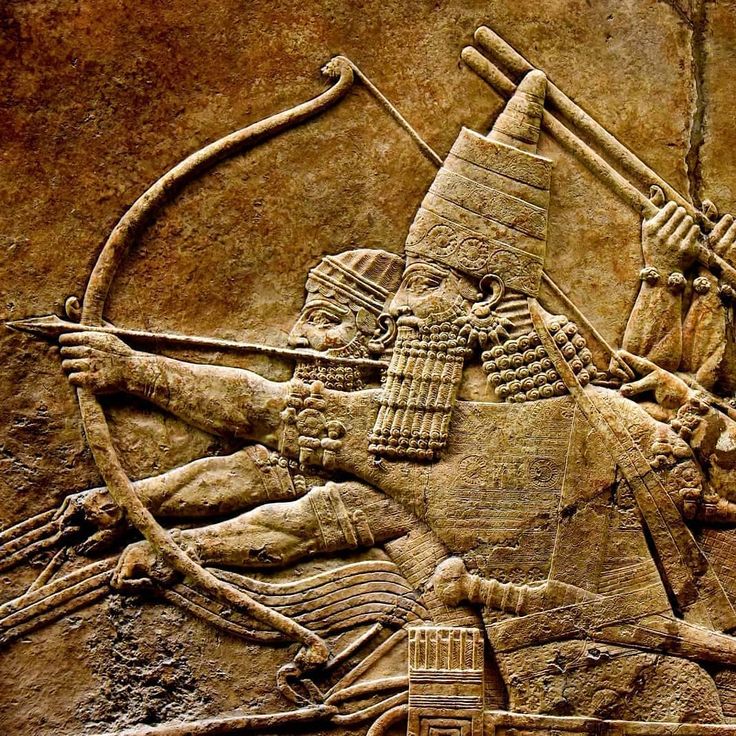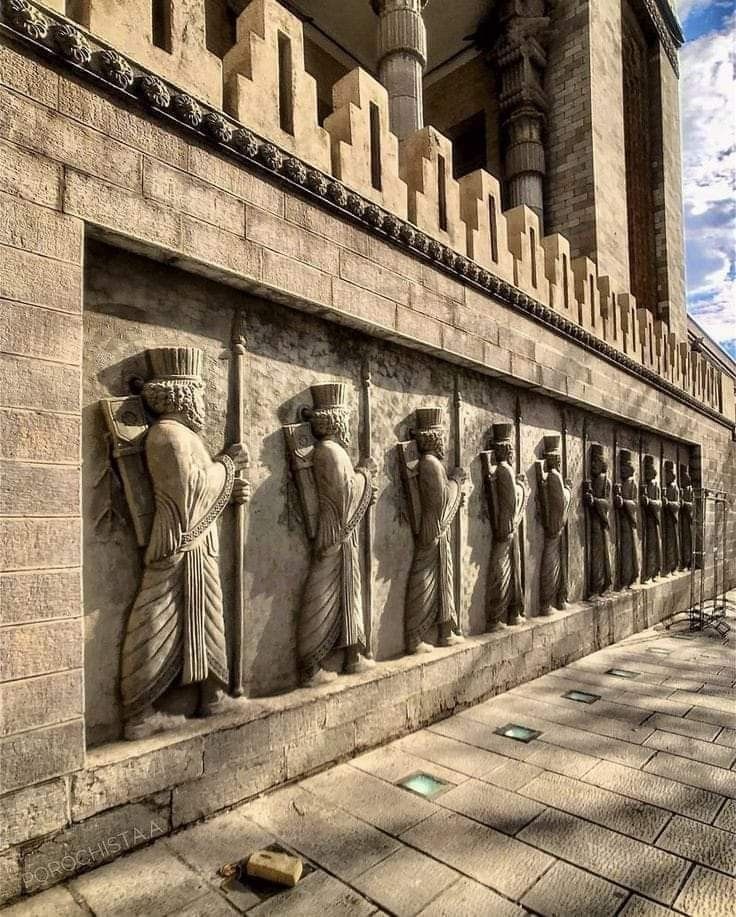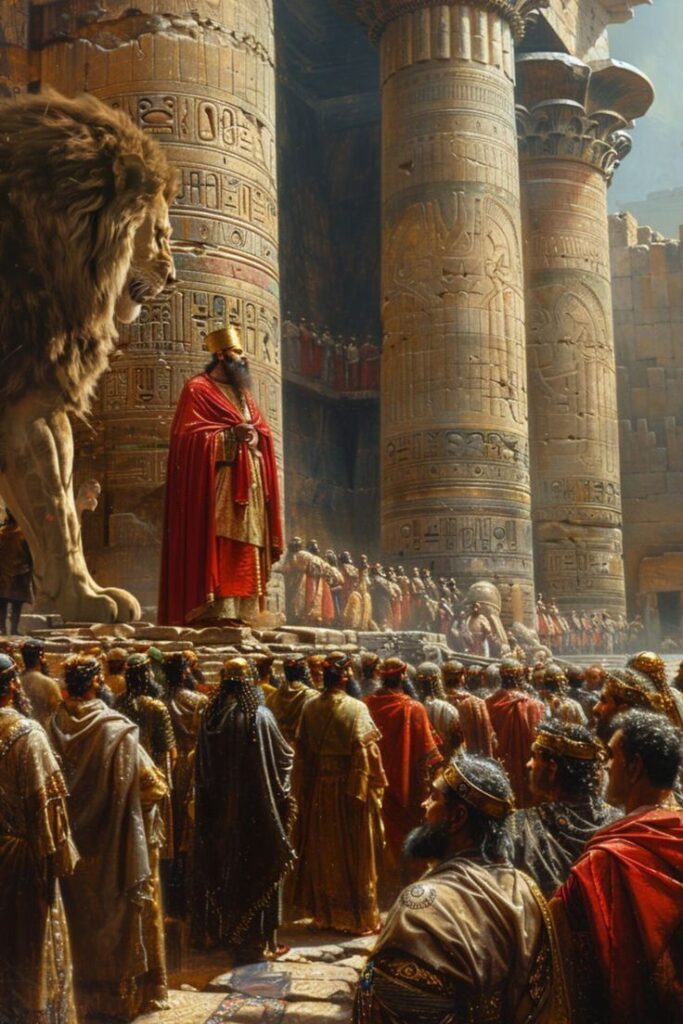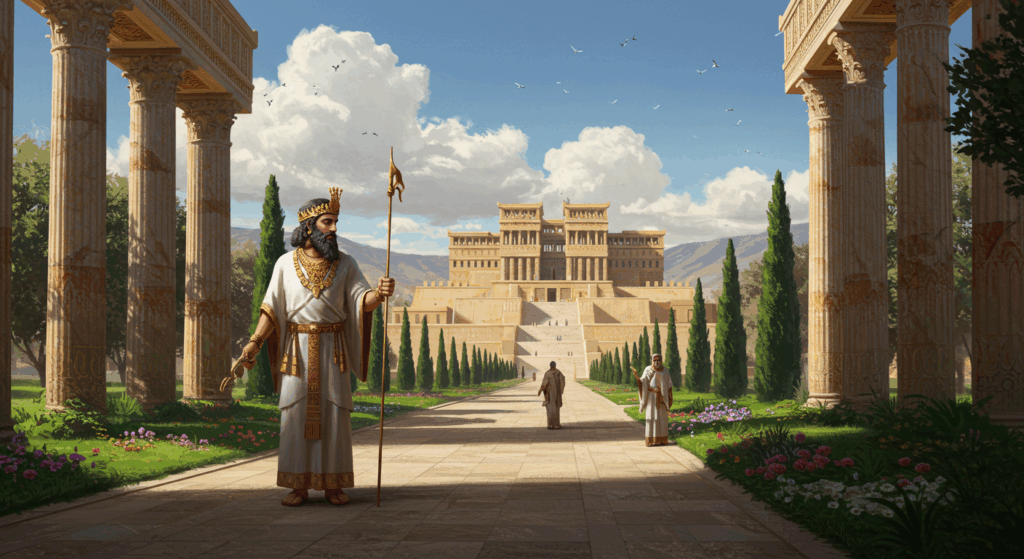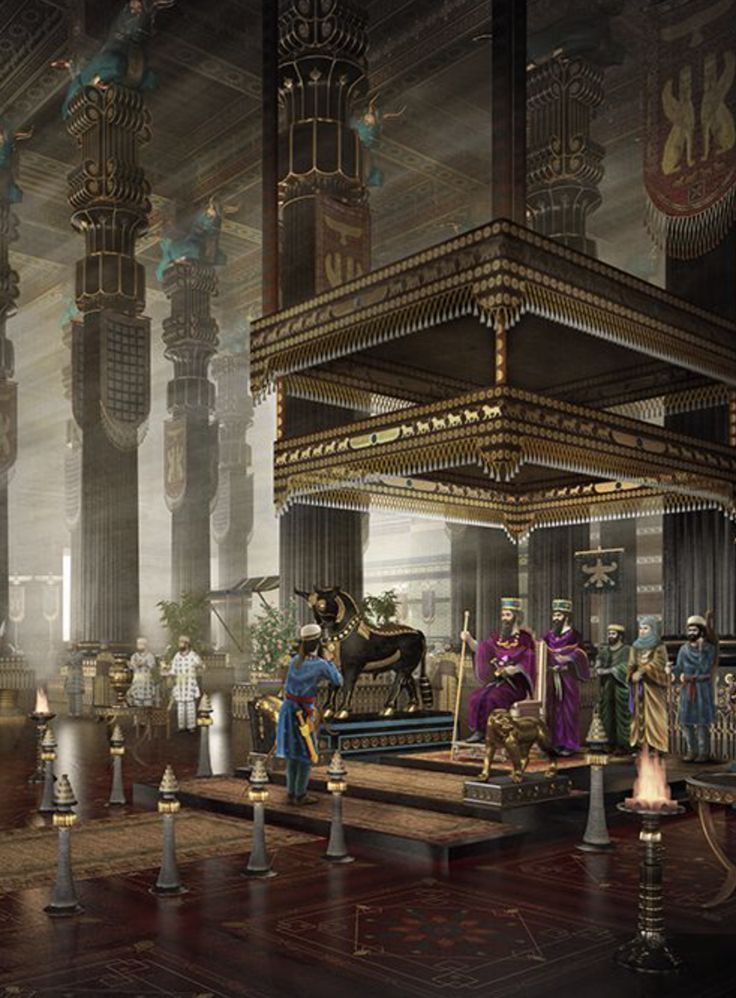
Rather, we must imagine God’s rule as similar to that of the Great King. The court of Cambyses, Xerxes, and Darius was so magnificently organized that it reached the pinnacle of majesty and sublimity. The ruler himself, as is reported, sat enthroned in Susa or Ecbatana, invisible to all, in a marvelous palace whose interior shone with gold, electrum, and ivory. There were many gatehouses, one after the other, and many courtyards, separated from each other by many stadia; brazen gates and mighty walls protected the whole. The most distinguished and experienced men were appointed to this task, some in the king’s immediate vicinity as his spearmen and his attendants, others as guards of the individual courtyards, as gatekeepers and so-called listeners, so that the king himself, the Lord and God—for so he was addressed—could see and hear everything. Separate from these, others were employed: administrators of state revenues, leaders in war and hunting, recipients of gifts, and officials for all other business related to the needs of the royal household.
And the entire dominion over Asia, extending westward to the Hellespont and eastward to the Indus, was divided among themselves by generals, governors, and kings according to peoples—they, too, were servants of the Great King, to whom others, such as runners, scouts, messengers, watchmen, and keepers of the fire signals, were subordinate.