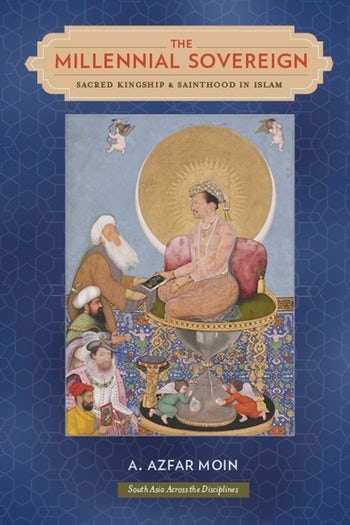
This book brings into dialogue two major fields of scholarship that are rarely studied together: sacred kingship and sainthood in Islam. In doing so, it offers an original perspective on both. In historical terms, the focus here is on the Mughal empire in sixteenth-century India and its antecedents and parallels in Timurid Central Asia and Safavid Iran. These interconnected milieus offer an ideal window to explore and rethink the relationship between Muslim kingship and sainthood. For it was here that Muslim rulers came to express their sovereignty and embody their sacrality in the manner of Sufi saints and holy saviors. The Mughal dynasty of India (1526–1857) and the Safavid one of Iran (1501–1722) exemplified this mode of sacred kingship. The early and foundational monarchs of these two lineages modeled their courts on the pattern of Sufi orders and fashioned themselves as the promised messiah. In their classical phases, both the Mughals and the Safavids embraced a style of sovereignty that was “saintly” and “messianic.” Neither a coincidence nor a passing curiosity, this similarity resulted from a common pattern of monarchy based upon Sufi and millennial motifs. There developed in this period an ensemble of rituals and knowledges to make the body of the king sacred and to cast it in the mold of a prophesied savior, a figure who would set right the unbearable order of things and inaugurate a new era of peace and justice—the new millennium. Undergirded by messianic conceptions and rationalized by political astrology, this style of sovereignty attempted to bind courtiers and soldiers to the monarch as both spiritual guide and material lord.
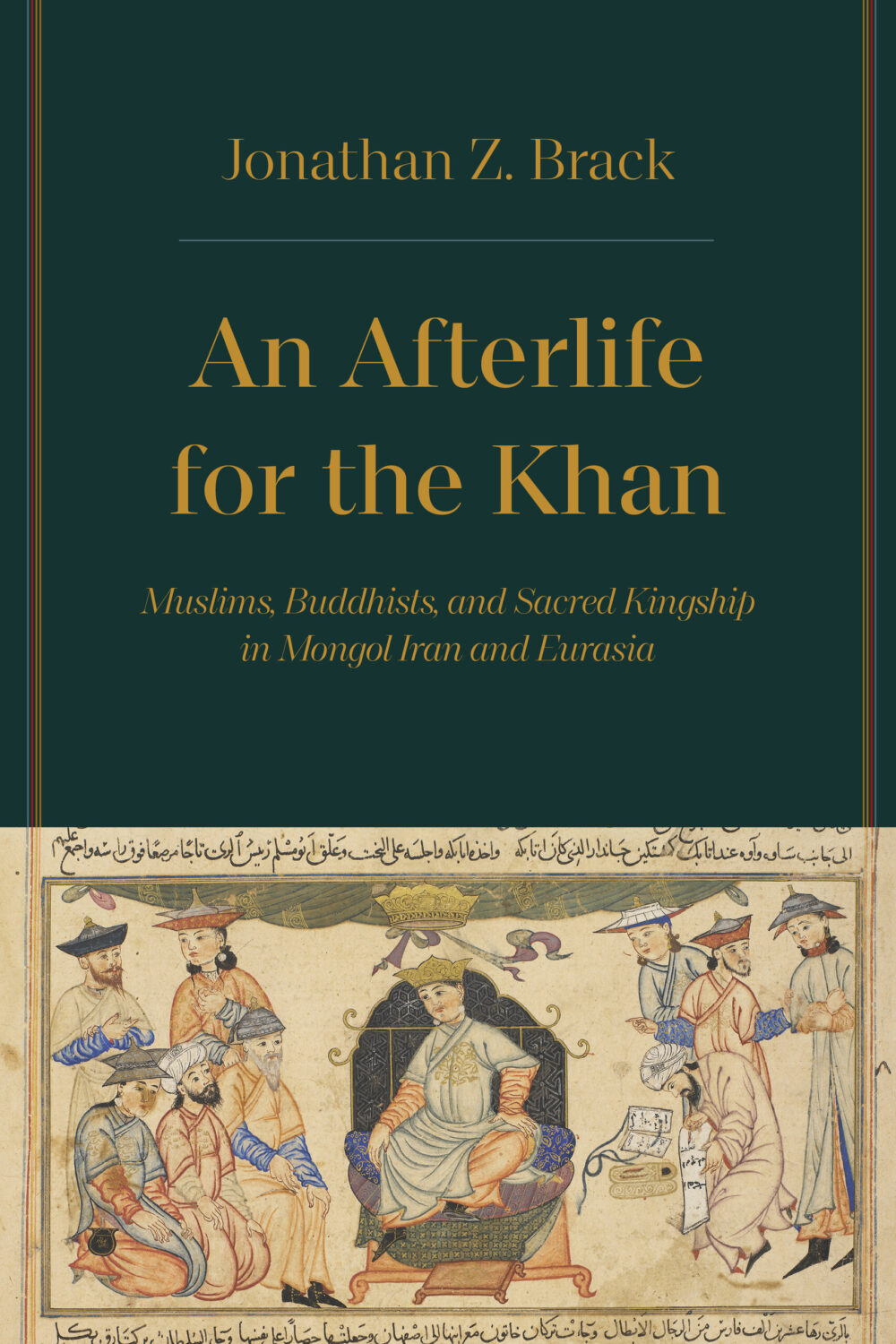
In 1254, after a long and anxious wait at the Mongol Empire’s capital of Qaraqorum, the Flemish friar and missionary William of Rubruck (ca. 1220–ca. 1293), finally got his wish to preach in person to the Mongol Qa’an Möngke (r. 1251–59). Before meeting the emperor, however, there was one final obstacle to overcome: outperforming his Muslim and Buddhist contenders in an interreligious debate. This multilateral court disputation was the first documented debate of its kind that included Christians (both Catholics and Nestorians), Muslims, and Buddhists. For William and for the Catholic Church more broadly, the encounter with Buddhism was entirely new. For the Muslim debaters, it was by no means the first interaction with Buddhists: Islam and Buddhism had a prolonged history of religious, intellectual, and commercial encounters and exchanges, but one that was fraught with friction and rivalry as well. From our historical hindsight, however, this 1254 exchange in Mongolia can be seen as marking a new page in Muslim-Buddhist relations, not in the eastern territories of the Mongol Empire (China and Mongolia), but rather further west, at the other end of Mongol-dominated Eurasia, in Iran, which would shortly become the seat of the independent Mongol state of the Ilkhanate (1260–1335). Established by Chinggis Khan’s (r. 1206–27) grandson, Hülegü (r. 1260–65) in Iran, Iraq, and Azerbaijan—areas with a predominantly Muslim population—the Ilkhanate would become a destination for Buddhist monks from across Eurasia. These Buddhist experts would travel great distances to spread the Dharma and take advantage of the opportunities of patronage that the new Mongol rulers of Iran, the Ilkhans, offered. In the late 1280s, some thirty years after William’s visit to Qaraqorum, the Ilkhanid court in Iran experienced the height of interfaith exchanges. Learned monks gathered at the court of Buddhist enthusiast Ilkhan Arghun (r. 1284–91), and debated with Muslims and possibly others. It is against this backdrop that this book’s protagonist, Rashid al-Din (d. 1318), then still a court physician and an up-and-coming bureaucrat, found himself embroiled in a disputation with one of the Mongol king’s cherished monks. Rashid al-Din describes his exchange in a treatise written nearly two decades after the event, and under very different circumstances. He was at the height of his tenure as vizier, the most powerful civil servant in the Ilkhanid state, and Islam had already prevailed over Buddhism to become the official religion of the Ilkhanid rulers. Rashid al-Din does not name his contender and refers to him only as a bakhshī, Buddhist priest. The Buddhist asked Rashid al-Din the following question in Arghun’s presence: “What came first, the bird or the egg?” Rashid al-Din notes that this was a “famous fable” among the Buddhists. The monk indeed evoked a well-known Buddhist enigma that appeared in the “Questions of Mellinda,” a Pali dialogue between a Buddhist sage and the Greek king Menander of Bactria, probably composed between 150 BC and 100 AD. Rashid al-Din writes that while the monk believed that he would fail to solve the riddle, he was confounded by it for only a moment before God divulged to him the answer. He does not tell us what answer he ended up providing nor whether the Buddhist offered a rebuttal. Instead, Rashid al-Din downplays his Buddhist rival, dismissing the monk as ignorant of the true meaning of his own riddle. Yet he does not disregard the question itself as a catalyst of a theological inquiry. Rashid al-Din is “inspired” by it, and in the remainder of this treatise, he proceeds to contemplate Islamic philosophical points regarding issues such as the createdness of Adam and the divine source of primordial human knowledge. Rashid al-Din’s account of this debate certainly differs from the Flemish friar William’s report to the Pope about his multilateral debate at Möngke’s court in Mongolia. For one, William provides more detail about how the debate with the Chinese Buddhist representative evolved and about the type of arguments that each party employed. We know they debated the existence and unity of God and the cause of evil. The differences between the Persian Muslim’s and the Flemish Christian’s accounts notwithstanding, there are also striking parallels between the two. Both downplay the intellectual fortitude of their Buddhist opponents. And both emphasize their recourse to their own scholastic traditions of rational argumentation to overcome the challenges mounted by their Buddhist contenders, rather than relying on Muslim or Christian scriptures. Whereas both might have underscored cultural and linguistic disparities, whether explicitly or implicitly, their accounts ultimately give the impression of a common vocabulary—that of rational argumentation. Scholastic disputation indeed emerges from their reports as a shared currency enabling a certain exchange of ideas. Yet how far did such exchanges go? William’s account suggests that the debates went beyond the exchange of riddles and parables and could include hefty theological arguments. It also gives the impression, however, that the two parties remained ingrained in their own scholastic traditions. Rashid al-Din’s account, on the other hand, leaves more to the imagination. He gives the impression that few meaningful intellectual exchanges between Muslims and Buddhists took place under Mongol rule in Iran. And this impression is amplified by the general dearth of Muslim Ilkhanid descriptions of such exchanges, as well as the complete absence of any Buddhist textual documentation from the Ilkhanate. Yet it is hard to reconcile this impression with what we know of the prevalence of Buddhism and the flourishing of the Buddhists during the Ilkhanate’s first four decades. As this book shows, a thorough examination of the Ilkhanid vizier Rashid al-Din’s extensive theological works demonstrates that Buddhist, Muslim, and Mongol exchanges have left deeper and more consequential impressions than the silence of contemporaneous Muslim authors implies. Muslims at the court were exposed to and made a considerable effort to respond to Buddhist concepts. These might not have been the finer points of the Dharma, but rather, as we will see, Buddhist methods of engaging with political authorities and conversion strategies. An Afterlife for the Khan explores the Ilkhanid court of the late thirteenth and early fourteenth century as an arena of interreligious exchange and rivalry, where the conceptual differences and equivalences between various Eurasian structures of power and sacrality—Islamic, Buddhist, and Mongol—were debated and deployed. It unearths the various subtle ways in which cultural and religious agents employed their religious and political resources to accommodate, translate, manipulate, and subvert the symbols and structures of the religious Other. Focusing on the theological-philosophical works of a Persian Muslim vizier active in the intellectual scene of the Ilkhanid court at the turn of the fourteenth century, An Afterlife for the Khan shows how the Persian-Muslim experience of Buddhism and its system of karmic-righteous kingship, on the one hand, and the accommodation of and resistance to the Mongol model of divinized kingship, on the other, generated and informed processes of creative experimentation in new modes of Islamic sacral kingship. Buddhists marketed concepts and models of karmic kingship as means of translating, reaffirming, and converting their Chinggisid patrons’ claims to deified kingship. The Islamic challenge entailed, therefore, not only winning their Ilkhanid patrons to the Muslim faith or cementing their commitment to Islam in the case of the Mongols who had already converted, but also uprooting their previous Buddhist education. Jewish convert, Persian vizier, historian, and Muslim theologian Rashid al-Din stood at the center of the Muslim conversion efforts. In his theological and historical writings, invigorated by the lively atmosphere of an intellectually rigorous and religiously competitive royal court, Rashid al-Din not only engaged in the translation and assimilation of Buddhist narratives and concepts, or painstakingly attempted to dispute and disprove the Buddhist doctrine of reincarnation. He was also inspired and informed by his Buddhist competitors and their strategies of conversion and domestication of the Chinggisid rulers. To this end, he experimented with a model of Mongol-Muslim kingship that paralleled Buddhism’s structure of karmic-righteous rulership. This book argues that Rashid al-Din’s Buddhist- and Mongol-informed experimentation in Islamic theological discourses formed a crucial, intermediate stage between the two more dominant frameworks for legitimizing Islamic, sultanic authority—the pre-Mongol phase of a restrictive, legalistic, and genealogical-based caliphal structure, and the post-Mongol independent model of universal and sacral Islamic rulership buttressed by saintly and messianic discourses. The Mongol occupation of Baghdad and the consequent elimination of the ʿAbbasid caliphate in 1258 represented a dramatic event that shattered the religiopolitical foundation of the Sunni majority’s world. This cataclysm inaugurated an era of unprecedented constitutional crisis that exacerbated after the collapse of the Ilkhanid state in 1335. In subsequent centuries, new strategies for legitimizing sultanic authority were formulated to resolve this crisis. To that end, Muslim intellectuals increasingly made use of and elaborated on an innovative, comprehensive, and compelling vocabulary of sovereignty that effectively shifted the discourse of sultanic legitimacy away from the pre-Mongol restrictive genealogical and juridical parameters of Sunni authority. In its place, there emerged a new discursive realm of universal Islamic kingship that referenced and interlinked a variety of intellectual fields—from philosophy and theology to astrology, mysticism, and the occult. Rashid al-Din’s works marked the end of caliphal authority and the beginning of this new age of Islamic authority. In the remainder of this introduction, we first explore the central theoretical foundation of this research into sacred kingship and the strategies of religious agents with the Mongol rulers.
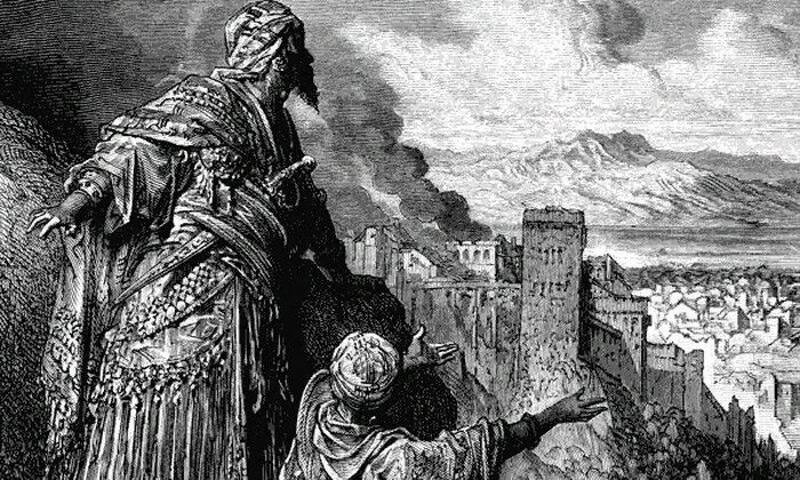
The Assassins were a special factor in the external relations of the Kingdom of Jerusalem in northern Syria. They were members of an ismāʿīlī Shiite sect known today as Nizārīya, which, under its Persian founder and leader Ḥasan-i Ṣabbāḥ, sought to spark a religious revolution in the Sunni ʿAbbāsid caliphate of Baghdad in the years 1078-1094 in the name of the Fāṭimid caliph al-Mustanṣir. After al-Mustanṣir, who had been revered as the only legitimate imam with a claim to spiritual and temporal supremacy over the entire Muslim world, died in 1094 and his rightful successor Nizār was deposed, they broke away from the new leadership in Cairo. In the following decades, the sect’s leaders constructed the legend that a grandson of the deceased imam, represented by them, was hiding in their headquarters, the fortress of Alamūt in north-east Persia, waiting for the appropriate time for his return. Early on, the sect focussed on missionary work (daʿwa) in order to assert its own authority, which gave it a growing following, especially among the rural population, who lived scattered in numerous settlement areas between Persia and northern Syria. However, these converts, who were regarded as heretics, were usually met with rejection by the majority Sunni population, which was reflected at irregular intervals in the form of spontaneous pogroms, but sometimes also those organised by the respective ruling elite. As the sect had only a few regular armed forces, which were mainly deployed as garrisons of the fortresses, it was unable to defend itself against the persecution by conventional military means, which is why its leaders mostly sought to reach an understanding with the political and religious authorities of the Sunni-dominated ruling complexes. If this failed, however, they used targeted assassinations as a means of exerting pressure to strengthen their negotiating position. They trained elite fighters (fidāʾiyyūn) for this task, promising them eternal rewards in paradise, and smuggled them into the target’s environment as confidants. If these were high dignitaries such as the caliphs and viziers of Cairo or Baghdad, the assassins sometimes had to spend several years gaining their trust before they finally received the order to attack from the imam. The possibility of a surprise attack, combined with their religious determination and intensive training in the use of weapons, gave them a high success rate. This and the widespread effect that the sudden assassination of a publicly known leading figure usually had, caused fear of the sect to grow, which contributed significantly to ensuring its continued existence. The assassins were soon surrounded by an aura of invincibility and deadlyness, which became increasingly legendary over time. They were said to carry out their attacks under the influence of hashish (Arabic ḥašīš), especially in the later Latin-European reception, which was strongly influenced by Marco Polo’s travelogue (ca. 1254-1324), and their Arabic name was attributed to this in various variants of the word ḥašīšīya (singular ḥašīšī). This assumption prevailed in the Western world over the following centuries and is still sometimes found in popular culture today, but according to current research it is probably unfounded. In fact, the effect of hashish would have been extremely counterproductive for the execution of the attacks, as they required the utmost concentration, readiness to react and the ability to realistically assess the situation. The Arabic terms do not necessarily have to be attributed to the name of the drug either, but can also refer to a metaphorical term used in a derogatory sense as “rabble of the lower class” or “unbelieving outsiders of society”.
The missionary work in northern Syria, commissioned from Persia, had already begun at the turn of the 12th century and had fallen on fertile ground due to the social and political upheavals caused by the first crusades, the territorial fragmentation of the Muslim world into individual dominions and the resulting constant military conflicts. Nevertheless, despite intensive attempts, it was only in the years after 1132 that the sect succeeded in gaining permanent control over several fortresses and the area in between on the western Syrian mountain massif of Ǧabal Bahrāʾ (today also known as Ǧibāl al-Anṣārīya) north of the Lebanon Mountains, the headquarters of which was the castle of Maṣyāf on the south-eastern edge, conquered in 1141. With reference to this, the later Latin chroniclers in particular often referred to the leader of the sect as “Old Man of the Mountain” (Vetus de Montanis), while the early sources only wrote of senex or vetulus and thus literally translated the Arabic title of honour šaiḫ, which is still in use today. The exact extent of their territory and influence as well as the size of their followers can hardly be determined, but William of Tyre attributed ten fortresses and more than 60,000 believers to them in the 1180s in a quite realistic estimate. The growth of their settlement area took place in the immediate neighbourhood of the northern crusader states of Antioch and Tripoli and partly spilled over into them, but relations with the Franks initially remained friendly. Most recently, in 1148, Prince Raimund of Antioch (1136-1149) and the Assassin leader ʿAlī b. Wafāʾ had formed an alliance against Nūr ad-Dīn and died together in the Battle of Ināb in June of the following year. It was only when Count Raimund II of Tripoli transferred the border region around Tortosa to the Knights Templar in 1152 that violent border disputes apparently arose, as a result of which the sect had him and two of his companions murdered in the same year as the first known non-Muslims. This was followed by violent pogroms against the sect, similar to the Sunni-dominated societies of the Islamic ruling complexes, but after some time relations normalised again and the Assassins paid the order 2,000 Byzantines annually as compensation for controlling a territory claimed by the order. There is also little information from the following years about the relations between the crusader states and their Nizārītic neighbours, who, after the conquest of Damascus in 1154, were among the last Muslim actors independent of the Zengīds in the immediate vicinity. Although troops from all three crusader states besieged the ruins of Šaizar occupied by the sect at the end of 1157, the endeavour was as unsuccessful as it was inconsequential.
[…]
According to the chronicler’s account, which should of course be viewed with caution, the Master of the Assassins had made the [aforementioned] renunciation of the “false doctrine” of Islam on his own initiative after he had recognised Christianity as the only true religion by reading the Gospel and had decided to prepare the conversion of his followers to Christianity. In a next step, he sent a trusted follower named Abū ʿAbd Allāh (Boaldelle) as an envoy with a secret message to King Amalrich, whose main concern was the request to cancel the “tribute” of 2,000 gold pieces imposed by the Knights Templar for the settlement areas of the Assassins. In return, William continued, he offered to have himself and his followers baptised and converted to Christianity for good. The king was naturally delighted at the prospect of new Christian allies and immediately agreed to pay the annual payments to the Order of Knights from his own income. After extensive talks, he sent the messenger back north with his own envoy as personal escort to finalise the negotiations with Sinān. When the duo had already travelled beyond Tripoli and were about to cross into Assassin territory, they were suddenly ambushed by Templars from nearby Tortosa. They immediately attacked and killed the Assassin messenger regardless of his royal commission and escort. When the king became aware of this, outraged by the act, which he also considered a personal insult, he summoned the Haute Cour to discuss the necessary sanctions. It was agreed that this open sabotage of an imperial affair could not go unpunished, as it had violated the royal auctoritas, discredited the fides and constantia of Christianity and lost the growth of the Church, which had already seemed certain. Two envoys, Soherius of Memedeo and Gottschalk of Torhout, were now sent to the Master of the Order, Odo of St Amand in Sidon, to demand the extradition of the main culprit, allegedly a one-eyed knight named Walter of Maisnil (Mesnil). The master refused, citing the fact that the order was subject to papal jurisdiction alone, and informed the king that he had already fined the culprit and would send him to the papal curia for further judgement. King Amalrich then travelled to the city in person, had the wanted man forcibly removed from the Templar quarters and imprisoned in Tyre. He sent a new envoy to the Master of the Assassins to protest his regret and innocence, which was supposedly believed. However, no further progress was made either in the negotiations with the sect or in the proceedings against the Templars, against whom, according to the chronicler, he planned to take extensive action, as the king fell seriously ill shortly afterwards and died in July 1174.