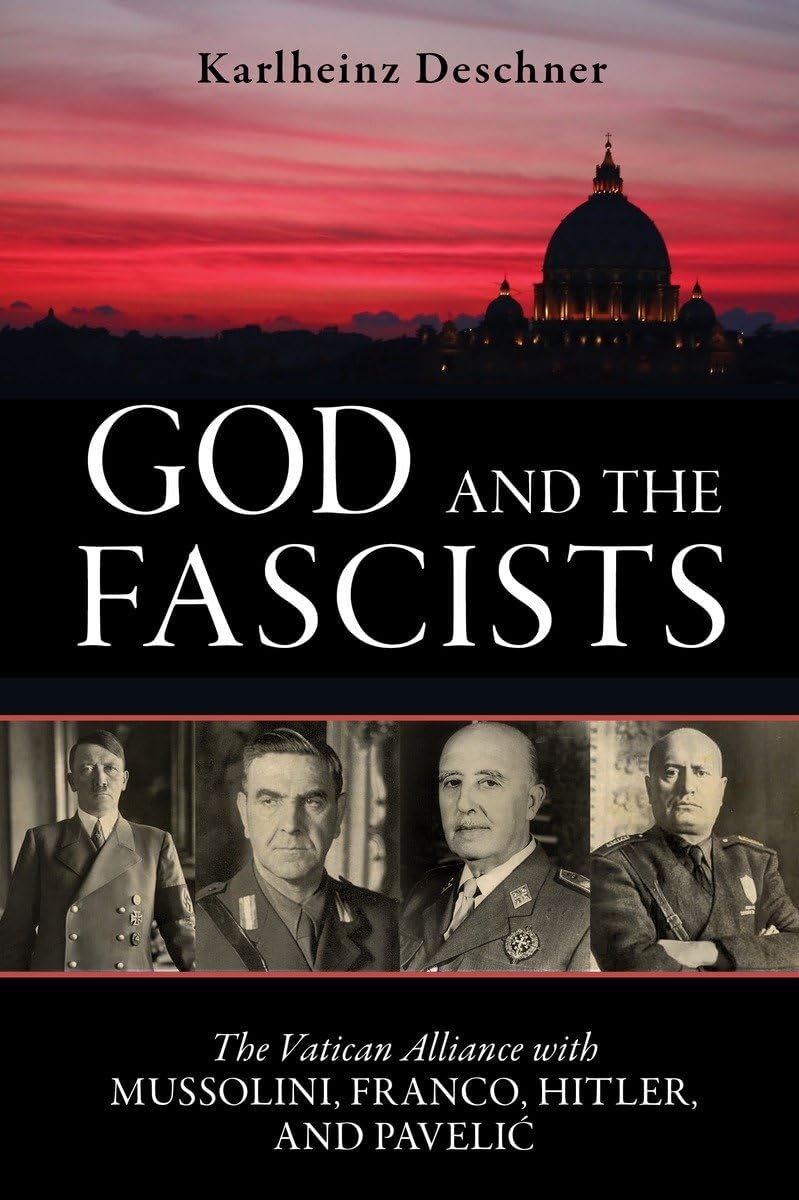
But slander from a church that not only persecuted and massacred millions in the Middle Ages but “repeatedly” and “most insistently” supported probably the greatest criminal of all time in the twentieth century; which in 1933 “would not withdraw the powers of the Church from him at any price,” but on the contrary, wanted to procure everyone for his “great development work,” which in 1935 “strictly [rejected] any action or position taken against the state by its members” and also promised “to support the ruler of the German Reich … with all means necessary” in 1936, which, one year before the war broke out, accompanied Hitler’s “work for the future with their highest blessings.” And, when the war started, the church ordered the Catholic soldiers “to do their duty out of obedience to the Führer and be prepared to sacrifice their entire person,” which followed his invasion of the Soviet Union in 1941 “with satisfaction” and affirmed: “We have repeatedly[!], and in the summer pastoral letter, called upon our believers to fulfill their duty with loyalty, to stand firm courageously, work in willingness to sacrifice and fight with all their might[!] in the service of our people in the most serious times of war,” only to condemn Hitler and the Nazis as soon as they collapsed. Well, I consider slander by a church like this an honor.
God and the Fascist, Karlheinz Deschner
Tag: Religion
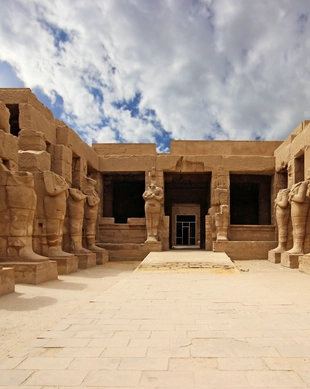
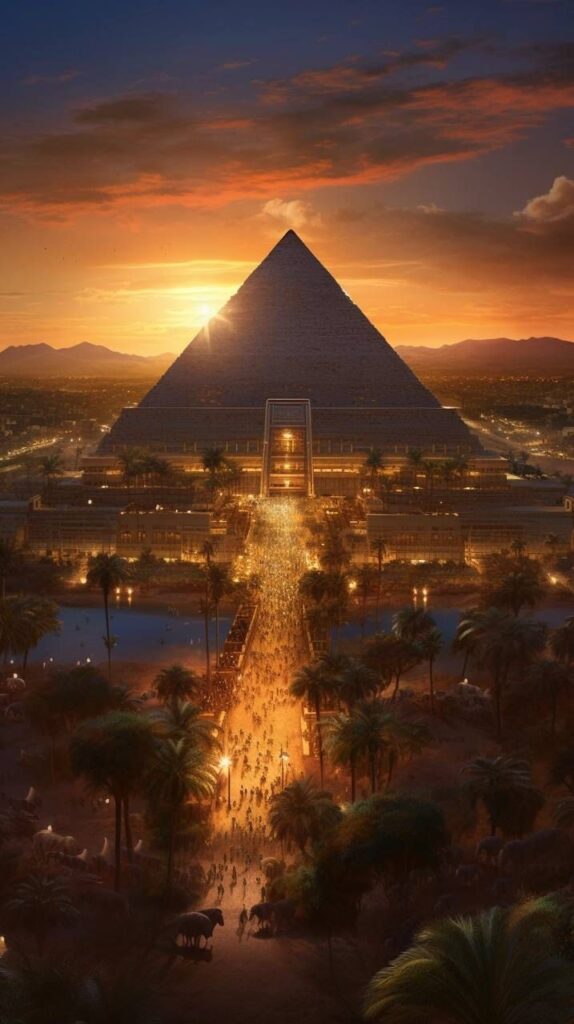
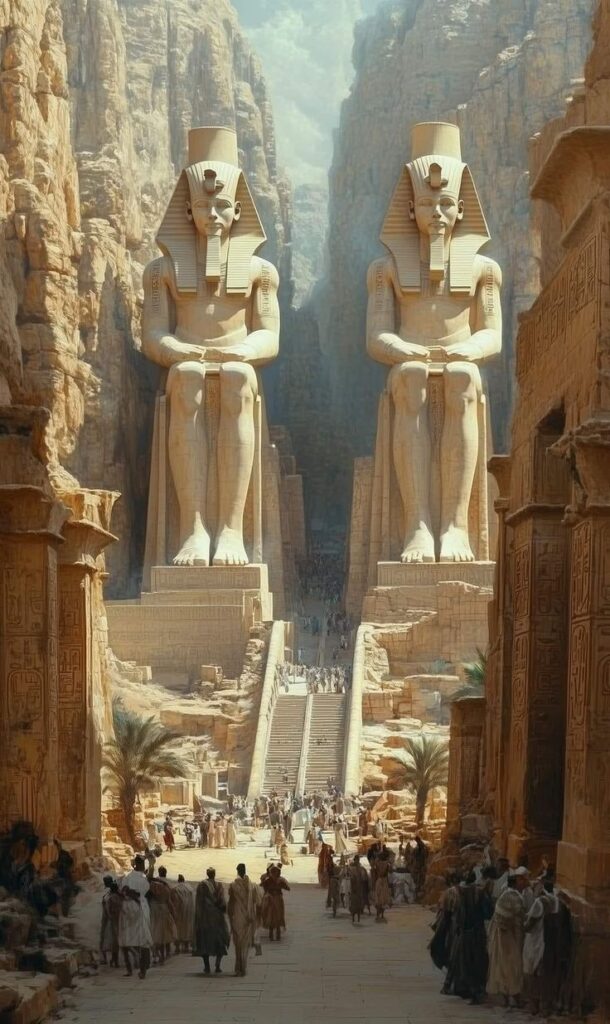
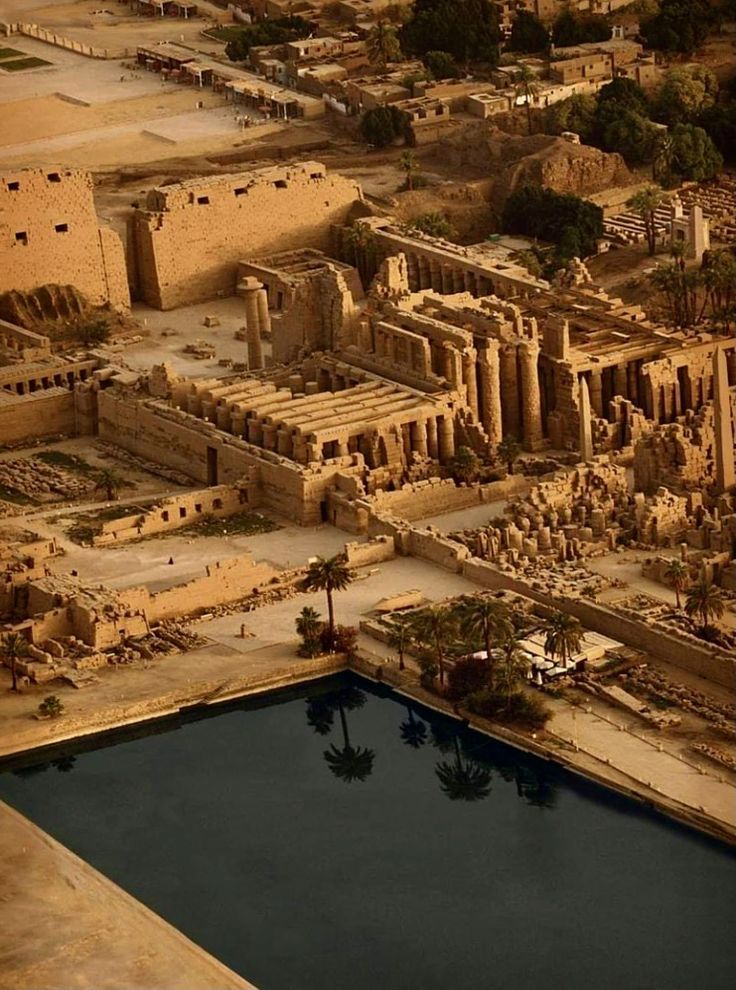
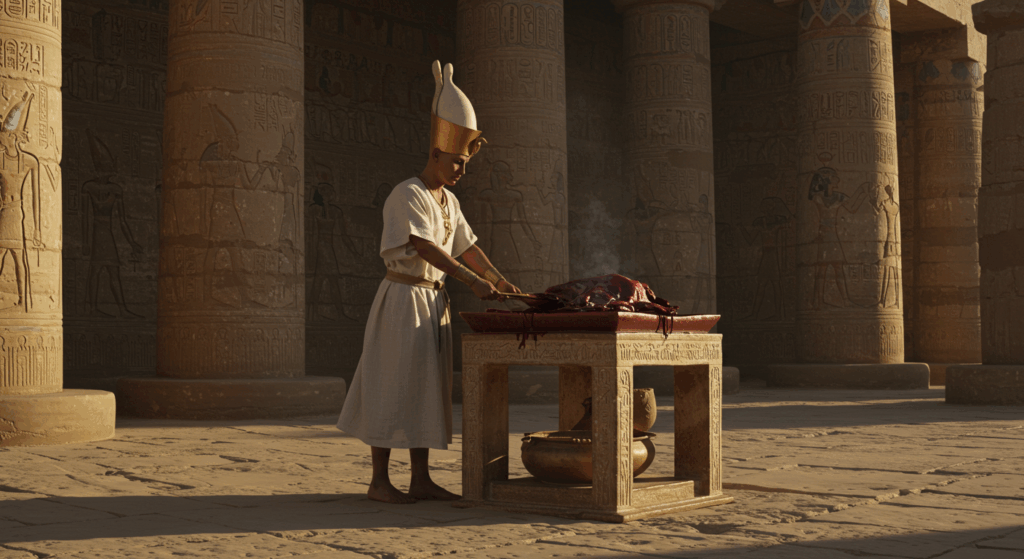
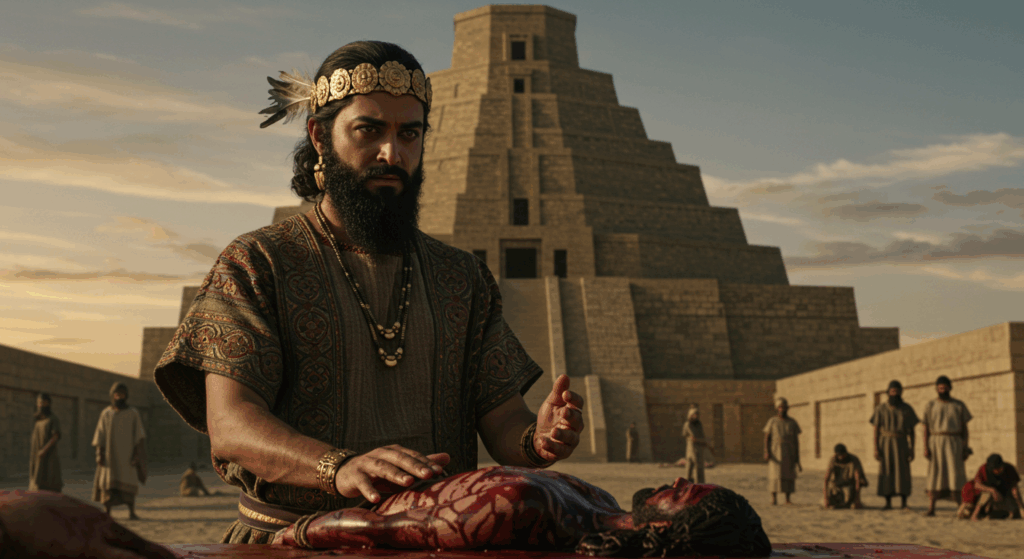
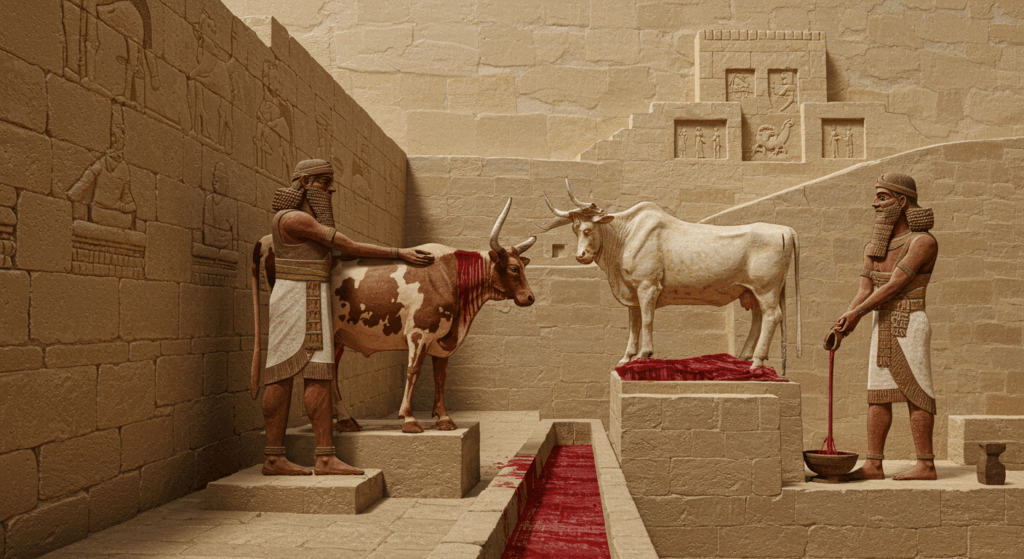
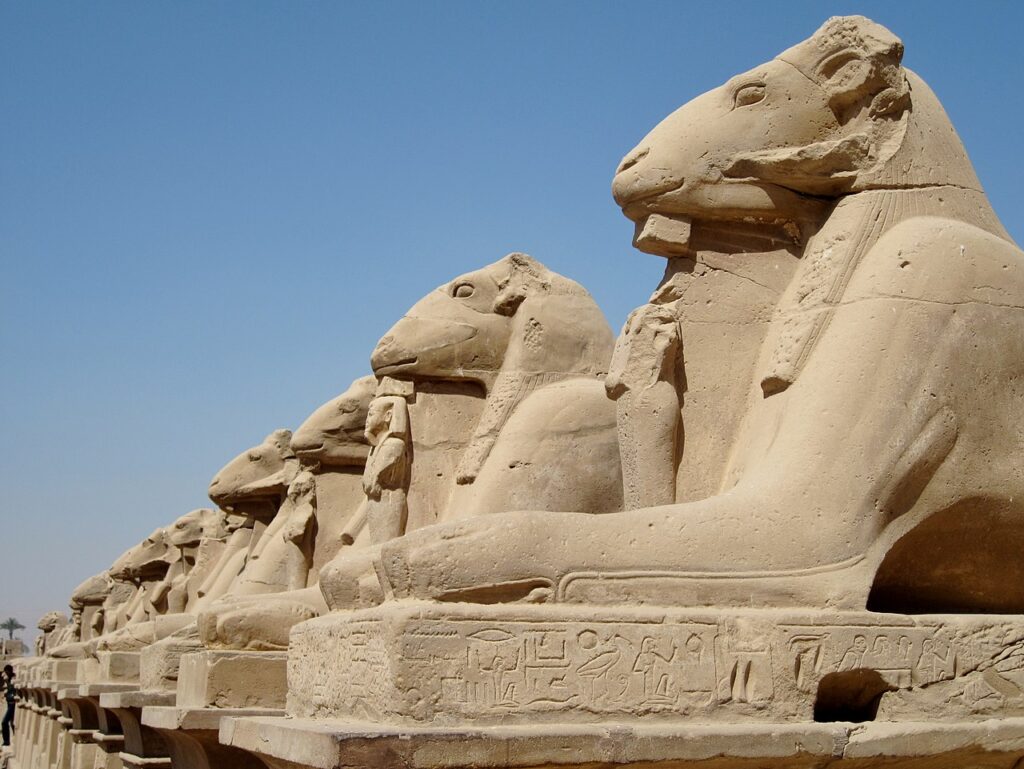
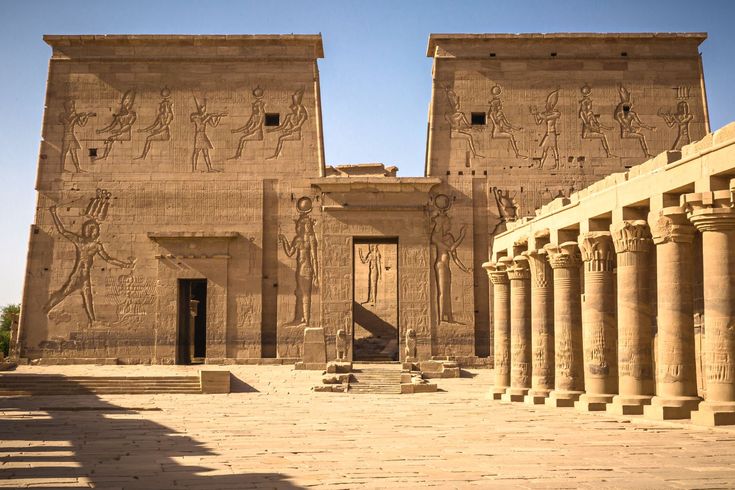
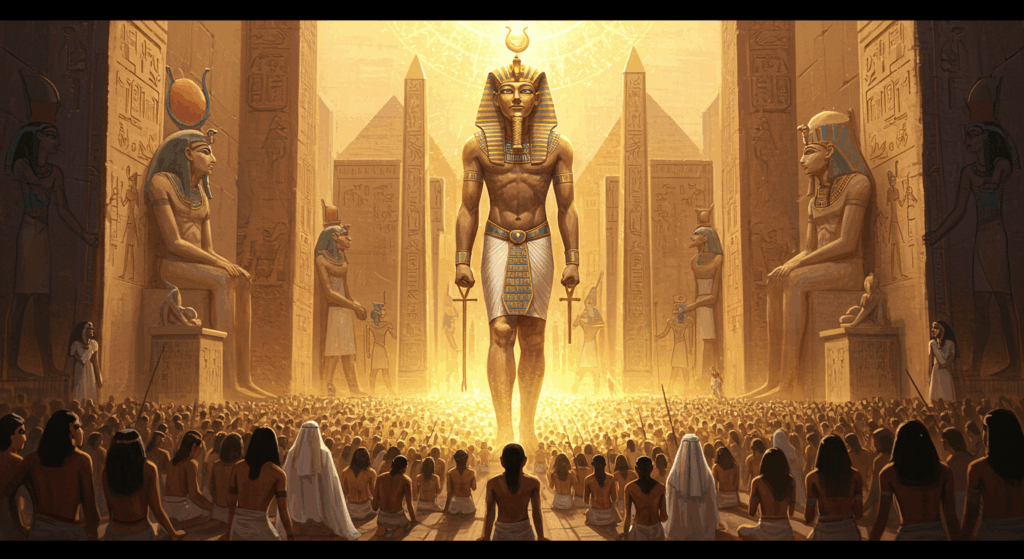
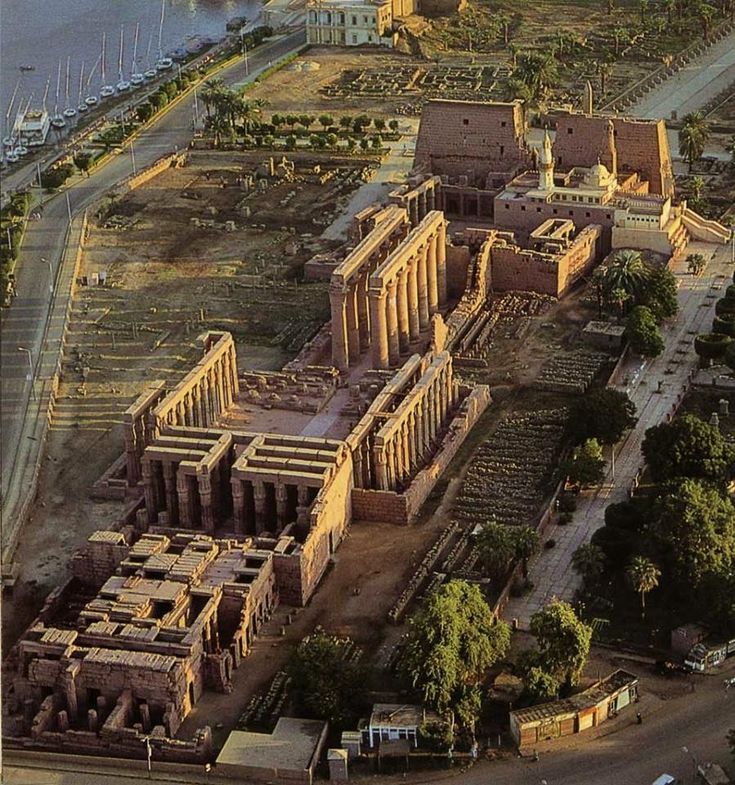
T’was in Karnak
Poem by Rainer Maria Rilke from the cycle “Aus dem Nachlass des Grafen C.W.” or Sämtliche Werke Band 2 Nr. VII. Translated with Copilot AI.
Never did a book reveal such truths,
Why seek a name? It matters not;
The boundless found a shape and form
In sacrifice’s sacred knot.
Oh see, what is possession’s worth
If it knows not to offer its all?
Things pass away. Aid them in passing,
Lest life from a hidden crack should fall
Forever, be the giver, not the taker.
The mule, the cow—all press their way
To where the king’s image, like a child,
Is sated, smiles, and softly lays.
His temple breathes unceasing calm,
He takes and takes, yet grants reprieve,
So gentle even, the princess’s hand
Holds the papyrus bloom,
but does not cleave.
Here, sacrifice’s paths are cut,
The Sunday rises, ungrasped by weeks.
Man and beast drag gains aside,
Unseen by gods, as profit speaks.
Though hard, commerce bends to will,
Earth cheapened, tamed by practiced skill,
But one who pays the ultimate price,
Surrenders all—they too are sacrificed.


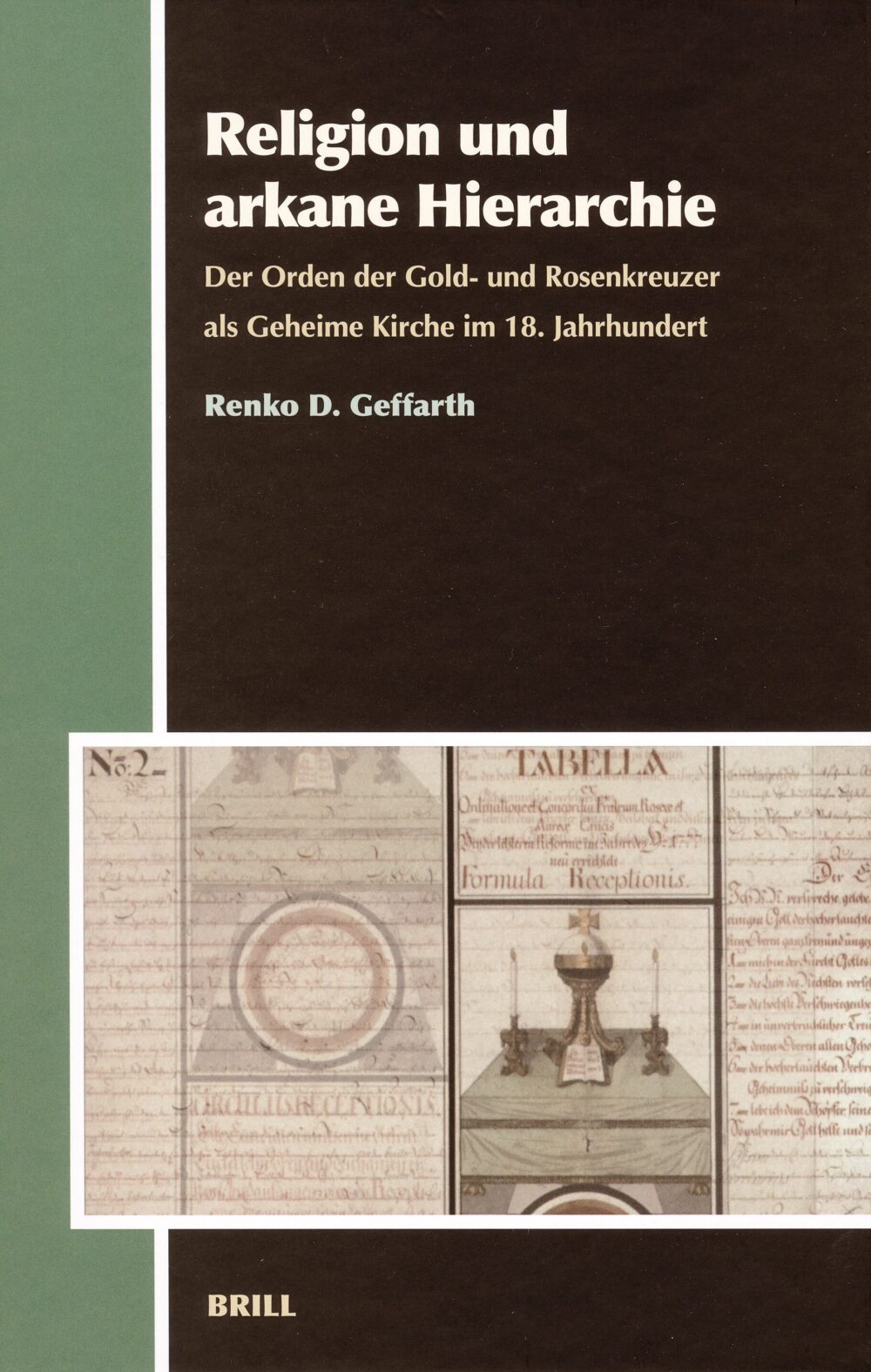
Religion and arcane Hierarchy
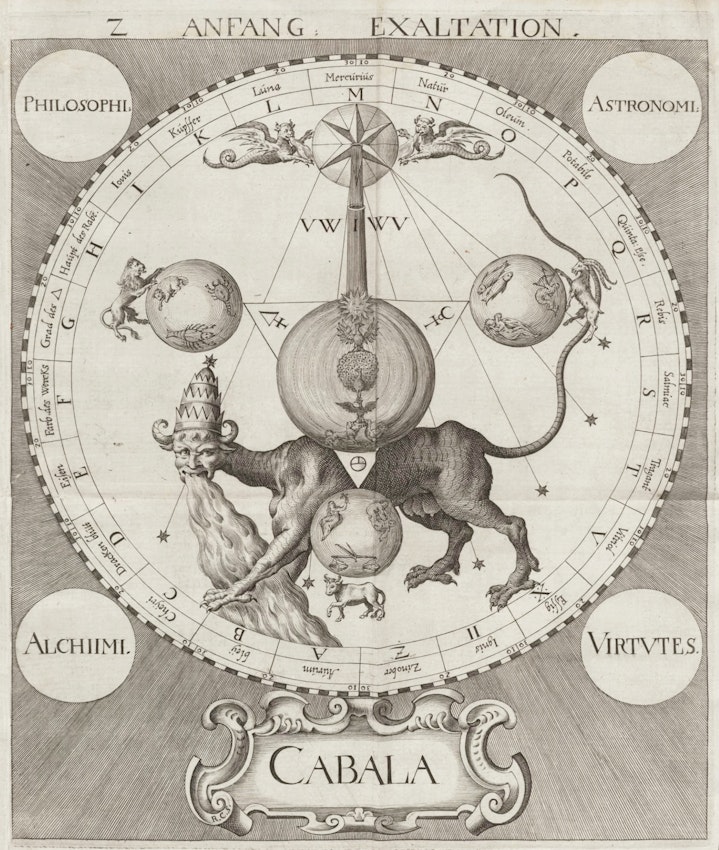
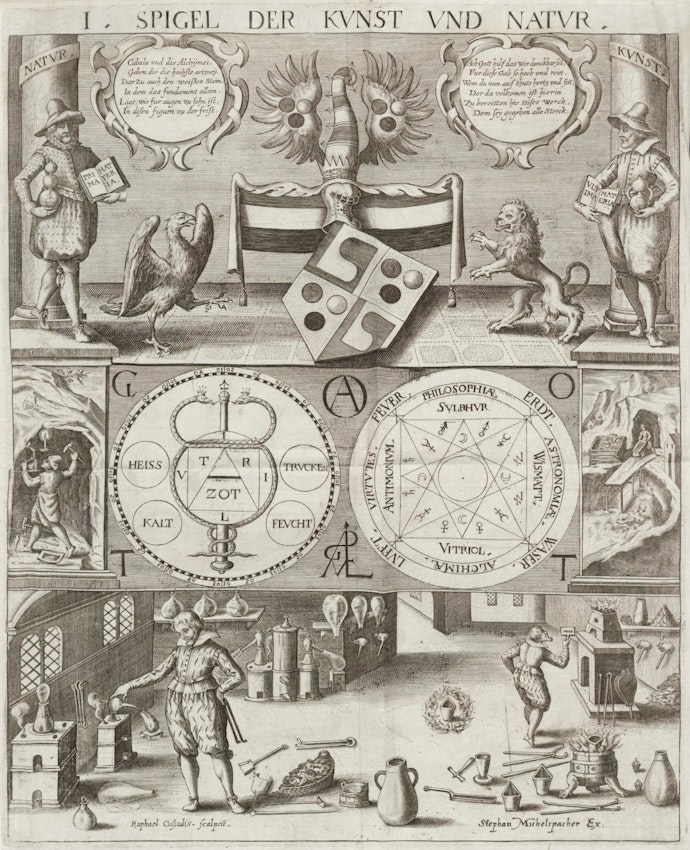
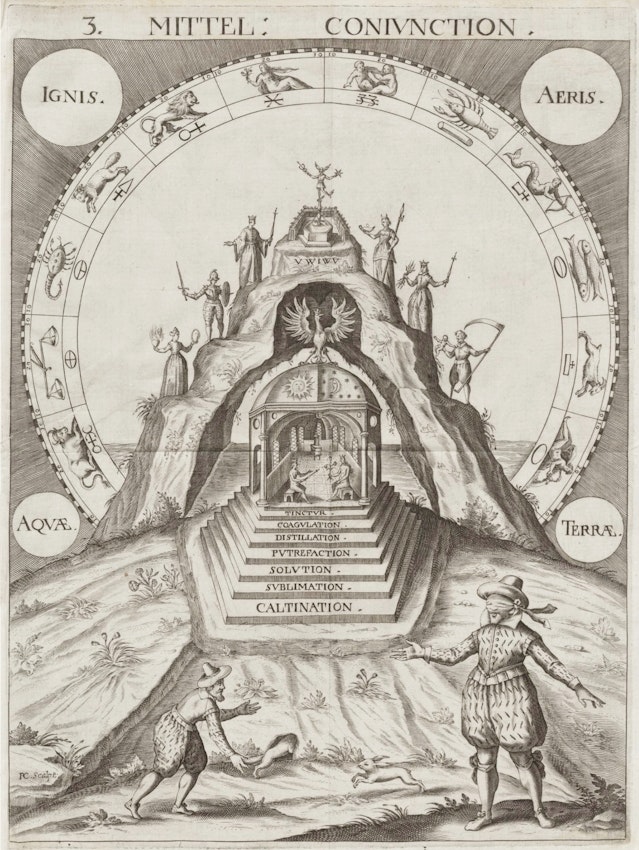
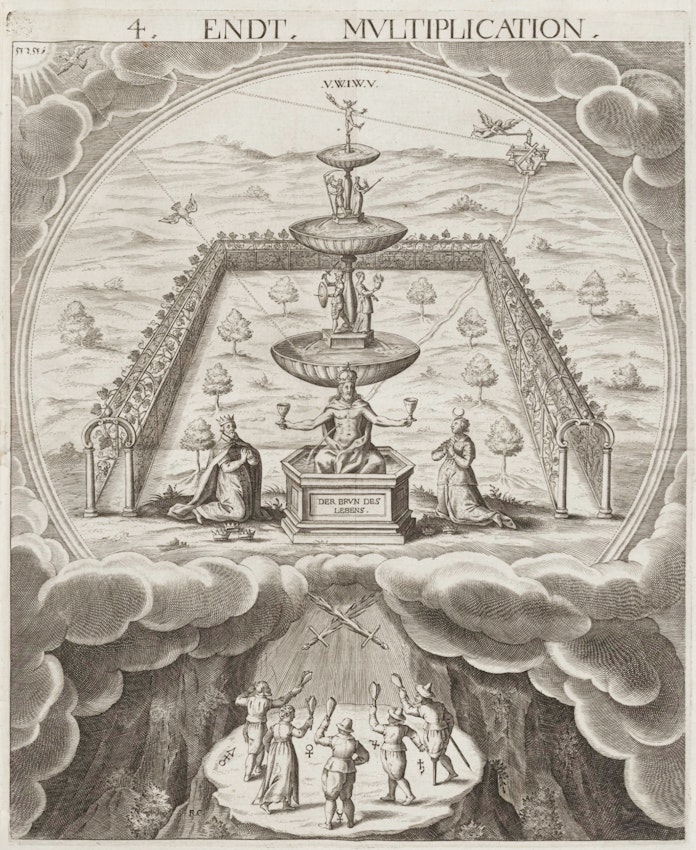
The order of the Gold- and Rosicrucians as a secret church in the 18th century
Renko D. Geffarth
Western esotericism began in the Italian Renaissance in the second half of the 15th century with the rediscovery of ancient writings, such as the late antique Corpus Hermeticum, whose originator was the mythical priestly figure of Hermes Trismegistos, and its translation into Latin by the philosopher Marsilio Ficino. […]
The reception of the Kabbalah, Platonism and Hermeticism in the German-speaking world ultimately gave rise to the early modern concept of magic of Heinrich Cornelius Agrippa von Nettesheim and subsequently, with the integration of alchemy, the Paracelsian natural philosophy, the theosophy of Jakob Böhme and the panosophy of the Rosicrucian writings of the 17th century. All of this was always in interplay and conflict with Christianity and its denominations, which also persecuted such heterodox currents as heresy.[…]
Schlögl also emphasizes the enlightened character of the esoteric secret societies, as they represented an “alternative to the salvation economy of the Christian churches” with their efforts to redeem ‘creation’ in this world and therefore accommodated the “self-confidence of people at the end of the 18th century”.[…]
In an overview essay on the Illuminati Order and the Gold and Rosicrucians in 1993, the Munich historian and professor Ludwig Hammermayer once again emphasized the contrast between the ‘radical Enlightenment’ Illuminati and the ‘theocratic’ Rosicrucians.[…]
Obviously challenging areas of social and cultural reform were the confessional and associated political tensions in the empire in the 16th century, the role of religion in culture and society and, last but not least, the perceived lack of understanding of ‘science’. With the help of the secret brotherhood of the Rosicrucians, these three core issues were now to be subjected to a renewal that followed a uniform ‘world view’. The Rosicrucian manifestos and the discourse that took place in the years following their first publication were thus not only the mediators of an early modern esoteric tradition that drew on the physician and hermeticist Theophrastus Bombastus von Hohenheim, known as Paracelsus (1493- 1541), and the hermeticism of the Renaissance, but also an expression of the perception of the crisis nature of the early 17th century.[…]
These first years after the publication of the Manifestos are considered the period of the ‘older’ Rosicrucians, followed by a ‘middle’ period resulting from the translation of the writings into other European languages and their reception in other countries, especially in England; the beginning of this second period is generally placed around the middle of the 17th century and its duration is extended into the early 18th century.For the ‘middle Rosicrucians’, there is initial speculation about actually existing brotherhoods or even just circles of people who considered or described themselves as Rosicrucians; for example, Gottfried Wilhelm Leibniz is said to have been a member of a circle of alchemists and Rosicrucians. However, it is still true for this phase of ‘Rosicrucianism’ that a real society, an order comparable to that of the late 18th century, very probably did not exist.[…]
The history of the development of Freemasonry presented in the following section does, however, show influences from the reception of Rosicrucian writings in 17th century England, which were passed on via Elias Ashmole (1617-1692), a member of the Royal Society founded in 1660 and one of the early Freemasons. The chronological order chosen in this study, ‘Older Rosicrucians’ – Freemasons – Gold and Rosicrucians, is therefore based on the well-founded assumption that there was a connection in terms of content between the Rosicrucian manifestos and early Freemasonry, just as there was a structural connection between 18th century Freemasonry and the Order of the Gold and Rosicrucians.[…]
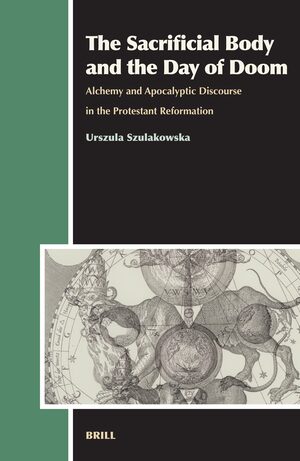
The Sacrificial Body and the Day of Doom
Alchemy and Apocalyptic Discourse in the Protestant Reformation
Urszula Szulakowska
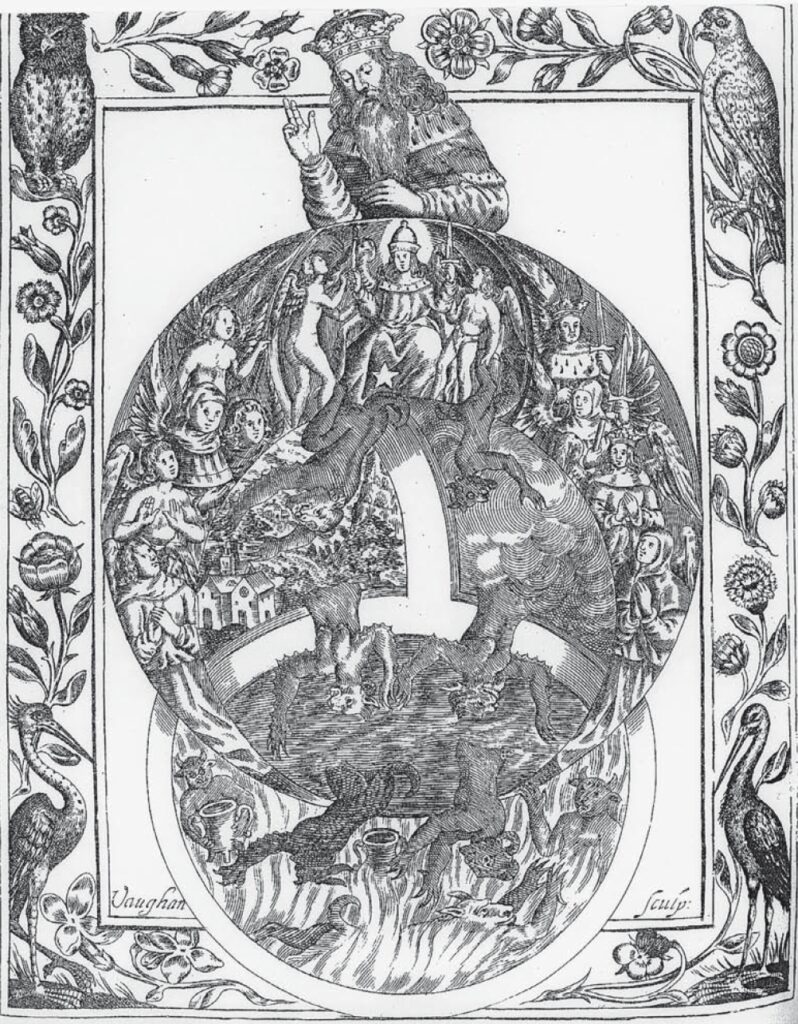
It was Luther who first identified the Papacy with Antichrist and, on this basis, Lutheran artists had crowned the head of the Whore of Babylon with the papal tiara, as in the Wittenberg Bible of 1522 “(Revelation 17: 1–7). Furthermore, they equated the Pope with the Beast from the Bottomless Pit (Revelation 11: 7). The standard apocalyptic repertoire was created in Luther’s immediate social circle by Lucas Cranach in his woodcuts for the Passional Christi und Antichristi (1521) and for Luther’s Septembertestament (1522). Despite the international and historical prestige of Dürer’s apocalyptic engravings (1498), which were copied in the Wittenberg Bible (1522), later Protestant iconographydid not develop on his model, but on that of Cranach.[…]
Martyrdom was believed to resource the Church with the spiritual wealth of divine grace, the foundation for its future development on earth.[…]
According to this doctrine, the flesh was the ground of human salvation, its torment a necessity, whether in life as a martyr for Christ, or after death in the state of purgation.[…]
In medieval doctrine it was the Church alone that could authorise the survival of the subject (that is, the body) by ensuring that the soul and its temporary somatic body went either to Purgatory, or (infrequently) directly to heaven through the grace of the Church’s sacraments.[…]
Some Paracelsian alchemists, especially Heinrich Khunrath (ca. 1560–1605) and Stefan Michelspacher (active ca. 1615–23), were objects of persecution on the part of both Lutheran and Catholic authorities. Khunrath was an alchemist from Saxony, the heartland of the Reformation, but his theological stance was characteristic of the second generation of Protestants who felt that Luther’s work had been left incomplete and that another religious reform was essential.[…]
Dissenters from the established Protestant Churches were important precursors of a secular society, tolerant of religious divisions, in which Church and state were separated. In characterising these dissidents,Séguenny has adopted a concept from the philosopher Leszek Kolakowski, that of “religion without a Church”. I would add that a little known aspect of the history of secularism is the role of Paracelsian theosophy in creating a heterogeneous society supporting noncompliant religious views.[…]

Historians such as Frances Yates in her investigation of the “Rosicrucian Enlightenment,” as well as Joscelyn Godwin in his analysis of the “Theosophical Enlightenment” have established the integral relation between esotericism and proto-democratic views. They have demonstrated the manner in which the Rosicrucians, or the eighteenth century “Illuminati,” characterised themselves as forerunners of enlightened thinking in their development of the intellectual traditions of classical humanism.[…]
Historians of Renaissance philosophy, such as Kristeller, have demonstrated that Renaissance Hermeticism also contributed to the emergence of a more individualistic faith. It had been Cosimo de Medici who had requested Marsilio Ficino in 1463 to translate into Latin the newly recovered Corpus Hermeticum. He completed only the first fourteen tractates and it was Lodovico Lazzarelli who translated the rest (tractates XVI–XVIII), publishing them as Diffinitiones Asclepii in Champier’s edition of 1507. This hermetic corpus mostly consisted of second century religious texts written by a variety of pagan groups in the late Hellenistic period. Some of them had been influenced by early Christianity, while others had been inspired by Middle Eastern beliefs. In the early Christian era they had been grouped under the pseudonymous authorship of “Hermes Trismegistus.” As a syncretic merger of diverse Hellenistic theosophical beliefs and practices, Hermetism had appeared in pre-Christian Egypt in the second century. Its sources included the Chaldean oracles, Orphism, the Sibylline prophecies, theogonies that united the Greek pantheon to those of Middle Eastern nations conquered by Alexander, initiatory rites and magical papyri originating in the proliferating cults of the Hellenistic Egypt, some of which had been influenced by concepts drawn from Christian soteriology. Hermetism was, thus, historically distinct from neo-platonism which was a theosophical discourse claiming direct descent from classical Platonic thought. In fact, the diversity of religious ideas in the late Roman Empire had stimulated Plotinus to evolve his own account of a triple-layered cosmology with an accompanying ontology inclined towards mystical experience. Plotinus had no interest whatsoever in magical ritual, but was intent on spiritual illumination for himself and his disciples. […]
In answer to earlier doubts concerning his religious beliefs, Fludd had written the Declaratio Brevis addressed to King James I in 1618–20. The alchemistic appropriation of the Christian sacraments of Baptism and Communion was not welcomed by the ruling Churches. None of them could accept a chemistry that claimed to produce substances equivalent to the body and blood of Christ, administering the same grace of spiritual and physical healing. The miracle of the bread and wine in the mass or Communion service was unique and could never be emulated by chemical means, no matter how devout and prayerful. Moreover, none of the Churches permitted unauthorised laity to perform the sacramental rite which was the prerogative of priests that had been formally appointed by a bishop through a direct apostolic transmission from Christ. Furthermore, if, like Fludd, they introduced kabbalistic angels (chiefly, Metatron) into the alchemical version of the rite, he was considered to be practising the most outrageous demonic magic, as Mersenne asserted. Good or bad purpose was irrelevant: the issue here concerned the question of who should control this powerful miracle. […]
The assertion that an individual human being guided by a purely inner grace could transform their own nature into that of Christ led to a second consequence, namely that the Church, whether Roman or Lutheran, became irrelevant to the work of spiritual salvation. In the organisation of dissident religious groups it was the laity who supplanted the ecclesiastical hierarchy as directors of the inner conscience. They were validating their efforts for independence of Church control by the sayings of Christ concerning the role of the Holy Spirit after his death.[…]
The Christian image of the Son of Man, specifically the one devised by the apostle Paul, was partly a historical inheritance from a pre-Christian Anthropos figure, whose cult had existed in the second century BC in Palestine, Syria and Egypt. Originating in Mesopotamia, this person had been translated to a Judaic context in the apocalyptic texts of Daniel, Ezekiel and Enoch 2.[…]
The image of the “Son of Man” (“Anthropos”) entered Judaism in the second century BC, appearing initially as a nameless, man-like person described in Daniel who subsequently became a messianic character in the account of Enoch. He was an Iranian element that was incorporated into the Jewish account of the creation of Adam. The “Son of Man” or “Anthropos” is a translation of the Hebrew term “bar nasha” which is found in the Synoptic Gospels and in the Hebrew Apocalypses of Daniel and Ezekiel. In the Semitic idiom “bar nasha” was not a first name, simply meaning “one,” or “someone”. It was the Hellenistic Christians who interpreted the term as meaning “the Son of Man” (“Anthropos”), following the Greek translation: “ο υιος του ανθροπον.” The original Jewish “bar nasha” is first encountered in the Book of Daniel 7: 13–14, which was also the first to mention the doctrine of the resurrection of the body. He subsequently re-appeared in the apocryphal Book of Enoch (first century BC) which added new elements to messianic prophecy, by integrating the non-Judaic Son of Man, the story of his concealment by God, his role in the revelation of secrets and his final task as universal Judge. Ezekiel, in turn, developed an eschatological account which prophesied a final conflict at Jerusalem followed by Judgement. The superhuman “Bar Nasha,” as God’s champion, represented the chosen people. Kraeling has, in fact, differentiated between the historical characters of the “Anthropos” and of the “Son of Man” that were fused together in subsequent Christian apocalypticism. As a victorious champion, Anthropos belonged to the history of creation, while the Son of Man “Bar Nasha” was an eschatological type.[…]
It was believed by many prophets and magicians that the Holy Spirit in the Last Days was revealing the concealed secrets of Nature, as Christ had foretold. These were available only to those of the true faith, namely, Lutherans. It is no coincidence that the alchemical resurgence of the late sixteenth century occurred in the Lutheran areas of Europe, particularly in the eastern German states through into Silesia, where there emerged lively groups of Paracelsian alchemists. Luther’s main disciple, the humanist Philip Melanchthon (who was also Reuchlin’s son-in-law) displayed a special interest in alchemy. He also encouraged the use of the new humanistic science of linguistics in order to mine sacred texts for further prophecies.


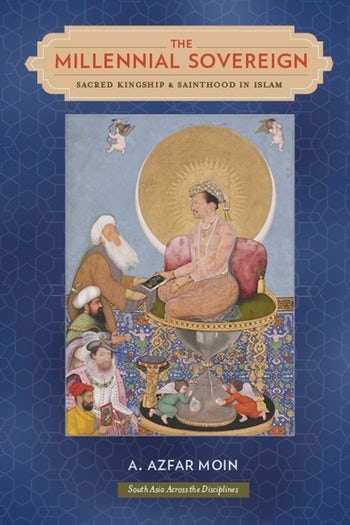
The Millenial Sovereign
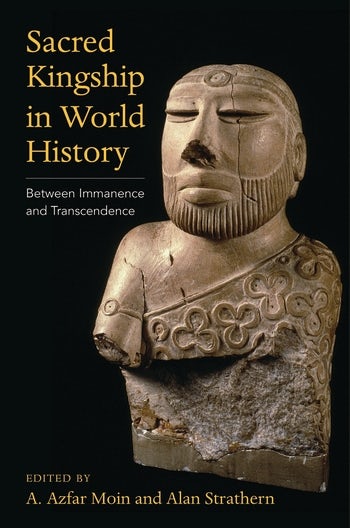
This book brings into dialogue two major fields of scholarship that are rarely studied together: sacred kingship and sainthood in Islam. In doing so, it offers an original perspective on both. In historical terms, the focus here is on the Mughal empire in sixteenth-century India and its antecedents and parallels in Timurid Central Asia and Safavid Iran. These interconnected milieus offer an ideal window to explore and rethink the relationship between Muslim kingship and sainthood. For it was here that Muslim rulers came to express their sovereignty and embody their sacrality in the manner of Sufi saints and holy saviors.
The Mughal dynasty of India (1526–1857) and the Safavid one of Iran (1501–1722) exemplified this mode of sacred kingship. The early and foundational monarchs of these two lineages modeled their courts on the pattern of Sufi orders and fashioned themselves as the promised messiah.
In their classical phases, both the Mughals and the Safavids embraced a style of sovereignty that was “saintly” and “messianic.” Neither a coincidence nor a passing curiosity, this similarity resulted from a common pattern of monarchy based upon Sufi and millennial motifs. There developed in this period an ensemble of rituals and knowledges to make the body of the king sacred and to cast it in the mold of a prophesied savior, a figure who would set right the unbearable order of things and inaugurate a new era of peace and justice—the new millennium. Undergirded by messianic conceptions and rationalized by political astrology, this style of sovereignty attempted to bind courtiers and soldiers to the monarch as both spiritual guide and material lord.
A. Azfar Moin – The Millenial Sovereign

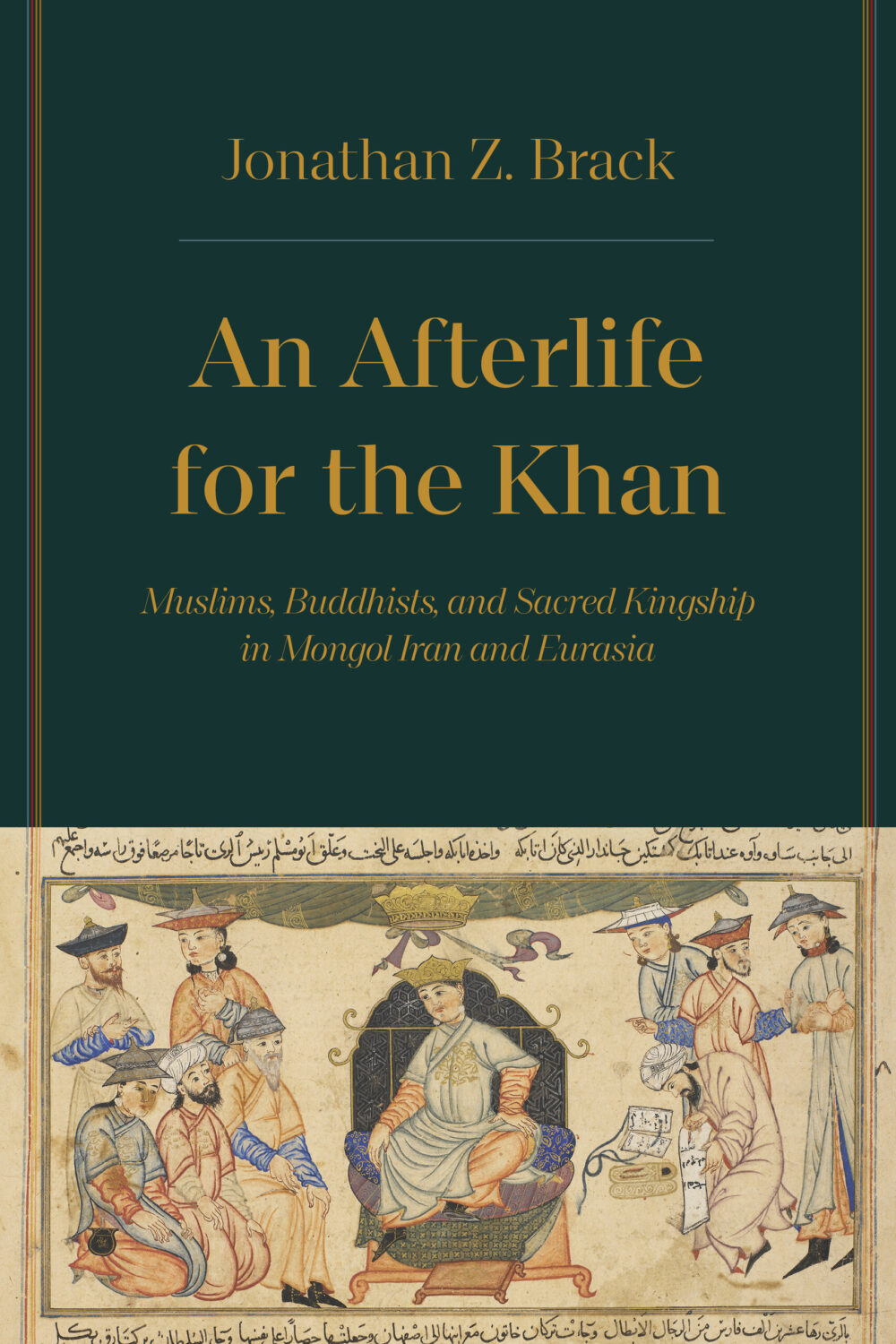
An Afterlife for the Khan
In 1254, after a long and anxious wait at the Mongol Empire’s capital of Qaraqorum, the Flemish friar and missionary William of Rubruck (ca. 1220–ca. 1293), finally got his wish to preach in person to the Mongol Qa’an Möngke (r. 1251–59). Before meeting the emperor, however, there was one final obstacle to overcome: outperforming his Muslim and Buddhist contenders in an interreligious debate. This multilateral court disputation was the first documented debate of its kind that included Christians (both Catholics and Nestorians), Muslims, and Buddhists. For William and for the Catholic Church more broadly, the encounter with Buddhism was entirely new. For the Muslim debaters, it was by no means the first interaction with Buddhists: Islam and Buddhism had a prolonged history of religious, intellectual, and commercial encounters and exchanges, but one that was fraught with friction and rivalry as well.
From our historical hindsight, however, this 1254 exchange in Mongolia can be seen as marking a new page in Muslim-Buddhist relations, not in the eastern territories of the Mongol Empire (China and Mongolia), but rather further west, at the other end of Mongol-dominated Eurasia, in Iran, which would shortly become the seat of the independent Mongol state of the Ilkhanate (1260–1335). Established by Chinggis Khan’s (r. 1206–27) grandson, Hülegü (r. 1260–65) in Iran, Iraq, and Azerbaijan—areas with a predominantly Muslim population—the Ilkhanate would become a destination for Buddhist monks from across Eurasia. These Buddhist experts would travel great distances to spread the Dharma and take advantage of the opportunities of patronage that the new Mongol rulers of Iran, the Ilkhans, offered.
In the late 1280s, some thirty years after William’s visit to Qaraqorum, the Ilkhanid court in Iran experienced the height of interfaith exchanges. Learned monks gathered at the court of Buddhist enthusiast Ilkhan Arghun (r. 1284–91), and debated with Muslims and possibly others. It is against this backdrop that this book’s protagonist, Rashid al-Din (d. 1318), then still a court physician and an up-and-coming bureaucrat, found himself embroiled in a disputation with one of the Mongol king’s cherished monks.
Rashid al-Din describes his exchange in a treatise written nearly two decades after the event, and under very different circumstances. He was at the height of his tenure as vizier, the most powerful civil servant in the Ilkhanid state, and Islam had already prevailed over Buddhism to become the official religion of the Ilkhanid rulers. Rashid al-Din does not name his contender and refers to him only as a bakhshī, Buddhist priest. The Buddhist asked Rashid al-Din the following question in Arghun’s presence: “What came first, the bird or the egg?” Rashid al-Din notes that this was a “famous fable” among the Buddhists. The monk indeed evoked a well-known Buddhist enigma that appeared in the “Questions of Mellinda,” a Pali dialogue between a Buddhist sage and the Greek king Menander of Bactria, probably composed between 150 BC and 100 AD. Rashid al-Din writes that while the monk believed that he would fail to solve the riddle, he was confounded by it for only a moment before God divulged to him the answer. He does not tell us what answer he ended up providing nor whether the Buddhist offered a rebuttal. Instead, Rashid al-Din downplays his Buddhist rival, dismissing the monk as ignorant of the true meaning of his own riddle. Yet he does not disregard the question itself as a catalyst of a theological inquiry. Rashid al-Din is “inspired” by it, and in the remainder of this treatise, he proceeds to contemplate Islamic philosophical points regarding issues such as the createdness of Adam and the divine source of primordial human knowledge.
Rashid al-Din’s account of this debate certainly differs from the Flemish friar William’s report to the Pope about his multilateral debate at Möngke’s court in Mongolia. For one, William provides more detail about how the debate with the Chinese Buddhist representative evolved and about the type of arguments that each party employed. We know they debated the existence and unity of God and the cause of evil. The differences between the Persian Muslim’s and the Flemish Christian’s accounts notwithstanding, there are also striking parallels between the two. Both downplay the intellectual fortitude of their Buddhist opponents. And both emphasize their recourse to their own scholastic traditions of rational argumentation to overcome the challenges mounted by their Buddhist contenders, rather than relying on Muslim or Christian scriptures. Whereas both might have underscored cultural and linguistic disparities, whether explicitly or implicitly, their accounts ultimately give the impression of a common vocabulary—that of rational argumentation.
Scholastic disputation indeed emerges from their reports as a shared currency enabling a certain exchange of ideas. Yet how far did such exchanges go? William’s account suggests that the debates went beyond the exchange of riddles and parables and could include hefty theological arguments. It also gives the impression, however, that the two parties remained ingrained in their own scholastic traditions. Rashid al-Din’s account, on the other hand, leaves more to the imagination. He gives the impression that few meaningful intellectual exchanges between Muslims and Buddhists took place under Mongol rule in Iran. And this impression is amplified by the general dearth of Muslim Ilkhanid descriptions of such exchanges, as well as the complete absence of any Buddhist textual documentation from the Ilkhanate.
Yet it is hard to reconcile this impression with what we know of the prevalence of Buddhism and the flourishing of the Buddhists during the Ilkhanate’s first four decades. As this book shows, a thorough examination of the Ilkhanid vizier Rashid al-Din’s extensive theological works demonstrates that Buddhist, Muslim, and Mongol exchanges have left deeper and more consequential impressions than the silence of contemporaneous Muslim authors implies. Muslims at the court were exposed to and made a considerable effort to respond to Buddhist concepts. These might not have been the finer points of the Dharma, but rather, as we will see, Buddhist methods of engaging with political authorities and conversion strategies.
An Afterlife for the Khan explores the Ilkhanid court of the late thirteenth and early fourteenth century as an arena of interreligious exchange and rivalry, where the conceptual differences and equivalences between various Eurasian structures of power and sacrality—Islamic, Buddhist, and Mongol—were debated and deployed. It unearths the various subtle ways in which cultural and religious agents employed their religious and political resources to accommodate, translate, manipulate, and subvert the symbols and structures of the religious Other.
Focusing on the theological-philosophical works of a Persian Muslim vizier active in the intellectual scene of the Ilkhanid court at the turn of the fourteenth century, An Afterlife for the Khan shows how the Persian-Muslim experience of Buddhism and its system of karmic-righteous kingship, on the one hand, and the accommodation of and resistance to the Mongol model of divinized kingship, on the other, generated and informed processes of creative experimentation in new modes of Islamic sacral kingship. Buddhists marketed concepts and models of karmic kingship as means of translating, reaffirming, and converting their Chinggisid patrons’ claims to deified kingship. The Islamic challenge entailed, therefore, not only winning their Ilkhanid patrons to the Muslim faith or cementing their commitment to Islam in the case of the Mongols who had already converted, but also uprooting their previous Buddhist education.
Jewish convert, Persian vizier, historian, and Muslim theologian Rashid al-Din stood at the center of the Muslim conversion efforts. In his theological and historical writings, invigorated by the lively atmosphere of an intellectually rigorous and religiously competitive royal court, Rashid al-Din not only engaged in the translation and assimilation of Buddhist narratives and concepts, or painstakingly attempted to dispute and disprove the Buddhist doctrine of reincarnation. He was also inspired and informed by his Buddhist competitors and their strategies of conversion and domestication of the Chinggisid rulers. To this end, he experimented with a model of Mongol-Muslim kingship that paralleled Buddhism’s structure of karmic-righteous rulership.
This book argues that Rashid al-Din’s Buddhist- and Mongol-informed experimentation in Islamic theological discourses formed a crucial, intermediate stage between the two more dominant frameworks for legitimizing Islamic, sultanic authority—the pre-Mongol phase of a restrictive, legalistic, and genealogical-based caliphal structure, and the post-Mongol independent model of universal and sacral Islamic rulership buttressed by saintly and messianic discourses. The Mongol occupation of Baghdad and the consequent elimination of the ʿAbbasid caliphate in 1258 represented a dramatic event that shattered the religiopolitical foundation of the Sunni majority’s world. This cataclysm inaugurated an era of unprecedented constitutional crisis that exacerbated after the collapse of the Ilkhanid state in 1335. In subsequent centuries, new strategies for legitimizing sultanic authority were formulated to resolve this crisis. To that end, Muslim intellectuals increasingly made use of and elaborated on an innovative, comprehensive, and compelling vocabulary of sovereignty that effectively shifted the discourse of sultanic legitimacy away from the pre-Mongol restrictive genealogical and juridical parameters of Sunni authority. In its place, there emerged a new discursive realm of universal Islamic kingship that referenced and interlinked a variety of intellectual fields—from philosophy and theology to astrology, mysticism, and the occult. Rashid al-Din’s works marked the end of caliphal authority and the beginning of this new age of Islamic authority. In the remainder of this introduction, we first explore the central theoretical foundation of this research into sacred kingship and the strategies of religious agents with the Mongol rulers.
Jonathan Z. Brack – An Afterlife for the Khan

God’s Kingship
Leuenberger, Martin, Art. Kingship of God (OT), in: Das Wissenschaftliche Bibellexikon im Internet (www.wibilex.de), 2012
The earthly kingship in Israel and Judah as well as the kingship of Yhwh form a section of ancient oriental concepts of rule and can only be understood historically or in terms of the history of religion and theology against this background or within these concepts. […]
King Hammurabi thus sees himself as “the shepherd appointed by Enlil” in parallel with the appointment of the god Marduk to an “eternal kingship (šarrūtum darītum)” (Hammurabi Stele 1:21) by Anu and Enlil (1:1ff) […]
In the wake of the global political rise of the Persian king Cyrus, Deutero-Isaiah visionarily proclaims the imminent, definitive, “eschatological” fulfillment of salvation for Israel in the near future. The (original) book gradient leads to Isa 52,7-10*, where the phrase “your [sc. Zion’s] God has become king and reigns” (מָלַךְאֱלֹהָיִךי mālakh ‘älohājikh; qatal-x) emphasizes the dawning of the kingship of Yhwh (at least in the divine world), which will now inevitably lead earthly events to their goal.
In the process, Yhwh’s “Messiah” Cyrus (Isa 45:1) inherits the worldly kingship of the Davidids, which is thus boldly globalized in the course of Deutero-Isaiah’s confrontation with the Babylonian dominant culture – in correspondence with the worldwide kingship of Yhwh over all “gods” (whose divinity is famously disputed) and all peoples. […]
[Deutero-Isaiahs] integration into the book of Isaiah results in a new dynamic: the exilic problematization is caught up in literary terms by the sequence of the present kingship of Yhwh (Isa 6) and the eschatological (new) dawn (Isa 40-52*). The same applies to the earthly level, when the royal texts Isa 7; Isa 9; (Isa 11), historicized in the course of the book to the Davidides, are continued through Isa 45 with the Messiah Cyrus. […]
[In the apocalyptic literature] the theme is never explicitly at the center, but Yhwh is not infrequently dubbed king and the (secular) enforcement of his kingship is consistently maintained against secular resistance of very different kinds – ultimately for the sake of God’s divinity (see in detail Camponovo, 1984, 230ff; Lindemann, 1986, 196ff; Collins, 1987, 88ff). […]
[In book of Daniel] God allows his “everlasting kingship (מַלְכוּת עלַם malkhût ‘ālam)” (Dan 3:33) to be realized in the succession of time by changing (world) rulers (see especially Kratz, 1991, 148ff; Seow, 2004). Only in the following (Hebrew) book redactions do eschatological-apocalyptic upheavals take place, which bring the earthly and divine kingship into an intensifying opposition (see Dan 2:44; Dan 7:14.18; Dan 10-12). […]
Finally, the Psalter, which was successively formed in the post-exilic period, is conceptually characterized by the kingship of Yhwh in its younger two theocratic books IV-V as well as in the present final composition (see Leuenberger, 2004, 392f [lit.]; Janowski, 2010, 301ff). Various conceptions can be distinguished, which locate Jhwh’s kingship in the course of the book in cosmic (natural order), large-scale political (world of nations / legal order), priestly (cultic legal order) and finally everyday (elementary salvation and provision in Ps 101-150) areas of experience; the spatial and temporal universality of Jhwh’s kingship is also spelled out in detail. The theological climax and final accent of the Psalter is then reached in the artfully constructed hymn Ps 145:
V. 1 I will exalt you, my God and King, / and praise your name forever and ever. (…) V.13 Your “kingdom” is a “kingdom” for all time, / and your reign lasts from generation to generation.
Ps 145
A historical analysis of the Yhwh-related מלך * mlk statements (king) in their literary (near) contexts brings to light a quite extensive field of words and concepts of “kingship of Yhwh”: on the one hand, there are more or less close parallel terms to מלך * mlk “to be / become king” or מֶלֶךְ mælækh “king” or the abstracts for “kingship” such as משׁל mšl “to rule”, שׁפט špṭ “to judge / rule”, Aramaic שׁלט šlṭ “to rule” or מוֹשׁל môšel “ruler”, מָשִׁיחַ māšîaḥ “anointed one” (Messiah), שֹׁפֵט šofeṭ “judge”, רֹעֵה ro’eh “shepherd”, רֹאשׁ ro’š “head”, נָגִיד nāgîd “prince” resp. מֶמְשָׁלָה mæmšālāh and Aramaic מָשִׁיחַ šālṭān “rule” etc. On the other hand, there are also numerous royal or imperious attributes (such as גֵּאוּת ge’ût “majesty”, הוֹד hôd “majesty”, הָדָר hādār “splendor”, עֹז ‘oz “power”, אַדִּיר ‘addîr “mighty” [s. especially the superiority over the chaos waters] etc.), functions (e.g. ישׁב jšb “to throne / dwell”, עלה ‘lh “to ascend / be exalted”) and conceptual elements (e.g. כִּסֵּא kisse’ “throne”, סוֹד sôd “throne council” [council of the gods], אַרְמוֹן ‘armôn “palace”, הֵיכָל hêkāl “temple / palace” and more) should be included: They all characterize Yhwh – admittedly in different forms and accentuations – as king. […]
3) brk ∙ jhw[h …] (4) brk ∙ bgj[m … j]mlk … (6) brk ‘dn[j] jh … (3) Blessed is / be Jhw[h …,] (4) Blessed is / be he among the nations who reigns / will reign as king. … (6) Blessed is / be the Lord; jh[…]”
Inscription from En Gedi
The Lord Yhwh is thus blessed (lines 3/6), whom the central statement (line 4) describes in a nationwide perspective (cf. ‘šr “Assur” line 1)[…]
The following should be mentioned: mlkj(h)w “(my) king is Jh(wh)” or jhwmlk “Jh(wh) is king” (cf. parallel formations such as mlkj’l “king is God” or ‘dnmlk “the Lord is king”). In addition, there are semantically related ruler names of the type “name of God + ruler terminus”, i.e. above all jh(w) “Yhwh”, ‘l “God” or ‘dn “Lord” with rwm “to rise / to be exalted”, qwm “to rise / to be high” or ‛lj / ‛lh “to ascend / to be high”, whereby the order of the two elements can change.
Hermisson, Hans-Jürgen, Art. Deutero-Isaiah, in: Das Wissenschaftliche Bibellexikon im Internet (www.wibilex.de), 2017
One of the elements of the promise of help is the mention of the redemption of Israel. The term comes from family law and refers to the redemption of clan members from debt slavery (redeemer / ransom); in DtIsa it is used exclusively as a predicate of Yahweh: Yahweh is Israel’s “redeemer”, now therefore from the Babylonian exile. However, the idea is significantly modified: Israel’s “ransom” does not, after all, mean that Yahweh pays a ransom to the previous overlord Babylon. Isa 43:3 comes closest to the conventional idea: Yahweh pays “Egypt, Cush and Sheba” as a ransom for Israel, but not to the previous owner, but to the future owner, to Cyrus, the conqueror of Babylon. It is different in Isa 44:22, where the word of Israel’s “redemption” follows the statement of the redemption of its sin and guilt: Admittedly, “redeem” there also means specifically to free from Babylonian captivity, but this is a consequence of Israel’s guilt towards its God. The payment of a ransom to Cyrus or Babylon is disputed by later authors (Isa 45:13bβ; Isa 52:3), but that is not DtIsa’ problem: it is concerned with the analogy of the familial relationship and the resulting duty to liberate: Yahweh has declared such a relationship to his people with the word of redemption. […]
Here we must speak of the earthly agents of Yahweh with DtIsa. There is Cyrus, addressed in two oracles of calling: In Isa 45:1-7 he is to conquer Babylon as Yahweh’s “anointed one”, in Isa 42:5-8* he is to release the captives.
This is the earthly-concrete form of the divine victory over Babylon and the repatriation of the “spoils” after the final part of the prologue: Cyrus is commissioned and authorized by Yahweh to do so. […]
The great “imperative poem” in Isa 51,9-10.17-23; Isa 52,1-2, which is linked to the text of the jubilantly welcomed entry of Yahweh into his city in Isa 52,7-10 and the concluding call to the exiles in Isa 52,11f. The plaintive call to Yahweh’s arm to wake up and prove his power in Israel’s favor, as he once did at the Exodus, at the Red Sea (Isa 51:9f.), is answered with the counter-call to the woman Jerusalem / Zion to rise in her turn (Isa 51:17), to rise from the dust, put on her festive garments and sit on the throne (Isa 52:1-2). Zion is drawn here in contrast to the woman Babylon, who loses her throne (Isa 47), but unlike Babylon, she is not Yahweh’s rival: she receives her royal role as the wife of King Yahweh, who now moves into Jerusalem and begins his world reign there: “Yahweh has bared his holy arm in the sight of all nations, and all the ends of the earth see the salvation of our God” (Isa 52:10).[…]
DtIsa’s message is presented in a wealth of vivid images that cannot all be set off against each other, but which in essence amount to the same thing. They can be summarized in a few sentences. The prophet proclaims the liberation of Yahweh’s people from exile and their return through the desert to the land of promise as a Yahweh miracle, in which Yahweh proves his saving creative power as the only God before all peoples. He needs three earthly agents for this: the chosen, created in the womb and called prophet. The chosen prophetic servant of God, created and called in the womb, who brings the despondent and unbelieving Israel to faith and on the way, as his “active witness”, the chosen servant of God Jacob / Israel, created and called in the womb, who then sets off and allows the miracles to happen to him, as the (initially) “passive witness”, and Cyrus, called and created by Yahweh, as his “shepherd” and “anointed one”, whom he “raised up” for the warlike conquest of the world empire of Babylon and thus for the liberation of the exiled people of Yahweh. All three are portrayed as royal figures with similar predicates. The triumph of Cyrus also serves as an example in which Yahweh proves his uniqueness as God, because he brings it about through his word of creation, which he had previously given to the world through his prophetic servant. In the end, Yahweh will reign from Jerusalem as King of Israel and King of the world, and all nations will confess him as the only God who saves: Thus, in the sum of his message, the prophet proclaims an eschatological event.
The fourth servant song after the death of the prophet goes beyond this by seeing the whole event as initiated by the suffering and death of the prophetic servant and by the miracle of Yahweh in his deceased servant (servant of God).
Pharaonic Kingship and it’s Biblical Deconstruction
In the ancient world, political power tends, to occupy the realm of its control with iconic and symbolic representations. This may have applied also to the period of monarchy in ancient Israel, from the times of Saul, David, and Solomon down to the fall of Jerusalem, a fact that may be gathered from the numerous prophetic invectives against idolatry. We must not confuse the Mosaic Law as it is codified in the second through the fifth books of Moses, which for us has become the core of biblical monotheism, with what prevailed as mainstream religion in Israel during the kingdom. The iconoclastic and monolatrous movement of the Torah was a matter of opposition born by the prophetic tradition from Amos and Hosea down to Jeremiah and Ezekiel and by a literate elite that finally asserted itself under king Josiah and gave rise to the first iconoclastic cleansing of official religion and the redaction of canonical scripture centered around Deuteronomy, containing a quite revolutionary conception of state and religion. This innovation on the political-theological plane did not lead to an iconic turn but to its contrary, a ban on images.
The prohibition of images occurs at the most prominent place within the Bible: as the first or second commandment of the Decalogue, together with a commentary that refers unequivocally to the political sphere:
You shall not make for yourself a carved image, or any likeness of anything that is in heaven above, or that is in the earth beneath, or that is in the water under the earth. You shall not bow down to them or serve them, for I the LORD your God am a jealous God, visiting the iniquity of the fathers on the children to the third and the fourth generation of those who hate me, but showing steadfast love to thousands of those who love me and keep my commandments.
2 Moses
God resents the making of images as an act of defection and apostasy. The distinction between friend and foe, those who love and those who hate God and His Law, has a predominantly political meaning. Carl Schmitt even saw in this distinction the hallmark of the political in general. This may be going too far, but nobody will deny that the principle of association and dissociation has a fundamentally political significance. If God makes the question of images a criterion of friend or foe, belonging or exclusion, he gives it a political meaning. Whoever wants to belong to the community of God’s friends must abstain from any image making and image worshipping. This story is not only about the foundation of a new form of religion but also of a new form of polity built on a treaty or covenant between God and the children of Israel. This is made clear by the whole body of legislation that follows the Decalogue as well as by the story of Exodus that forms its frame. It is highly significant that this concept of divine leadership precludes the making of images. The idea of the covenant implies a conception of direct theocracy. In the same way as the idea of direct democracy, the idea of direct theocracy precludes any mediating institutions of representation. The will of God chooses Moses as interpreter, and Moses will be followed in this function by a line of prophets down to the times of Artaxerxes, but he bans from his covenant all representations because he wants to reign directly and not by representation.
The political sense of the prohibition of images is made clear at the very beginning, during the reception of the covenant at Mount Sinai, by the scene of the golden calf, which functions as a kind of primal scene of idolatry. Moses climbed on top of Mount Sinai and stayed there for 40 days.
When the people saw that Moses delayed to come down from the mountain, the people gathered themselves together to Aaron and said to him, “Up, make us gods who shall go before us. As for this Moses, the man who brought us up out of the land of Egypt, we do not know what has become of him.”
2 Moses
So Aaron said to them, “Take off the rings of gold that are in the ears of your wives, your sons, and your daughters, and bring them to me.”
So all the people took off the rings of gold that were in their ears and brought them to Aaron.
And he received the gold from their hand and fashioned it with a graving tool and made a golden calf. And they said, “These are your gods, O Israel, who brought you up out of the land of Egypt!”
The people did not want to defect to other gods but to replace the vanished Moses, whom they believed dead, with a representation, an image. They wanted the calf for a leader to take over what Moses had done for them, to go ahead, represent God, and intimidate any possible enemies. Moses acted for them as a representative of God; now they needed another form of mediation and fell back on Egyptian idolatry.
Representation and mediation were the principal functions of the king in the ancient world. Covenantal law aimed at destroying any forms of mediation, to radically eclipse the figure of sacred kingship, and to establish an immediate link between God and the people.
Instead of images, the king is instructed to make a copy of the text of the Torah and to learn it by heart so that his royal activities become nothing but a fulfilment of scripture. This is the exact counterimage of the usual dynamics of political and iconic display of power. Where the power is handed over to an invisible God, the images must disappear and give way to scripture. We may call this a scriptural and aniconic turn and may recognize in it the same interrelatedness of politics and image making as in Egypt, only in an inverse key. The ban on images amounts to an eclipse of the king as a representative of God and a mediator between God and humankind.
The Deuteronomistic concept of the covenant or treaty—berît in Hebrew— that JHWH established between himself and the children of Israel has a primarily political meaning. The term berît occurs, however, already a century earlier with the prophet Hosea, but couched in bridal and filial metaphors and without any political connotations. Hosea is the first one to conceive of monotheism as a matter of fidelity, truthfulness, or loyalty. Like Amos, Hosea reproaches Israel for its sins, but in his eyes, these sins do not consist primarily in injustice and oppression but in “whoredom” with alien gods. I collate here several of Hosea’s most striking invectives against Israel’s infidelity:
They sacrifice upon the tops of the mountains, and burn incense upon the hills, under oaks and poplars and elms, because the shadow thereof is good: therefore your daughters shall commit whoredom, and your spouses shall commit adultery. I will not punish your daughters when they commit whoredom, nor your spouses when they commit adultery: for [the men] themselves consort with whores, and they sacrifice with harlots: therefore the people that doth not un-derstand shall come to ruin. I found Israel like grapes in the wilderness; I saw your fathers as the firstripe in the fig tree at her first time: but they went to ba’al pe’ôr, and separated themselves unto that shame; and their abominations were according as they loved.
Hoseas
A different image used by Hosea for the special bond between YHWH and his people is that of a father-son relationship: “When Israel was a child, then I loved him, and called my son out of Egypt. But the more they were called, the more they went away from me: they sacrificed unto Baalim, and burned incense to graven images.” About a century after Hosea, the original version of Deuteronomy was presented in Jerusalem as an accidental finding during restoration work in the temple and identified as a book dating from the time of Moses. This legend has a kernel of truth because it refers to the truly “Mosaic” spirit in which it is written. Deuteronomy codifies the covenant in the form of a formal treaty of alliance, thereby giving it the status of an institution recognized under international law. The covenant is now no longer metaphorical but the real thing.
The authors of Deuteronomy borrowed the model of a political contract from Assyria. The loyalty oath that in 672 bce King Essarhaddon had his subjects and vassals swear to his designated successor, Ashurbanipal, makes its influence felt right down to the wording of the biblical text. One of those vassals must have been King Manasseh of Judah, so it may be assumed that a copy of the succession treaty and oath was stored in the royal archive in Jerusalem. When applying this Assyrian template to the covenant between YHWH and the people, the biblical authors adopted and adapted it in two ways. First, God does not make this treaty with the king, in his capacity as the people’s representative before the gods, but directly with the people themselves; second, the loyalty clauses are not between the people and the king, in his capacity as the gods’ representative before the people, but between the people and God. In a startling innovation, the king’s position as representative and intermediary is thus bypassed. Through the “transference” of the king-god relationship and the king-people relationship to the relationship between God and his people, Assyrian state ideology is converted into Israelite covenant theology. The fact that God makes his covenant with the people as a whole rather than through the intercession of royalty, priesthood, or some other representative authority becomes the basis for a new; specific; emphatic; and, to some extent, “democratic” conception of the people. The people—not Moses, not the seventy elders, not Aaron, not the Levites—assume the role of a sovereign partner in the covenant. This direct access to God is what lends the biblical concept its democratic force.
In Egypt, the Pharaoh was regarded as the son of the supreme deity and given the title, son of Ra. The Jerusalem monarchy also adopted the model of the king’s divine sonship from Egypt. “Thou art my son; this day have I begotten thee,” God tells the king in Psalms 2:7. God chooses the king to be his son, a transformation that takes place the instant he is crowned. In Psalm 89:27, God pledges: “I will make him my firstborn, higher than the kings of the earth.”
The image of Israel’s divine sonship is firmly anchored in the Exodus myth.
Unlike the bridal metaphor, which, with the prophets Hosea, Jeremiah, and Ezekiel, always has tragic connotations and looks backward to the adulterous violation of the covenant, the image of sonship in Exodus has positive connotations and looks forward to Israel’s election and the fulfillment of God’s promises:
“Thus saith YHWH, Israel is my son, even my firstborn. And I say unto thee: let my son go, that he may serve me. And if thou refuse to let him go, behold, I will slay thy son, even thy firstborn.” Rather than looking back in anger at the broken covenant, the image of sonship here looks forward in hope to the liberation of Israel, soon to be exacted by the death of the Egyptian fi rstborn, and to the covenant, which will make the children of Israel God’s chosen people and hence his adopted son. Whereas the sonship is transferred from the king to the people, the function of legislator is transferred from the king to God. On the famous Louvre-stela of Hammurabi, we see the king presenting his law code in a gesture of recitation to Shamash, the sun god and god of justice. According to the biblical concept, Moses receives the law from God. Bereft of his prerogatives of sonship and legislation, there is nothing peculiar left to the king. This is what Deuteronomy has to say concerning the role of the king:
If, having reached the country given by Yahweh your God and having taken possession of it and, while living there, you think, “I should like to appoint a king to rule me”—like all the surrounding nations, the king whom you appoint to rule you must be chosen by Yahweh your God; the appointment of a king must be made from your own brothers; on no account must you appoint as king some foreigner who is not a brother of yours.
Dtn 17
He must not, however, acquire more and more horses, or send the people back to Egypt with a view to increasing his cavalry, since Yahweh has told you, “You must never go back that way again.” Nor must he keep on acquiring more and more wives, for that could lead his heart astray. Nor must he acquire vast quantities of silver and gold.
Once seated on his royal throne, and for his own use, he must write a copy of this Law on a scroll, at the dictation of the levitical priests. It must never leave him, and he must read it every day of his life and learn to fear Yahweh his God by keeping all the words of this Law and observing these rules, so that he will not think himself superior to his brothers, and not deviate from these commandments either to right or to left. So doing, long will he occupy his throne, he and his sons, in Israel.
This is no longer the idea of kingship as represented in a paradigmatic way by King David. The king is no longer chosen by God, who says to him “Thou art my Son; this day have I begotten thee,” or with regard to him—“I will be his father and he will be my son” and “Also I will make him my firstborn, higher than the kings of the earth.” Instead, the king is appointed by the people if they like and is seen as a danger rather than a blessing that must be restricted in his display of power as much as possible. The original idea of kingship is deferred into the future and turned into as a figure of messianic expectation. The new religion as worked out by the exilic prophets and the deported literary elite emerged in a situation of total loss: of kingship, state, temple, and territory and enabled Judaea to do without external stabilizers. Law, statehood, temple, and priesthood were created at Mount Sinai, in the desert, and in a radically extraterritorial situation.
This new concept of religion no longer depends on state, kingship, and territory; it can be realized wherever Jews live and follow the law of the covenant.
In this differentiation and emancipation of religion from state and territory lies the secret of the survival of Judaism and Jewry as the only nation of antiquity over two millennia of diaspora and persecution, whereas ancient Egypt and all other states and cultures of antiquity succumbed to the assault of Christianity and Islam.