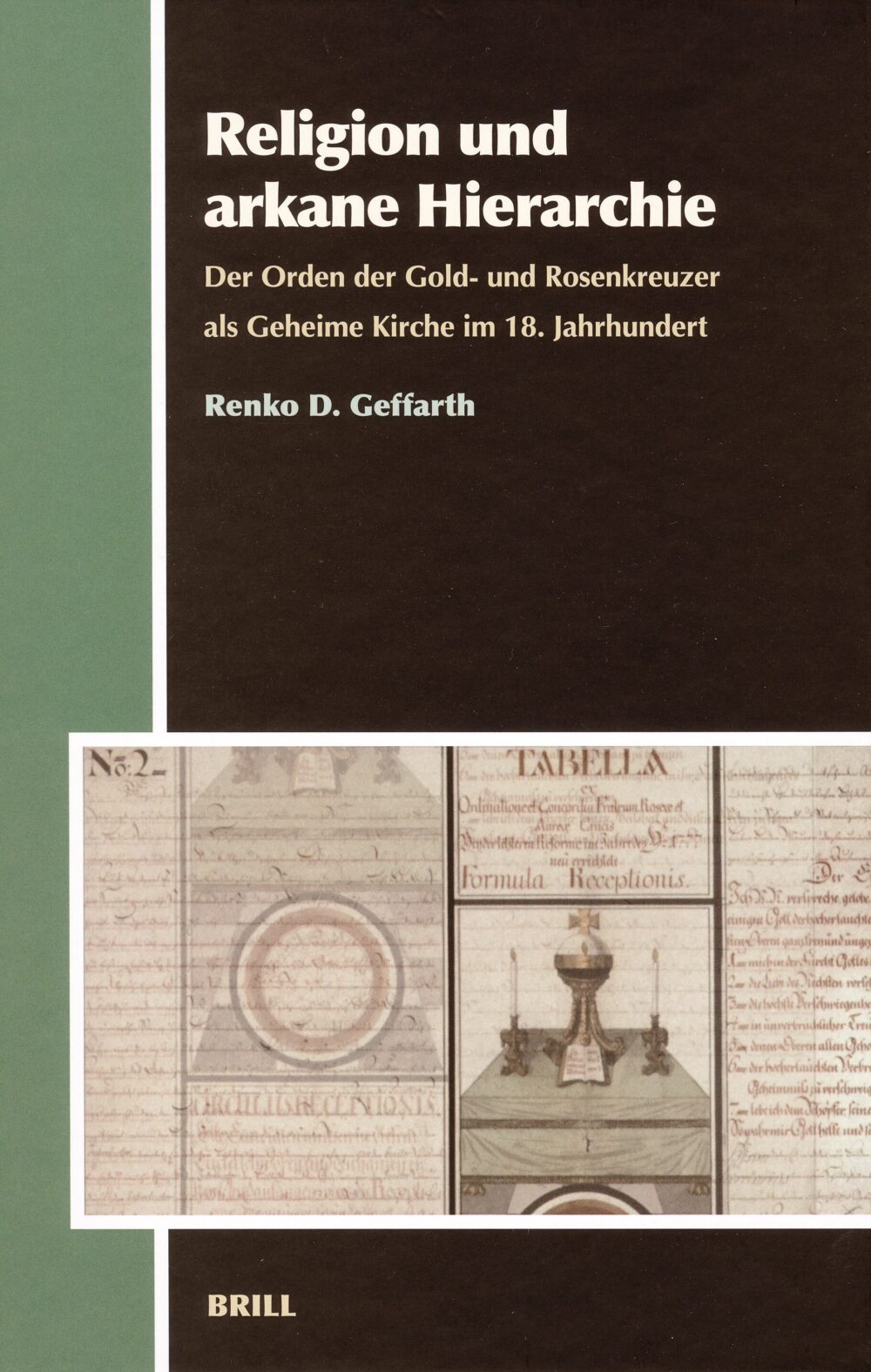
The order of the Gold- and Rosicrucians as a secret church in the 18th century
Renko D. Geffarth
Western esotericism began in the Italian Renaissance in the second half of the 15th century with the rediscovery of ancient writings, such as the late antique Corpus Hermeticum, whose originator was the mythical priestly figure of Hermes Trismegistos, and its translation into Latin by the philosopher Marsilio Ficino. […]
The reception of the Kabbalah, Platonism and Hermeticism in the German-speaking world ultimately gave rise to the early modern concept of magic of Heinrich Cornelius Agrippa von Nettesheim and subsequently, with the integration of alchemy, the Paracelsian natural philosophy, the theosophy of Jakob Böhme and the panosophy of the Rosicrucian writings of the 17th century. All of this was always in interplay and conflict with Christianity and its denominations, which also persecuted such heterodox currents as heresy.[…]
Schlögl also emphasizes the enlightened character of the esoteric secret societies, as they represented an “alternative to the salvation economy of the Christian churches” with their efforts to redeem ‘creation’ in this world and therefore accommodated the “self-confidence of people at the end of the 18th century”.[…]
In an overview essay on the Illuminati Order and the Gold and Rosicrucians in 1993, the Munich historian and professor Ludwig Hammermayer once again emphasized the contrast between the ‘radical Enlightenment’ Illuminati and the ‘theocratic’ Rosicrucians.[…]
Obviously challenging areas of social and cultural reform were the confessional and associated political tensions in the empire in the 16th century, the role of religion in culture and society and, last but not least, the perceived lack of understanding of ‘science’. With the help of the secret brotherhood of the Rosicrucians, these three core issues were now to be subjected to a renewal that followed a uniform ‘world view’. The Rosicrucian manifestos and the discourse that took place in the years following their first publication were thus not only the mediators of an early modern esoteric tradition that drew on the physician and hermeticist Theophrastus Bombastus von Hohenheim, known as Paracelsus (1493- 1541), and the hermeticism of the Renaissance, but also an expression of the perception of the crisis nature of the early 17th century.[…]
These first years after the publication of the Manifestos are considered the period of the ‘older’ Rosicrucians, followed by a ‘middle’ period resulting from the translation of the writings into other European languages and their reception in other countries, especially in England; the beginning of this second period is generally placed around the middle of the 17th century and its duration is extended into the early 18th century.For the ‘middle Rosicrucians’, there is initial speculation about actually existing brotherhoods or even just circles of people who considered or described themselves as Rosicrucians; for example, Gottfried Wilhelm Leibniz is said to have been a member of a circle of alchemists and Rosicrucians. However, it is still true for this phase of ‘Rosicrucianism’ that a real society, an order comparable to that of the late 18th century, very probably did not exist.[…]
The history of the development of Freemasonry presented in the following section does, however, show influences from the reception of Rosicrucian writings in 17th century England, which were passed on via Elias Ashmole (1617-1692), a member of the Royal Society founded in 1660 and one of the early Freemasons. The chronological order chosen in this study, ‘Older Rosicrucians’ – Freemasons – Gold and Rosicrucians, is therefore based on the well-founded assumption that there was a connection in terms of content between the Rosicrucian manifestos and early Freemasonry, just as there was a structural connection between 18th century Freemasonry and the Order of the Gold and Rosicrucians.[…]
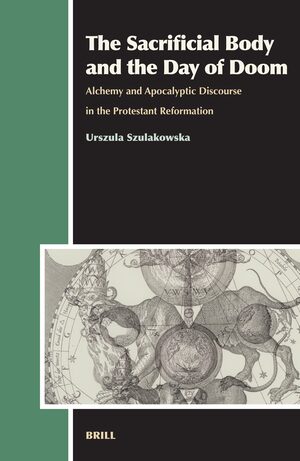
Alchemy and Apocalyptic Discourse in the Protestant Reformation
Urszula Szulakowska
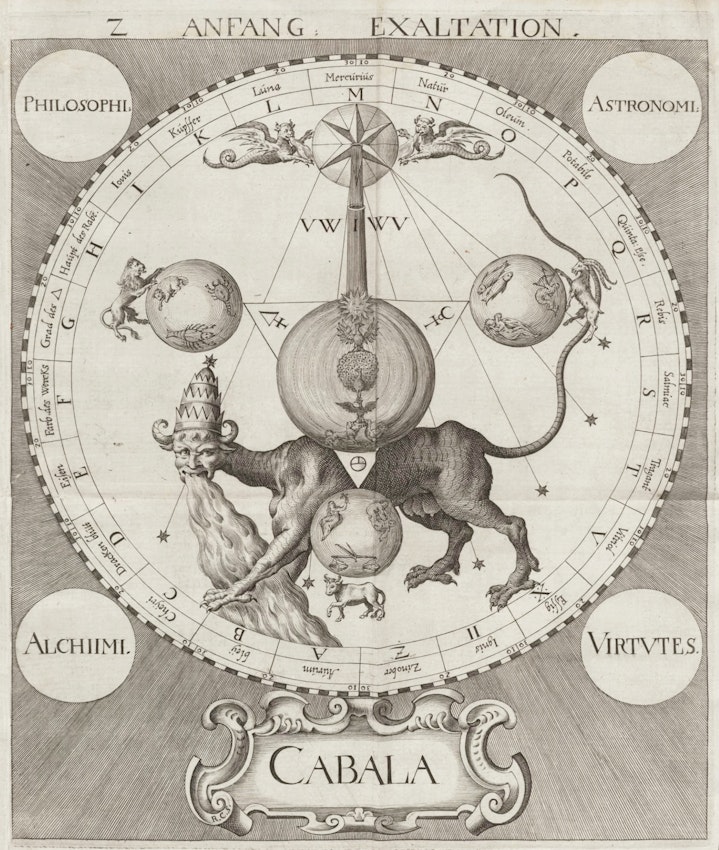
It was Luther who first identified the Papacy with Antichrist and, on this basis, Lutheran artists had crowned the head of the Whore of Babylon with the papal tiara, as in the Wittenberg Bible of 1522 “(Revelation 17: 1–7). Furthermore, they equated the Pope with the Beast from the Bottomless Pit (Revelation 11: 7). The standard apocalyptic repertoire was created in Luther’s immediate social circle by Lucas Cranach in his woodcuts for the Passional Christi und Antichristi (1521) and for Luther’s Septembertestament (1522). Despite the international and historical prestige of Dürer’s apocalyptic engravings (1498), which were copied in the Wittenberg Bible (1522), later Protestant iconographydid not develop on his model, but on that of Cranach.[…]
Martyrdom was believed to resource the Church with the spiritual wealth of divine grace, the foundation for its future development on earth.[…]
According to this doctrine, the flesh was the ground of human salvation, its torment a necessity, whether in life as a martyr for Christ, or after death in the state of purgation.[…]
In medieval doctrine it was the Church alone that could authorise the survival of the subject (that is, the body) by ensuring that the soul and its temporary somatic body went either to Purgatory, or (infrequently) directly to heaven through the grace of the Church’s sacraments.[…]
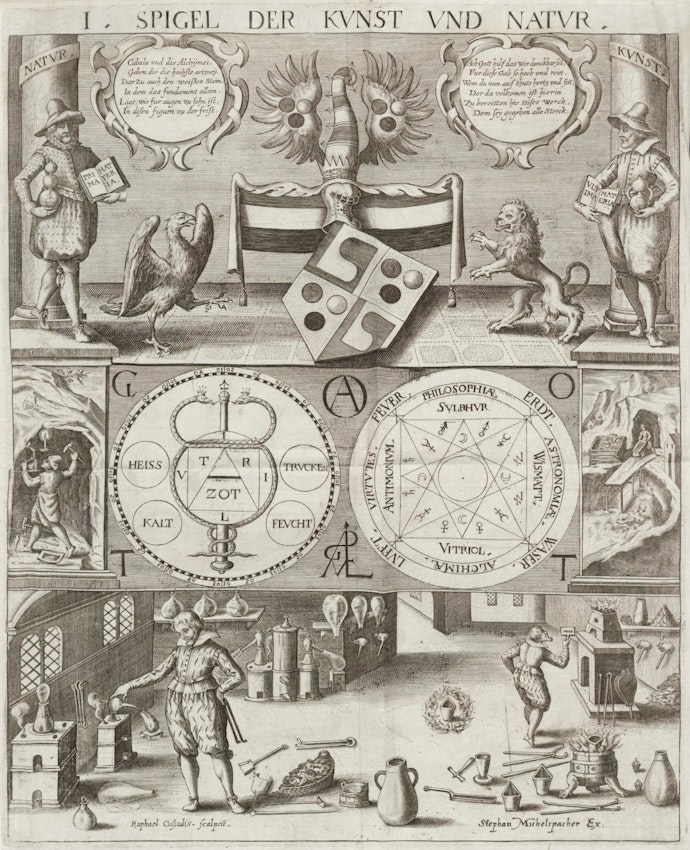
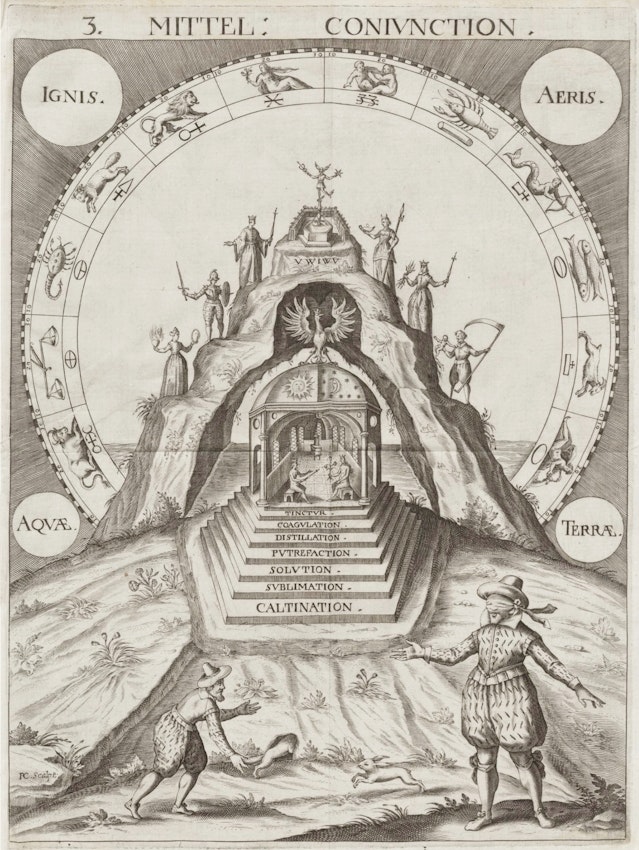
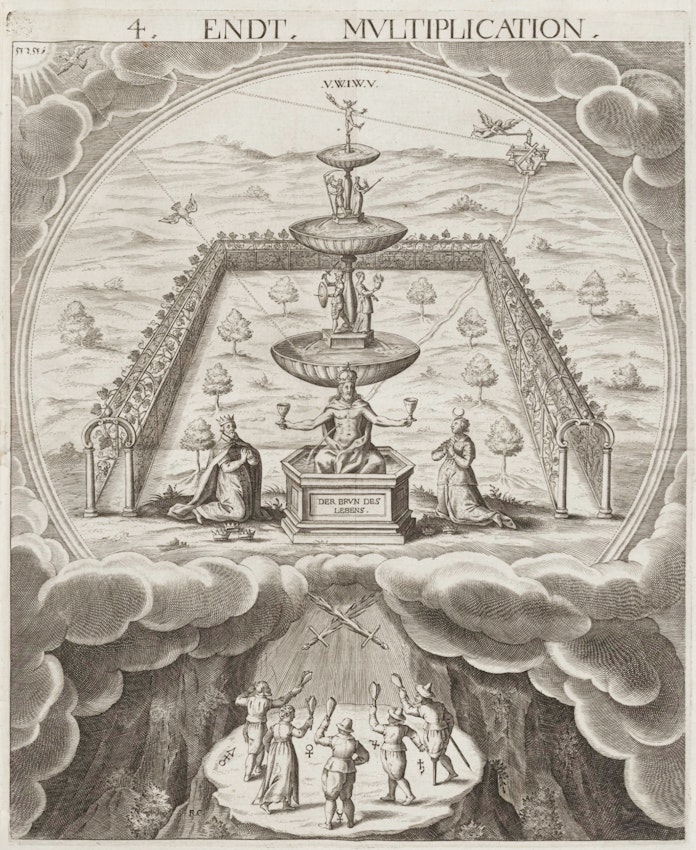
Some Paracelsian alchemists, especially Heinrich Khunrath (ca. 1560–1605) and Stefan Michelspacher (active ca. 1615–23), were objects of persecution on the part of both Lutheran and Catholic authorities. Khunrath was an alchemist from Saxony, the heartland of the Reformation, but his theological stance was characteristic of the second generation of Protestants who felt that Luther’s work had been left incomplete and that another religious reform was essential.[…]
Dissenters from the established Protestant Churches were important precursors of a secular society, tolerant of religious divisions, in which Church and state were separated. In characterising these dissidents,Séguenny has adopted a concept from the philosopher Leszek Kolakowski, that of “religion without a Church”. I would add that a little known aspect of the history of secularism is the role of Paracelsian theosophy in creating a heterogeneous society supporting noncompliant religious views.[…]
Anti-Christ, Stefan Michelspacher, Cabala: Spiegel der Kunst und Natur (Augsburg: David Francke, 1616), second engraving. The pope as the beast and whore of Babylon.
Historians such as Frances Yates in her investigation of the “Rosicrucian Enlightenment,” as well as Joscelyn Godwin in his analysis of the “Theosophical Enlightenment” have established the integral relation between esotericism and proto-democratic views. They have demonstrated the manner in which the Rosicrucians, or the eighteenth century “Illuminati,” characterised themselves as forerunners of enlightened thinking in their development of the intellectual traditions of classical humanism.[…]
Historians of Renaissance philosophy, such as Kristeller, have demonstrated that Renaissance Hermeticism also contributed to the emergence of a more individualistic faith. It had been Cosimo de Medici who had requested Marsilio Ficino in 1463 to translate into Latin the newly recovered Corpus Hermeticum. He completed only the first fourteen tractates and it was Lodovico Lazzarelli who translated the rest (tractates XVI–XVIII), publishing them as Diffinitiones Asclepii in Champier’s edition of 1507. This hermetic corpus mostly consisted of second century religious texts written by a variety of pagan groups in the late Hellenistic period. Some of them had been influenced by early Christianity, while others had been inspired by Middle Eastern beliefs. In the early Christian era they had been grouped under the pseudonymous authorship of “Hermes Trismegistus.” As a syncretic merger of diverse Hellenistic theosophical beliefs and practices, Hermetism had appeared in pre-Christian Egypt in the second century. Its sources included the Chaldean oracles, Orphism, the Sibylline prophecies, theogonies that united the Greek pantheon to those of Middle Eastern nations conquered by Alexander, initiatory rites and magical papyri originating in the proliferating cults of the Hellenistic Egypt, some of which had been influenced by concepts drawn from Christian soteriology. Hermetism was, thus, historically distinct from neo-platonism which was a theosophical discourse claiming direct descent from classical Platonic thought. In fact, the diversity of religious ideas in the late Roman Empire had stimulated Plotinus to evolve his own account of a triple-layered cosmology with an accompanying ontology inclined towards mystical experience. Plotinus had no interest whatsoever in magical ritual, but was intent on spiritual illumination for himself and his disciples. […]
In answer to earlier doubts concerning his religious beliefs, Fludd had written the Declaratio Brevis addressed to King James I in 1618–20. The alchemistic appropriation of the Christian sacraments of Baptism and Communion was not welcomed by the ruling Churches. None of them could accept a chemistry that claimed to produce substances equivalent to the body and blood of Christ, administering the same grace of spiritual and physical healing. The miracle of the bread and wine in the mass or Communion service was unique and could never be emulated by chemical means, no matter how devout and prayerful. Moreover, none of the Churches permitted unauthorised laity to perform the sacramental rite which was the prerogative of priests that had been formally appointed by a bishop through a direct apostolic transmission from Christ. Furthermore, if, like Fludd, they introduced kabbalistic angels (chiefly, Metatron) into the alchemical version of the rite, he was considered to be practising the most outrageous demonic magic, as Mersenne asserted. Good or bad purpose was irrelevant: the issue here concerned the question of who should control this powerful miracle. […]
The assertion that an individual human being guided by a purely inner grace could transform their own nature into that of Christ led to a second consequence, namely that the Church, whether Roman or Lutheran, became irrelevant to the work of spiritual salvation. In the organisation of dissident religious groups it was the laity who supplanted the ecclesiastical hierarchy as directors of the inner conscience. They were validating their efforts for independence of Church control by the sayings of Christ concerning the role of the Holy Spirit after his death.[…]
The Christian image of the Son of Man, specifically the one devised by the apostle Paul, was partly a historical inheritance from a pre-Christian Anthropos figure, whose cult had existed in the second century BC in Palestine, Syria and Egypt. Originating in Mesopotamia, this person had been translated to a Judaic context in the apocalyptic texts of Daniel, Ezekiel and Enoch 2.[…]
The image of the “Son of Man” (“Anthropos”) entered Judaism in the second century BC, appearing initially as a nameless, man-like person described in Daniel who subsequently became a messianic character in the account of Enoch. He was an Iranian element that was incorporated into the Jewish account of the creation of Adam. The “Son of Man” or “Anthropos” is a translation of the Hebrew term “bar nasha” which is found in the Synoptic Gospels and in the Hebrew Apocalypses of Daniel and Ezekiel. In the Semitic idiom “bar nasha” was not a first name, simply meaning “one,” or “someone”. It was the Hellenistic Christians who interpreted the term as meaning “the Son of Man” (“Anthropos”), following the Greek translation: “ὁ υἱὸς τοῦ ἀνθρώπου.” The original Jewish “bar nasha” is first encountered in the Book of Daniel 7: 13–14, which was also the first to mention the doctrine of the resurrection of the body. He subsequently re-appeared in the apocryphal Book of Enoch (first century BC) which added new elements to messianic prophecy, by integrating the non-Judaic Son of Man, the story of his concealment by God, his role in the revelation of secrets and his final task as universal Judge. Ezekiel, in turn, developed an eschatological account which prophesied a final conflict at Jerusalem followed by Judgement. The superhuman “Bar Nasha,” as God’s champion, represented the chosen people. Kraeling has, in fact, differentiated between the historical characters of the “Anthropos” and of the “Son of Man” that were fused together in subsequent Christian apocalypticism. As a victorious champion, Anthropos belonged to the history of creation, while the Son of Man “Bar Nasha” was an eschatological type.[…]
It was believed by many prophets and magicians that the Holy Spirit in the Last Days was revealing the concealed secrets of Nature, as Christ had foretold. These were available only to those of the true faith, namely, Lutherans. It is no coincidence that the alchemical resurgence of the late sixteenth century occurred in the Lutheran areas of Europe, particularly in the eastern German states through into Silesia, where there emerged lively groups of Paracelsian alchemists. Luther’s main disciple, the humanist Philip Melanchthon (who was also Reuchlin’s son-in-law) displayed a special interest in alchemy. He also encouraged the use of the new humanistic science of linguistics in order to mine sacred texts for further prophecies.
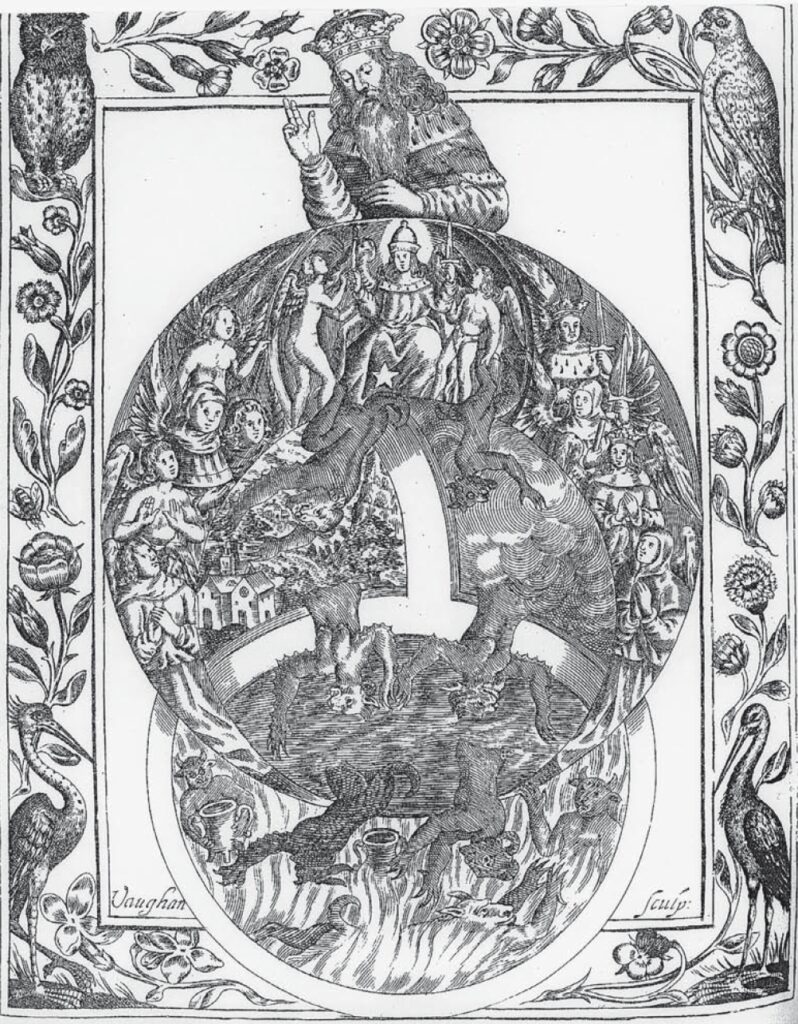
Allegory of Alchemy, Stefan Michelspacher, Cabala: Spiegel der Kunst und Natur (Augsburg:David Francke, 1616)The alchemical conjunction, Stefan Michelspacher, Cabala: Spiegel der Kunst und Natur (Augsburg: David Francke, 1616)Christ in the Fountain of Life, Stefan Michelspacher, Cabala: Spiegel der Kunst und Natur (Augsburg: David Francke, 1616)Robert Vaughan, “Christ in Glory” in Elias Ashmole, Theatrum Chemicum Britannicum (London: G. Grismond, 1652)
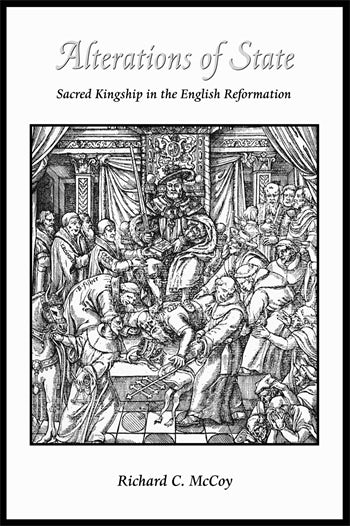
Kings were sacred figures for centuries in Europe, perceived as the Lord’s anointed deputies on earth. The Church and its sacraments were considered holier than the monarchy, but medieval rulers were still thought to have sacerdotal, spiritual, and even miraculous powers. Coronation was seen by some as a sacrament, akin to ordination; the royal touch was thought to have healing effects; and the mystical conception of the king’s two bodies implied that kingship never died. Moreover, rulers from Charlemagne to the Hapsburgs had claimed imperial autonomy from the papacy, causing tension between kings and clerics. The Reformation intensified this conflict while vastly expanding older notions of sacred kingship, making them simultaneously more grandiose and more problematic. In England, Henry VIII’s break with Rome was justified by new theories of royal supremacy that made the king the head of the church and clergy as well as the spiritual embodiment of the realm.
As the Reformation advanced, even the sacraments themselves were diminished and the Mass suppressed. These developments caused what John Bossy calls “a migration of the holy” in which “the socially integrative powers of the host” were transferred “to the rituals of monarchy and secular community.” Under the Tudors, the royal presence acquired some of the awesome sanctity of Christ’s real presence in the Eucharist and at times even threatened to replace it.Rood screens were dismantled and sometimes replaced with the royal coat of arms under Edward, and the feast of Corpus Christi was eventually suppressed and superseded by a cult of Elizabeth and its annual royal processions. Both old and new ideas of sacred kingship still provoked increasing ambivalence and even hostility, and challenges and conflicts intensified throughout the Reformation. “Because Protestantism rejected physical holiness,” as Paul Kléber Monod says in The Power of Kings, “. . . it could easily clash with a kingship that made the body sacred.” More zealous Protestants found veneration of the monarchy as idolatrous as adoration of the host and repeatedly criticized the shortcomings of godly rule under the Tudors. Under the Stuarts, Puritan opposition increased, helping to fuel the Civil War and leading to the execution of Charles I in 1649. The English Reformation’s struggle over sacred kingship was hardly resolved by regicide and republican rule. To John Milton’s horror, the blood shed by Charles I only increased England’s tendency toward “a civil kinde of Idolatry in idolizing thir Kings.” The king proved more popular in death and defeat than he ever had in life, inspiring support for the restoration of Charles II in 1660. Nevertheless, the Stuarts’ papist sympathies became increasingly unpalatable, and James II was deposed in 1688. By challenging hereditary divine right, the Glorious Revolution seriously damaged more traditional ideas of sacred kingship and inaugurated a new era of constitutional monarchy.
As this brief summary indicates, conflicts over the English monarchy grew more tumultuous throughout the early modern period. It was a time, in the words of different contemporary accounts, of “many great changes, and terrible alterations,” marked by “days of shaking.” Even a relatively smooth transition could arouse dire fears.In his chronicle of 1603, ironically entitled The Wonderful Year, Thomas Dekker conveys the anxieties surrounding the death of Elizabeth and the succession of James by exclaiming “What an EarthQuake is the Alteration of a State!” Any change of regime could arouse acute anxieties because, throughout the English Reformation, political change often entailed religious changes as well. King James understood these fears and tried to assure his new subjects that such drastic alterations were behind them when he spoke at Hampton Court in 1604: “in this land, King Henry VIII towards the end of his reign altered much, King Edward VI more, Queen Mary reversed all, and lastly Queen Elizabeth (of famous memory) settled religion as it now standeth. Herein I am happier than they, because they were fain to alter all things they found established, whereas I see yet no such cause to change as confirm what I find settled already.” However, James’s own hostility to Puritans aggravated sectarian conflicts throughout his reign, and his heirs only further inflamed them.
Charles I’s religious policies helped provoke the Civil War that cost him his head, and James II’s conversion to Catholicism caused the Glorious Revolution that cost him and eventually the Stuart dynasty the throne. For many in England, these alterations must have felt like earthquakes indeed.