Alchemy and Apocalyptic Discourse in the Protestant Reformation
Urszula Szulakowska
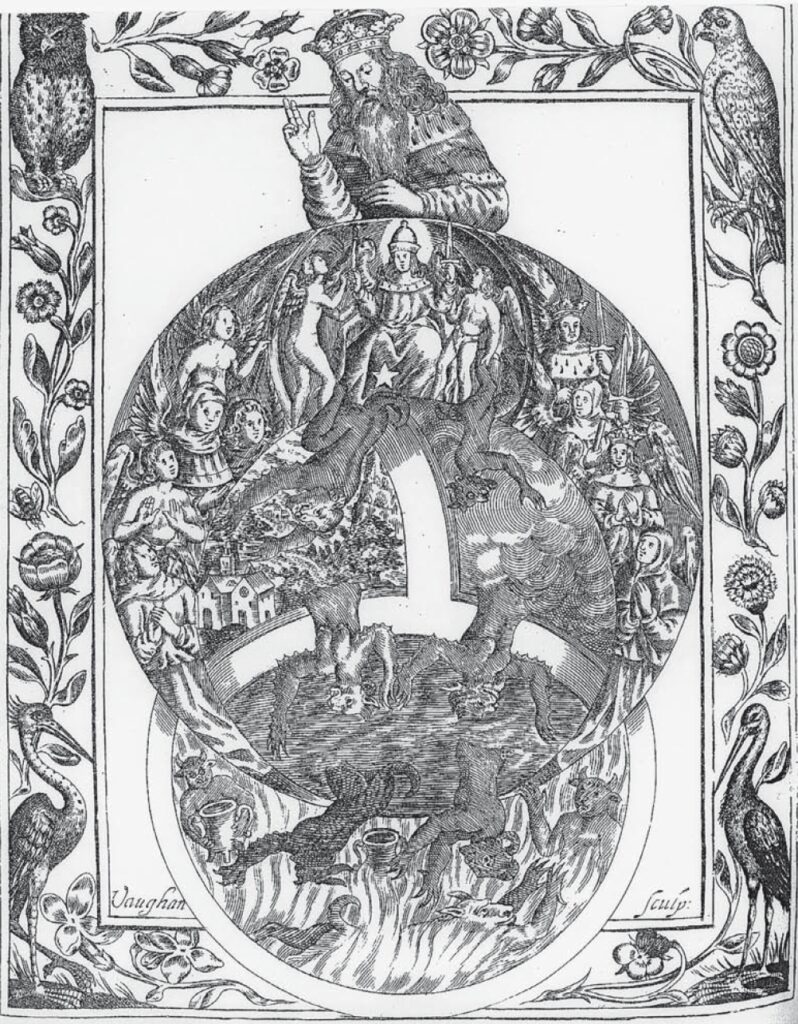
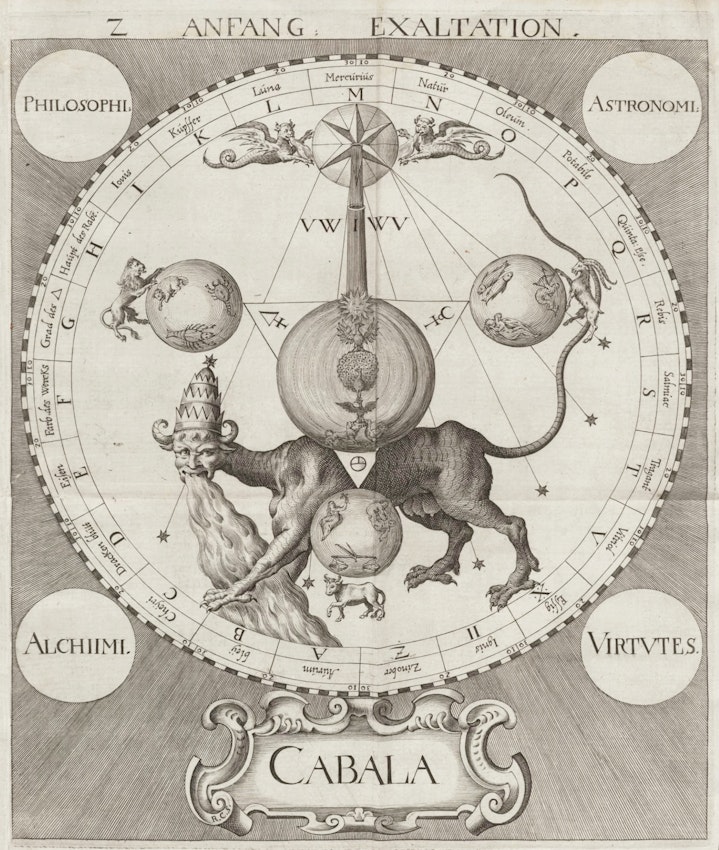
It was Luther who first identified the Papacy with Antichrist and, on this basis, Lutheran artists had crowned the head of the Whore of Babylon with the papal tiara, as in the Wittenberg Bible of 1522 “(Revelation 17: 1–7). Furthermore, they equated the Pope with the Beast from the Bottomless Pit (Revelation 11: 7). The standard apocalyptic repertoire was created in Luther’s immediate social circle by Lucas Cranach in his woodcuts for the Passional Christi und Antichristi (1521) and for Luther’s Septembertestament (1522). Despite the international and historical prestige of Dürer’s apocalyptic engravings (1498), which were copied in the Wittenberg Bible (1522), later Protestant iconographydid not develop on his model, but on that of Cranach.[…]
Martyrdom was believed to resource the Church with the spiritual wealth of divine grace, the foundation for its future development on earth.[…]
According to this doctrine, the flesh was the ground of human salvation, its torment a necessity, whether in life as a martyr for Christ, or after death in the state of purgation.[…]
In medieval doctrine it was the Church alone that could authorise the survival of the subject (that is, the body) by ensuring that the soul and its temporary somatic body went either to Purgatory, or (infrequently) directly to heaven through the grace of the Church’s sacraments.[…]
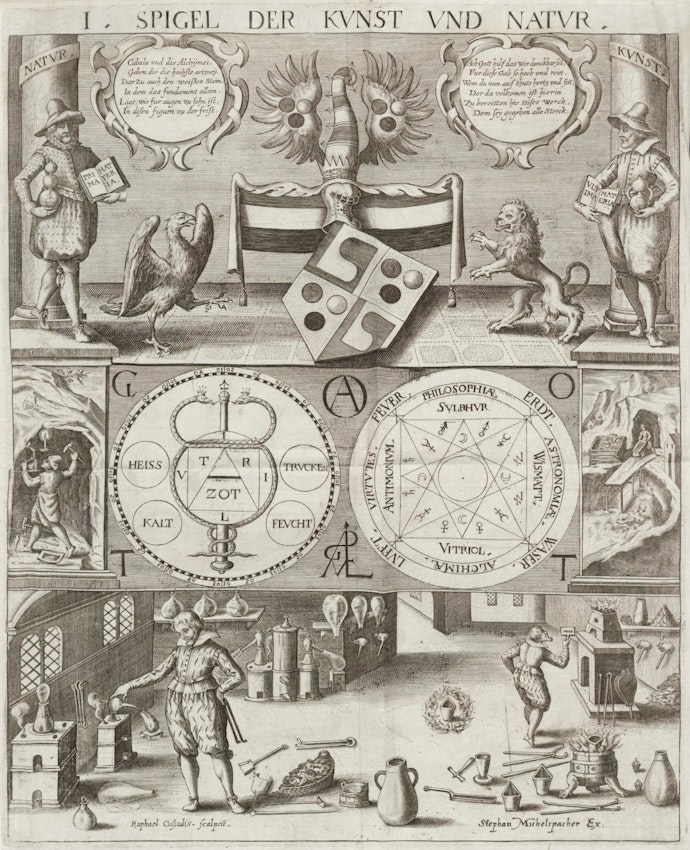
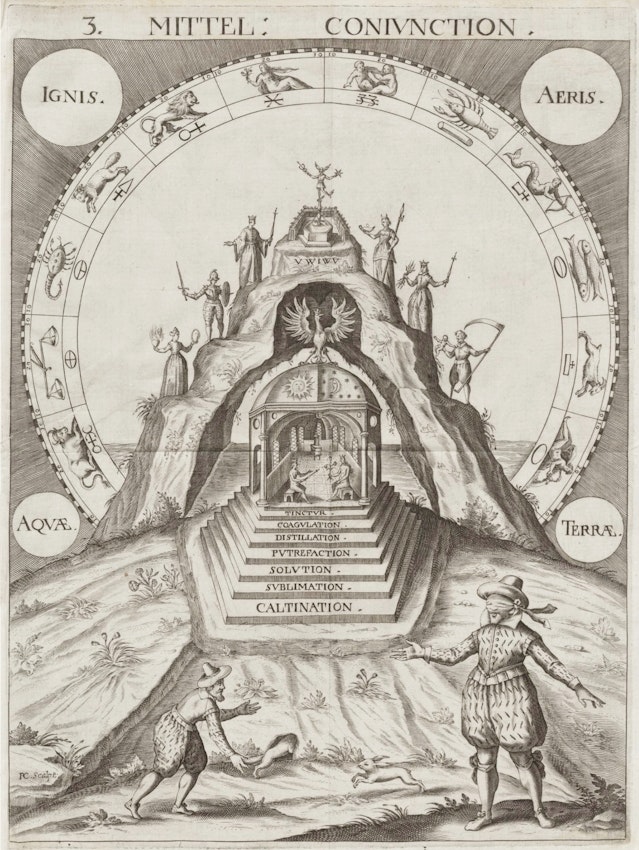
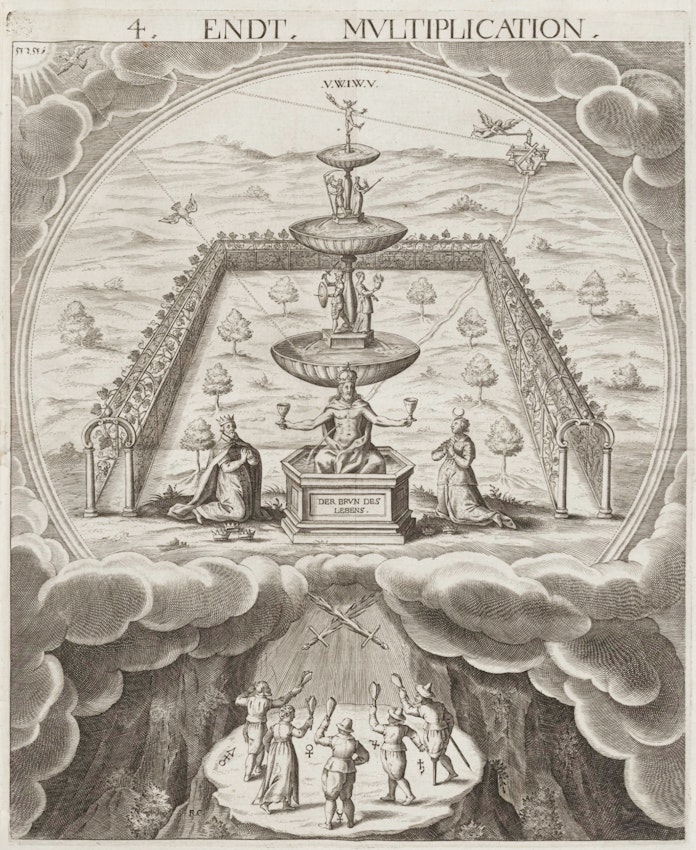
Some Paracelsian alchemists, especially Heinrich Khunrath (ca. 1560–1605) and Stefan Michelspacher (active ca. 1615–23), were objects of persecution on the part of both Lutheran and Catholic authorities. Khunrath was an alchemist from Saxony, the heartland of the Reformation, but his theological stance was characteristic of the second generation of Protestants who felt that Luther’s work had been left incomplete and that another religious reform was essential.[…]
Dissenters from the established Protestant Churches were important precursors of a secular society, tolerant of religious divisions, in which Church and state were separated. In characterising these dissidents,Séguenny has adopted a concept from the philosopher Leszek Kolakowski, that of “religion without a Church”. I would add that a little known aspect of the history of secularism is the role of Paracelsian theosophy in creating a heterogeneous society supporting noncompliant religious views.[…]
Historians such as Frances Yates in her investigation of the “Rosicrucian Enlightenment,” as well as Joscelyn Godwin in his analysis of the “Theosophical Enlightenment” have established the integral relation between esotericism and proto-democratic views. They have demonstrated the manner in which the Rosicrucians, or the eighteenth century “Illuminati,” characterised themselves as forerunners of enlightened thinking in their development of the intellectual traditions of classical humanism.[…]
Historians of Renaissance philosophy, such as Kristeller, have demonstrated that Renaissance Hermeticism also contributed to the emergence of a more individualistic faith. It had been Cosimo de Medici who had requested Marsilio Ficino in 1463 to translate into Latin the newly recovered Corpus Hermeticum. He completed only the first fourteen tractates and it was Lodovico Lazzarelli who translated the rest (tractates XVI–XVIII), publishing them as Diffinitiones Asclepii in Champier’s edition of 1507. This hermetic corpus mostly consisted of second century religious texts written by a variety of pagan groups in the late Hellenistic period. Some of them had been influenced by early Christianity, while others had been inspired by Middle Eastern beliefs. In the early Christian era they had been grouped under the pseudonymous authorship of “Hermes Trismegistus.” As a syncretic merger of diverse Hellenistic theosophical beliefs and practices, Hermetism had appeared in pre-Christian Egypt in the second century. Its sources included the Chaldean oracles, Orphism, the Sibylline prophecies, theogonies that united the Greek pantheon to those of Middle Eastern nations conquered by Alexander, initiatory rites and magical papyri originating in the proliferating cults of the Hellenistic Egypt, some of which had been influenced by concepts drawn from Christian soteriology. Hermetism was, thus, historically distinct from neo-platonism which was a theosophical discourse claiming direct descent from classical Platonic thought. In fact, the diversity of religious ideas in the late Roman Empire had stimulated Plotinus to evolve his own account of a triple-layered cosmology with an accompanying ontology inclined towards mystical experience. Plotinus had no interest whatsoever in magical ritual, but was intent on spiritual illumination for himself and his disciples. […]
In answer to earlier doubts concerning his religious beliefs, Fludd had written the Declaratio Brevis addressed to King James I in 1618–20. The alchemistic appropriation of the Christian sacraments of Baptism and Communion was not welcomed by the ruling Churches. None of them could accept a chemistry that claimed to produce substances equivalent to the body and blood of Christ, administering the same grace of spiritual and physical healing. The miracle of the bread and wine in the mass or Communion service was unique and could never be emulated by chemical means, no matter how devout and prayerful. Moreover, none of the Churches permitted unauthorised laity to perform the sacramental rite which was the prerogative of priests that had been formally appointed by a bishop through a direct apostolic transmission from Christ. Furthermore, if, like Fludd, they introduced kabbalistic angels (chiefly, Metatron) into the alchemical version of the rite, he was considered to be practising the most outrageous demonic magic, as Mersenne asserted. Good or bad purpose was irrelevant: the issue here concerned the question of who should control this powerful miracle. […]
The assertion that an individual human being guided by a purely inner grace could transform their own nature into that of Christ led to a second consequence, namely that the Church, whether Roman or Lutheran, became irrelevant to the work of spiritual salvation. In the organisation of dissident religious groups it was the laity who supplanted the ecclesiastical hierarchy as directors of the inner conscience. They were validating their efforts for independence of Church control by the sayings of Christ concerning the role of the Holy Spirit after his death.[…]
The Christian image of the Son of Man, specifically the one devised by the apostle Paul, was partly a historical inheritance from a pre-Christian Anthropos figure, whose cult had existed in the second century BC in Palestine, Syria and Egypt. Originating in Mesopotamia, this person had been translated to a Judaic context in the apocalyptic texts of Daniel, Ezekiel and Enoch 2.[…]
The image of the “Son of Man” (“Anthropos”) entered Judaism in the second century BC, appearing initially as a nameless, man-like person described in Daniel who subsequently became a messianic character in the account of Enoch. He was an Iranian element that was incorporated into the Jewish account of the creation of Adam. The “Son of Man” or “Anthropos” is a translation of the Hebrew term “bar nasha” which is found in the Synoptic Gospels and in the Hebrew Apocalypses of Daniel and Ezekiel. In the Semitic idiom “bar nasha” was not a first name, simply meaning “one,” or “someone”. It was the Hellenistic Christians who interpreted the term as meaning “the Son of Man” (“Anthropos”), following the Greek translation: “ὁ υἱὸς τοῦ ἀνθρώπου.” The original Jewish “bar nasha” is first encountered in the Book of Daniel 7: 13–14, which was also the first to mention the doctrine of the resurrection of the body. He subsequently re-appeared in the apocryphal Book of Enoch (first century BC) which added new elements to messianic prophecy, by integrating the non-Judaic Son of Man, the story of his concealment by God, his role in the revelation of secrets and his final task as universal Judge. Ezekiel, in turn, developed an eschatological account which prophesied a final conflict at Jerusalem followed by Judgement. The superhuman “Bar Nasha,” as God’s champion, represented the chosen people. Kraeling has, in fact, differentiated between the historical characters of the “Anthropos” and of the “Son of Man” that were fused together in subsequent Christian apocalypticism. As a victorious champion, Anthropos belonged to the history of creation, while the Son of Man “Bar Nasha” was an eschatological type.[…]
It was believed by many prophets and magicians that the Holy Spirit in the Last Days was revealing the concealed secrets of Nature, as Christ had foretold. These were available only to those of the true faith, namely, Lutherans. It is no coincidence that the alchemical resurgence of the late sixteenth century occurred in the Lutheran areas of Europe, particularly in the eastern German states through into Silesia, where there emerged lively groups of Paracelsian alchemists. Luther’s main disciple, the humanist Philip Melanchthon (who was also Reuchlin’s son-in-law) displayed a special interest in alchemy. He also encouraged the use of the new humanistic science of linguistics in order to mine sacred texts for further prophecies.