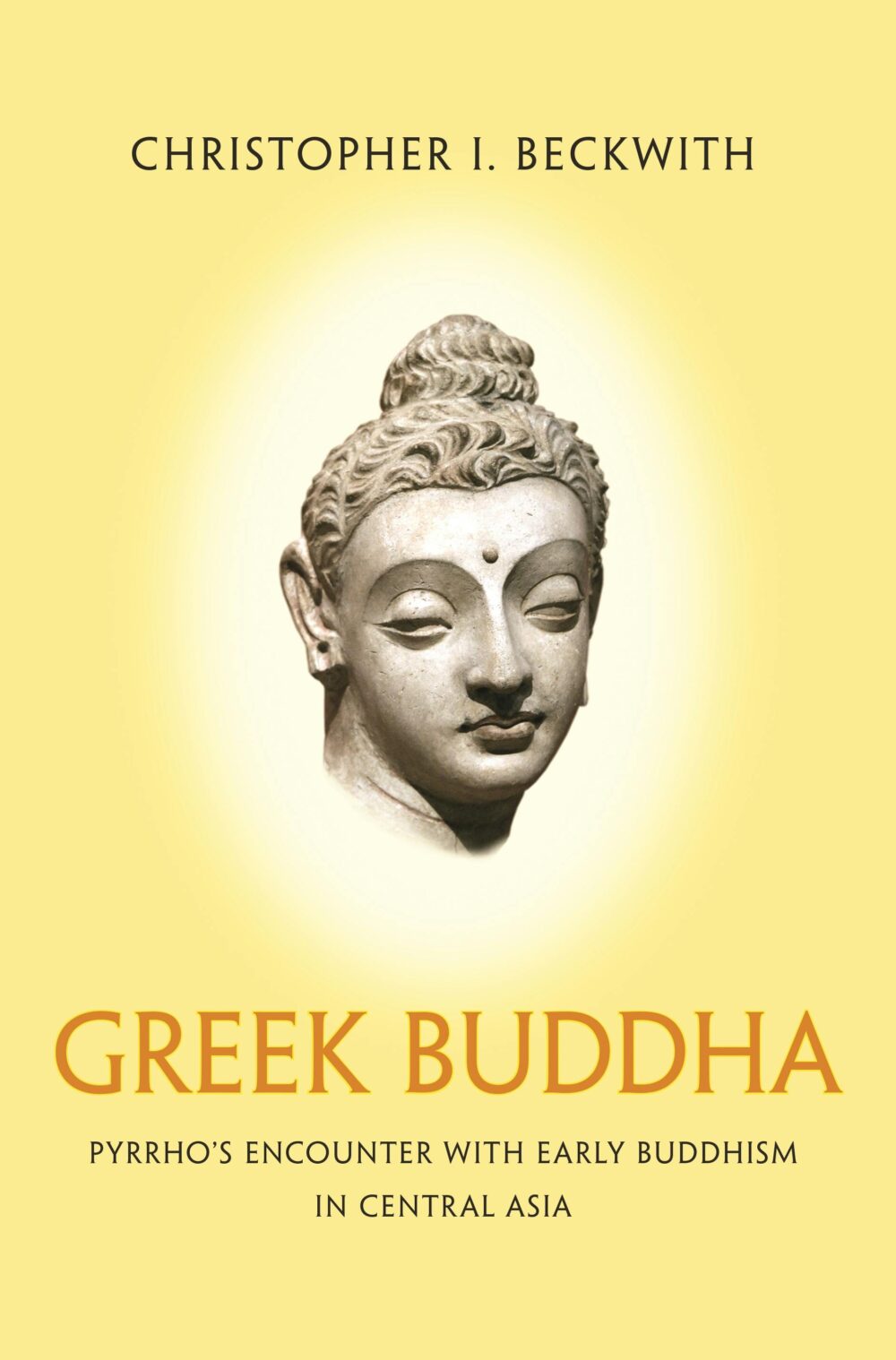
Für gewöhnlich wird erklärt Buddhas Beiname Śākyamuni bedeutet “Weiser der Śakya”, ein Kriegerclan im Nordwesten Indiens.
Das Epithet ist erstmals in den Ghāndhārī-Schriften der ersten nachchristlichen Jahrhunderte belegt, die in Prakrit verfasst sind, und zwar als Śākamuni.
Skythen und die Verbindung zum Zoroastrismus
Die Achaemeniden bezeichneten die Skythen als Śāka, lt. Iranistik ursprünglich eine Selbstbezeichnung der östlichen Skythen, deshalb argumentiert Beckwith der Beiname bedeute Weiser der Skythen und sei erst später zu Sanskrit Śākyamuni geworden.
Die Skythen dienten im Heer der Achaemeniden und seien so zuerst nach Indien gekommen und überdies in Berührung mit dem Zoroastrismus.
Früher Buddhismus und seine Abgrenzung zum Zoroastrismus
Beckwith identifiziert die in alten Quellen Ṣramaṇas Bezeichneten mit den frühen Buddhisten und erklärt, dass sie dem Zoroastrismus ablehnend gegenüber gestanden hätten, den die Perser im Osten etablieren wollen, deshalb kein Schöpfergott und im frühen Buddhismus keine heilige Erlöserfigur.
Frühe Interaktionen und Datierung von Zoroaster
Die Brahmanen hingehen seien den Zoroastrismus gegenüber aufgeschlossen gewesen.
Der terminus post quem für das Auftreten Buddhas sei somit der Feldzug Darius in Indien 518/517 v. Chr.
Beckwith akzeptiert die orale Tradition des Ṛgveda und auch, dass es bereits vor Buddha Austausch des Veda mit dem Zoroastrismus gegeben haben muss, datiert den Zoroaster aber niedrig ~600 v.Chr.
Datierung des Palī-Kanons und Ghāndhārī-Schriften
Für die Tradition des Palī-Kanon hingegen, von dem Teile traditionell in die Lebenszeit Buddhas datiert werden, möchte er auch nicht das Datum der ersten schriftlichen Fixierung zum 4. Konzil auf Sri Lanka unter König Vaṭṭagāmaṇī 29-17 v. Chr. akzeptieren, sondern die Ähnlichkeit zu den Ghāndhārī-Schriften deuten in die Śāka-Kushan-Era der ersten nachchr. Jahrhunderte.
Einfluss des Buddhismus auf die Upaniṣaden
Auch die Upaniṣaden, die üblicherweise 750-500 v. Chr. datiert werden, zeigen lt. Beckwith Einfluss von Buddhismus und nicht umgekehrt, seien deshalb deutlich späteren Datums.
Beckwiths kritische Analyse von Gründungsgeschichten
Die Geburtsgeschichte Buddhas in Lumbini ist nach Beckwith ebenfalls viel spätere Nachdichtung.
Ähnlich kritisch behandelt er die Tradition des Jainismus, der seine Gründerfigur Mahavira als Zeitgenossen Buddhas betrachtet.
Nach Beckwith gibt es hierfür auch keine Belege die vor die Śāka-Kushan-Era zurückreichen, der früheste gesicherte Beleg seien Höhlenklöster mit Jaina-Artefakten.
Historische Darstellungen und kulturelle Unterschiede
Er ist damit also durchwegs sehr kritisch was die traditionellen Datierungen und Geschichtsdarstellungen auch in der aktuellen westlichen Geschichtswissenschaft angeht.
Die Inder hatten nie Interresse an empirischer Historiographie oder Chronologie, ihre Geschichte ist immer episch und mythologisch.
Überhaupt wird sogar gesagt die Hinduisten seien dem Schrifttum misstrauisch gegenüber gestanden, anders aber die Buddhisten und Jainisten.
Von der Zeit der Guptas an wird auch die buddhistische Geschichtsschreibung stark mythologisiert.
Buddhas Legende als höfische Erzählung
Die Erzählung von dem reichen Prinzen Buddha von höchster Geburt, der mit aller Leichtigkeit alle Widrigkeiten überwindet und Buddha wird klingt auch sehr nach einer Fertigung für die tatsächlichen Prinzen und Höfe um sie dem Buddhismus wohlwollend zu machen.
Pyrrhonismus: Ursprung und Einfluss
Mit Alexanders Feldzug kam Pyrrho nach Indien und wurde später in Griechenland Begründer einer Philosophenschule die einflussreich genug war, dass die Bezeichnung Pyrrhonismus dafür geprägt wurde und die dem Skeptizismus angerechnet wird.
Cicero hat sich damit befasst und Eusebius ist eine bedeutende Quelle und David Hume bezeichnete sich als Pyrrhonist.
Skeptische Grundsätze des Pyrrhonismus
Was die pragmata – „Angelegenheiten, Fragen, Themen“ – betrifft, so sind sie alle adiaphora – „durch keine logische Differenzierung unterscheidbar“ –, astathmēta – „instabil, unausgewogen, nicht messbar“ – und anepikrita – „unbeurteilt, unbestimmt, unentscheidbar“.
Beckwith zitiert Euseb. Praep. Ev. XIV 18:1-5
Die Unzuverlässigkeit von Sinneswahrnehmungen und Meinungen
Daher sagen uns weder unsere Sinneswahrnehmungen noch unsere „Ansichten, Theorien, Überzeugungen“ (doxai) die Wahrheit oder Lüge [über pragmata]; also sollten wir uns sicherlich nicht auf sie verlassen [um dies zu tun].
Vielmehr sollten wir adoxastous „ohne Ansichten“, aklineis „unentschlossen [zu dieser oder jener Seite hin]“ und akradantous „unerschütterlich [in unserer Weigerung, zu wählen]“ sein und über jedes einzelne sagen, dass es nicht mehr ist, als es nicht ist, oder dass es sowohl ist als auch nicht ist, oder dass es weder ist noch nicht ist.
Die Trilakṣaṇa als buddhistische Lehre und ihr griechisches Äquivalent
Das hat große Ähnlichkeit mit buddhistischer Weisheit, Beckwith will herausstellen, dass sich darin ein dreiteiliger Aufbau befindet wie es ihn in griechischer Philosophie so nicht gegeben hat (der “Weg der Mitte” ist aber zB auch in Aristoteles Politik relevant – den Pyrrho womöglich persönlich kannte, schließlich war er zuvor bereits an Alexanders Hof und dieser der Schüler von Aristoteles), hingegen sei es zentraler Bestandteil buddhistischer Texte, er führt dazu das Trilakṣaṇa an:
The statement is known as the Trilakṣaṇa, the ‘Three Characteristics’ of all dharmas ‘ethical distinctions, factors, constituents, etc.’ Greek pragmata ‘(ethical) things’ corresponds closely to Indic dharma ~ dhamma ‘(ethical) things’ and seems to be Pyrrho’s equivalent of it.
The Buddha says, “All dharmas are anitya ‘impermanent’. . . . All dharmas are duḥkha ‘unsatisfactory, imperfect, unstable’. . . . All dharmas are anātman ‘without an innate self- identity’.”
Ziel der Meditation
With the essential work of calming the mind completed, with the attainment of the fourth dhyāna, the meditator can focus fully on the development of insight.
Insight meditation aims at understanding [that “things”] . . . are impermanent and unstable (anitya/anicca), that they are unsatisfactory and imperfect (duḥkha/dukkha), and that they are not self (anātman/anattā).
The philosophical nuances of these three terms may be expressed differently in the theoretical writings of various Buddhist schools, but in one way or another the higher stages of the Buddhist path focus on the direct understanding and seeing of these aspects of the world.
“Early Buddhism” und Chronologie
Nach Beckwith ist Pyrrho das älteste Zeugnis buddhistischer Philosophie und etwa zeitgleich damit seien die chinesischen, früh-taoistischen Werke Tao Te Ching (von Laotzu/Lao Tan) und das Chuangtzu sowie eine Jadeyoga-Inschrift, die ebenfalls vom Buddhismus inspiriert oder beeinflusst seien.
Megasthenes’ Indika und frühe indische Schriften
305/4 v. Chr. reiste Megasthenes im Auftrag von Seleukos I. zu Chandragupta, dem Begründer der Maurya-Dynastie.
Er schrieb das verlorene Werk Indika, von der nur Bruchstücke in Strabos Geographica erhalten sind, darunter, dass die Inder keine Schrift kannten.
Und in der Tat sind die ältesten überlieferten Schriften auf indischem Boden (mit Ausnahme der nicht entzifferten Glyphen der bronzezeitlichen Induskultur) die Inschriften der Maurya aus dem 3. Jh. v. Chr.
Konkret die Major Rock Edicts, die als Urheber Devānāṃpriya Priyadarśi angeben der mit Aśoka identifiziert wird.
Kontroverse um die Identifikation von Devānāṃpriya Priyadarśi und Aśoka
Beckwith argumentiert aber, dass diese Identifikation durch den Bearbeiter der Standardedition dieser Texte Hultzsch 1925 auf der Grundlage des ahistorischen Mahāvaṃsa beruht.
Er führt eine Reihe Ungereimtheiten auf und argumentiert bei Devānāṃpriya Priyadarśi handle es sich womöglich um den Sohn von Chandragupta, bei Aśoka hingegen um einen späteren Herrscher der lediglich für die Minor Rock Edicts verantwortlich sei, in denen Devānāṃpriya Aśoka auch als Urheber angegeben wird.
Chinesische Sprachverbindungen
Er führt auch eine Herleitung von Gautama von Lao Tan im Alt- und Mittelchinesischen.
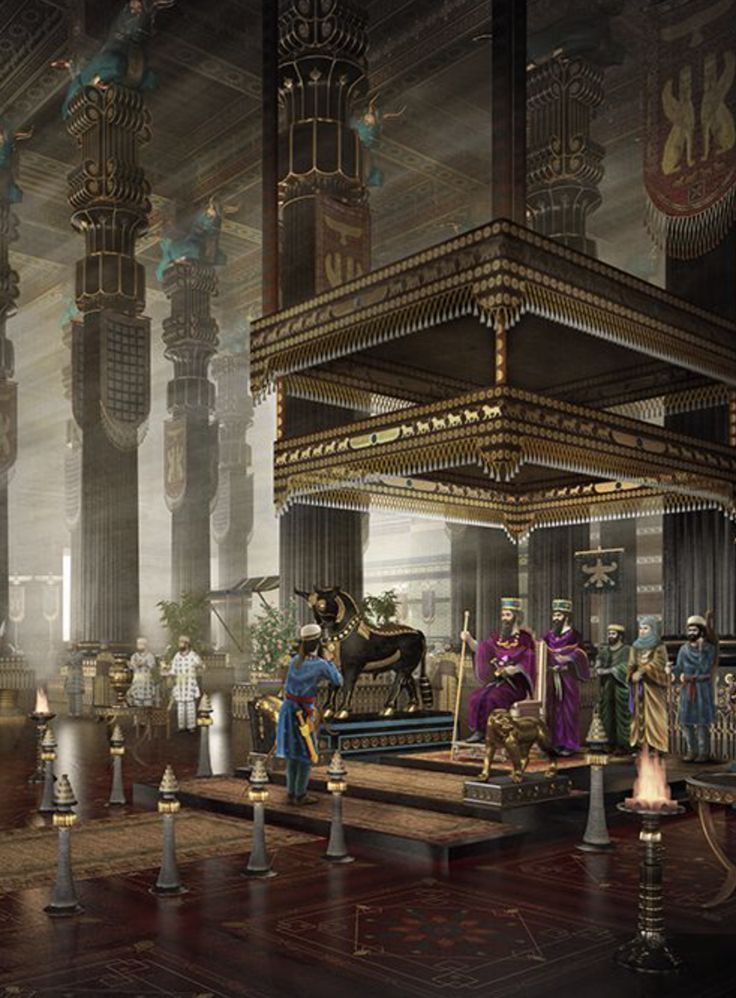
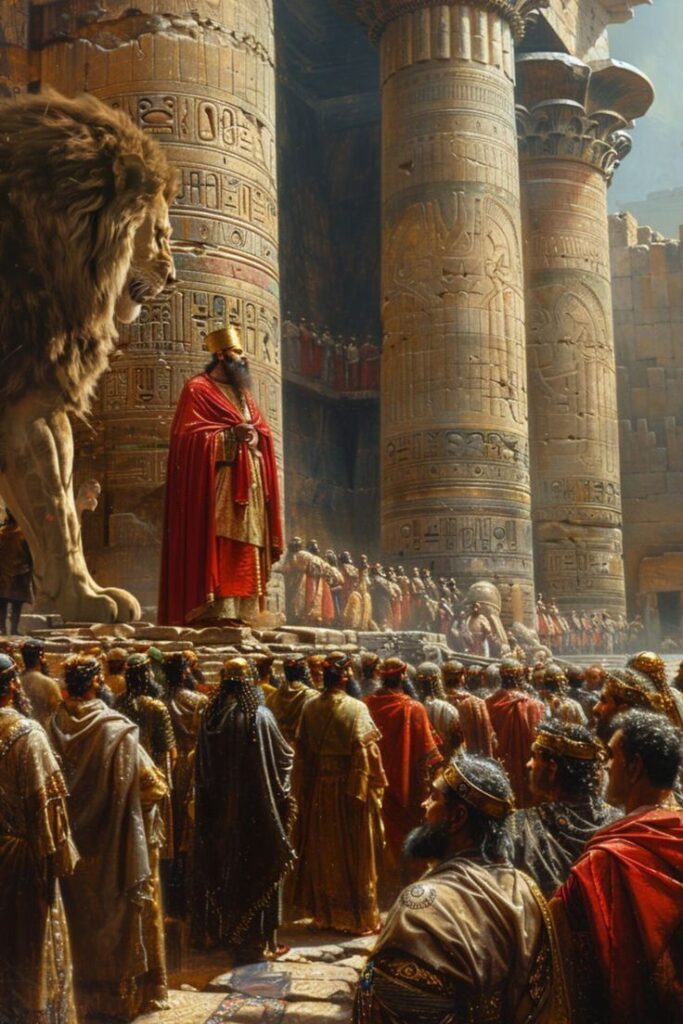
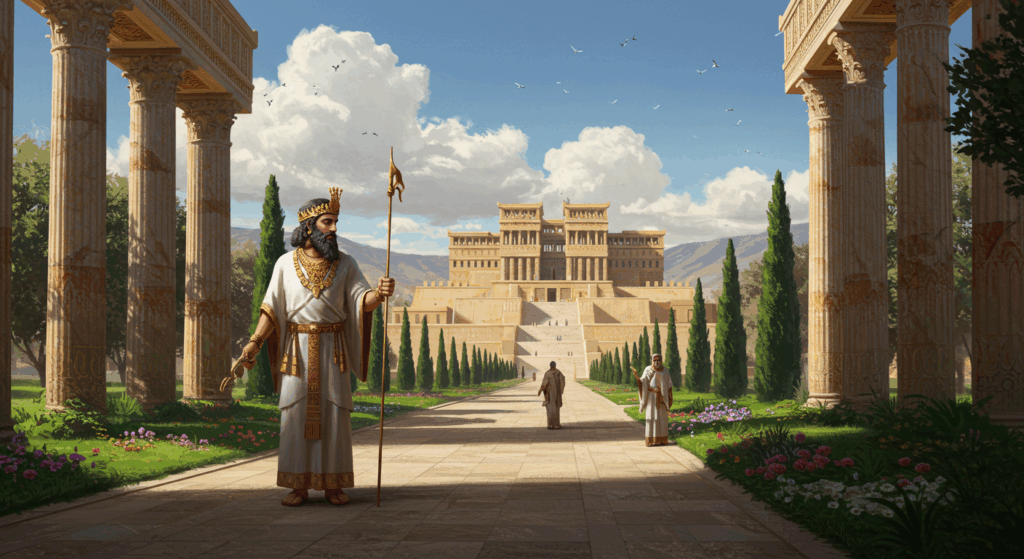
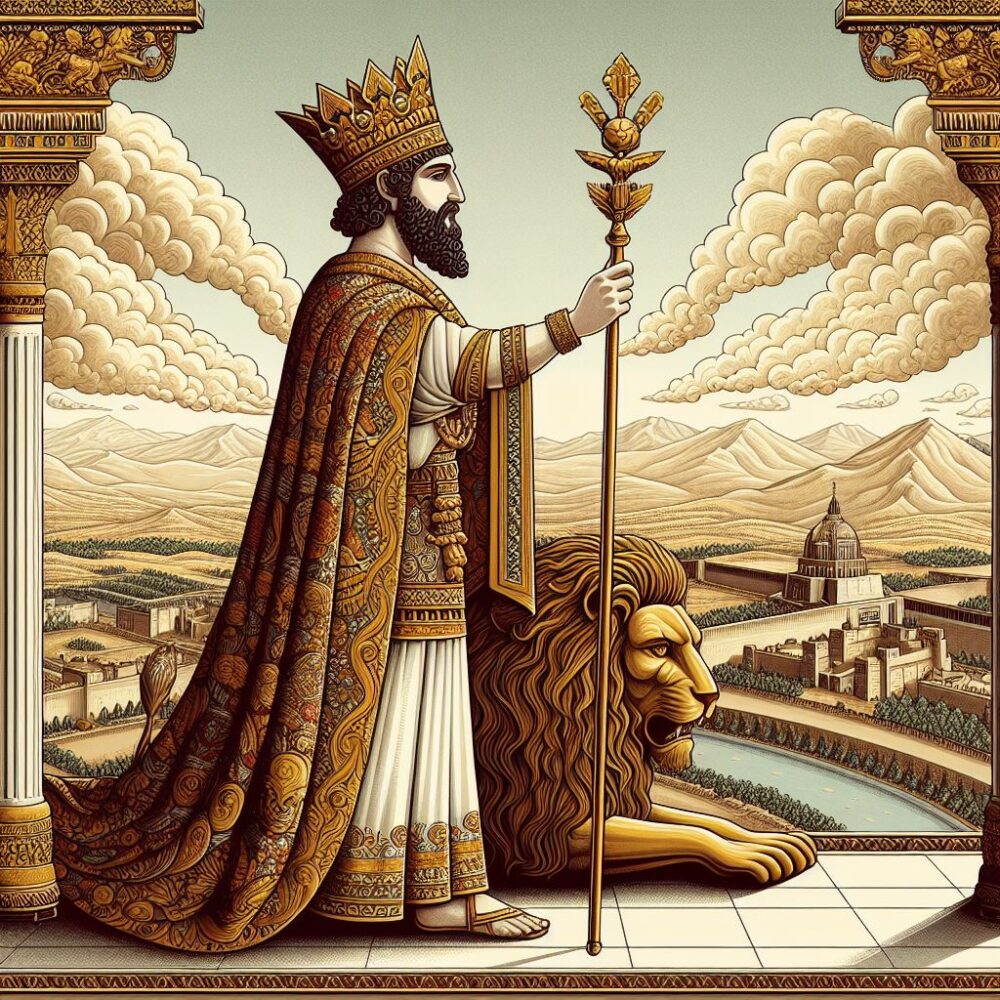
Rather, we must imagine God’s rule as similar to that of the Great King. The court of Cambyses, Xerxes, and Darius was so magnificently organized that it reached the pinnacle of majesty and sublimity. The ruler himself, as is reported, sat enthroned in Susa or Ecbatana, invisible to all, in a marvelous palace whose interior shone with gold, electrum, and ivory. There were many gatehouses, one after the other, and many courtyards, separated from each other by many stadia; brazen gates and mighty walls protected the whole. The most distinguished and experienced men were appointed to this task, some in the king’s immediate vicinity as his spearmen and his attendants, others as guards of the individual courtyards, as gatekeepers and so-called listeners, so that the king himself, the Lord and God—for so he was addressed—could see and hear everything. Separate from these, others were employed: administrators of state revenues, leaders in war and hunting, recipients of gifts, and officials for all other business related to the needs of the royal household.
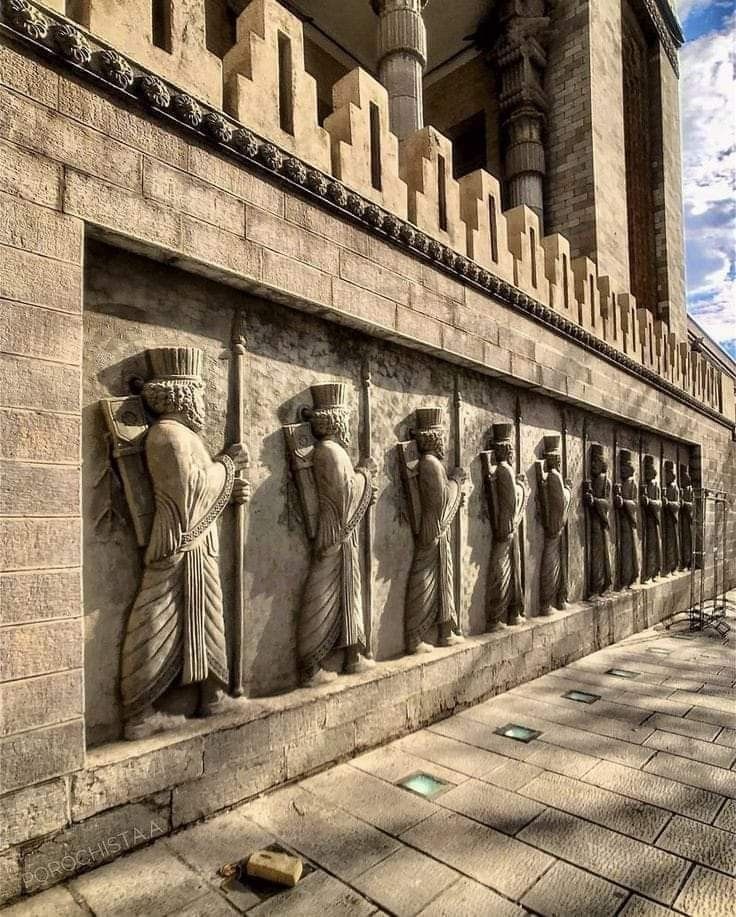
And the entire dominion over Asia, extending westward to the Hellespont and eastward to the Indus, was divided among themselves by generals, governors, and kings according to peoples—they, too, were servants of the Great King, to whom others, such as runners, scouts, messengers, watchmen, and keepers of the fire signals, were subordinate.
Leuenberger, Martin, Art. Kingship of God (OT), in: Das Wissenschaftliche Bibellexikon im Internet (www.wibilex.de), 2012
The earthly kingship in Israel and Judah as well as the kingship of Yhwh form a section of ancient oriental concepts of rule and can only be understood historically or in terms of the history of religion and theology against this background or within these concepts. […]
King Hammurabi thus sees himself as “the shepherd appointed by Enlil” in parallel with the appointment of the god Marduk to an “eternal kingship (šarrūtum darītum)” (Hammurabi Stele 1:21) by Anu and Enlil (1:1ff) […]
In the wake of the global political rise of the Persian king Cyrus, Deutero-Isaiah visionarily proclaims the imminent, definitive, “eschatological” fulfillment of salvation for Israel in the near future. The (original) book gradient leads to Isa 52,7-10*, where the phrase “your [sc. Zion’s] God has become king and reigns” (מָלַךְאֱלֹהָיִךי mālakh ‘älohājikh; qatal-x) emphasizes the dawning of the kingship of Yhwh (at least in the divine world), which will now inevitably lead earthly events to their goal. In the process, Yhwh’s “Messiah” Cyrus (Isa 45:1) inherits the worldly kingship of the Davidids, which is thus boldly globalized in the course of Deutero-Isaiah’s confrontation with the Babylonian dominant culture – in correspondence with the worldwide kingship of Yhwh over all “gods” (whose divinity is famously disputed) and all peoples. […]
[Deutero-Isaiahs] integration into the book of Isaiah results in a new dynamic: the exilic problematization is caught up in literary terms by the sequence of the present kingship of Yhwh (Isa 6) and the eschatological (new) dawn (Isa 40-52*). The same applies to the earthly level, when the royal texts Isa 7; Isa 9; (Isa 11), historicized in the course of the book to the Davidides, are continued through Isa 45 with the Messiah Cyrus. […]
[In the apocalyptic literature] the theme is never explicitly at the center, but Yhwh is not infrequently dubbed king and the (secular) enforcement of his kingship is consistently maintained against secular resistance of very different kinds – ultimately for the sake of God’s divinity (see in detail Camponovo, 1984, 230ff; Lindemann, 1986, 196ff; Collins, 1987, 88ff). […]
[In book of Daniel] God allows his “everlasting kingship (מַלְכוּת עלַם malkhût ‘ālam)” (Dan 3:33) to be realized in the succession of time by changing (world) rulers (see especially Kratz, 1991, 148ff; Seow, 2004). Only in the following (Hebrew) book redactions do eschatological-apocalyptic upheavals take place, which bring the earthly and divine kingship into an intensifying opposition (see Dan 2:44; Dan 7:14.18; Dan 10-12). […]
Finally, the Psalter, which was successively formed in the post-exilic period, is conceptually characterized by the kingship of Yhwh in its younger two theocratic books IV-V as well as in the present final composition (see Leuenberger, 2004, 392f [lit.]; Janowski, 2010, 301ff). Various conceptions can be distinguished, which locate Jhwh’s kingship in the course of the book in cosmic (natural order), large-scale political (world of nations / legal order), priestly (cultic legal order) and finally everyday (elementary salvation and provision in Ps 101-150) areas of experience; the spatial and temporal universality of Jhwh’s kingship is also spelled out in detail. The theological climax and final accent of the Psalter is then reached in the artfully constructed hymn Ps 145:
V. 1 I will exalt you, my God and King, / and praise your name forever and ever. (…) V.13 Your “kingdom” is a “kingdom” for all time, / and your reign lasts from generation to generation.
Ps 145
A historical analysis of the Yhwh-related מלך * mlk statements (king) in their literary (near) contexts brings to light a quite extensive field of words and concepts of “kingship of Yhwh”: on the one hand, there are more or less close parallel terms to מלך * mlk “to be / become king” or מֶלֶךְ mælækh “king” or the abstracts for “kingship” such as משׁל mšl “to rule”, שׁפט špṭ “to judge / rule”, Aramaic שׁלט šlṭ “to rule” or מוֹשׁל môšel “ruler”, מָשִׁיחַ māšîaḥ “anointed one” (Messiah), שֹׁפֵט šofeṭ “judge”, רֹעֵה ro’eh “shepherd”, רֹאשׁ ro’š “head”, נָגִיד nāgîd “prince” resp. מֶמְשָׁלָה mæmšālāh and Aramaic מָשִׁיחַ šālṭān “rule” etc. On the other hand, there are also numerous royal or imperious attributes (such as גֵּאוּת ge’ût “majesty”, הוֹד hôd “majesty”, הָדָר hādār “splendor”, עֹז ‘oz “power”, אַדִּיר ‘addîr “mighty” [s. especially the superiority over the chaos waters] etc.), functions (e.g. ישׁב jšb “to throne / dwell”, עלה ‘lh “to ascend / be exalted”) and conceptual elements (e.g. כִּסֵּא kisse’ “throne”, סוֹד sôd “throne council” [council of the gods], אַרְמוֹן ‘armôn “palace”, הֵיכָל hêkāl “temple / palace” and more) should be included: They all characterize Yhwh – admittedly in different forms and accentuations – as king. […]
3) brk ∙ jhw[h …] (4) brk ∙ bgj[m … j]mlk … (6) brk ‘dn[j] jh … (3) Blessed is / be Jhw[h …,] (4) Blessed is / be he among the nations who reigns / will reign as king. … (6) Blessed is / be the Lord; jh[…]”
Inscription from En Gedi
The Lord Yhwh is thus blessed (lines 3/6), whom the central statement (line 4) describes in a nationwide perspective (cf. ‘šr “Assur” line 1)[…]
The following should be mentioned: mlkj(h)w “(my) king is Jh(wh)” or jhwmlk “Jh(wh) is king” (cf. parallel formations such as mlkj’l “king is God” or ‘dnmlk “the Lord is king”). In addition, there are semantically related ruler names of the type “name of God + ruler terminus”, i.e. above all jh(w) “Yhwh”, ‘l “God” or ‘dn “Lord” with rwm “to rise / to be exalted”, qwm “to rise / to be high” or ‛lj / ‛lh “to ascend / to be high”, whereby the order of the two elements can change.
Hermisson, Hans-Jürgen, Art. Deutero-Isaiah, in: Das Wissenschaftliche Bibellexikon im Internet (www.wibilex.de), 2017
One of the elements of the promise of help is the mention of the redemption of Israel. The term comes from family law and refers to the redemption of clan members from debt slavery (redeemer / ransom); in DtIsa it is used exclusively as a predicate of Yahweh: Yahweh is Israel’s “redeemer”, now therefore from the Babylonian exile. However, the idea is significantly modified: Israel’s “ransom” does not, after all, mean that Yahweh pays a ransom to the previous overlord Babylon. Isa 43:3 comes closest to the conventional idea: Yahweh pays “Egypt, Cush and Sheba” as a ransom for Israel, but not to the previous owner, but to the future owner, to Cyrus, the conqueror of Babylon. It is different in Isa 44:22, where the word of Israel’s “redemption” follows the statement of the redemption of its sin and guilt: Admittedly, “redeem” there also means specifically to free from Babylonian captivity, but this is a consequence of Israel’s guilt towards its God. The payment of a ransom to Cyrus or Babylon is disputed by later authors (Isa 45:13bβ; Isa 52:3), but that is not DtIsa’ problem: it is concerned with the analogy of the familial relationship and the resulting duty to liberate: Yahweh has declared such a relationship to his people with the word of redemption. […]
Here we must speak of the earthly agents of Yahweh with DtIsa. There is Cyrus, addressed in two oracles of calling: In Isa 45:1-7 he is to conquer Babylon as Yahweh’s “anointed one”, in Isa 42:5-8* he is to release the captives. This is the earthly-concrete form of the divine victory over Babylon and the repatriation of the “spoils” after the final part of the prologue: Cyrus is commissioned and authorized by Yahweh to do so. […]
The great “imperative poem” in Isa 51,9-10.17-23; Isa 52,1-2, which is linked to the text of the jubilantly welcomed entry of Yahweh into his city in Isa 52,7-10 and the concluding call to the exiles in Isa 52,11f. The plaintive call to Yahweh’s arm to wake up and prove his power in Israel’s favor, as he once did at the Exodus, at the Red Sea (Isa 51:9f.), is answered with the counter-call to the woman Jerusalem / Zion to rise in her turn (Isa 51:17), to rise from the dust, put on her festive garments and sit on the throne (Isa 52:1-2). Zion is drawn here in contrast to the woman Babylon, who loses her throne (Isa 47), but unlike Babylon, she is not Yahweh’s rival: she receives her royal role as the wife of King Yahweh, who now moves into Jerusalem and begins his world reign there: “Yahweh has bared his holy arm in the sight of all nations, and all the ends of the earth see the salvation of our God” (Isa 52:10).[…]
DtIsa’s message is presented in a wealth of vivid images that cannot all be set off against each other, but which in essence amount to the same thing. They can be summarized in a few sentences. The prophet proclaims the liberation of Yahweh’s people from exile and their return through the desert to the land of promise as a Yahweh miracle, in which Yahweh proves his saving creative power as the only God before all peoples. He needs three earthly agents for this: the chosen, created in the womb and called prophet. The chosen prophetic servant of God, created and called in the womb, who brings the despondent and unbelieving Israel to faith and on the way, as his “active witness”, the chosen servant of God Jacob / Israel, created and called in the womb, who then sets off and allows the miracles to happen to him, as the (initially) “passive witness”, and Cyrus, called and created by Yahweh, as his “shepherd” and “anointed one”, whom he “raised up” for the warlike conquest of the world empire of Babylon and thus for the liberation of the exiled people of Yahweh. All three are portrayed as royal figures with similar predicates. The triumph of Cyrus also serves as an example in which Yahweh proves his uniqueness as God, because he brings it about through his word of creation, which he had previously given to the world through his prophetic servant. In the end, Yahweh will reign from Jerusalem as King of Israel and King of the world, and all nations will confess him as the only God who saves: Thus, in the sum of his message, the prophet proclaims an eschatological event.
The fourth servant song after the death of the prophet goes beyond this by seeing the whole event as initiated by the suffering and death of the prophetic servant and by the miracle of Yahweh in his deceased servant (servant of God).
The 39 books written in Hebrew or Aramaic according to today’s count are divided into three large groups in the arrangement of the Hebrew Bible: Torah (“Instructions”; Pentateuch), Neviim (“Prophets”) and Ketuvim (“Writings”). This is why in Judaism the Bible, which we Christians call the “Old Testament”, is referred to as “TaNaK” (pronounced: TaNaCh), an artificial word made up of the first letters of the three groups. […]
Overall, however, the TaNaK was probably completed and generally accepted around 100 AD. From this late date, the text-forming work is finished.[…]
It was based on four different sources: J = Yahwist around 950 BC; E = Elohist around 800 BC; D = (Pre-)Deuteronomi-um in the 7th century BC and P = Priestly Writer around 550 BC.
[“Münster Pentateuch model”]: A central change compared to the older theory formation is that the first written traditions are dated approx. 100 to 200 years later (instead of the 10th century to the 8th/7th century BC). After the first larger, written narrative contexts in the 7th century, the Münster Pentateuch model sees the decisive formation phase for the Pentateuch in the exile-post-exile and Persian period (6th-4th century).[…]
Only at first glance does it appear that the biblical tradition intends to narrate a course of history; if one takes a closer look, it becomes clear that the biblical tradition is a theological space of teaching and reflection that chooses narrative as a mode as well as lived life and experienced history as a place for orienting theological reflection.[…]
The supreme priest is the king. Staff are employed at the places of worship and the royal court (priests, prophets, etc.), who are paid for their services. They assist the king as advisors in theological and political matters, e.g. in (warlike) decision-making situations (cf. 1 Kings 22; 2 Kings 3).
Like the Codex Hammurapi, the Deuteronomic Law is divided into a prologue (Deut 5-11), a body of laws (Deut 12-26) and an epilogue with blessings and curses (Deut 28).[…]
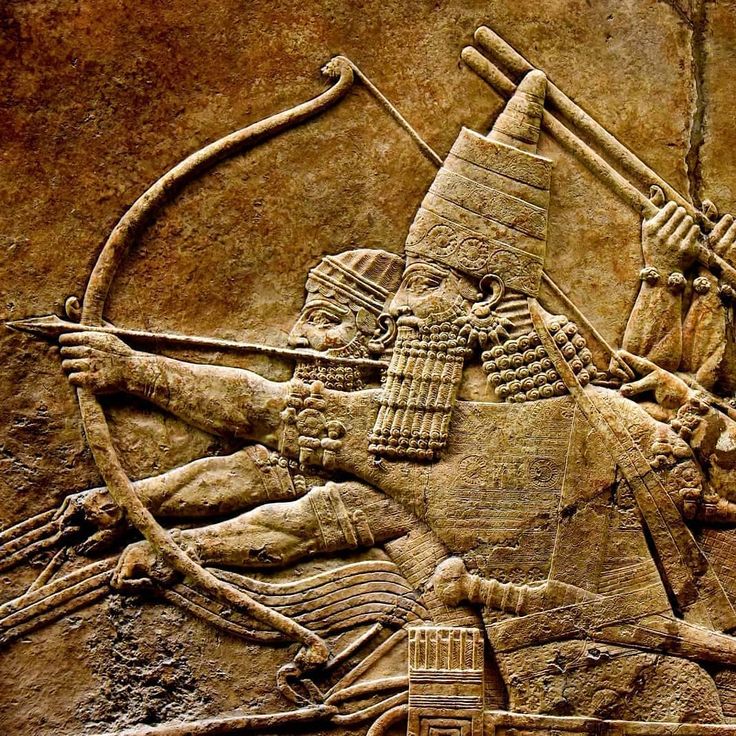
In addition, the character of the law was changed insofar as the law is in the form of an Assyrian vassal treaty. It can be shown that the core of the blessing and cursing chapter in Deut 28:20-44 has been literarily adopted from the oaths of succession to the throne of Azarhaddon (VTE § 56; 38A-42; 63-65).[…]
The Assyrian treaties were not simply imitated, but were theologically reinterpreted in their own context: Unlike in the Assyrian vassal treaties, it is now not the Assyrian king or Assyrian deities who are the contract givers, but YHWH is the lawgiver and concludes a mutual contract (“covenant”) with the people of Israel.
Judah in the 10th century BC
The kingdom of Judah must be understood as a remote mountainous region in the hinterland, where a small-scale, agrarian society of farmers and small livestock breeders lived in subsistence farming organized in villages and clans. There is no material evidence from Judah from either the 10th or 9th century BC that would suggest a centrally governed, territorially organized state. Archaeological research in recent years has led to a new assessment that revises the biblical image of a centrally governed territorial state under David and Solomon in the 11th/10th century BC. How large the territory of Judah actually was is disputed. At this time, Jerusalem was a small village without monumental architecture or written records. Excavations show that after a gap in settlement, early Iron Age Jerusalem was probably only a modest village settlement of 1 ha and around 200 inhabitants.[…]
This makes Jerusalem in the 10th century BC a typical Judean mountain village – not significantly larger or smaller than others. This village certainly did not have the dominant position of a capital and a central administrative center. The continuation of the dynasty with Rehoboam as narrated in the books of Kings can hardly be proven historically. It could be that Rehoboam was also a figure who, from a later Judean perspective, served to narratively construct continuities. The campaign of the Egyptian pharaoh Shoshenq I (945-924 BC; biblical name: Shishak) in Palestine, which is traditionally dated to around 926 BC, tells of the plundering of the temple and the palace (cf. 1 Kings 14:25-26). Egyptian sources about this campaign, however, omit Judah and Jerusalem. The findings indicate that Judah and the region as a whole were under Egyptian domination.
There is a gap of 350 years between the first non-biblical mention of “Israel” on the Merenptah stele (1209 BC) and the next, in which “Ahab of Israel” is mentioned on an inscription by the Assyrian king Salmanassar (853) and a little later “Jehu, the son of Omri” on the stele of the Moabite king Mesha (around 840). However, on the inscription from Tel Dan, found in 1993 and written in Aramaic around 835, there is a note that King Hazael (ca. 843-803) killed the king of Israel and a king from the “House of David”. This is the only non-biblical source that – over 100 years after David – proves the existence of a “House of David”. Since ruling houses are named after the founder of dynasties, the position that David is a historical person seems plausible in view of this finding, even if there is no further extra-biblical evidence for this. […]
In view of the archaeological findings, it can be assumed that there was no developed territorial state with a central administration under David. “If kingship as an organized state does not emerge until the 9th century BC and there was neither a united kingdom nor a division of the empire, Israel is the name of the state in the 9th century BC and has no connection to the local ruler David, whenever (10th or 9th century BC) he is to be placed.” […]
An important argument in the discussion about the figure of Solomon’s reign are the building measures in Jerusalem, Megiddo, Gezer and Hazor, which are attributed to Solomon in 1 Kings 5:6, 27-32; 9:15-19. […] However, archaeological excavations in Megiddo and other cities have now made it clear that the facilities found, such as warehouses, stables and gates, do not date to the time of Solomon, as had long been assumed, but to a much later date and therefore cannot be linked to the construction measures (allegedly) initiated by Solomon. […]
In the narratives, Jerusalem is a not unimportant city with an ambitious kingship, palace complexes, central administration and international contacts. However, Jerusalem only achieved this status in the 7th century BC. In the world of the text, however, it already appears to readers as such under David and Solomon.
The narratives tell of the three or four generations of the family of Abraham and Sarah (Gen 12:1-23:20), Isaac and Rebekah (Gen 24:1-28:9), Jacob with Leah and Rachel and his twelve sons (Gen 28:10-35:20). The family originally came from Ur in Chaldea in Babylonia and emigrated to Haran in Syria under their father Terah (Gen 11:31). From there, Abraham and Sarah moved to Canaan at God’s command (Gen 12:1-3). From now on, the wanderings of Abraham and Sarah’s family in the Syro-Palestinian region are recounted. […] It is only in the Books of Kings that we find dates that allow us to reconstruct the times within the text (!). According to this, Abraham and Sarah must have lived around 2300 to 2200 BC. [N]o realistic route can be recognized in the narrated wanderings of the patriarchs. Sometimes thousands of kilometers are covered for no apparent reason (cf. Gen 12:9-10; 13,1.17; 18,1; 20,1; 22,19). This does not indicate any real migration of peoples, nor can it be derived from a (semi-)nomadic existence. […] In the narratives, places are mentioned whose settlement history has been archaeologically researched, such as “Ur in Chaldea”. In Ur, an ancient place in southern Mesopotamia, Aramaic-speaking Chaldeans had only been living since the 8th century BC. If the reference to Terah and his clan coming from “Ur of Chaldea” and moving away from there (Gen 11:31) were a “historical” note, Terah and Abraham could have left Ur of Chaldea in the 8th century BC at the earliest. According to the biblical narrative, Abraham and Sarah would not have arrived in Israel until the middle royal period, especially since, according to Gen 11:31, they had previously lived in Haran for a longer period of time. Another example is the place “Gerar in the land of the Philistines” (Gen 20:1, 2; 21:32; 26:1, 6, 17, 20, 26), which plays an important role in the Abraham narratives. Excavations have shown that Gerar was an important place – but only in the first half of the 2nd millennium and then in the late 8th and 7th centuries B.C. The (Indo-European) Philistines, however, reached the Canaanite coast around 1200 B.C. (Gen 10:14; 21:32 etc.), at a time when Gerar had no settlement. […]
Camels are frequently mentioned in the stories about Abraham (Gen 12:16) and especially in the stories about Rebekah and Isaac. The one-humped camel or dromedary as a domesticated beast of burden and hunting animal only became known in Palestine after 1000 BC via the Midianites (= Ishmaelites) (Jdg 8:24-26). In the narratives, the camel is a status symbol to illustrate the wealth of Jacob (cf. Gen 30:43; 32:8.16) and Pharaoh (Gen 12:16). However, it is unlikely that the pharaoh owned camels, as camels are not found in Egyptian texts or images; moreover, there is no Egyptian character for “camel”. Even if the camel was already known around 1000, it was not used intensively as a means of transportation suitable for the desert until the 8th to 7th century BC in the Assyrian Empire. This is because the camel is the only animal that can endure long stretches of desert without needing water or food. The camel was therefore the prerequisite for the global trade in luxury goods (e.g. rare spices, precious stones or resins/incense) from southern Arabia. However, this trade is already mentioned in the narratives of the first parents, for example in Gen 37:25. However, the economically lucrative caravan trade cannot have developed in the “time of Abraham”, but only in the Assyrian Empire, because the camel had not yet been domesticated. The camels and camel caravans in the narratives of the first parents must therefore date from much later times. […]
These examples show that the archetypal narratives cannot be set in the 3rd or 2nd millennium BC but are narratives that have grown over many centuries and fulfill different purposes and functions. […] For example, we are told that Abraham erected altars in Bethel and Shechem (Gen 12:7-8), but also in Hebron (Gen 13:18). In this way, important cult centers of the northern kingdom and the old center of the south are linked together and a bridge is built between north and south. In this way, the individual, originally localized legends become a common story and the patriarchs, as a family, become the common ancestors of the entire people. In the Priestly Document written in the exilic-post-exilic period (2nd half of the 6th century BC.) and in the Great Post-Exilic History (Genesis 1:1-2 Kings 25*), the arch-parents – and Abraham in particular – have an important function: The overarching narrative arc, which extends from the beginnings of creation to the downfall of kingship (Gen 2:4-2 Kings 25*), begins – not coincidentally – with the stories of Abraham and Sarah and the great migration that leads the patriarchs, at God’s command, from Ur in Chaldea to Haran in northern Mesopotamia (Gen 11:27-32) and then from there to a land unknown to them but promised by God. This migratory movement describes the path to which the exiles were called in the 6th century BC: the path from Babylonia (= Ur in Chaldea) to the land unknown to them, which they, living in the second or third generation in Babylon or Persia, do not know or which has become foreign to them. Thus, the textual world of the arch-parent narratives (Gen 12) reflects the Babylonian or Persian world empire: Abraham’s origins lie in Ur, in Babylonia! […] The fact that Abraham and Sarah, despite all the adverse and improbable circumstances, still had a son, the bearer of the promise (!), was a message of hope in the presence of exile. The arch-parents are not about an “once-upon-a-time” world, but about the political, theological and personal questions that deeply preoccupied people. With the narratives of the parents, stories have been placed at the beginning that seem to tell “how it was”, but which actually want to tell how things could go on.
The book of Exodus recounts the exodus from Egypt and the journey through the desert to Sinai, while the book of Numbers recounts the journey from Sinai through the desert to Moab and the border of the Promised Land. At the center of the Torah is the Book of Leviticus, which takes place at Sinai and in which instructions are given that are to be constitutive for Israel’s life in the land. In other words: The stay at Sinai with the making of the covenant and the giving of the Torah (Ex 19:1-Num 10:10) is framed by the descriptions of the wandering in the desert (Ex 15:22-18:27 and Num 10:11-20:29) and concluded by the sojourn in the East Bank (Num 21-36) and the account of the day of Moses’ death (Deut). […]
The Exodus – as the Bible describes it – is not historical. The most important reasons for this clear statement from a historical perspective are: (a) The biblical chronology, which dates the Exodus 480 years before the building of the Temple and thus around 1440 BCE under Pharaoh Thutmose III (1479-1425 BCE), is contrived and at the same time contradicts the participation of the Israelites in the building of the city of Ramses under Ramses II (1279-1213 BCE). (b) The routes of the Exodus reported in the Exodus narrative contradict each other. (c) In Ex 12:37; Num 11:21 the Bible assumes 600,000 people, in Num 1:46; 2:32 even 603,550 able-bodied adult men. It is impossible for such a group to survive in the desert, as there is not enough water in the natural springs. Apart from this, there are no archaeological traces of a 40-year mass movement in the LBA period [= Late Bronze Age, B.S.] on the Sinai Peninsula. (d) The oasis of Kadesh (‘ğn el-Quudğrat), where Israel is said to have stayed several times and for long periods (Num 13:26; 20:1; Deut 1:46, etc.), is not known to have been inhabited in the LBA until the Iron IIB period in the 8th century BC. The same applies to Arad (Num 21:1), the East Jordanian city of Heshbon (Num 21:25f.) or the port city of Ezion-Geber (Num 33:35f.). (e) There is no evidence of a mass exodus or mass expulsion of Semites in Egypt during the 19th-21st dynasties. Egyptian sources are completely silent about the Exodus. Since none of the biblical evidence is contemporary and its source value remains limited, the historical proof of an exodus is hopeless.
Christian Frevel, Geschiche Israels (History of Israel)
[…]In addition, there is no evidence in Egyptian and other sources that “Israel” stayed in Egypt. […] So the question is: who told of an “exodus”, when, for what reason and for what purpose? Interestingly, the probably oldest literary evidence is not found in the Book of Exodus, but in the Book of the Twelve Prophets and also in Israel (Hos 8:11-13; 9:3-4; 11:1-6; 12:8-14 cf. Am 2:10; 3:1, 9:7). It is assumed that the listeners and readers can contemplate something under the cipher “Egypt”. At the same time, it is noticeable that in these texts “Egypt” is often used in parallel with “Assyria”. This leads to the conclusion that it was not experiences from Egypt, but those from the time of Hosea with the Assyrians and the imperial policies of Sargon II (722-705), Sennacherib (705-681) and Asarhaddon (681-669) that were the impetus and driving force. […] The narrative about the childhood of Moses takes up an old literary model that was revived in the 7th century BC: King Sargon I of Akkad (around 2340-2284 BC, in Akkadian: šarru-k̅ en = “the king is legitimate”) was of unknown, non-dynastic origin, which was legitimized by a legend. This legend tells that he was abandoned in a basket of rushes as an infant. Many centuries later, this legend was taken up by Sargon II (722-705) for his own legitimization and seems to have been adopted from there in the childhood story of Moses. […] The concept of the covenant, which is found in the context of the Exodus traditions, is decisively influenced by Assyrian vassal treaties (= “covenant”), with which the Assyrians defined the relationship to their vassals. This “covenant” is a contract in which the Assyrians define the tasks, duties and obligations and demand the obedience of their subjects through an oath of allegiance. These treaties were received in the biblical texts with the opposite sign, especially in the Deuteronomistic literature, in that the early versions of the Book of Deuteronomy draft a counter-treaty to its Assyrian models. In Deuteronomistic literature, the Assyrian oath of loyalty is of course not to the Assyrian king, but to YHWH (cf. Deut. 13*; 28*) – Israel is loyal to him alone! The fact that this subversive counter-reading is set in the context of the Exodus tradition, the narrative of liberation from bondage and enslavement, speaks for itself.
During the Babylonian exile and in Persian times, the Exodus narratives are retold. The Exodus narratives now serve to call on people to leave their lives in the Babylonian and Persian empires and move out in order to live in their own country. The fact that the location of this narrative is not Egypt in the 13th century BC, but rather the situation of exile, can be seen in Deutero-Isaiah (Isaiah II). Here, the possibility of returning from exile to the promised land is described as an exodus (Isa 48:20-21; 52:11; 55:12). […] The Exodus traditions are thus narrative condensations of historical experiences – not necessarily of a historically fixable enslavement in Egypt, but of “Egypt”, i.e. of experiences of foreign rule, exploitation and lack of freedom, for example by the Assyrians, the Babylonians, etc.
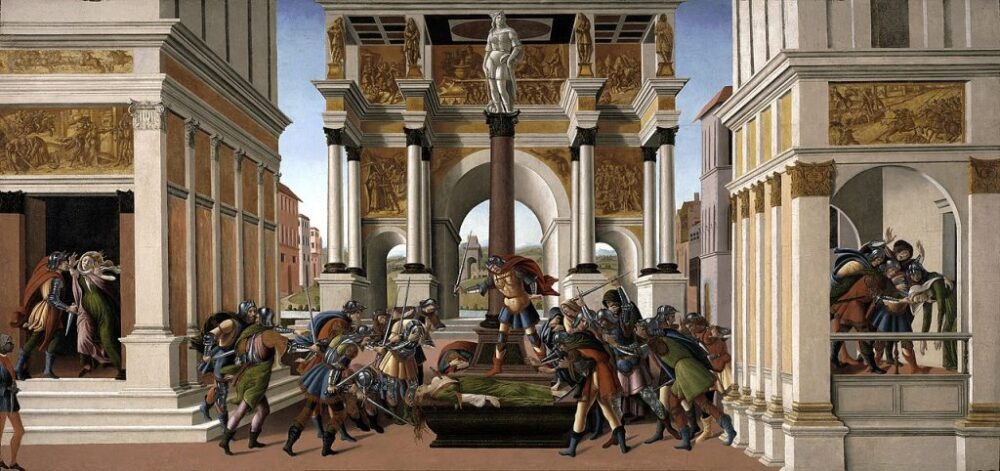
Our image of ‘kingship’ in Rome is shaped by a more or less uniform version of the beginnings of the city and the history of the res publica, which can be found in Cicero, Livy, Tacitus and Florus: After its foundation by Romulus and the reign of a total of six ‘good’ kings, the monarchy turned into a tyranny under Tarquinius Superbus. The tragedy surrounding Lucretia, who was ravished by the king’s son Sextus Tarquinius, was the trigger for the oppressed Romans to defend themselves against escalating violence and arbitrary rule and, under Brutusʼ leadership, expelled all members of the gens Tarquinia from the city. Afterwards, the citizens of the now free polity, traumatized by the previous despotism, swore an oath never to tolerate a king in their city again. This odium regni, sworn for all eternity, was to prove to be a constitutive characteristic of the newly founded res publica, whose internal and external policies were determined by the Romans’ collective hostility to everything associated with kingship and royal rule: “[T]he last Tarquin had given the name of king an evil ring to Roman ears for all time; rex and regnum were opprobrious terms”. This collective national Roman trauma triggered by Tarquinius Superbus was fueled in the 3rd and 2nd centuries BC by military conflicts with hostile kings of the East (Philip V, Antiochus III, Perseus), came to a head from the Gracchi onwards through the polemical use of the term ‘rex’ as a political invective in domestic power struggles and led to the assassination of C. Julius Caesar on March 15, 44 BC, who allegedly wanted to become king of Rome after his victory over Pompey. Octavian, who also emerged from the turmoil of a civil war as sole ruler a few years later, learned from the fate of his adoptive father and attempted to conceal the monarchical character of his reign by referring to himself not as rex but as princeps in consideration of the odium regni. However, this common image of the Romans’ hatred of kings contrasts with numerous positive uses of the terms ‘rex’ and ‘regnum’ in Roman literature as well as references to kings and kingship in political culture. This ambivalence, which had already been pointed out by Republican authors of the 1st century BC, has been demonstrated in research on individual phenomena: for example, attention has been drawn to the fact that the six ancient Roman kings before Tarquinius Superbus were always honored for their services to the genesis of Rome. The literature painted an extremely positive picture of foreign rulers (such as Cyrus or Hieron II) and even bitter enemies (for example Pyrrhus) and held them up as exemplary models. The terms ‘rex’ and ‘regnum’ were not only used to refer to the person(s) sitting in front of the drinking party, but a patron was also reverentially addressed as ‘king’ by his clients – like the parasite’s brother in ancient Latin comedies – without this form of address being offensive. The traditional divine apparatus of the Romans, headed by rex Iuppiter, also seems to contradict the theory of the odium regni, but like the positively connoted reminiscences of kingship in the sacred sphere (rex nemorensis, rex sacrorum, regia), it should be excluded insofar as old concepts (here: from the royal era) often persist unchanged in cult traditions despite changed circumstances (here: in Republican Rome). Furthermore, the Romans cooperated with reges socii and often (again) appointed ‘vassal kings’ to represent the interests of the Roman people in conquered territories. What is particularly remarkable, however, is that Roman senators were very close to Hellenic kings in many respects. Even Caesar’s assassination in 44 BC, the highest expression and culmination of the Romans’ rejection of the ‘monarchy’ form of government, did not detract from the many positive ways in which it was used. For example, the ‘Augustan’ poets only used terms from the word family ‘reg-‘ in a pejorative sense in the rarest of cases, and the attitude of the Romans towards the subject of ‘kingship’ was evidently far more differentiated than the image of blanket hatred of kingship would suggest.
From Königtum’ in der politischen Kultur des spätrepublikanischen Rom Christian Sigmund, De Gruyter 2014
In the ancient world, political power tends, to occupy the realm of its control with iconic and symbolic representations. This may have applied also to the period of monarchy in ancient Israel, from the times of Saul, David, and Solomon down to the fall of Jerusalem, a fact that may be gathered from the numerous prophetic invectives against idolatry. We must not confuse the Mosaic Law as it is codified in the second through the fifth books of Moses, which for us has become the core of biblical monotheism, with what prevailed as mainstream religion in Israel during the kingdom. The iconoclastic and monolatrous movement of the Torah was a matter of opposition born by the prophetic tradition from Amos and Hosea down to Jeremiah and Ezekiel and by a literate elite that finally asserted itself under king Josiah and gave rise to the first iconoclastic cleansing of official religion and the redaction of canonical scripture centered around Deuteronomy, containing a quite revolutionary conception of state and religion. This innovation on the political-theological plane did not lead to an iconic turn but to its contrary, a ban on images. The prohibition of images occurs at the most prominent place within the Bible: as the first or second commandment of the Decalogue, together with a commentary that refers unequivocally to the political sphere:
You shall not make for yourself a carved image, or any likeness of anything that is in heaven above, or that is in the earth beneath, or that is in the water under the earth. You shall not bow down to them or serve them, for I the LORD your God am a jealous God, visiting the iniquity of the fathers on the children to the third and the fourth generation of those who hate me, but showing steadfast love to thousands of those who love me and keep my commandments.
2 Moses
God resents the making of images as an act of defection and apostasy. The distinction between friend and foe, those who love and those who hate God and His Law, has a predominantly political meaning. Carl Schmitt even saw in this distinction the hallmark of the political in general. This may be going too far, but nobody will deny that the principle of association and dissociation has a fundamentally political significance. If God makes the question of images a criterion of friend or foe, belonging or exclusion, he gives it a political meaning. Whoever wants to belong to the community of God’s friends must abstain from any image making and image worshipping. This story is not only about the foundation of a new form of religion but also of a new form of polity built on a treaty or covenant between God and the children of Israel. This is made clear by the whole body of legislation that follows the Decalogue as well as by the story of Exodus that forms its frame. It is highly significant that this concept of divine leadership precludes the making of images. The idea of the covenant implies a conception of direct theocracy. In the same way as the idea of direct democracy, the idea of direct theocracy precludes any mediating institutions of representation. The will of God chooses Moses as interpreter, and Moses will be followed in this function by a line of prophets down to the times of Artaxerxes, but he bans from his covenant all representations because he wants to reign directly and not by representation. The political sense of the prohibition of images is made clear at the very beginning, during the reception of the covenant at Mount Sinai, by the scene of the golden calf, which functions as a kind of primal scene of idolatry. Moses climbed on top of Mount Sinai and stayed there for 40 days.
When the people saw that Moses delayed to come down from the mountain, the people gathered themselves together to Aaron and said to him, “Up, make us gods who shall go before us. As for this Moses, the man who brought us up out of the land of Egypt, we do not know what has become of him.” So Aaron said to them, “Take off the rings of gold that are in the ears of your wives, your sons, and your daughters, and bring them to me.” So all the people took off the rings of gold that were in their ears and brought them to Aaron. And he received the gold from their hand and fashioned it with a graving tool and made a golden calf. And they said, “These are your gods, O Israel, who brought you up out of the land of Egypt!”
2 Moses
The people did not want to defect to other gods but to replace the vanished Moses, whom they believed dead, with a representation, an image. They wanted the calf for a leader to take over what Moses had done for them, to go ahead, represent God, and intimidate any possible enemies. Moses acted for them as a representative of God; now they needed another form of mediation and fell back on Egyptian idolatry. Representation and mediation were the principal functions of the king in the ancient world. Covenantal law aimed at destroying any forms of mediation, to radically eclipse the figure of sacred kingship, and to establish an immediate link between God and the people. Instead of images, the king is instructed to make a copy of the text of the Torah and to learn it by heart so that his royal activities become nothing but a fulfilment of scripture. This is the exact counterimage of the usual dynamics of political and iconic display of power. Where the power is handed over to an invisible God, the images must disappear and give way to scripture. We may call this a scriptural and aniconic turn and may recognize in it the same interrelatedness of politics and image making as in Egypt, only in an inverse key. The ban on images amounts to an eclipse of the king as a representative of God and a mediator between God and humankind. The Deuteronomistic concept of the covenant or treaty—berît in Hebrew— that JHWH established between himself and the children of Israel has a primarily political meaning. The term berît occurs, however, already a century earlier with the prophet Hosea, but couched in bridal and filial metaphors and without any political connotations. Hosea is the first one to conceive of monotheism as a matter of fidelity, truthfulness, or loyalty. Like Amos, Hosea reproaches Israel for its sins, but in his eyes, these sins do not consist primarily in injustice and oppression but in “whoredom” with alien gods. I collate here several of Hosea’s most striking invectives against Israel’s infidelity:
They sacrifice upon the tops of the mountains, and burn incense upon the hills, under oaks and poplars and elms, because the shadow thereof is good: therefore your daughters shall commit whoredom, and your spouses shall commit adultery. I will not punish your daughters when they commit whoredom, nor your spouses when they commit adultery: for [the men] themselves consort with whores, and they sacrifice with harlots: therefore the people that doth not un-derstand shall come to ruin. I found Israel like grapes in the wilderness; I saw your fathers as the firstripe in the fig tree at her first time: but they went to ba’al pe’ôr, and separated themselves unto that shame; and their abominations were according as they loved.
Hoseas
A different image used by Hosea for the special bond between YHWH and his people is that of a father-son relationship: “When Israel was a child, then I loved him, and called my son out of Egypt. But the more they were called, the more they went away from me: they sacrificed unto Baalim, and burned incense to graven images.” About a century after Hosea, the original version of Deuteronomy was presented in Jerusalem as an accidental finding during restoration work in the temple and identified as a book dating from the time of Moses. This legend has a kernel of truth because it refers to the truly “Mosaic” spirit in which it is written. Deuteronomy codifies the covenant in the form of a formal treaty of alliance, thereby giving it the status of an institution recognized under international law. The covenant is now no longer metaphorical but the real thing. The authors of Deuteronomy borrowed the model of a political contract from Assyria. The loyalty oath that in 672 bce King Essarhaddon had his subjects and vassals swear to his designated successor, Ashurbanipal, makes its influence felt right down to the wording of the biblical text. One of those vassals must have been King Manasseh of Judah, so it may be assumed that a copy of the succession treaty and oath was stored in the royal archive in Jerusalem. When applying this Assyrian template to the covenant between YHWH and the people, the biblical authors adopted and adapted it in two ways. First, God does not make this treaty with the king, in his capacity as the people’s representative before the gods, but directly with the people themselves; second, the loyalty clauses are not between the people and the king, in his capacity as the gods’ representative before the people, but between the people and God. In a startling innovation, the king’s position as representative and intermediary is thus bypassed. Through the “transference” of the king-god relationship and the king-people relationship to the relationship between God and his people, Assyrian state ideology is converted into Israelite covenant theology. The fact that God makes his covenant with the people as a whole rather than through the intercession of royalty, priesthood, or some other representative authority becomes the basis for a new; specific; emphatic; and, to some extent, “democratic” conception of the people. The people—not Moses, not the seventy elders, not Aaron, not the Levites—assume the role of a sovereign partner in the covenant. This direct access to God is what lends the biblical concept its democratic force. In Egypt, the Pharaoh was regarded as the son of the supreme deity and given the title, son of Ra. The Jerusalem monarchy also adopted the model of the king’s divine sonship from Egypt. “Thou art my son; this day have I begotten thee,” God tells the king in Psalms 2:7. God chooses the king to be his son, a transformation that takes place the instant he is crowned. In Psalm 89:27, God pledges: “I will make him my firstborn, higher than the kings of the earth.” The image of Israel’s divine sonship is firmly anchored in the Exodus myth. Unlike the bridal metaphor, which, with the prophets Hosea, Jeremiah, and Ezekiel, always has tragic connotations and looks backward to the adulterous violation of the covenant, the image of sonship in Exodus has positive connotations and looks forward to Israel’s election and the fulfillment of God’s promises: “Thus saith YHWH, Israel is my son, even my firstborn. And I say unto thee: let my son go, that he may serve me. And if thou refuse to let him go, behold, I will slay thy son, even thy firstborn.” Rather than looking back in anger at the broken covenant, the image of sonship here looks forward in hope to the liberation of Israel, soon to be exacted by the death of the Egyptian fi rstborn, and to the covenant, which will make the children of Israel God’s chosen people and hence his adopted son. Whereas the sonship is transferred from the king to the people, the function of legislator is transferred from the king to God. On the famous Louvre-stela of Hammurabi, we see the king presenting his law code in a gesture of recitation to Shamash, the sun god and god of justice. According to the biblical concept, Moses receives the law from God. Bereft of his prerogatives of sonship and legislation, there is nothing peculiar left to the king. This is what Deuteronomy has to say concerning the role of the king:
If, having reached the country given by Yahweh your God and having taken possession of it and, while living there, you think, “I should like to appoint a king to rule me”—like all the surrounding nations, the king whom you appoint to rule you must be chosen by Yahweh your God; the appointment of a king must be made from your own brothers; on no account must you appoint as king some foreigner who is not a brother of yours. He must not, however, acquire more and more horses, or send the people back to Egypt with a view to increasing his cavalry, since Yahweh has told you, “You must never go back that way again.” Nor must he keep on acquiring more and more wives, for that could lead his heart astray. Nor must he acquire vast quantities of silver and gold. Once seated on his royal throne, and for his own use, he must write a copy of this Law on a scroll, at the dictation of the levitical priests. It must never leave him, and he must read it every day of his life and learn to fear Yahweh his God by keeping all the words of this Law and observing these rules, so that he will not think himself superior to his brothers, and not deviate from these commandments either to right or to left. So doing, long will he occupy his throne, he and his sons, in Israel.
Dtn 17
This is no longer the idea of kingship as represented in a paradigmatic way by King David. The king is no longer chosen by God, who says to him “Thou art my Son; this day have I begotten thee,” or with regard to him—“I will be his father and he will be my son” and “Also I will make him my firstborn, higher than the kings of the earth.” Instead, the king is appointed by the people if they like and is seen as a danger rather than a blessing that must be restricted in his display of power as much as possible. The original idea of kingship is deferred into the future and turned into as a figure of messianic expectation. The new religion as worked out by the exilic prophets and the deported literary elite emerged in a situation of total loss: of kingship, state, temple, and territory and enabled Judaea to do without external stabilizers. Law, statehood, temple, and priesthood were created at Mount Sinai, in the desert, and in a radically extraterritorial situation. This new concept of religion no longer depends on state, kingship, and territory; it can be realized wherever Jews live and follow the law of the covenant. In this differentiation and emancipation of religion from state and territory lies the secret of the survival of Judaism and Jewry as the only nation of antiquity over two millennia of diaspora and persecution, whereas ancient Egypt and all other states and cultures of antiquity succumbed to the assault of Christianity and Islam.
I give today’s politics a wide berth, it is still authoritarian paternalism and there is no real dialogue anyway. In a democracy, everyone would be a politician, but when people have no time day in, day out because they have to spend their lives doing repetitive work that they themselves have nothing to gain from, for people they don’t even know just to pay for the same concrete box and the same car time and time again, then they simply don’t have the time and energy to study current issues in depth themselves and form their own opinions and statements. In the absence of their own insights, all that remains is to adapt one of the prefabricated opinions, to choose between democrats or republicans. People are not being brought up to be emancipated at all. You could encourage participation in political debates every 2-3 weeks from an early age, actively involve them in politics and give them time off from work and commitments accordingly, so that politically educated people would be brought up. At the age of 6, children are put in a penitentiary where they are told to sit still and keep quiet, in school and education it is completely irrelevant what is correct, the only thing that matters is saying what they want to hear, it’s about obedience. You are taught that you can not, you are not taught that you can learn foreign languages with ease, but that it is tedious and difficult, that it requires expensive teachers and courses and, in short, that it is best to abandon the idea and go to work. Every child would love to study maths and build ingenious robots, vehicles or clever houses because it’s a pleasure if you are not de-graded, not penalized if you don’t perform “well enough”, but these are the really valuable things in life and are taken away from everyone from an early age. Want to develop your own vehicle or housing? No authorisation. Nobody voluntarily sells kebabs day in, day out in the street, people are broken as children and pressed into these moulds because this system needs cleaners and mechanics. Truth is these jobs are not actually mandatory for anybody to do all day, if people had to clean up their mess themselves instead of paying others to do it, then they would certainly make less mess and think about what’s actually worth it. Nobody would have to flip burgers at McDonalds all day if people could go there and do it themselves. We could also automate and abolish a lot of the jobs, Ford developed the conveyor belt and the automated factory and thus mass production, we wanted to develop these machines to do the work for us, but that benefit was never handed down to the people, instead the factory owner, the capitalist, the corporation keeps it to themselves, that’s their profit. Now that it is no longer really necessary for everyone to spend their lives working (and in fact never was), billions are literally burnt in pointless wars because the citizen has to work for the money that the national banks print. Likewise, nobody would use their free time to examine eczema every day or write expert opinions, be it doctor, lawyer or carpenter, everybody needs to buy almost everything because they themselves know almost nothing, they aren’t even a doctor, but only an ENT, especially of politics they have no clue, only real politicians can do this, they need to let others decide in their stead, they need to be governed. What that means is you haven’t even accomplished Marx’ idea yet and that’s while it’s 160 years old. Why doesn’t Marxism work? Because those who profit from the established system do not want the workers to rise up, free themselves from their chains and take their capital and their rights into their own hands. Paradise is possible, that’s where we come from, but then we forget all the negative things, the problems and difficulties of life and open the door to them, Marxism is not a miracle solution and therefore not a utopia.
When, in the course of the French Revolution, His Most Serene Highness the King of France Louis XVI was only a “citoyen Capet”, a citizen at the tribunal, this meant that even the highest nobility suddenly had to deal with civil rights and ideas. The aristocratic dynasties cant be squeezed into the petty-bourgeois idea of the nation state; they defined themselves through their widely ramified kinships at the international courts. What happened with the revolution dealt a blow to the aristocracy of the whole of Europe, it was clear that it would repeat itself in the Holy Roman Empire of German Nation and so it was pre-empted by making the nobody, the blank slate from Corsica emperor against all class differences and thus dissolving the HRE, he marched on Paris to fanfare and ended the revolution and waged wars across Europe to fight back the forthcoming changes.
[…] with the subjugation of the working class, accomplished in the days of February and March, 1848, the opponents of that class – the bourgeois republicans in France, and the bourgeois and peasant classes who were fighting feudal absolutism throughout the whole continent of Europe – were simultaneously conquered; that the victory of the “moderate republic” in France sounded at the same time the fall of the nations which had responded to the February revolution with heroic wars of independence; and finally that, by the victory over the revolutionary workingmen, Europe fell back into its old double slavery, into the English-Russian slavery. The June conflict in Paris, the fall of Vienna, the tragi-comedy in Berlin in November 1848, the desperate efforts of Poland, Italy, and Hungary, the starvation of Ireland into submission – these were the chief events in which the European class struggle between the bourgeoisie and the working class was summed up, and from which we proved that every revolutionary uprising, however remote from the class struggle its object might appear, must of necessity fail until the revolutionary working class shall have conquered; – that every social reform must remain a Utopia until the proletarian revolution and the feudalistic counter-revolution have been pitted against each other in a world-wide war. In our presentation, as in reality, Belgium and Switzerland were tragicomic caricaturish genre pictures in the great historic tableau; the one the model State of the bourgeois monarchy, the other the model State of the bourgeois republic; both of them, States that flatter themselves to be just as free from the class struggle as from the European revolution.
Frederick Engels
Wars are a much more suited to suppress and control one’s own population than foreign enemies, war is always the same class struggle and so it is clear that the last two major wars were about nothing else. Emperor Wilhelm wanted to end the November Revolution in 1918 by marching on Berlin like Napoleon did on Paris, but what stopped him was the extremely bloody deposition of the tsars by the Russian revolutionaries. The fact that he then retreated to his villa in Doorn was seen as desertion by the old nobility and never forgiven, they said he had better died heroically for the empire. The lower nobility were hit particularly hard after 1918, many now had to work as gas station attendants or secretaries or were even dependent on donations from the DAG and accordingly were angry about the defeat and especially the republic, they radicalized themselves towards the national right. Although the high nobility also had to accept losses, they continued to enjoy enormous wealth and possessions; of course, they hated the Republic no less, but they were able to fight the battle on a completely different level, they were able to bring committees of lawyers and doctors who were able to stop the dissolution of the Fideikommisse, for example, and were of course well represented in all important positions in the Republic and the Third roman-german Reich; Hindenburg’s family could certainly live carefree.
A few impressive passages from Stephan Malinowski’s dissertation/book from 2003 Vom König zum Führer:
According to the information passed on to the exiled emperor’s “house minister” by the Reich Defence Minister Werner v. Blomberg, who was present, Hitler had made vague but far-reaching promises: “As the conclusion of his work, [Hitler] sees the monarchy,” it said in the minutes of the meeting. However, only the Hohenzollern monarchy would come into question; a restoration of the thrones in the federal states was to be rejected. However, the time for restoration had not yet come and the monarchy was only conceivable as the result of a victorious war.
In October 1933, retired Lieutenant General August v. Cramon had written a memorandum to the Reich President proposing the reinstatement of Wilhelm II to his royal rights, as a kind of present for his 75th birthday in January 1934. Wisdom and dignity of age would now be added to the “hereditary wisdom of the lineage”. The “Führer concept” must inevitably end “in immortal leadership, the hereditary monarchy” and Hitler would help with this: “Adolf Hitler himself is, as far as is known, a monarchist.”
A grotesque variant of aristocratic attempts to direct the ubiquitous desire for leadership towards themselves is provided by a speech from 1930, in which Wilhelm II lamented the inflation of the leadership concept in Doorn:
To be a leader! Everyone wants that nowadays. Leaders present themselves everywhere. Many people pose as leaders […]. And yet the cry for leaders is omnipresent!
In a strange mixture of Christian and neo-right-wing motifs, Wilhelm II renewed his claim to leadership. The idea of leadership was first ‘revealed’ by God to the Sumerians. King Hammurabi was given the “leadership profession” by God 5,000 years ago, his own ancestors 500 years ago. “Only to these leaders is the leader Jesus Christ!” Spatially and mentally far removed from all political realities, the exiled emperor appointed Jesus as the otherworldly “leader” and himself as the earthly “leader”. The imperial leader referred to himself in the preceding passage from the Gospel of John, which had given the speech its title: “I am the vine; you are the branches. If a man remains in me and I in him, he will bear much fruit; apart from me you can do nothing.”
A “mobile” interface was created by the activities of Wilhelm II’s second wife, Princess Hermine v. Reuß, who socialised in the most important circles of the political right during her visits to Germany. She apparently made contact with the NSDAP leadership in 1929, on the fringes of the Nuremberg Party Congress. The date of her first meeting with Hitler is unclear, but a meeting with Hitler in the salon of Baroness Tiele-Winckler in November 1931 is well documented. In the presence of the “Empress”, Göring and the aristocratic chief advisors of Wilhelm II, Hitler held a monologue lasting several hours in which he explained his intention to have “all November criminals […] publicly strangled”. The lecture delighted the hostess and guests alike, and the Kaiser’s wife spoke favourably of the “likeable” Hitler, “also about his good and straight facial expression and his good eyes and their expression without falseness.” Pleased with the outcome of the meeting, Magnus v. Levetzow summarised his impressions of Hitler in a letter to Prince v. Donnersmarck: “He was good on the plate, by golly.”
etc, the book contains a wealth of intriguing source material. See Books
The Republic was thus hated and so once again a nobody, a blank slate, was brought in to eliminate it. It had to be a nobody who had no connections to existing powerful structures, otherwise old alliances and rivalries would make effective action impossible. The Republic as an enemy may have been a common front of the high nobility, but old ties and rivalries were far from forgotten:
In agreement with his Westphalian peers, Abbot Augustinus von Galen, a brother of the later famous bishop, described the monarchy problem in 1926 as a cura posterior and considered the claims of the House of Habsburg to be justified in contrast to those of the Hohenzollerns: ,,As far as the Hohenzollerns were concerned, their emperorship had not the slightest thing to do with that of the old empire […]. The Hohenzollerns were therefore in no way the legal successors of the old emperors and from this point of view, they could therefore absolutely not be considered as favoured candidates for the future crown.”
For the south-west German nobility association, which maintained friendly relations with the Bavarian associations, Attila Graf v. Neipperg explained to a fellow Bavarian that the nobility in the south-west was also monarchist, but unlike in Bavaria, which was loyal to Wittelsbach, their loyalty only partly belonged to the houses of Württemberg and Zähringen, while many West German nobles had not forgotten the “sins” of the princes from the Napoleonic era. The monarchism that Count Neipperg outlined here also resembled a vague basic attitude rather than a practicable programme: “These people are fully Holy Roman Empire of the German Nation. And to a certain extent, cum grano salis, I am also with this side. Our stance is that we want to show and prove that the nobility is necessary in the republic, even more necessary than in the monarchy, where everything went its more or less regular course. But officially we are not monarchists.”
As late as the 1930s, Churchill said that the Russians were the greatest threat to Europe, so it may have been unthinkable before the war for the Allies and Russians to forge an alliance. When they faced each other after the war without a common enemy, the old antipathy broke out again, but the peace treaties that had now been signed made further warfare impossible and so it smouldered instead as a Cold War, which was fought preferentially on the loser country, Germany (and other puppets): it was torn apart into the Allied West and the Russian East. How the story ended is now well known: today everything in Germany is English-American, American banks and corporations as far as the eye can see. The first changes after the war included things like removing the Brothers Grimm from the classroom as “too German” (“anti-Semitic”, throughout all editions of Grimms Fairy Tales three of 200 tales contain Jews, the Christian is not shelt at all, on the contrary) and that newspapers and press agencies had to request their concessions from the occupying forces. In this way, education and news were made allied and, accordingly, historiography and politics today are allied, in which the German is the absolute enemy, the Nazi, about whom there can be nothing good. Yet the political constellation of a nationalist, socialist German workers’ party (NSDAP) in and of itself has nothing to do with anti-Semitism or dictatorship. In fact, the system of nation states is nationalism, that is the New World Order that has also created new elites. Under international pressure and competition, nationalism shows its problematic facets, such as a tendency towards xenophobia, because the state puts its own citizens before all foreigners. The state is a covenant of people that excludes others, strangers; the highest covenant today is the covenant with oneself, so freedom for individuality tends towards egoism that puts oneself before all others. In the past, the covenant with God was the highest, the Lord is more important than one’s own life, Christians are martyrs, servants of their masters, that is why religions have been spread so readily, Islam literally means submission, submitting to Allah the Lord. The “immortal leadership” mentioned in the quote earlier indicates an important facet of the nobles’ self-image: they are “immortal” through their bloodline as long as it continues to exist, “the king is dead, long live the king”, while the testament of the common people is that their lives and their achievements are inherited by the Lord and not by themselves.
The world of the stories of Holy Scripture is not content with the claim to be a historically true reality – it claims to be the only true world, the world destined for sole dominion. … The stories of Scripture do not court our favor, as Homer’s do, they do not flatter us in order to please and charm us – they want to subjugate us, and if we refuse, we are rebels”. The belief in the one God who reveals himself to the world in Israel’s fate is imperious and exclusive.
Otto Kaiser – Zwischen Athen und Jerusalem
The people of the Christian state is only a non-people, which no longer has a will of its own, but possesses its true existence in the head to which it is subject, which, however, is originally and by its nature alien to it, i.e. given to it by God and has come to it without its own intervention.
Bruno Bauer, On The Jewish Question, 1843
The only man who counts, the king, is a being specifically different from other men, and is, moreover, a religious being, directly linked with heaven, with God.
Karl Marx, On The Jewish Question, 1844
By its very nature, the Christian state is incapable of emancipating the Jew; but, adds Bauer, by his very nature the Jew cannot be emancipated. So long as the state is Christian and the Jew is Jewish, the one is as incapable of granting emancipation as the other is of receiving it.
Karl Marx, On The Jewish Question, 1844
To have a thought about how it all began, another book: This is an international lecture series at the University of Heidelberg
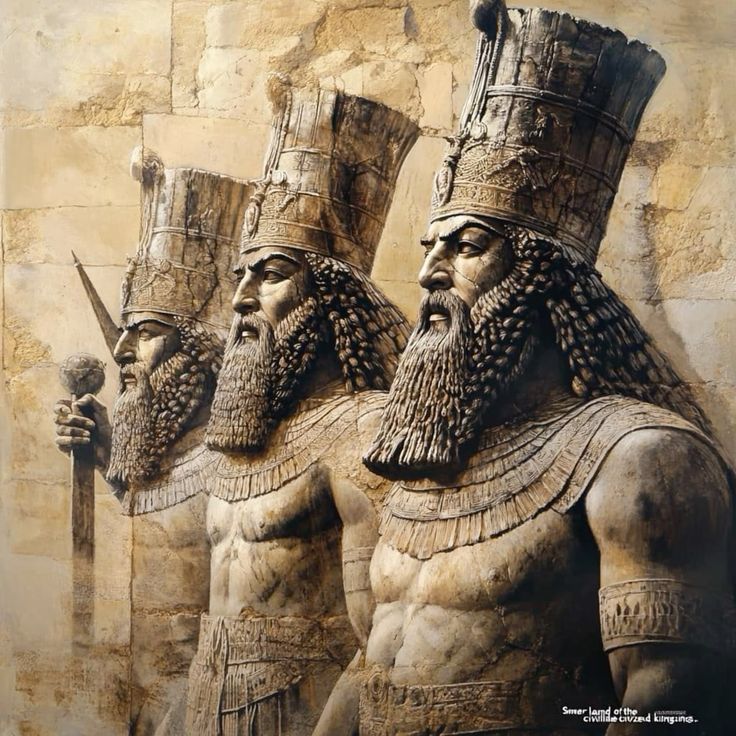
I (am) Darius the great king, king of kings, king of Persia, king of the countries, the son of Hystaspes, the grandson of Arsames, an Achaemenid. Proclaims Darius, the king: my father (is) Hystaspes; the father of Hystaspes (is) Arsames; the father of Arsames (was) Ariaramnes; The father of Ariaramnes (was) Teispes; the father of Teispes (was) Achaemenes. Proclaims Darius, the king: For this reason we are called Achaemenids; from ancient times we are noblemen; from ancient times our family has been kings. Proclaims Darius, the king: (There are) eight in my family who formerly have been kings; I (am) the ninth; (thus altogether) nine, now as ever, are we kings.
(Schmitt 1991: 49 lines 1–11)
This genealogy is particularly significant because Darius, like Cyrus, claims that his right to the throne is based on his family line. Also, like Cyrus, he claims that his family had been kings for a long period of time, in succession. What can one make of these statements? There are conspicuous absences in this genealogy, including Cyrus and Cambyses. Herodotus comments in a story concerning Cambyses in Egypt that Darius was a member of Cambyses’ guard and a “man of no great importance” (III.139–40). Thus, according to Herodotus, Darius was not in line for the throne, although he was of noble birth. Yet David Stronach argues that Darius’s ancestors may have had control of certain areas of Fars, and thus he was from a family of monarchs (2003: 256). Hence, his claim is not necessarily a lie. What then is Darius attempting to do in his genealogy? There are clear examples of usurpers who did not attempt to create a genealogy in order to justify their right to the throne. The classic case is the Neo-Assyrian ruler, Sargon II, who never provides a genealogy to support his right to the throne. Yet Darius did not claim that he had no royal pedigree but, rather, justifies his right to the throne through his family. Still, he provides no specifics except for family names. Unlike Cyrus, he gives no geographical location for his ancestors’ supposed kingdom. Hence, Darius attempted to redefine what it meant to be the rightful monarch through the use of his genealogy. Briant observes, “It was not because he was Achaemenid (in the clan sense) that Darius achieved power; it was his accession to royalty that allowed him to redefine the reality of what it meant to be ‘Achaemenid’” (2002: 111).
Judah and the Judeans in the Achemenid Period – Negotiating Identity in an International Context
It was also Darius and Darius II who called themselves Aryan and their homeland the land of the Aryans (Iran). It is early human history and Wilhelm was probably not far from the truth with his chronological and geographical classification of the origins of kingship. Genesis mentions Nimrod as the first to become mighty, the first of all Kings (in the Hebrew perception), he can’t be clearly identified but was probably either a King of Babylon or Assyria. These ancient actors had a decisive influence on the further course of history and shaped the concepts and structures that prevailed for a long time, the later nobility may have made up something about the “Aryan” origin of their ruling caste and, as a reaction to the new sciences such as the biological-zoological theory of heredity, postulated a racial one that was supposed to confirm the superiority of their own descent. If they were actually convinced of this is another question, as mentioned in the quote above, it was also about “proving that the nobility is necessary in the republic”, so they were aware of the changing times and wanted to preserve their own position as an elite by redefining themselves as leaders, with programs such as “New nobility of blood and soil” and “The nobility its right”.
Upon blood and soil the Führer is building his Reich. We have understood blood selection for seven centuries and have wisely chosen to build and continue our bloodstream on the basis of age-old race and culture. […] All the great ideals that the Führer has set for the German people stem from ancient Germanic heritage and not least from the deepest treasuries of the German nobility. Thus the German aristocracy is fundamentally akin to National Socialism in nature and origin. At the time of the red governments, the motto was: down with the aristocracy, we all want to be proletarians. Now it is the other way: the common man from the people should rise up, and we all want to meet again on the level of a true aristocracy. […] What the future will bring us, we leave in the hands of God and the enlightenment of the leader. But we know one thing. Our old lineage is not a foreign body in the Third Reich, rotting and decaying, it is a load-bearing block in the building, hardened over centuries. […] Sieg Heil! Sieg Heil! Sieg Heil!
Friedrich v. Bulöw, 1935
In 1921, an Pan-German (Alldeutsch) baron saw the EDDA project as the deliberate continuation of the […] selective breeding […] that has always been practised by the nobility through the cultivation of pedigree and genealogy […]. The aristocracy’s attitude towards the idea of selection and race breeding is therefore not a new goal for the nobility, but actually a self-evident one.
Stephan Malinowski
I can breed pugs, and I can breed dachshunds, but if the malör (sic) happens to me and I get a basket full of young dachshund pugs, they will be drowned with good reason. This is neither anti-pug nor anti-dachshund, but a realization of the centuries-old experience that all bastards are inferior.
Börries Frhr. v. Münchhausen
There are other interesting paradigm shifts in the course of the modern era. You can only call someone wealthy compared to someone who has less, there can only be rich if there are poor, they have too much that is lacking elsewhere. The powerful were only powerful when they were above others, for the mighty require the oppressed, the formulation that their power comes from the people is the very idea of republic and democracy. It can be seen that it is merely a paradigm shift, that what changes is merely people’s attitude towards the subject matter, that politics is merely a set of instruments that can vary. In reality, every one *is* a politician and influences the course of society with his decisions every day, whether this is recognized and promoted in the political apparatus or not. In the same way, socialism and communism are much more a quantity than a decision, no one can live their life alone, everyone draws from society and what they do with their life is what they give back, whether this can be quantified depends on the value system used.
So to jump from the ancient era in which claims to rulership by descent were established to the time of ancient Judaism discussed in the article, I quote the book again:
Von Rad suggested a three-part structure for the Priestly Document. He differentiated between “three big concentric circles . . . which move from the outside inwards towards the salvific mystery of God—the circle of the world, the circle of Noah, and the Abrahamic circle” (“drei mächtige konzentrische Kreise . . . die von außen nach innen fortschreitend in das Heilsgeheimnis Gottes einführen: der Weltkreis, der Noahkreis und der abrahamitische Kreis”).
[…]
The circle of Abraham includes “the Abrahamic household,” consisting of the Arabs (“Ishmael”), Israel (that is, “Samaria”) and Judah (“Jacob”), and Edom (“Esau”).
[…]
This Abrahamic circle is defined by the Abrahamic covenant of Genesis 17, which promises the participating covenant partners fruitfulness, land inheritance (which seems to imply a right to use rather than to possess), and proximity to God. The circle of Israel narrows the focus down to the nation of God alone. It is generally concerned with the establishment of the sanctuary, which enables the sacrificial cult of Israel. This sacrificial cult alone is what allows Israel to achieve atonement. The sanctuary and the implementation of the cult seem to function as the partial restoration of the initial creation, in the sense of a second “creation within creation.” The circle of Israel is not established by its own covenant because the foundational promise of the presence of God (“I will be your God”) was already given in Gen 17:7 (cf. Exod 6:7, 29:45–46).
[…]
Whether the Priestly writer’s Abraham is aware of it or not, what he asks is that Ishmael become Yhwh’s priest; and it is that request that is denied to Ishmael and offered instead to the yet to be born Isaac. In this whole exchange (vv. 18–21), the question therefore is not whether Ishmael will be allowed to live in the land of Canaan—the right of Ishmael to live in Canaan has been settled once and for all in v. 8—but the question is only whether there is a need for a further son, i.e. for a further category among Abraham’s multi-nation descendants. And the answer to that question is yes. Sarah’s son Isaac will beget those descendants of Abraham who are destined to become Yhwh’s priestly nation.
Judean Identity abd Eucumenicity, Konrad Schmid
A further striking feature of the book of Esther is the virtual absence of God in the book. This has, of course, given rise to manifold speculation about hidden references, double entendres, and so on. On the other hand, it is incorrect to view the apparent “secular” nature of the book as an indication of the book’s being of lesser quality. I think, if we approach the Esther story with the remarks about God in mind that were made above when dealing with Genesis 20, some light will be shed on the issue. The personal God of the patriarchs was changed in Genesis 20 into a universal divine being to whom Israelites and pagans can speak and to whose universal laws even apparently foreign kings can adhere. This change from a personal to a universal God is taken a step further in Esther. Because none of the actions that lead to an endangerment of the Jews in Persia are explicitly linked to the religious factor, the absence of any direct divine intervention might be understandable. Only in passing can we mention that the apparent noninvolvement of Persia in the religious affairs of its subject people makes Persia an ideal setting for the legitimation of a new festival, which seems to defy the common notions of biblical festivals. For any issues of religion, the conflict between Mordecai and Haman reported in Esth 3:1–15 is often interpreted by drawing attention to Exod 20:1–5. True, חוה is used in the stipulation of Exod 20:5, but nothing in the text of Esther suggests that Haman had any divine quality, and only the Targum adds this aspect by stating that Haman wore a portrait of an idol on his clothes. [The motif of Haman’s divinity only occurs in Judg 3:8, where Nebuchadnezzar claims divine honors: “And he destroyed all of their sanctuaries and ravished their cultic groves. He was given the order to extinguish all the gods of the earth so that all people of the earth serve Nebuchadnezzar alone and all tongues and tribes should worship him alone as god”] Despite Mordecai’s statement that he is a Jew (Esth 4:4bβ), we have instances in the Hebrew Bible in which it is perfectly acceptable to bow down before another man (see Gen 23:7, 27:29; 1 Kgs 1:31). The combination of the Hebrew verbs חוה and כרע is normally reserved for God (Ps 22:30, 95:6; 2 Chr 7:3), “but if idolatry is the cause of Mordecai’s noncompliance, the text is strangely silent about this. In addition it is difficult to see why the king commands that an underling be treated as god when he himself is not.” Esth 3:4bβ (כי הגיד להם אשר הוא יהודי ) seems to look forward to Esth 3:8–15 rather than serving as an adequate reason why Mordecai refuses to bow down.
The Absent Presence, Anselm C. Hagedorn
To judge a story’s historicity by its degree of realism is to mistake veri-similitude for historicity.
Adele Berlin
What are fairy tales and myths to us today were the only real reality for our ancestors. There is no doubt that the light bulb, medicine, hygiene and education defeated the devil, and yet even if you think he is a figment of the imagination (the beast and the animal in man are hardly a figment of the imagination) he had an enormous influence on human history. The world we see through our eyes is an image in our head, we experience our own senses, our own perception, not an external world “in itself” (Kant). Nature, the animal and plant world cannot adhere to the borders that we print on a map because they do not exist, in the world there are neither speed vectors nor meters or minutes. They are concepts of the human mind. Logic is a discipline of philosophy, mathematics is a discipline of logic, this is the Greek school and the origin and fundament of ours, therefore it is clear and easy for us to understand when the ancient Greeks speak of cosmos and chaos, order and disorder, but when the Jewish Kabbalah speaks of the Sephiroth or the Vedantas speak of Brahman, this is not logical and therefore not correct, because right or wrong is a very specific logical operation. So in order to understand foreign and ancient cultures, you have to be able to detach yourself from your own world view. We always like to assume that we are superior to all past people, after all we have all their experiences behind us, in reality this is a fallacy, nobody has had all the experiences, we rely on the statements of others in almost everything. Progress is preached today as a mantra, forgetting that too rapid growth cannot be sustained or that something is lost at the other end, so a lot of things have fallen by the wayside in the course of history, such as closeness to nature. “It’s not weapons that kill people, it’s people who kill people”, technology is only superficial, much more causal and therefore more important are the more fundamental, simpler things and so the earliest questions of mankind are also the longest lasting and our “superiority” over our ancestors is also just one that we would like to confirm to ourselves.
The Political Theology of the Priestly Document (P)
[…]
Von Rad suggested a three-part structure for P. He differentiated between “three big concentric circles . . . which move from the outside inwards towards the salvific mystery of God—the circle of the world, the circle of Noah, and the Abrahamic circle” (“drei mächtige konzentrische Kreise . . . die von außen nach innen fortschreitend in das Heilsgeheimnis Gottes einführen: der Weltkreis, der Noahkreis und der abrahamitische Kreis”).
[…]
The circle of Abraham includes “the Abrahamic household,” consisting of the Arabs (“Ishmael”), Israel (that is, “Samaria”) and Judah (“Jacob”), and Edom (“Esau”). Intermarriage within this circle is allowed: according to P, Esau marries—illegitimately (Gen 26:34, 27:46)—two “Hittite women” (Gen 26:34). Subsequently, Jacob receives advice from his parents to marry a woman from among his kin in Paddan Aram (Gen 27:46, 28:1–5). In response, Esau marries another woman, one of the daughters of his uncle Ishmael (Gen 28:6–9). Therefore, it can be concluded with de Pury that “according to P Jews are permitted to intermarry with Ishmaelite and Edomite women, but not with ‘Hittite’ or ‘Canaanite’ women.’” P furthermore records the genealogy of Ishmael’s descendants (Gen 25:12–18) as well as Esau’s (Gen 36:4–14), who possess a qualified theological nearness to Israel through this ethnic proximity. This Abrahamic circle is defined by the Abrahamic covenant of Genesis 17, which promises the participating covenant partners fruitfulness, land inheritance (which seems to imply a right to use rather than to possess), and proximity to God. The circle of Israel narrows the focus down to the nation of God alone. It is generally concerned with the establishment of the sanctuary, which enables the sacrificial cult of Israel. This sacrificial cult alone is what allows Israel to achieve atonement. The sanctuary and the implementation of the cult seem to function as the partial restoration of the initial creation, in the sense of a second “creation within creation.” The circle of Israel is not established by its own covenant because the foundational promise of the presence of God (“I will be your God”) was already given in Gen 17:7 (cf. Exod 6:7, 29:45–46). Nevertheless, the establishment of the sanctuary concretizes the presence of God specifically for Israel by locating God’s ׁ שכינה in the midst of his people (cf. Exod 29:45–46).
[…]
Whether the Priestly writer’s Abraham is aware of it or not, what he asks is that Ishmael become Yhwh’s priest; and it is that request that is denied to Ishmael and offered instead to the yet to be born Isaac. In this whole exchange (vv. 18–21), the question therefore is not whether Ishmael will be allowed to live in the land of Canaan—the right of Ishmael to live in Canaan has been settled once and for all in v. 8—but the question is only whether there is a need for a further son, i.e. for a further category among Abraham’s multi-nation descendants. And the answer to that question is yes. Sarah’s son Isaac will beget those descendants of Abraham who are destined to become Yhwh’s priestly nation.
[…]
The promises of fertility given to Abraham as a “covenant” and to Ishmael as a “blessing”, when considering their concrete arrangements, are drawn up quite similarly and seem nearly equivalent. Therefore, it is much more likely that the function of vv. 19–21 is not the exclusion of Ishmael but rather in the inclusion of Isaac in the Abrahamic covenant. Ishmael’s inclusion in the covenant is clearly stated in Gen 17:7–8. Additionally, this section highlights the fact that the covenant with Abraham and his descendants, to which Ishmael belongs without a doubt, is an “eternal covenant.” The need for an explicit inclusion of Isaac in vv. 19, 21 can be explained its position in the narrative, namely, that at the time of Genesis 17 Isaac had not yet been born. This makes the double appearance of “covenant” terminology in vv. 19, 21, with reference to Isaac, plausible: an extension of the covenant to a person who did not yet exist is a bold enterprise and therefore needs special terminological emphasis. Nevertheless, the conclusion remains that Ishmael is not the same type of partner in the covenant of God as Isaac is. They are equal with re-gard to fertility and land holdings (in the sense of an ,אחוזה Israel will then signify its land in Exod 6:8 as ) מור ׁ שה within the greater region of the “whole land of Canaan.” But they are not equal with regard to the possibility of cultic proximity (“living before God,” Gen 17:18b). This proximity—as the narrative of the Priestly Document goes on to show—only belongs to Israel by means of the foundation of the sanctuary and is explicitly denied to Ishmael.
[…]
In Genesis 17, the Priestly Document apparently attempts to balance the theological prerogative of Israel with the political reality of Persian-period Judah: Judah lives in a modest province within “ecumenical” proximity to its neighbors. Perhaps the specific outline of Genesis 17, the creation of an “Abrahamic ecumenicity”, as Albert de Pury has put it, has to do with the fact that Abraham’s tomb of Hebron, which was in all likelihood venerated by Judeans, Arabs, and Edomites, was probably not part of Achaemenid Judah but part of Idumea as Ernst Axel Knauf and Detlef Jericke have convincingly argued. This means that P had to include Judeans, Arabs, and Edomites in a privileged position and therefore developed the notion of an “Abrahamic” covenant of the peoples living in the “whole land of Canaan.”
While royal genealogies could serve to legitimize a line that was already established, like that of Cyrus, they could also give rise to new claims. This is manifest with Darius, who was not directly in line for the throne. The Behistun Monument clearly illustrates this in that he formulates a six-generation lineage back to the eponymous founder, Achaemenes.
I (am) Darius the great king, king of kings, king of Persia, king of the countries, the son of Hystaspes, the grandson of Arsames, an Achaemenid. Proclaims Darius, the king: my father (is) Hystaspes; the father of Hystaspes (is) Arsames; the father of Arsames (was) Ariaramnes; The father of Ariaramnes (was) Teispes; the father of Teispes (was) Achaemenes. Proclaims Darius, the king: For this reason we are called Achaemenids; from ancient times we are noblemen; from ancient times our family has been kings. Proclaims Darius, the king: (There are) eight in my family who formerly have been kings; I (am) the ninth; (thus altogether) nine, now as ever, are we kings.
(Schmitt 1991: 49 lines 1–11)
This genealogy is particularly significant because Darius, like Cyrus, claims that his right to the throne is based on his family line. Also, like Cyrus, he claims that his family had been kings for a long period of time, in succession. What can one make of these statements? There are conspicuous absences in this genealogy, including Cyrus and Cambyses. Herodotus comments in a story concerning Cambyses in Egypt that Darius was a member of Cambyses’ guard and a “man of no great importance” (III.139–40). Thus, according to Herodotus, Darius was not in line for the throne, although he was of noble birth. Yet David Stronach argues that Darius’s ancestors may have had control of certain areas of Fars, and thus he was from a family of monarchs (2003: 256). Hence, his claim is not necessarily a lie. What then is Darius attempting to do in his genealogy? There are clear examples of usurpers who did not attempt to create a genealogy in order to justify their right to the throne. The classic case is the Neo-Assyrian ruler, Sargon II, who never provides a genealogy to support his right to the throne. Yet Darius did not claim that he had no royal pedigree but, rather, justifies his right to the throne through his family. Still, he provides no specifics except for family names. Unlike Cyrus, he gives no geographical location for his ancestors’ supposed kingdom. Hence, Darius attempted to redefine what it meant to be the rightful monarch through the use of his genealogy. Briant observes, “It was not because he was Achaemenid (in the clan sense) that Darius achieved power; it was his accession to royalty that allowed him to redefine the reality of what it meant to be ‘Achaemenid’” (2002: 111). Christopher Tuplin questions Briant’s interpretation, adding that Darius may not have been intentionally lying about his descent from Achamenes but rather is speaking in “symbolic terms” (2005: 230). Whether Darius is giving a faithful rendering of his family line or lying is unclear. But it is apparent that through the use of his genealogy, Darius, in essence, is undoing Cyrus’s rightful claim to the throne by taking his genealogy to the founder of the dynasty, Achaemenes, whereas Cyrus only connects himself to Teispes. Wilson adds that, in the case of the Achaemenid kings, “many . . . were engaged either in expanding the Persian Empire or protecting it from the threat of internal political chaos” (1977: 70). Darius felt the need to construct this genealogy, whether real or imaginary, in order to show his family’s past claims to power.
In the biblical material, certain royal and priestly genealogies may point to periods when legitimizing one’s genealogy was particularly important. There are two examples of this, 1 Chr 3:1–24, the Davidic genealogy, and 1 Chr 8:33–40, the so-called Saulide genealogy. Both lineages focus on monarchs who had long been out of power. In the example of the Davidic genealogy in 1 Chr 3:1–24, this extensive genealogy continues for 26 generations in the MT, from David to the seven sons of Elioenai. It also builds on the Judahite genealogy in 1 Chronicles 2, which also connects David to Judah, Jacob, and beyond. 1 Chr 3:1–24 employs both linear and segmented formats that continue for over 600 years. The Davidic lineage begins with a segmented genealogy highlighting all of the first-born sons born to him in Hebron by his six wives and then moving on to the sons born to him in Jerusalem by Bath-shua. A linear genealogy is employed from the time of Solomon to Josiah (16 generations). The genealogy returns to a segmented format from the period of Josiah until the sons of Elioenai. But this is not simply a genealogy of David’s dynastic line. It continues long past the Exile and Return, through the family line of Zerubbabel and down to the sons of Elioenai. Thus, the Davidic genealogy focuses on one line and its endurance and survival, even after the destruction of the Kingdom of Judah. Although the power of this family had long ago diminished, it is clear that this genealogy is attempting to position one branch of the Davidic family in line for power. And thus, in a period when they had long been out of power, as Gary Knoppers points out, the “careful demarcation of continuity among the descendants of David throughout periods of tremendous change demonstrates the dynasty’s resiliency and importance” (2004: 335–36). The genealogy functions as a way of authorizing one family line within the larger Davidic lineage to a position of power, if the occasion ever arose where power could be bestowed on them. Another example of a royal genealogy found within the lineage of the Benjaminites is the so-called Saulide genealogy (1 Chr 8:33–40), which is really the Jeielite genealogy because it begins with Saul’s grandfather Jeiel. The Chronicler’s interest in the family of Saul acknowledges his earlier importance as well as his descendants’ continued importance during the postexilic period. The importance of Saul’s family is carried through Chronicles, where Saul and David are the two royal lines within the narrative of the monarchy. Unlike the Davidic genealogy, which highlights one particular family line, 1 Chronicles 8 highlights the importance of the Benjaminite clan and their position in their different territories, including Jerusalem and Gibeon. Saul’s genealogy, which begins in v. 29 with his grandfather Jeiel and continues for 17 generations, ends with the phrase “all these were from the descendants of Benjamin” (8:40), thus concluding the Benjaminite genealogy with Saul’s descendants. Saul’s family clearly endures long after the loss of the monarchy, and the Benjaminite genealogy does not hide the character of Saul but rather honors him and his sons and holds them in a position of esteem, ending the lengthy Benjaminite genealogy with Saul’s particular family line of the Benjaminites. As a consequence of the antique Jeielite and Saulide genealogy, the tribe of Benjamin gained prominence. Further, the Benjaminites were an important tribe within postexilic Yehud and, for the Chronicler, a loyal subject of the Davidic monarchy. They were also an integral member of Yehud during the Achaemenid era, and thus past events or the genealogy legitimized their place in the Second Commonwealth by recourse to the ancient past through Jeiel and Saul, their most famous members.
Long genealogies were fairly uncommon in nonroyal material, save a few notable exceptions. One such example appears in Herodotus’s Histories. In book two, Herodotus recounts his visit to Thebes (Karnak), where he tells a story about Hecataeus of Miletus, the sixth-century historian (550–490 b.c.e.), who wrote works on geography, enumerating different regions of the known world, and also genealogies, in which he attempted to order the stories of gods and heroes (of these works, there are extant some 35 fragments). Hecataeus is also credited with revising a map of the world first created by Anaximander. Herodotus states that Hecataeus “had studied his own lineage and had traced his family history back to a divine ancestor in the sixteenth generation” (II.143). He continues his narrative, stating that the priests at Thebes did not believe Hecataeus’s claim that one could descend from the divine, and took him into the Temple of Amun and showed him the statues of the high priests, each representing a generation. The position was passed down from father to son. In the end, the priests showed Hecataeus 345 statues and claimed “that every one of the figures represented a piromis descended from a piromis [in Greek this would be a “man of rank”] . . . they did not connect any of them to either god or a hero” (II. 143). Herodotus questions this notion that one could trace a genealogy back to the gods, and indeed Herodotus states that he does not have a genealogy of his own family and thus this practice seems strange to him. This story is noteworthy because this is the only real evidence for the creation of long genealogies during this period in the Ionian world.”
Cultural Responses to Persian Presence in the Eastern Mediterranean
[…]
Throughout the book, the continued existence of Jewish communities in Persia is never questioned. Also, a return to the homeland is never debated and we encounter a cosmopolitan Judaism in Esther where—just as in Genesis 20—ethnic identity is no longer tied to the land. This, however, does not preclude any connection to Palestine. The ties of the Diaspora community at Susa with the people in Palestine and especially in Jerusalem are emphasized in the figure of Mordecai, who is introduced as a Benjaminite who had been exiled from Jerusalem in the group that was carried into exile with king Jeconiah of Judah, who had been driven into exile by Nebuchadnezzar, king of Babylon (Esth 2:5–6). Taken literally, Mordecai would then have been roughly 115 years old and hardly able to have a very beautiful niece. As in the case of Sarah in Genesis 20, too close a reading blinds us to the literary intention and purpose of the narrative. The genealogy of Mordecai stresses that he is both a יהודי and a member of the tribe of Benjamin and it is precisely this connection to which we need to draw our attention. In the book of Ezra (Ezra 1:5, 4:1), Judah and Benjamin (together with Levi) represent the continuation of the Southern Kingdom of Judah and are regarded as the only true community. This means by the parameter set by the book of Ezra, Mordecai is an authentic Jew of the Exile. With his genealogy, he fits the description of other prominent members of the Diaspora, because both Daniel (Dan 2:25) and Tobit (Tob 1:1–2) are described as being exiled from Judah or Israel. As is common in Diaspora discourse, status and identity are related to the level of connection with the homeland as well as with a certain expression of “cosmopolitanism.” As far as Jewish identity is concerned, we find a curious interplay between concealing and revealing one’s lineage. It starts with Mordecai’s order given to Esther to conceal her ethnic identity (Esth 2:10; cf. Esth 2:20), and she must have done it remarkably well, because the Persian king appears oblivious to the fact that he has taken a Jewish wife. When she finally reveals her identity (Esth 7:4), the king is untroubled by the fact. In contrast to Genesis 20, the authors of the book of Esther can imagine that a Jewish woman would have intercourse with someone outside her own ethnic group (the fact that Esther is unmarried might have helped here). All in all, the reader gets the impression that religion as an ethnic marker does not seem to matter anymore— this fact is clearly a cultural response to the (proposed) Persian setting, where theology is only the starting point for an otherwise secular political economy. A further striking feature of the book of Esther is the virtual absence of God in the book. This has, of course, given rise to manifold speculation about hidden references, double entendres, and so on. On the other hand, it is incorrect to view the apparent “secular” nature of the book as an indication of the book’s being of lesser quality. I think, if we approach the Esther story with the remarks about God in mind that were made above when dealing with Genesis 20, some light will be shed on the issue. The personal God of the patriarchs was changed in Genesis 20 into a universal divine being to whom Israelites and pagans can speak and to whose universal laws even apparently foreign kings can adhere. This change from a personal to a universal God is taken a step further in Esther. Because none of the actions that lead to an endangerment of the Jews in Persia are explicitly linked to the religious factor, the absence of any direct divine intervention might be understandable. Only in passing can we mention that the apparent noninvolvement of Persia in the religious affairs of its subject people makes Persia an ideal setting for the legitimation of a new festival, which seems to defy the common notions of biblical festivals. For any issues of religion, the conflict between Mordecai and Haman reported in Esth 3:1–15 is often interpreted by drawing attention to Exod 20:1–5. True, חוה is used in the stipulation of Exod 20:5, but nothing in the text of Esther suggests that Haman had any divine quality, and only the Targum adds this aspect by stating that Haman wore a portrait of an idol on his clothes. [The motif of Haman’s divinity only occurs in Judg 3:8, where Nebuchadnezzar claims divine honors: “And he destroyed all of their sanctuaries and ravished their cultic groves. He was given the order to extinguish all the gods of the earth so that all people of the earth serve Nebuchadnezzar alone and all tongues and tribes should worship him alone as god”] Despite Mordecai’s statement that he is a Jew (Esth 4:4bβ), we have instances in the Hebrew Bible in which it is perfectly acceptable to bow down before another man (see Gen 23:7, 27:29; 1 Kgs 1:31). The combination of the Hebrew verbs חוה and כרע is normally reserved for God (Ps 22:30, 95:6; 2 Chr 7:3), “but if idolatry is the cause of Mordecai’s noncompliance, the text is strangely silent about this. In addition it is difficult to see why the king commands that an underling be treated as god when he himself is not.” Esth 3:4bβ (כי הגיד להם אשר הוא יהודי ) seems to look forward to Esth 3:8–15 rather than serving as an adequate reason why Mordecai refuses to bow down.