Posted in Reformation & Secret Societies

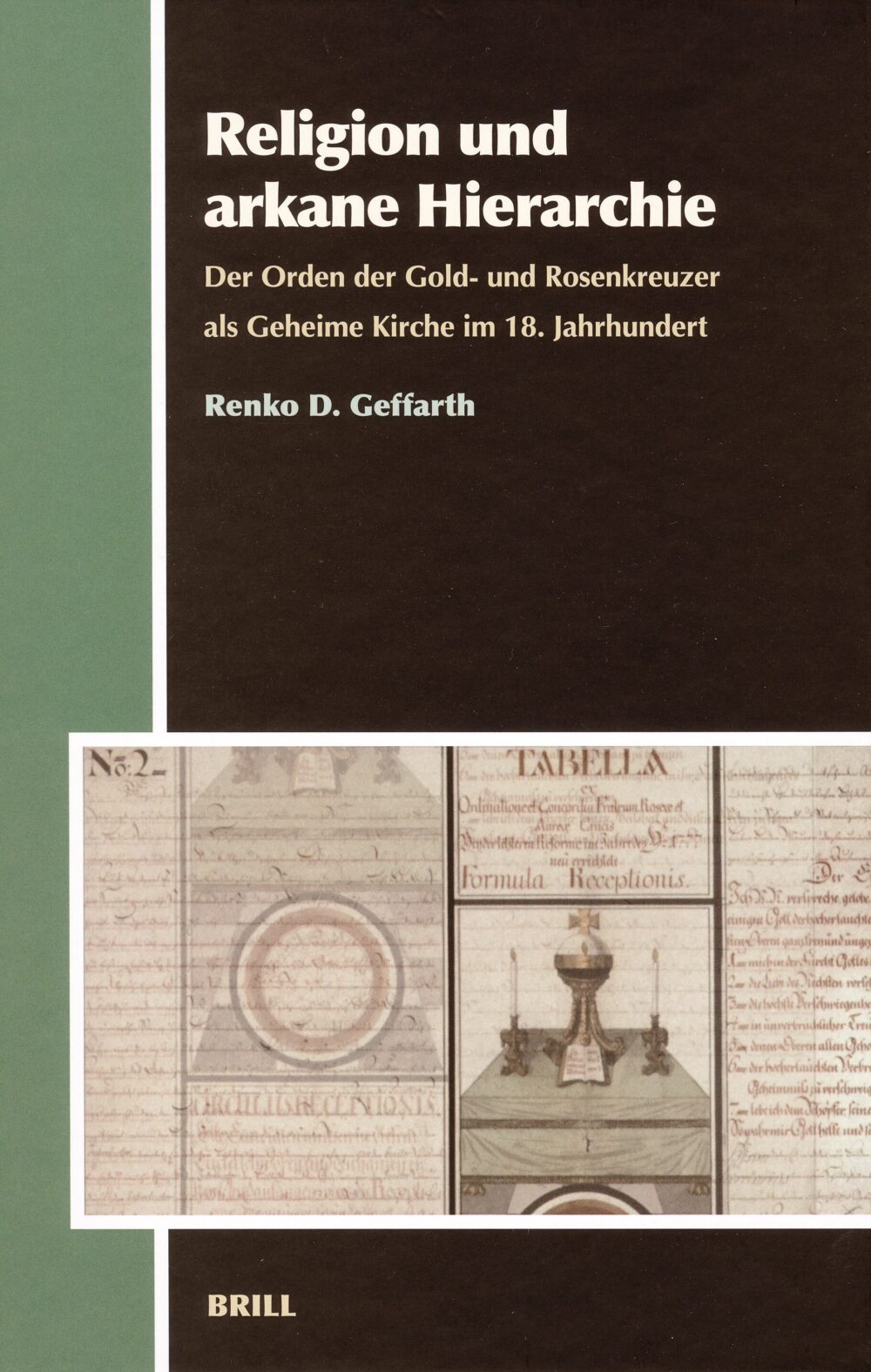
Religion and arcane Hierarchy

The order of the Gold- and Rosicrucians as a secret church in the 18th century

Renko D. Geffarth

Western esotericism began in the Italian Renaissance in the second half of the 15th century with the rediscovery of ancient writings, such as the late antique Corpus Hermeticum, whose originator was the mythical priestly figure of Hermes Trismegistos, and its translation into Latin by the philosopher Marsilio Ficino. […]

The reception of the Kabbalah, Platonism and Hermeticism in the German-speaking world ultimately gave rise to the early modern concept of magic of Heinrich Cornelius Agrippa von Nettesheim and subsequently, with the integration of alchemy, the Paracelsian natural philosophy, the theosophy of Jakob Böhme and the panosophy of the Rosicrucian writings of the 17th century. All of this was always in interplay and conflict with Christianity and its denominations, which also persecuted such heterodox currents as heresy.[…]

Schlögl also emphasizes the enlightened character of the esoteric secret societies, as they represented an “alternative to the salvation economy of the Christian churches” with their efforts to redeem ‘creation’ in this world and therefore accommodated the “self-confidence of people at the end of the 18th century”.[…]

In an overview essay on the Illuminati Order and the Gold and Rosicrucians in 1993, the Munich historian and professor Ludwig Hammermayer once again emphasized the contrast between the ‘radical Enlightenment’ Illuminati and the ‘theocratic’ Rosicrucians.[…]

Obviously challenging areas of social and cultural reform were the confessional and associated political tensions in the empire in the 16th century, the role of religion in culture and society and, last but not least, the perceived lack of understanding of ‘science’. With the help of the secret brotherhood of the Rosicrucians, these three core issues were now to be subjected to a renewal that followed a uniform ‘world view’. The Rosicrucian manifestos and the discourse that took place in the years following their first publication were thus not only the mediators of an early modern esoteric tradition that drew on the physician and hermeticist Theophrastus Bombastus von Hohenheim, known as Paracelsus (1493- 1541), and the hermeticism of the Renaissance, but also an expression of the perception of the crisis nature of the early 17th century.[…]

These first years after the publication of the Manifestos are considered the period of the ‘older’ Rosicrucians, followed by a ‘middle’ period resulting from the translation of the writings into other European languages and their reception in other countries, especially in England; the beginning of this second period is generally placed around the middle of the 17th century and its duration is extended into the early 18th century.For the ‘middle Rosicrucians’, there is initial speculation about actually existing brotherhoods or even just circles of people who considered or described themselves as Rosicrucians; for example, Gottfried Wilhelm Leibniz is said to have been a member of a circle of alchemists and Rosicrucians. However, it is still true for this phase of ‘Rosicrucianism’ that a real society, an order comparable to that of the late 18th century, very probably did not exist.[…]

The history of the development of Freemasonry presented in the following section does, however, show influences from the reception of Rosicrucian writings in 17th century England, which were passed on via Elias Ashmole (1617-1692), a member of the Royal Society founded in 1660 and one of the early Freemasons. The chronological order chosen in this study, ‘Older Rosicrucians’ – Freemasons – Gold and Rosicrucians, is therefore based on the well-founded assumption that there was a connection in terms of content between the Rosicrucian manifestos and early Freemasonry, just as there was a structural connection between 18th century Freemasonry and the Order of the Gold and Rosicrucians.[…]
Posted in Reformation & Secret Societies

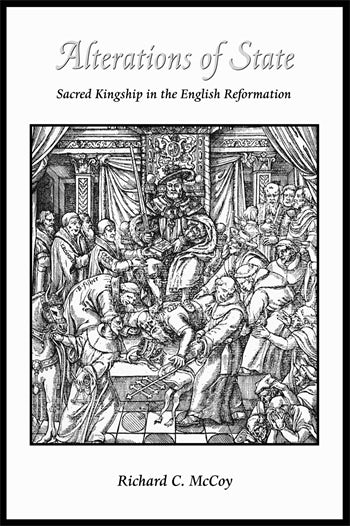
Alterations of State

Sacred Kingship in the English Reformation

Richard C. McCoy

Kings were sacred figures for centuries in Europe, perceived as the Lord’s anointed deputies on earth. The Church and its sacraments were considered holier than the monarchy, but medieval rulers were still thought to have sacerdotal, spiritual, and even miraculous powers. Coronation was seen by some as a sacrament, akin to ordination; the royal touch was thought to have healing effects; and the mystical conception of the king’s two bodies implied that kingship never died. Moreover, rulers from Charlemagne to the Hapsburgs had claimed imperial autonomy from the papacy, causing tension between kings and clerics. The Reformation intensified this conflict while vastly expanding older notions of sacred kingship, making them simultaneously more grandiose and more problematic. In England, Henry VIII’s break with Rome was justified by new theories of royal supremacy that made the king the head of the church and clergy as well as the spiritual embodiment of the realm.

As the Reformation advanced, even the sacraments themselves were diminished and the Mass suppressed. These developments caused what John Bossy calls “a migration of the holy” in which “the socially integrative powers of the host” were transferred “to the rituals of monarchy and secular community.” Under the Tudors, the royal presence acquired some of the awesome sanctity of Christ’s real presence in the Eucharist and at times even threatened to replace it.Rood screens were dismantled and sometimes replaced with the royal coat of arms under Edward, and the feast of Corpus Christi was eventually suppressed and superseded by a cult of Elizabeth and its annual royal processions. Both old and new ideas of sacred kingship still provoked increasing ambivalence and even hostility, and challenges and conflicts intensified throughout the Reformation. “Because Protestantism rejected physical holiness,” as Paul Kléber Monod says in The Power of Kings, “. . . it could easily clash with a kingship that made the body sacred.” More zealous Protestants found veneration of the monarchy as idolatrous as adoration of the host and repeatedly criticized the shortcomings of godly rule under the Tudors. Under the Stuarts, Puritan opposition increased, helping to fuel the Civil War and leading to the execution of Charles I in 1649. The English Reformation’s struggle over sacred kingship was hardly resolved by regicide and republican rule. To John Milton’s horror, the blood shed by Charles I only increased England’s tendency toward “a civil kinde of Idolatry in idolizing thir Kings.” The king proved more popular in death and defeat than he ever had in life, inspiring support for the restoration of Charles II in 1660. Nevertheless, the Stuarts’ papist sympathies became increasingly unpalatable, and James II was deposed in 1688. By challenging hereditary divine right, the Glorious Revolution seriously damaged more traditional ideas of sacred kingship and inaugurated a new era of constitutional monarchy.

As this brief summary indicates, conflicts over the English monarchy grew more tumultuous throughout the early modern period. It was a time, in the words of different contemporary accounts, of “many great changes, and terrible alterations,” marked by “days of shaking.” Even a relatively smooth transition could arouse dire fears.In his chronicle of 1603, ironically entitled The Wonderful Year, Thomas Dekker conveys the anxieties surrounding the death of Elizabeth and the succession of James by exclaiming “What an EarthQuake is the Alteration of a State!” Any change of regime could arouse acute anxieties because, throughout the English Reformation, political change often entailed religious changes as well. King James understood these fears and tried to assure his new subjects that such drastic alterations were behind them when he spoke at Hampton Court in 1604: “in this land, King Henry VIII towards the end of his reign altered much, King Edward VI more, Queen Mary reversed all, and lastly Queen Elizabeth (of famous memory) settled religion as it now standeth. Herein I am happier than they, because they were fain to alter all things they found established, whereas I see yet no such cause to change as confirm what I find settled already.” However, James’s own hostility to Puritans aggravated sectarian conflicts throughout his reign, and his heirs only further inflamed them.

Charles I’s religious policies helped provoke the Civil War that cost him his head, and James II’s conversion to Catholicism caused the Glorious Revolution that cost him and eventually the Stuart dynasty the throne. For many in England, these alterations must have felt like earthquakes indeed.