If one sees a handful of powerful and rich people at the pinnacle of opulence and fortune, while the crowd below grovels in obscurity and wretchedness, it is because the former valued the things they enjoy only because others are deprived of them and even without changing their condition, they would cease to rejoice if the people ceased to suffer.
The behavior of the southern Italian and Roman nobility is also noteworthy. According to Benedetto Croce, in the south of the peninsula, “a large number of noble families” followed the Bourbons into Roman exile for several years. Croce further informed us that after 1870, they returned the same way “in groups or individually.” Towards the end of the century, the stay of the fashionable young Prince Vittorio Emanuele in Naples softened their opposition. Nevertheless, this behavior clearly demonstrates how alien the creation of the new state was to a large part of the nobility—especially those closely connected to the Bourbon court and who possessed the greatest wealth and influence!—during its crucial phase. More striking was the case of Rome, where after 1870, many families of the “black” pro-papal nobility remained hostile to a united Italy and the Savoy “occupiers” for a long time. In the capital, too, time healed wounds, but many maintained their hostile attitudes even until the conclusion of the Lateran Treaties. The divide between “black” pro-papal and “white” liberal nobles was of particular importance, as it affected the rich and prestigious families of the Roman princes, from whom popes and cardinals had emerged for centuries. They enjoyed a status almost comparable to royalty and were endowed with great wealth and strong social influence. These nobles of Naples and Rome together constituted 15 to 20 percent of the entire Italian nobility; the Piedmontese accounted for 10 percent. Elsewhere, too, where the dynasties and courts were less firmly established than the papacy in Rome, veritable sectors of aristocrats existed who—albeit less conspicuously—barely identified with the national cause.
From Hochkultur als Herrschaftselement – Italienischer und deutscher Adel im langen 19. Jahrhundert
Herausgegeben von: Gabriele B. Clemens , Malte König und Marco Meriggi
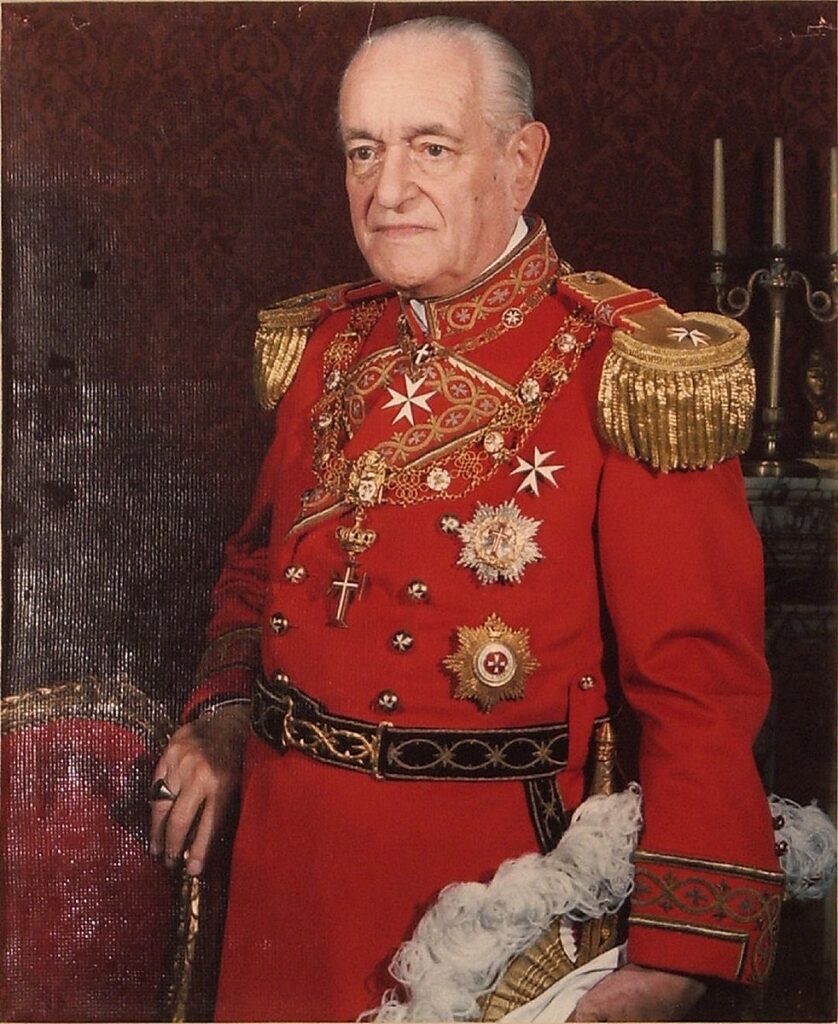
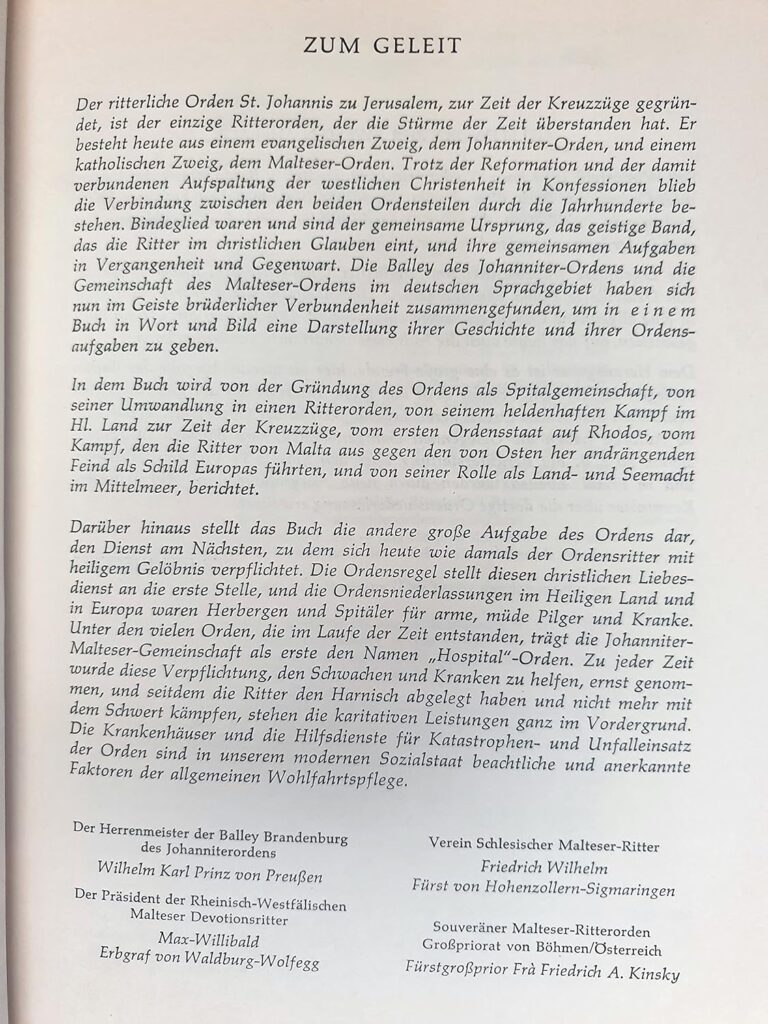
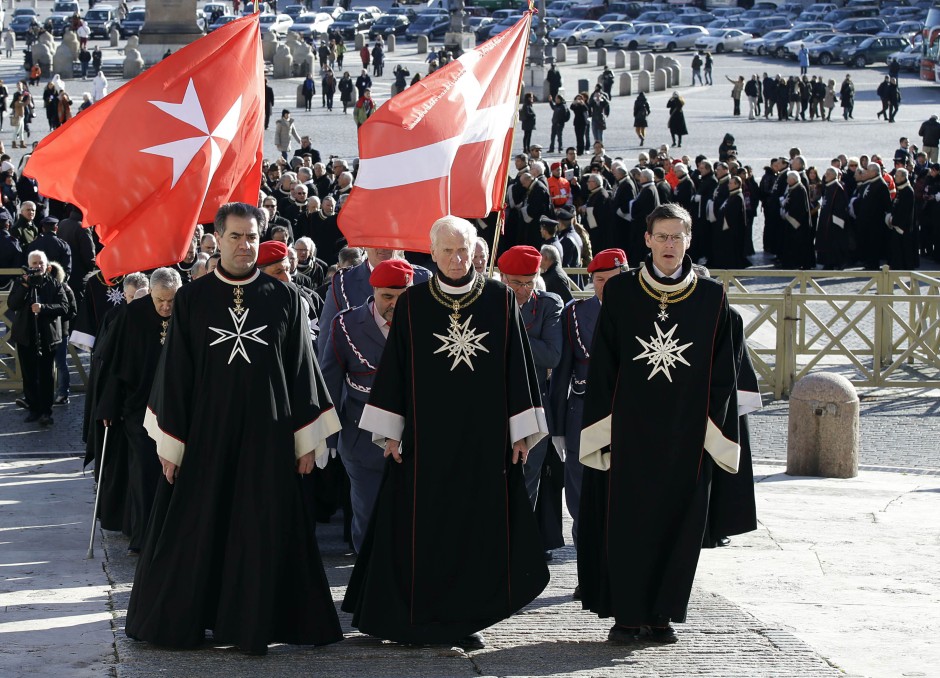
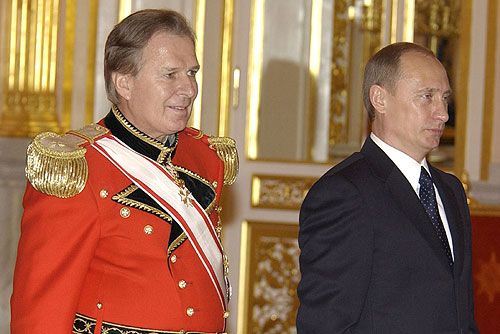
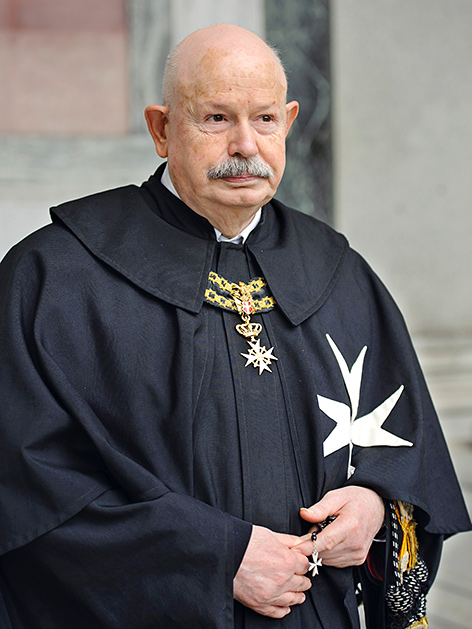
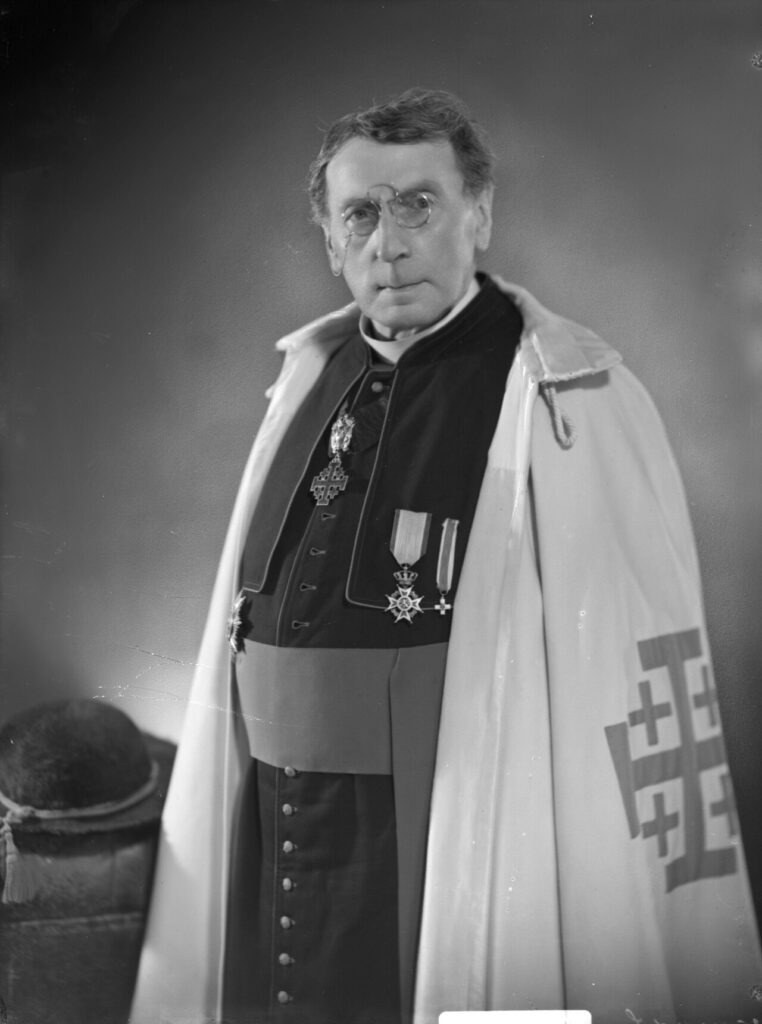
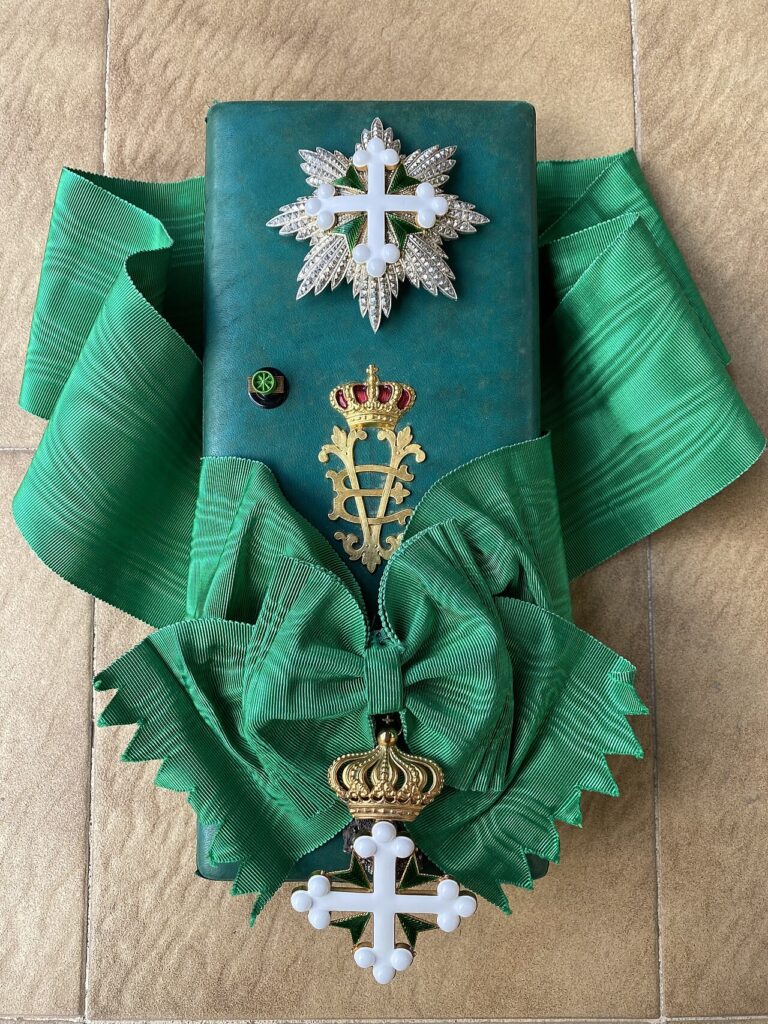
His Eminence and Highness, the Prince and 77th Grand Master of the Order, Fra’ Angelo de Mojana di Cologna, to whom this study is submitted with respect and devotion, was the kind patron of this work. The author owes his respectful thanks to His Most Excellent Obedience Grand Cross Bailli Quintin Jermy Gwyn, the Grand Chancellor of the Order, and to His Serene Highness, the Prince Grand Prior of the Grand Priory of Austria, Bailli Fra’ Friedrich A. Kinsky von Wchnitiz und Tettau, for their pioneering and supportive discussions on the structure and law, spirituality, and the spiritual-childared self-image of the research object in a technologically changing world. His Most Excellent Ambassador Count Robert de Billy and the immortalized Minister-Conseiller at the Order’s Embassy to the Republic of Austria, Dr. Leopold Hayden, whom the author had the privilege of assisting in diplomatic service, conveyed to him, during countless encounters, the unmistakable nobility-Melitsian spirit and familiarized him with the old and new imperatives of the eight-pointed Maltese Cross in our time.
Fra’ Angelo de Mojana di Cologna
The Director of the Vienna Diplomatic Academy, His Excellency Ambassador Baron Dr. Arthur Breycha-Vauthier de Baillamont, a member of the Magistral Commission for Foreign Affairs and Social Assistance of the Order, has, in a spirit of personal friendship, graciously and helpfully made his extensive private archives and his many years of experience of life in the Order of Malta available to the author. He also personally took the trouble to validate and correct the manuscript of this work, for which he is expressed his sincere gratitude. The author owes sincere and lifelong gratitude to his esteemed teachers, Prelate Emeritus Professor Dr. h. c. mult. Dr. Johannes Messner and the Nestor of International Law, Emeritus Professor Dr. h. c. mult. Dr. Alfred Verdross, from whom he was able to experience and receive insights into and inspiration for understanding the “bonum commune humanitatis” from a natural law and Christian perspective. The author remains equally sincerely grateful to the directors of the Institute for International Law and International Relations at the University of Vienna: Prof. Dr. Karl Zemanek and former Ambassador Prof. Dr. Stefan Verosta shared their knowledge of international law with him and accepted this study as a contribution to academic research.
Retired Senator Dr. Johannes Broermann, the owner of the publishing house Duncker & Humblot, and the Austrian Federal Minister of Science and Research, Dr. Hertha Firnberg, have made the publication of this study possible with their understanding and openness. In accordance with the spiritual intentions of the “Sovereign Order of Malta” as a subject of international law, this academic work is placed under the auspices of Saint John the Baptist, who gave this religious, noble, and socially hospital, worldwide community its original and still primarily binding name.
Now the question arises: does the noble character of the Order and its knights today “only” consist of the oft-cited “noble disposition,” or does the Order partially adhere to a blood nobility?
Both, as well as. For admission to the 1st and 2nd classes of the Order, certain nobility tests are required, which will not be described in detail in this work. However, some branches of the third class bear a special characteristic that corresponds to Melitian internal law: their members are “cavalieri die grazia magistrale,” that is, knights “by the grace of the Grand Master,” in the internal sense of personal “Melitian nobility” within the Order, without, however, receiving predicates, heraldic rights, or inheritance rights linked to this.
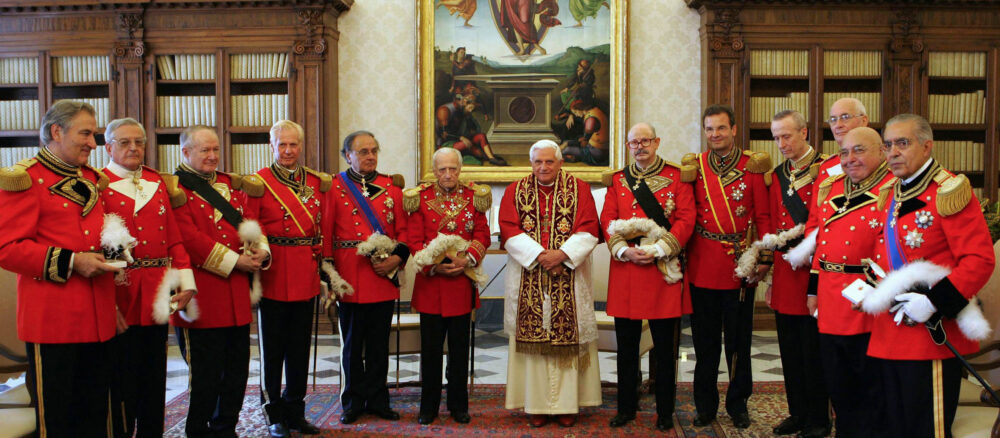
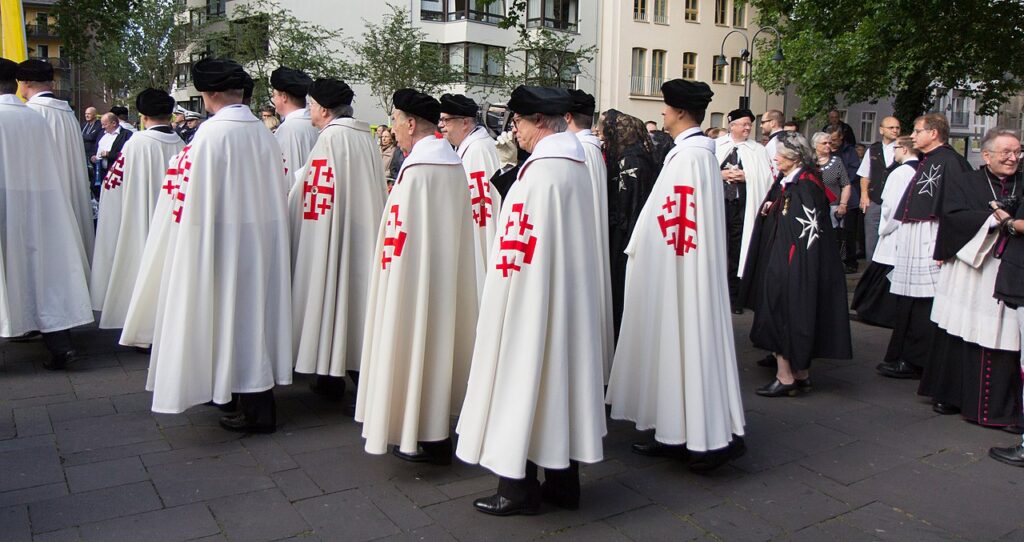
Without a doubt, the Order benefits from its “religious dependence” on the Holy See, as the latter accredits it on the basis of its international prestige and a priori relieves it of any suspicion of religious separation, social isolation, even schism and the existence of a religious sect. The Holy See grants the Order a spiritual credential by connecting it directly to the lifestream of the universal Catholic Church, keeping it bound, and feeding its religious channels. It is therefore only natural that, even in the secular-diplomatic sphere, the missions of the Holy See and the Order—namely, nunciatures and embassies, internuntiatures and legations, apostolic delegations, and Melitensian delegations—cooperate in the best possible way. For the Order of Malta is more “ecclesiastical” than any other subject of international law besides the Catholic Church, or rather the Holy See. R. A. Graham considers the Order of Malta to be one of those states (including those subjects of international law that are not states) in which there is no “separation of church and state”.
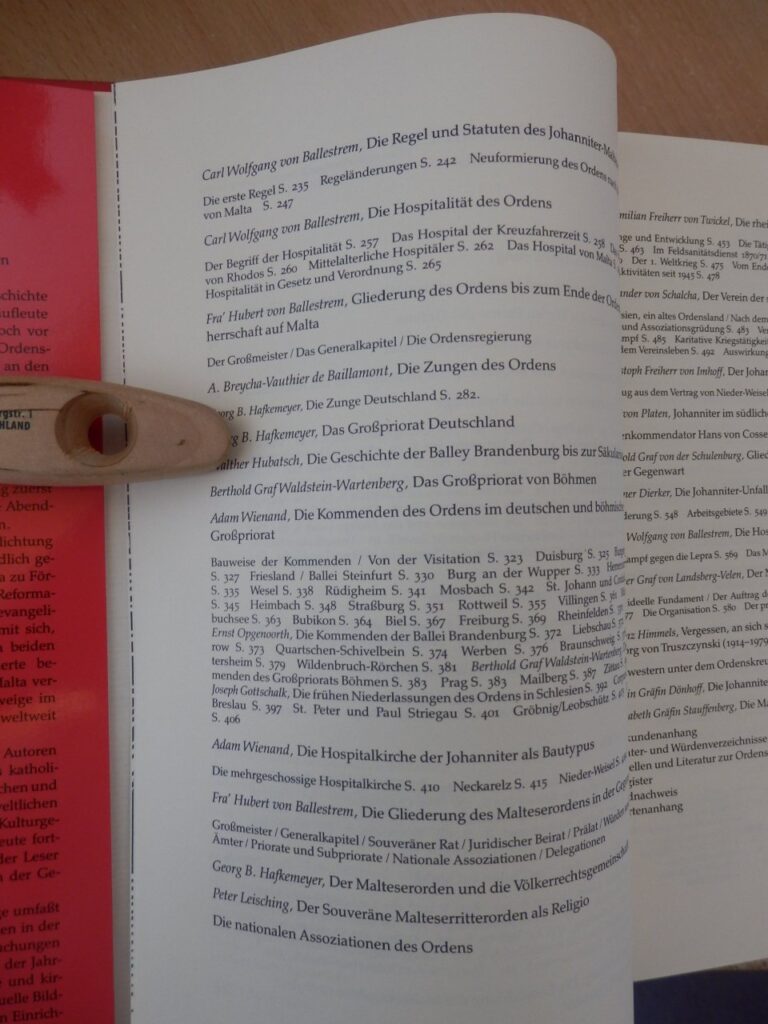
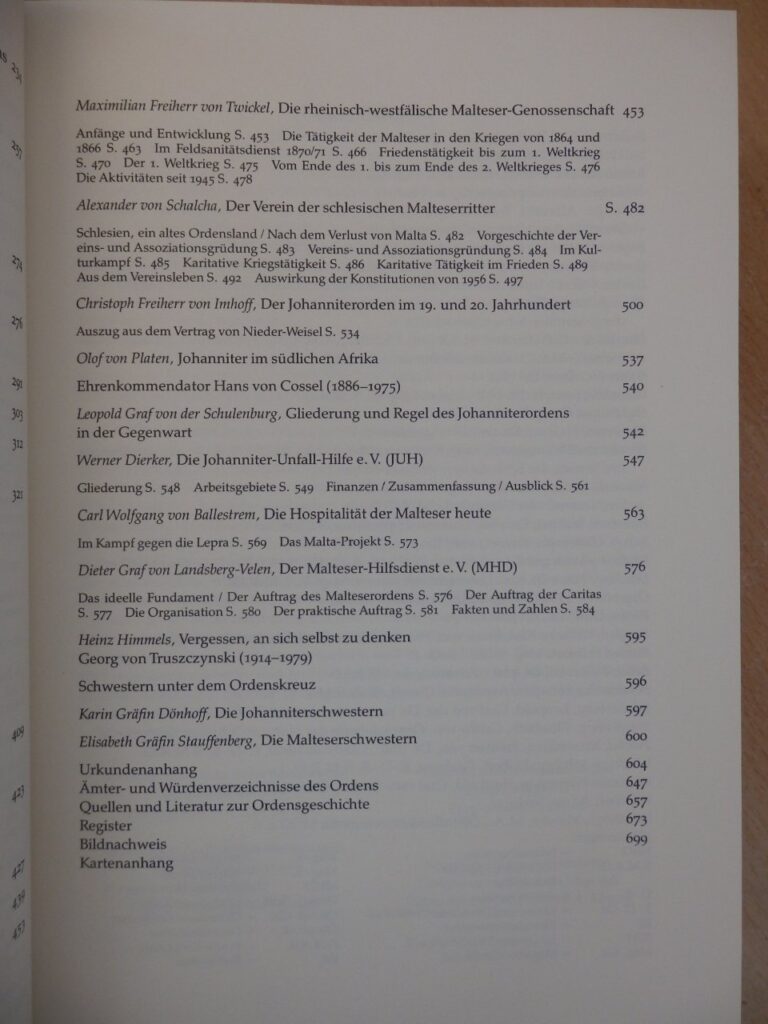
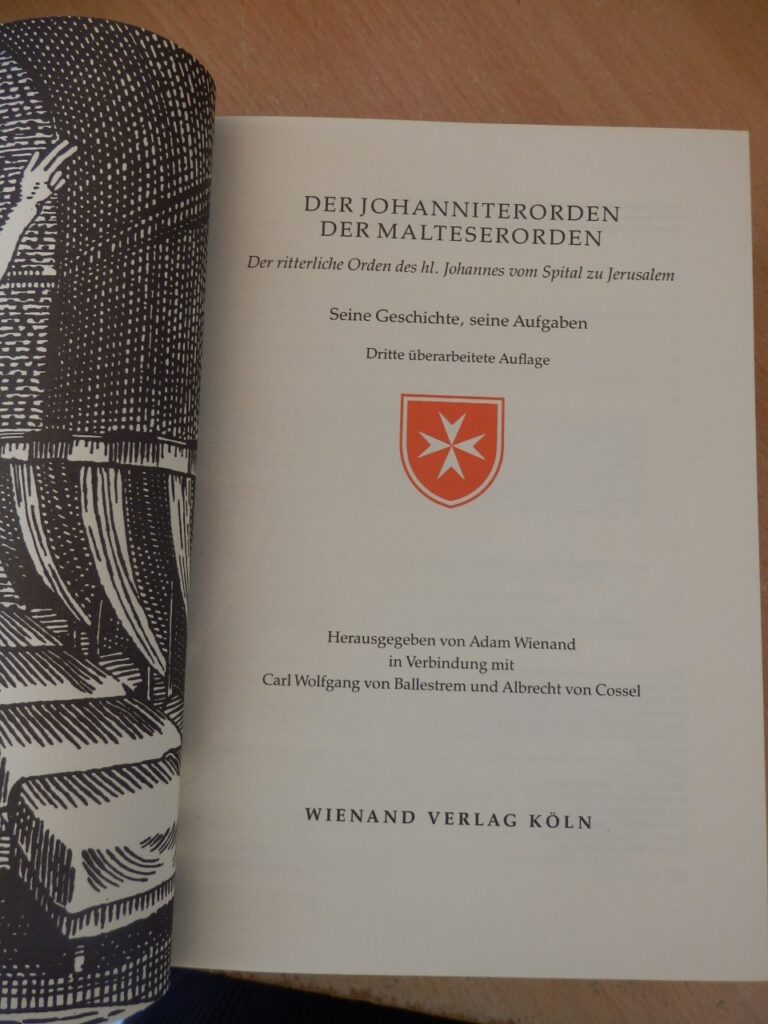
From Malteserorden und Völkergemeinschaft (Robert Prantner, 1974)
The work continuously cites for sources a book authored by the Order themselves at a publisher specialized on arts and museums. Numerous aristocratic members of the order are the authors of the chapters and they are cited individually by Prantner as if to appear like they are independent sources.
Robert Prantner later received the Papal Pontifical Equestrian Order of St. Gregory the Great.
Since the 1830s, the Order received offers to take on hospital duties and suggestions of the opportunity for increased charitable work, particularly from members of the Austrian Arch-House. However, the high regard for knightly-military splendor and prestige held by the Order’s leadership meant that this opportunity was either not seized or was seized too late. Indeed, the Knights of the Order, especially those who had served in Malta, did not like to see themselves working in a second-rate hospital in Modena or auditing the accounts of a medical institute. They much preferred to provide service befitting their status, but of only limited use, to the noble guard of the respective duchy or to the papal court. Therefore, another organization filled the gap in the market for military medical services. In 1863, the Swiss Henry Dunant (1828-1920) founded the International Committee of Relief Societies for the Care of the Wounded, whose symbol, the Red Cross, soon monopolized systematic military nursing. By remaining committed to the principle of social inequality and its often inherited aristocratic traditions with its discriminatory admission regulations, the Order of Malta missed a significant opportunity.
Until 1914, a Knight of the Order had an almost 50 percent chance of becoming a Commander and benefiting from the revenues of a commandery, which further improved their standard of living. Individual noble families successfully managed to retain the succession to the administration of the lucrative commanderies through multiple representation in the legal ranks and thus in the provincial chapter.
The motivations for membership as a Knight of Honor or Dame of Honor were broader. In the religious sphere, the Order created the opportunity for Catholic noblemen to fulfill their religious duties in an environment befitting their status. Political motivations for membership are also evident. Since traditional elites and the Catholic Church were preferred targets of liberal and socialist criticism throughout Europe, the Order of Malta served the clergy and the nobility as a transnational platform for demonstrating shared values. At the national level, honorary membership was also an expression of political commitment. For a long time, in the Grand Priory of Rome, it represented a special bond with the Pope and a relative distance from the Savoy royal house. This honorary membership in the Rhenish-Westphalian Order of Malta, which had a strong ultramontane orientation, indicated a political position just as clearly as that of parts of the former Polish nobility, who expressed anti-Prussian, anti-Russian, or anti-Austrian tendencies by belonging to a particular Grand Priory.
Until the last third of the 19th century, however, one could hardly speak of serious charitable work. The Order offered a befitting framework for charitable work, especially for women. The Knights of the Right, as the core group of the community, were little involved in the active hospitality of the Order. Active service to fellow human beings in need was partly left to institutions outside the Order. However, individual Knights of Honor gladly assumed the organizational and responsible leadership of charitable missions. Caritas thus served to provide the order with a contemporary justification for its existence in the public eye. In this way, the charitable activity fulfilled a task of central political importance for the order.
Although the Savoys are close to the Vatican, they nevertheless produced at least two Freemasons. The Freemasons and the Vatican/clergy were enemies from the beginning, fighting each other with propaganda, agitation, and intrigue. In the past, the Vatican repeatedly encouraged the persecution of Freemasons, while the Freemasons promoted enlightenment and the separation of church and state. After World War II, the two groups appear to have negotiated a kind of truce. From then on, the Catholic Church was able to establish itself among the people of the USA and Great Britain. Previously, Catholics had been discriminated against there. Until the beginning of the 19th century, Catholics were a small minority in the USA. To this day, there are hardly any Catholics among the elite of either country. Only one British Prime Minister was baptized Catholic (Boris Johnson), but even he was later confirmed Anglican. Besides Joe Biden, only one US President was a Catholic: the assassinated Kennedy. All other US presidents have been Protestants, and almost a third of them were Freemasons. The Pilgrim Fathers of the USA were Puritans (Protestants) and therefore probably disliked the Vatican. Since the beginning of the 18th century, Catholics were excluded from the British line of succession, and heirs to the throne were not allowed to marry Catholics. The law was changed in 2015. Incidentally, the British royal family was one of the most important Masonic families of the last 200 years.
Amadeus I (1845-1890) was the first known Freemason from the House of Savoy. He was King of Spain from 1871 to 1873. He lifted the ban on Freemasons that had existed in Spain until then. Eventually, Amadeus voluntarily abdicated and the first Spanish Republic was founded, which from then on was ruled by politicians, many of whom were Freemasons. The Republic lasted for almost two years, but was then replaced by a monarchy and members of the House of Bourbon regained power in Spain. Amadeus’s second wife was Maria Letizia Bonaparte, a niece of the French Emperor Napoleon Bonaparte. Maria’s father, Napoléon Joseph, and her grandfather Jérôme were Freemasons, as were other members of the Bonaparte family. The Freemason Napoléon Joseph Bonaparte also married into the House of Savoy.
Victor Emmanuel of Savoy (*1937 [✝2024]) met Popes Paul VI, John Paul II, Benedict XVI, and Francis. As mentioned, he was a member of the P2 [Italian Masonic Lodge] and is also a member of the Order of Malta. He has been to court several times: In the 1970s, he was investigated for international arms trafficking. He brokered the sale of 300 combat helicopters to his friend, the Shah of Persia. The helicopters eventually ended up in Jordan, Taiwan, and South Africa. Victor Emmanuel became rich through these arms sales, according to a cousin. In 1978, he fired several shots that killed 19-year-old German Dirk Hamer. It was allegedly an accident. In 1991, Victor Emmanuel was acquitted of the charge of intentional homicide but received a six-month suspended sentence for illegal possession of weapons. Dirk Hamer was the son of convicted alternative medicine practitioner Ryke Geerd Hamer, a conspiracy theorist who developed his own Germanic medical science. In 2006, Victor Emmanuel was arrested. He was accused of founding a criminal organization responsible for corruption and the exploitation of prostitutes. Victor Emmanuel had contacts in the gambling industry and allegedly procured young prostitutes for visitors to a casino. During this investigation, other people were investigated for corruption, extortion, money laundering, and mafia connections. One of the suspects was Victor Emmanuel’s cousin Simeon Saxe-Coburg-Gotha, the head of the non-reigning royal family of Bulgaria. Simeon was also Prime Minister of Bulgaria. He was accused of accepting bribes and helping an Italian businessman obtain public contracts in Bulgaria. Victor Emmanuel served as an intermediary. Three Carabinieri (police officers) were also investigated. She was suspected of passing information from a database to Victor Emmanuel and his associates. Victor Emmanuel was ultimately acquitted.
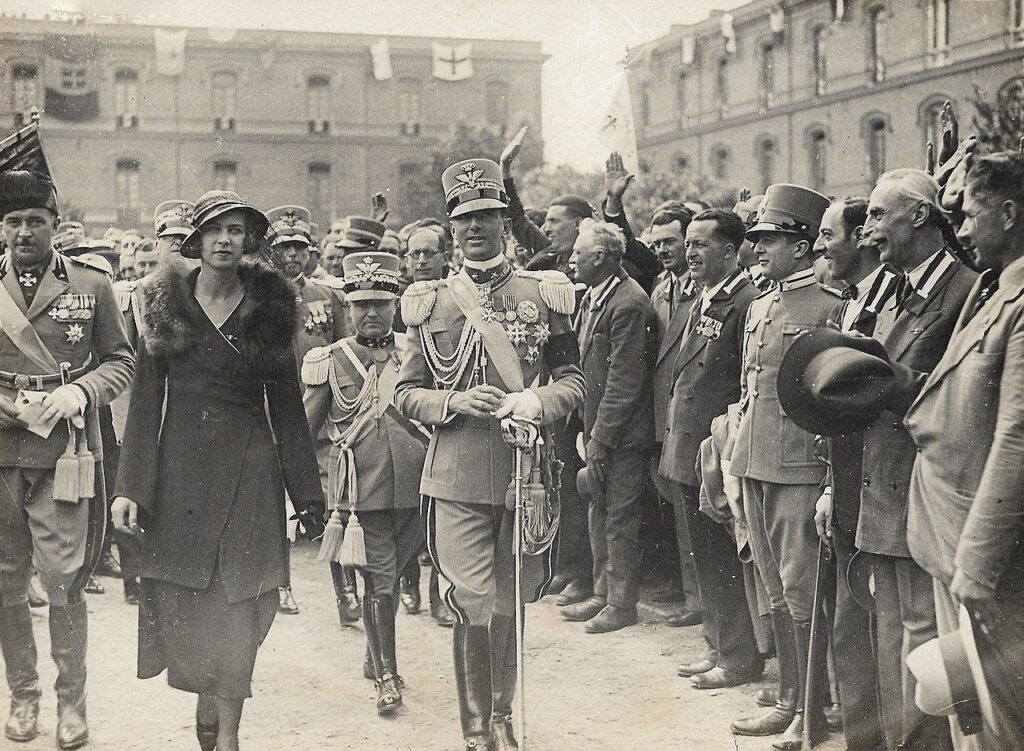
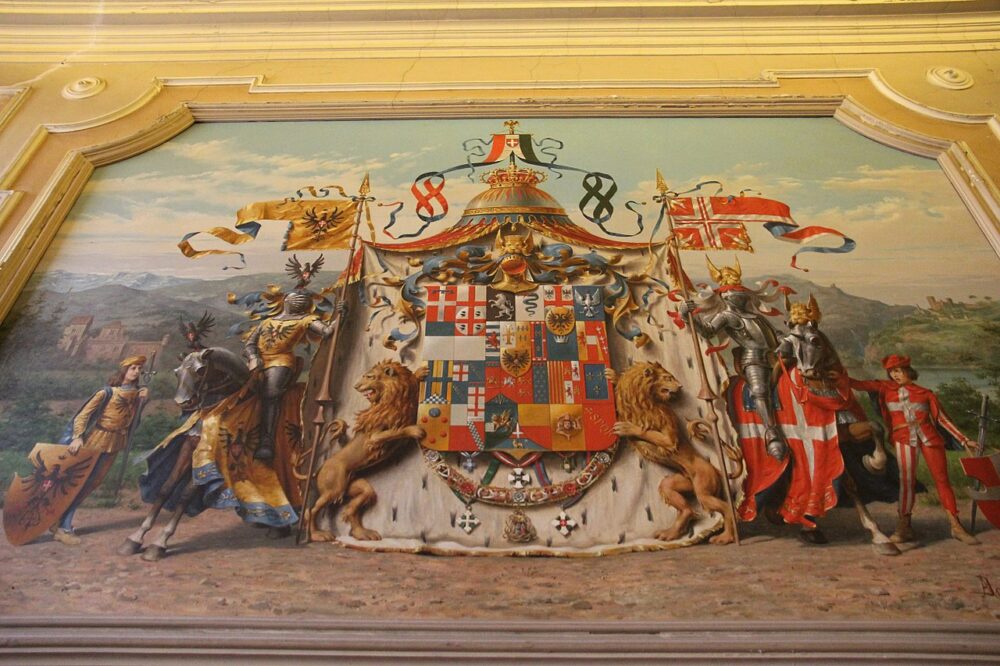
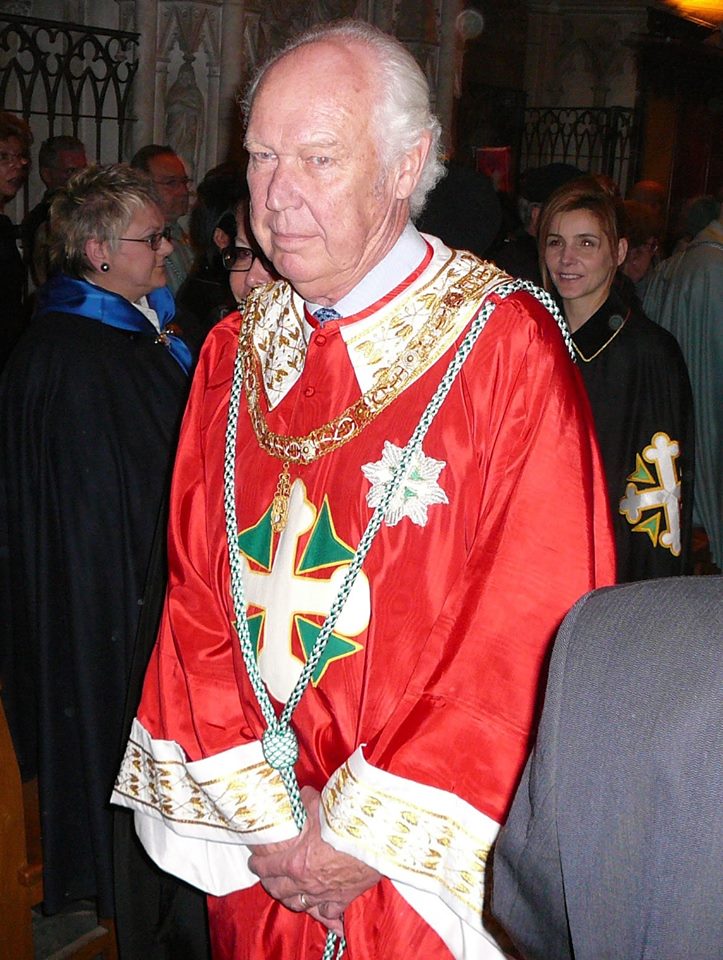
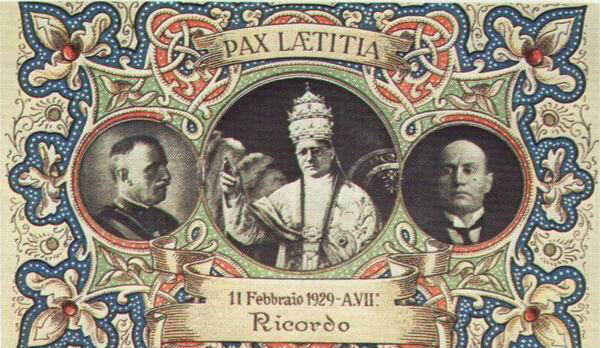
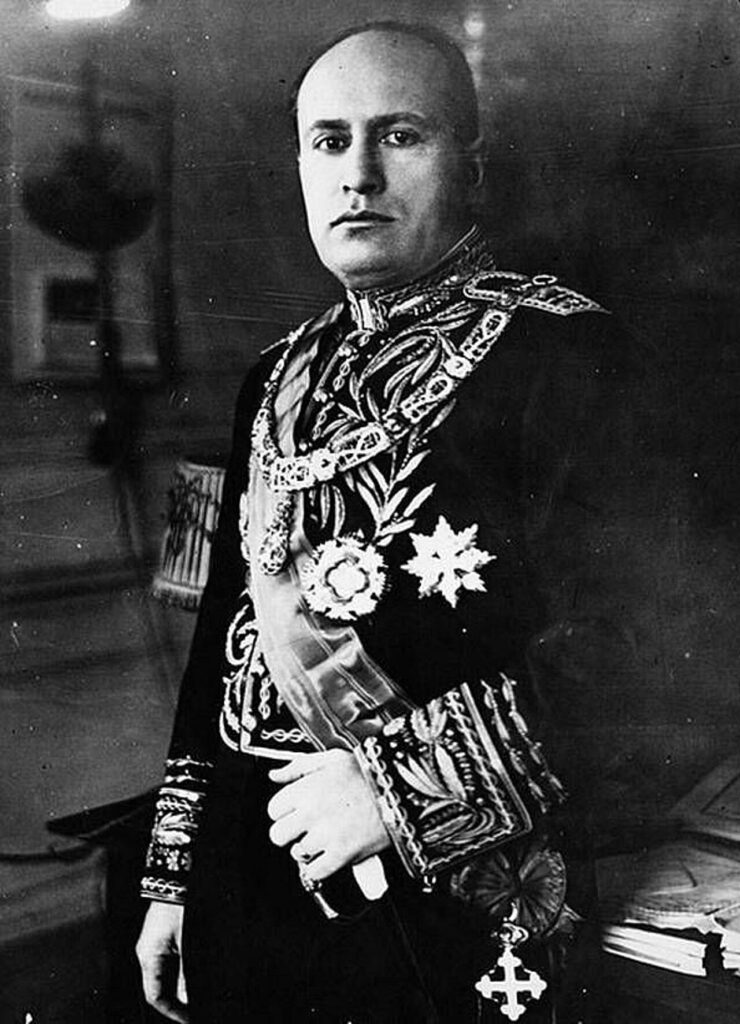
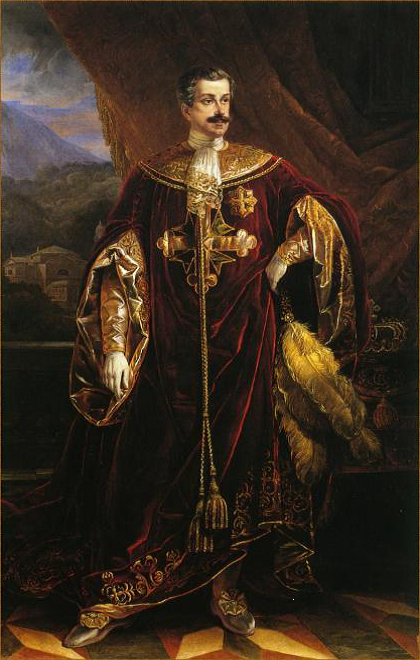
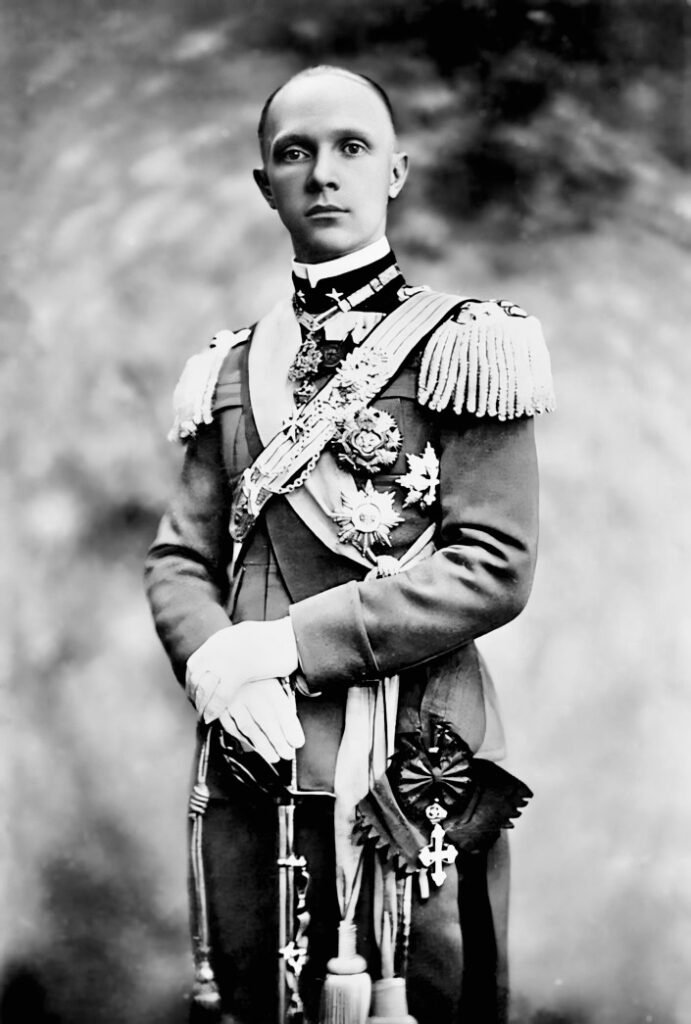
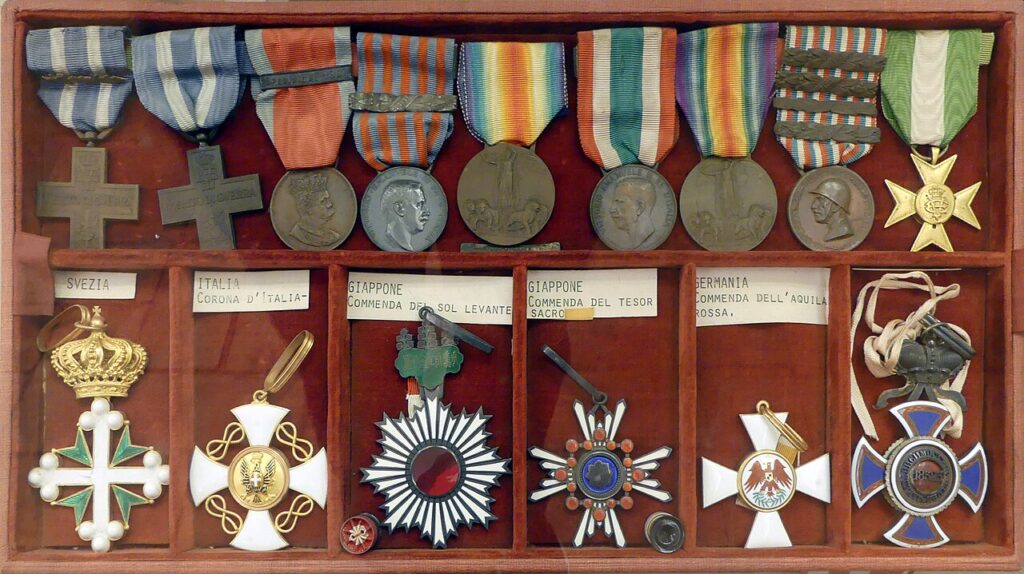
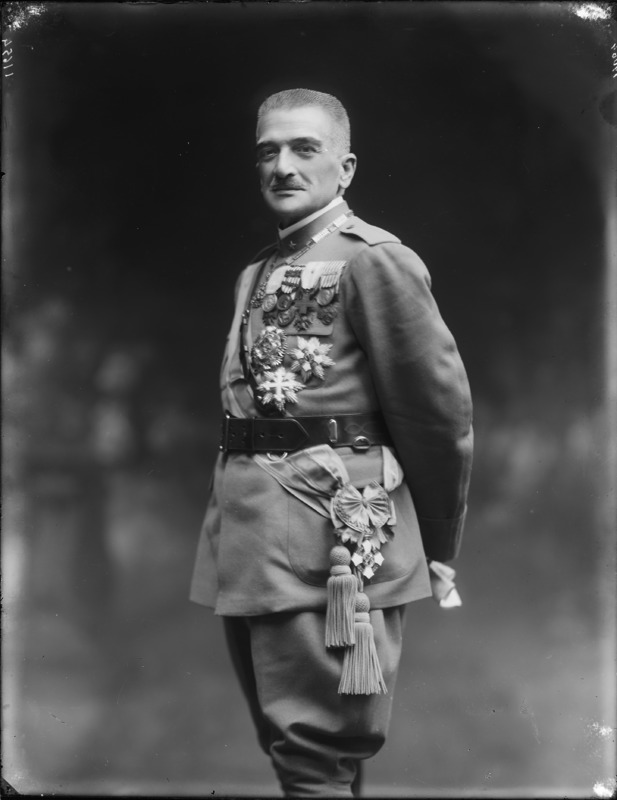
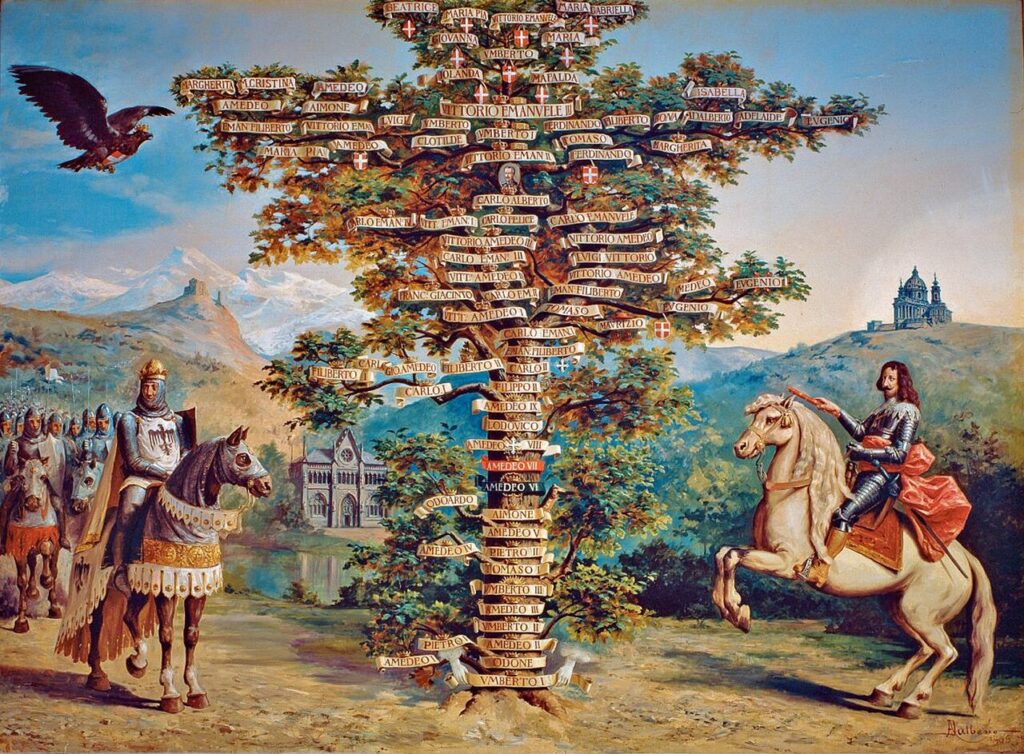
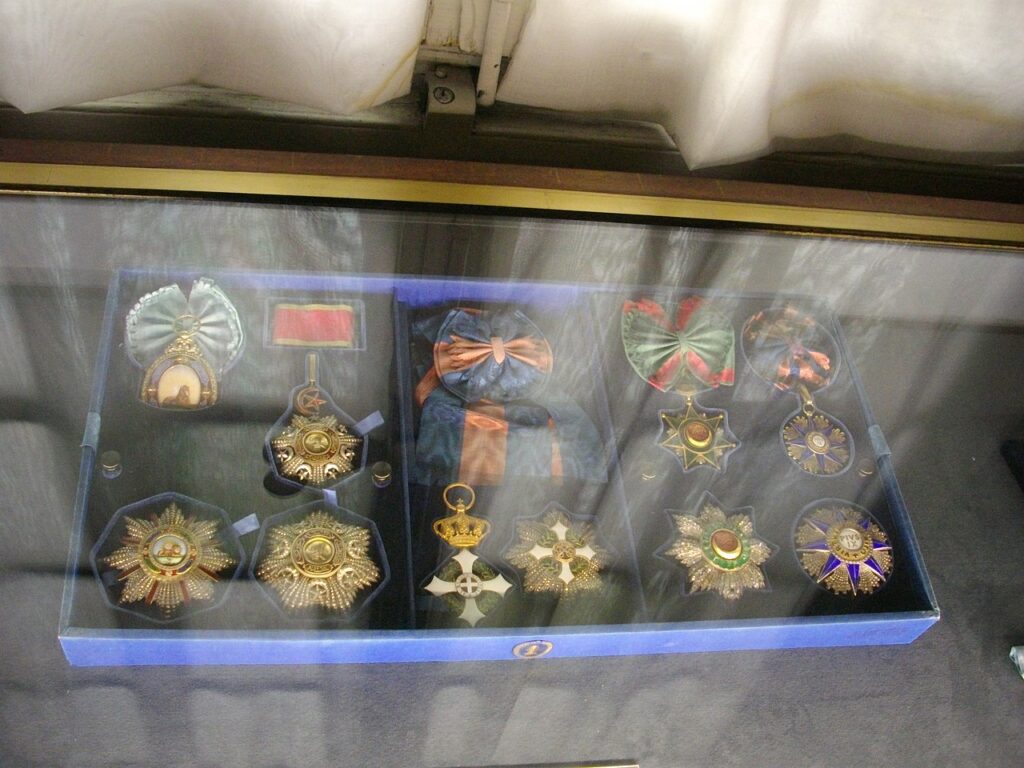
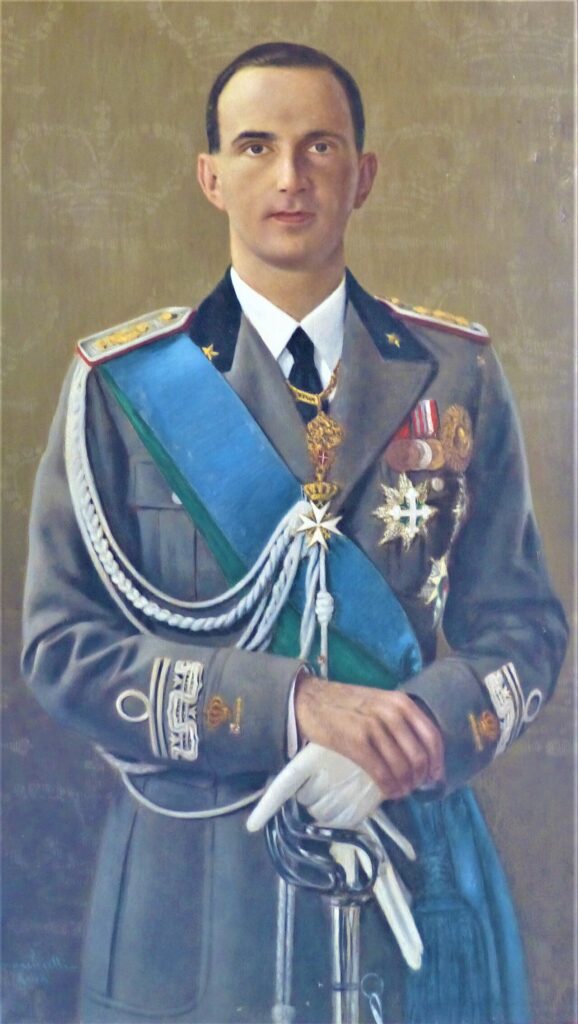
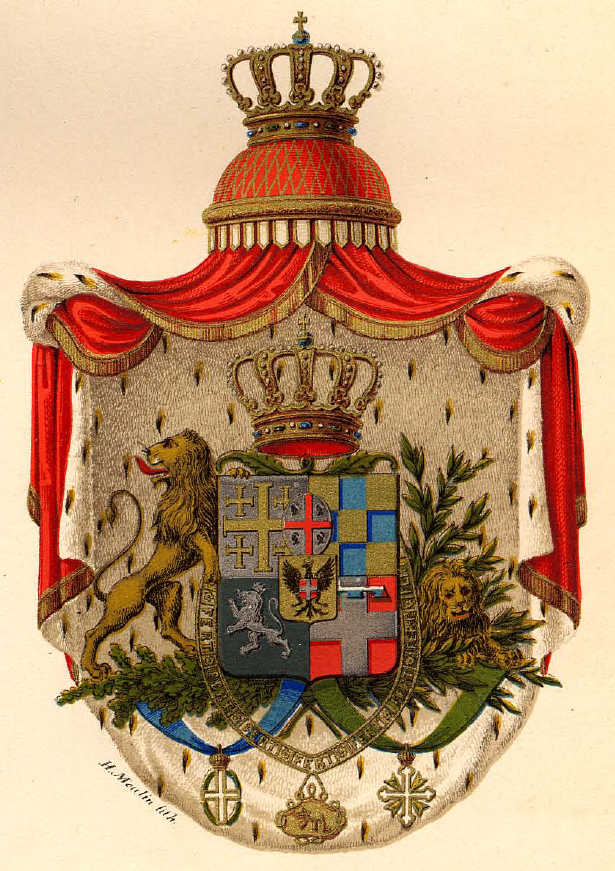
Vittorio Emanuelle in the robe of the Order of Saints Mauritius and LazarusVittorio Emanuelle III. King of Italy, Pope Pious XI. and MussoliniMussolini with Savoyen coat of arms including the house-owned Order of Saints Mauritius and LazarusCharles Albert of Sardinia (1798 – 1841)Order of Saints Mauritius and LazarusAdalberto of Savoyen-Genua (1898–1982), Duke of BergamoArmando Diaz (1861-1928), Minister of War under MussolliniUmerto II. (1904-1981), King of Italy
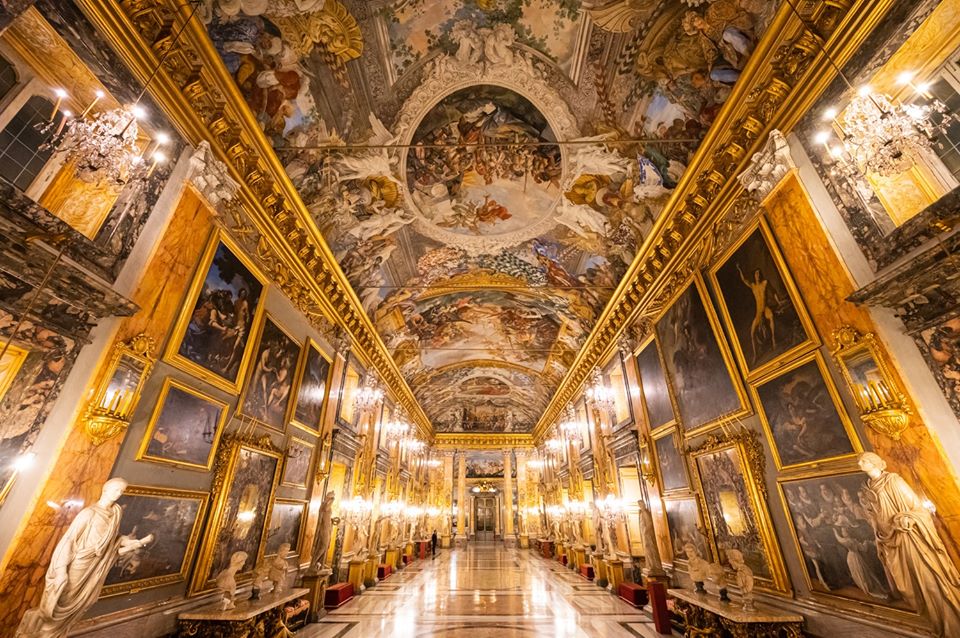
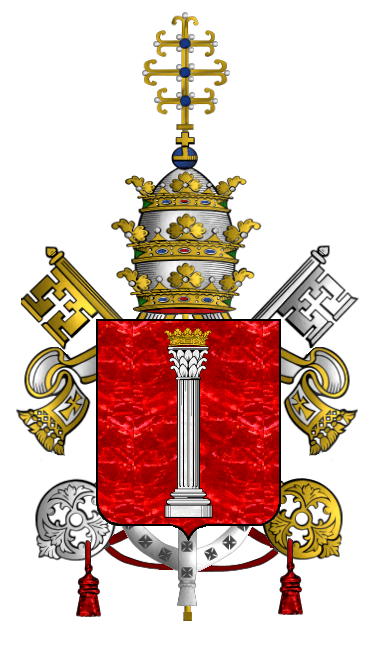
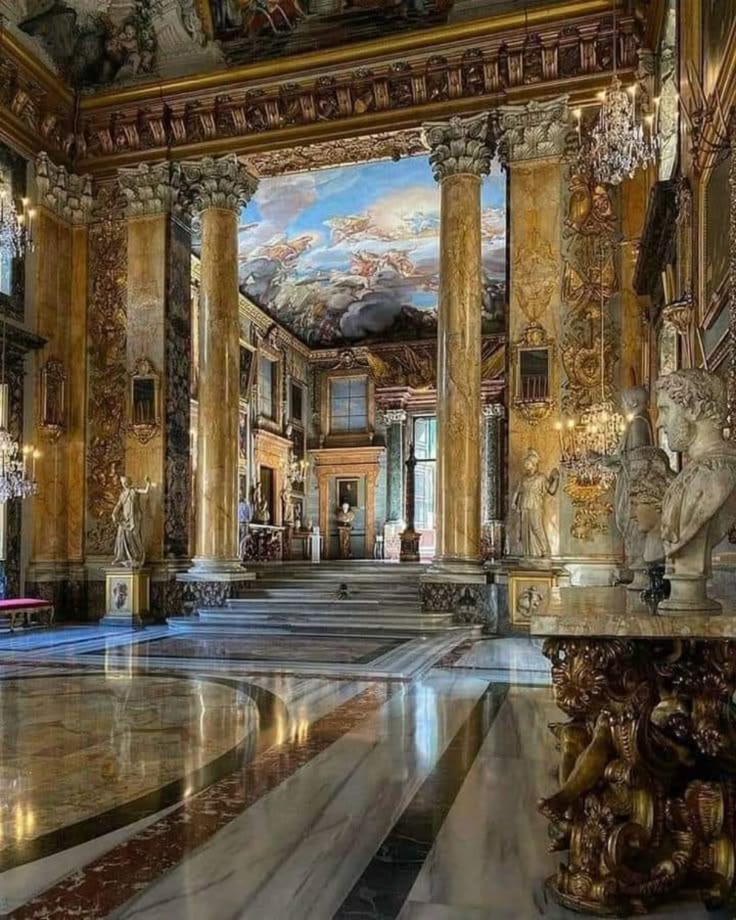
In 1870, the Papal States were occupied by the Italian royal family of Savoy, against the will of the Pope. Those Italian noble families who rejected the Savoys and remained loyal to the Pope are known as the Black Nobility. The Colonna family belongs to the Black Nobility. The Sicilian branch of the family, however, was closely linked to the Savoys. In 1946, the Kingdom of Italy was dissolved and the Savoys were deposed because they had supported the Italian dictator Benito Mussolini. In addition to the abolition of the monarchy, titles of nobility were also abolished in Italy. The members of the papal nobility, including the Colonnas, were allowed to keep their titles of nobility and hold them to this day.
Guido Colonna di Paliano (1908-1982) represented Italy as a diplomat in New York, Toronto, Cairo, Stockholm and London from 1933. At that time Italy was a fascist dictatorship led by Benito Mussolini. After the Second World War and the end of the dictatorship, Guido Colonna was the general representative of the Italian delegation to the Marshall Plan negotiations. From 1948 to 1956 he was the first Deputy Secretary General of the OEEC and thus deputy head of the international organization. The OEEC was the forerunner of today’s OECD. Guido Colonna held a leading position in the Italian Foreign Ministry and was Italian ambassador to Norway. From 1962 to 1964 he was Deputy Secretary General of NATO and thus deputy head of the world’s most powerful military alliance. He chaired the North Atlantic Council, NATO’s most important decision-making body. He was also a member of the EEC/EEC Commission in the 1960s. It was the forerunner of today’s EU Commission.
Guido Colonna di Paliano founded the Trilateral Commission in 1973 together with the American David Rockefeller. This influential think tank facilitates exchange between the elites of North America, Western Europe, and Japan. Many business leaders and politicians are represented in the Trilateral Commission. Guido Colonna would have known the Dutchman Max Kohnstamm, as he was also a co-founder of the Trilateral Commission. Kohnstamm was a friend of the Dutch royal family. Kohnstamm was also a co-founder of the Bilderberg Meeting and is considered one of the founding fathers of the EU.
After giving up his career as a diplomat, Guido Colonna di Paliano entered the private sector. He served on the board of the Italian automobile group Fiat. The company was founded by the Agnelli family, which still controls it today. The Agnellis are considered the most powerful family of the Italian business elite and married into several Italian aristocratic families. Guido Colonna knew Giovanni Agnelli, the family’s head. They were active together in the Trilateral Commission.
Guido Colonna di Paliano was on the board of a large Italian electrical company controlled by the US conglomerate General Electric. Guido Colonna was also on the board of the chemical company Solvay. Solvay is one of Belgium’s largest companies and is still controlled by the billionaire founding family.
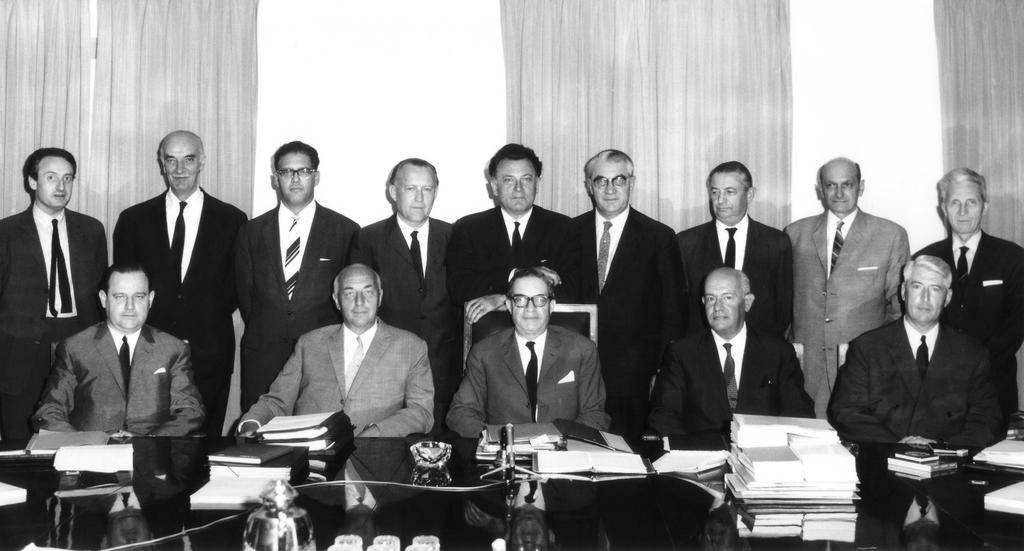
Guido Colonna di Paliano at the European Communities Rey Commission (1967-1970), upper row 2nd from left
Prince Ascanio Colonna di Paliano (1883-1971) was a diplomat from 1908 onward. He represented Italy in England, Turkey, Denmark, Sweden, and Hungary. After the First World War, he was part of the Italian delegation to the Paris Peace Conference. From 1938 to 1941, he served as Italian ambassador to the United States, representing the Italian dictator Mussolini in the USA. In December 1941, he delivered Italy’s declaration of war on the USA to then-US President Roosevelt. That same day, Prince Ascanio resigned from his position as ambassador because he opposed war with the USA.
Ascanio’s brother, Prince Marcantonio VII (1881-1947), married Isabelle, a member of the Lebanese Sursock family. Through the marriage, Isabelle became part of Roman high society. She and her husband were loyal to the Vatican. Isabella received Vatican citizenship, which only a few hundred people possess. In her palace, Isabella received influential figures from around the world. The Sursock family was once the wealthiest family in Lebanon and produced Freemasons. The international family also married into the Irish, Muslim, and Thai aristocracy.
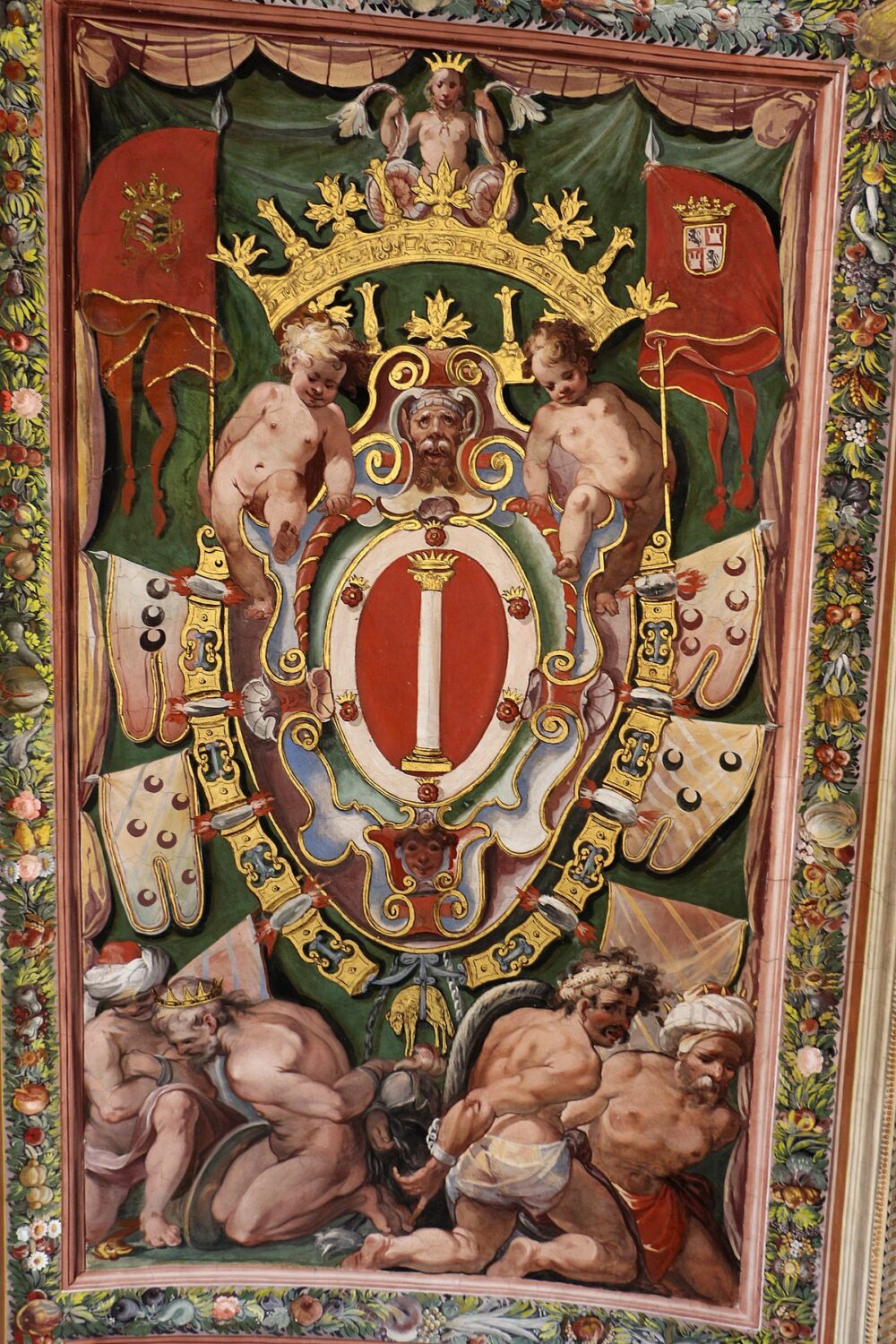
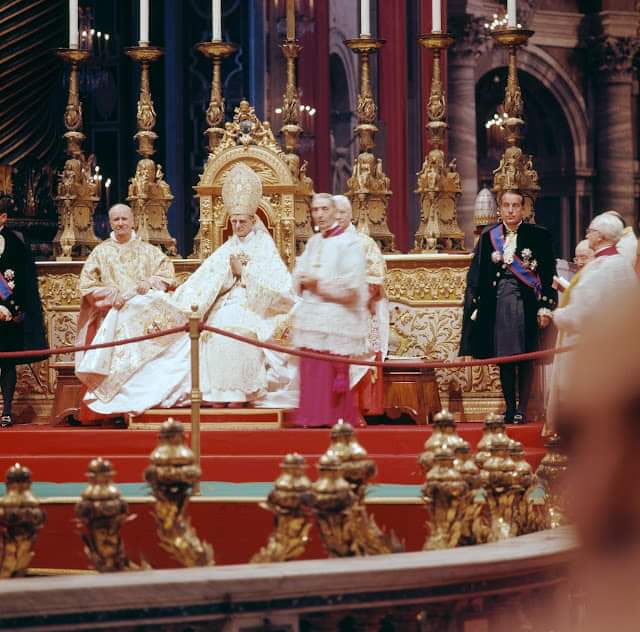
Until 1968, numerous Vatican offices were held and inherited by noblemen. Since the 16th century, the Colonna family had enjoyed the privilege of having a family member sit on the right side of the papal throne during papal ceremonies. Prince Aspreno Colonna di Paliano (1916-1987) was the last member of the family to receive this honor. With his 35 titles of nobility, he was one of the most distinguished members of the high aristocracy.
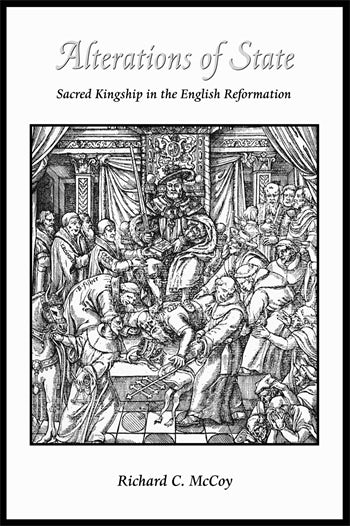
Kings were sacred figures for centuries in Europe, perceived as the Lord’s anointed deputies on earth. The Church and its sacraments were considered holier than the monarchy, but medieval rulers were still thought to have sacerdotal, spiritual, and even miraculous powers. Coronation was seen by some as a sacrament, akin to ordination; the royal touch was thought to have healing effects; and the mystical conception of the king’s two bodies implied that kingship never died. Moreover, rulers from Charlemagne to the Hapsburgs had claimed imperial autonomy from the papacy, causing tension between kings and clerics. The Reformation intensified this conflict while vastly expanding older notions of sacred kingship, making them simultaneously more grandiose and more problematic. In England, Henry VIII’s break with Rome was justified by new theories of royal supremacy that made the king the head of the church and clergy as well as the spiritual embodiment of the realm.
As the Reformation advanced, even the sacraments themselves were diminished and the Mass suppressed. These developments caused what John Bossy calls “a migration of the holy” in which “the socially integrative powers of the host” were transferred “to the rituals of monarchy and secular community.” Under the Tudors, the royal presence acquired some of the awesome sanctity of Christ’s real presence in the Eucharist and at times even threatened to replace it.Rood screens were dismantled and sometimes replaced with the royal coat of arms under Edward, and the feast of Corpus Christi was eventually suppressed and superseded by a cult of Elizabeth and its annual royal processions. Both old and new ideas of sacred kingship still provoked increasing ambivalence and even hostility, and challenges and conflicts intensified throughout the Reformation. “Because Protestantism rejected physical holiness,” as Paul Kléber Monod says in The Power of Kings, “. . . it could easily clash with a kingship that made the body sacred.” More zealous Protestants found veneration of the monarchy as idolatrous as adoration of the host and repeatedly criticized the shortcomings of godly rule under the Tudors. Under the Stuarts, Puritan opposition increased, helping to fuel the Civil War and leading to the execution of Charles I in 1649. The English Reformation’s struggle over sacred kingship was hardly resolved by regicide and republican rule. To John Milton’s horror, the blood shed by Charles I only increased England’s tendency toward “a civil kinde of Idolatry in idolizing thir Kings.” The king proved more popular in death and defeat than he ever had in life, inspiring support for the restoration of Charles II in 1660. Nevertheless, the Stuarts’ papist sympathies became increasingly unpalatable, and James II was deposed in 1688. By challenging hereditary divine right, the Glorious Revolution seriously damaged more traditional ideas of sacred kingship and inaugurated a new era of constitutional monarchy.
As this brief summary indicates, conflicts over the English monarchy grew more tumultuous throughout the early modern period. It was a time, in the words of different contemporary accounts, of “many great changes, and terrible alterations,” marked by “days of shaking.” Even a relatively smooth transition could arouse dire fears.In his chronicle of 1603, ironically entitled The Wonderful Year, Thomas Dekker conveys the anxieties surrounding the death of Elizabeth and the succession of James by exclaiming “What an EarthQuake is the Alteration of a State!” Any change of regime could arouse acute anxieties because, throughout the English Reformation, political change often entailed religious changes as well. King James understood these fears and tried to assure his new subjects that such drastic alterations were behind them when he spoke at Hampton Court in 1604: “in this land, King Henry VIII towards the end of his reign altered much, King Edward VI more, Queen Mary reversed all, and lastly Queen Elizabeth (of famous memory) settled religion as it now standeth. Herein I am happier than they, because they were fain to alter all things they found established, whereas I see yet no such cause to change as confirm what I find settled already.” However, James’s own hostility to Puritans aggravated sectarian conflicts throughout his reign, and his heirs only further inflamed them.
Charles I’s religious policies helped provoke the Civil War that cost him his head, and James II’s conversion to Catholicism caused the Glorious Revolution that cost him and eventually the Stuart dynasty the throne. For many in England, these alterations must have felt like earthquakes indeed.
In Dante’s view – and here he again refers to Aristotle’s Politics – there is a natural, innate predisposition to rule that need not be limited to individuals, but can also apply to entire peoples. For him, the Roman people are destined by nature to rule over the whole of humanity.[…]
The central theme of the entire second book of the Monarchia is the question of whether the Roman Empire was or is legitimate as a dominion over the globe. However, Dante does not understand this to be human law, but divine law or natural law.[…]
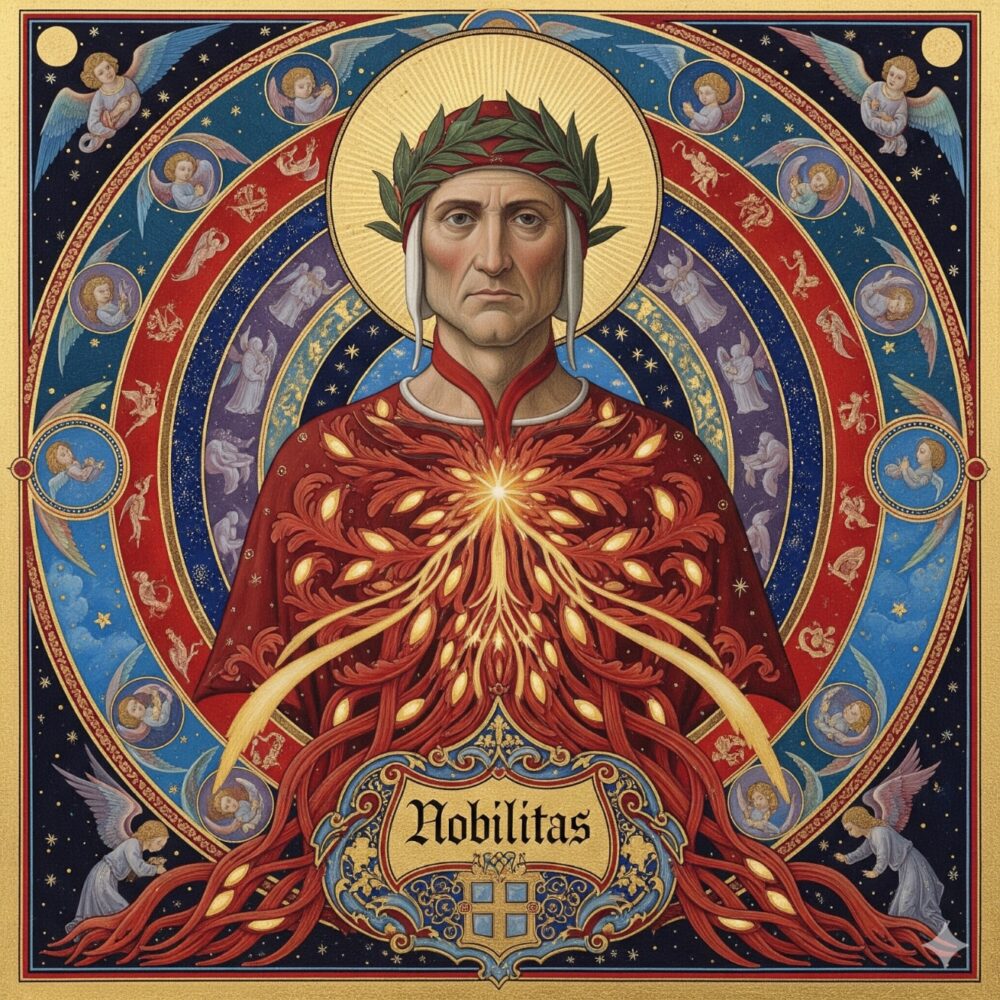
The lineage, i.e. the bloodline, is ennobled. Against the background of the expanded concept of nobility, this is easy to understand, because the individual proves through his virtuous achievements that he was able to realize by divine intellect something that had previously been created and prepared by the virtus of the paternal seed. In this sense, the following also applies in the Monarchia: the Roman people as a whole – not automatically each individual member – is “nobilissimum” because its “father” Aeneas has ennobled the lineage. Now, the Trojan hero was certainly anxious to have a reproductive effect himself and to have his virtus – according to the physiological terminology outlined above – make impressions in the matter of women. The blood that had previously flowed into him from all parts of the world via his (pre-)paternal ancestors, he now exuded again (in the form of sperm as a derivative of blood) into the high women from all parts of the world: Creusa from Asia, Dido from Africa and Lavinia from Europe. With this “duplex concursus sanguinis”, the flowing in and out “in unum virum”, Dante performs precisely the reductio ad unum that he directs towards the world monarch throughout the treatise, now in the sign of blood. It has already been said that, in the Aristotelian-biological understanding, nature was regarded as the mover of conceiving matter by means of sperm. If Aeneas is the one who brings this movement into all parts of the world by means of his virtus, he functions as the proto-monarch, the “unicus motor”. Aeneas has extended his biological fatherhood to the globe through his partners, who together represent all parts of the world. He sowed his seed and with it the inherent formative power in the best possible way, namely on the sanguis menstruus of the women who conceived him, i.e. in the materia.[…]
In the Convivio, he had already proclaimed the Roman Empire as God’s chosen world dominion, because the sublime blood of the Trojans had been added to the people of the Latins (“l’alto sangue troiano era mischiato”), whereby the Roman people had acquired the best natural disposition to rule (“quello popolo che a ciò più era disposto”). It is important that Dante does not imagine the later translatio imperii as a mere succession of office that had passed from the Romans to the Germans – and certainly did not require the appointment of the pope or the people – but as a biological descent.[…]
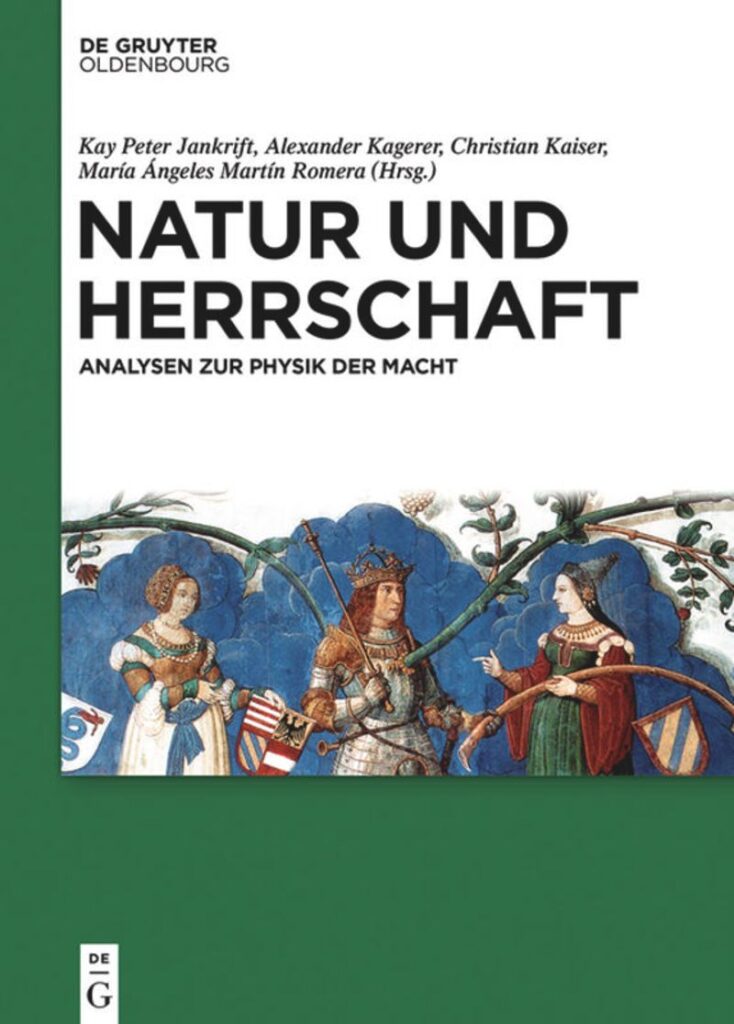
The idea of the royal qualities and potential inherent in the blood of a dynasty was not invented by Dante; it had already been advocated before and had been developed very prominently around 80 to 90 years earlier in the circle of the Hohenstaufen Emperor Frederick II. Virgil – the undisputed patron of the essential figures of thought in Dante’s Monarchia – played a decisive role in modeling the closed bloodline with his lineage narrative, which extends from Aeneas to his son Ascanius/Iulus, then on through Julius Caesar to Augustus, the ruler of peace and the world (Aen. I 260-296). Dante was well acquainted with the written testimonies of the historians at the court of Frederick II and his heirs; for him, the Hohenstaufen was one of those rulers whose external signs (the frutti or signa) could be used to deduce the causa, i.e. the nobility of the soul. And even if his son Manfred was an illegitimate descendant according to human law, according to the understanding of Dante’s nobilitas naturalis described above, as the biological offspring of the noble, who was himself virtuous, he is consistently and rightly regarded as “well-born”. The fundamental characteristic of wellbornness in the sense described here is descent from the seed of Roman ancestors […]. This applies not only, but primarily, to the Florentines, who put up fierce resistance to the emperor. According to Dante’s conviction, it is not the inhabitants of his native town who are responsible for this, who – like himself and his ancestor Cacciaguida – are descended from the Romans, but the descendants of the Etruscan Fiesole, to whom the exiled Florentine attests that wickedness is practically in their genetic make-up and who are the ringleaders. However, this fixation on blood is not limited to these contexts: In his letter to “all and each individual king of Italy, senators of the venerable city [Rome] as well as dukes, margraves, counts and peoples”, the poet also implores the “Lombard blood” (i.e. the Italians) to renounce barbarism and make room for the seed of the Trojans and Latins, if there should still be any of it in those he addresses. This is linked to submission to the Roman king, whom God had predestined as ruler, as can be seen from miraculous signs. This is also the message that Dante addressed directly to Henry VII in April 1311: He, the successor to Caesar and Augustus, was the rightful lord whom the whole world awaited. This claim is again underlined by quotations from the Aeneid, which are intended to testify that Caesar comes from the Trojan lineage via the Aeneas offspring Ascanius or Iulus, whereby the line is abruptly extended to Henry’s son John, the “old Ascanius”. […] It is true that numerous princely families in the late Middle Ages sought to locate their origins in Troy and that the descendants derived from the Trojans can thus in principle be regarded as a common European starting point for the plural noble families. However, the reference back to the Trojans, who had fled their homeland and become active as city founders in various parts of Europe, often seems to have been motivated less by integration intentions than by veritable efforts to differentiate and demarcate themselves. In the numerous and varied genealogical narratives of the Middle Ages, three main separate lines can be identified in this sense: the descent of the Romans from Aeneas, who had married into the Latin ruling house and subsequently taken over the government; a second line founded by Brutus, the great-grandson of Aeneas, who had fled from Latium and established a new rule in the British Isles; a third branch around a group that had split off from the train of Aeneas and whose members, such as Francion, the son of Hector and grandson of the Trojan king Priam, became the progenitors of the Franks/Francophones, among others, by founding cities in Pannonia and then in Germania and Gaul. According to this scheme, numerous European cities and dynasties traced their origins back to the Trojan emigrants, such as the Venetians and Paduans to Antenor, who, like Hector and Francion, also had no closer relationship to Aeneas. Such origin stories were also used by the German nobility, especially those who harbored ambitions for the office of Roman king. It was around the time of the writing of the Monarchia that the Habsburgs began to perceive themselves as a collateral line of the Roman Colonna, whose origins could be traced back to Julius Caesar, which in turn meant that the latter’s ancestor Aeneas could be regarded as the progenitor of the Habsburgs. And for the Luxembourgs, whose first imperial representative was Henry, who was supported by Dante, there are also historical accounts from the 14th century that claim a descendant of Aeneas and his descendant Julius Caesar. The noble families competing with the Roman kings and emperors, who regularly – albeit always in a different form – referred to the other ancestors mentioned, were able to relativize the actually universal claim to power of the head of the empire by claiming supposedly equal and equally legitimate lines of nobility, because Aeneas had only been one of several Trojan princes. The situation becomes even more complicated when one considers that the Capetians as a French royal dynasty and their collateral line of the Angevins, who ruled Naples and Sicily, claimed a completely different genealogy. On the occasion of the canonization of the French king Louis IX in 1297, the tendency to characterize the entire family as beata stirps, i.e. as a dynasty that carried on the tendency to lead a saintly life through blood relations, was reinforced. This self-stylization via the saint – the grandfather of King Philip IV of France and great-uncle of King Robert of Naples, after all, two of Henry VII’s most powerful rivals – had the potential to neutralize, if not devalue, any reference to Trojan and Roman, i.e. decidedly pagan, forefathers. Dante’s design is clearly positioned within these genealogical-propagandistic constellations, and this also answers the question posed at the beginning about the physique of the world monarch: The monarcha necessarily comes from the lineage of Aeneas, because the virtus transmitted through his bloodline carries on the natural disposition to rule over the other peoples, as described in detail above. Anyone who cannot present himself as an Aeneid does not have the best natural disposition to hold the power of government over the entire globe. […] No Capetian or Angevin or any other house not descended from Aeneas can legitimately claim to govern Italy, let alone the world, on the basis of the family tree reconstructions cultivated up to that point, but these families are by nature destined to serve the descendants of Julius Caesar’s progenitor. This attitude is reinforced by Dante’s devaluation of Hugo Capet, when he describes the ancestor of the French royal house as the son of a butcher and, in the biologistic language that has already come to light more frequently, as the “root” (“radice”) of the “bad plant” (“mala pianta”), i.e. his descendants, but does not mention St. Louis anywhere. […]Through his fictions outlined above, which are not infrequently used, Dante creates the basis for Aeneas to be, in principle, the progenitor of a great plurality of different rulers; in this scheme, it would even be conceivable for an Asian or African prince to rise to the position of world monarch in the future, provided he can make his descent from Aeneas’ lineage credible.This could also be the reason why the argumentation of the Monarchia does not wish to associate itself with any contemporary rulers by naming them. By omitting this commitment to this or that particular noble family, which has just seen one of its offspring rise to emperor, Dante creates openness for other princes to also be considered world monarchs. However, the prerequisite is always that the pretender invokes the ruling blood of the Aeneids, as only this naturally entitles them to world domination and is thus legitimized by God. With sufficient literary creative will, it would even be conceivable that a Capetian, whose royal representatives in Dante’s time had repeatedly and justifiably hoped to assume the imperial kingship, would proclaim the natural descent of Aeneas and thus, in the event of his election by the electors, which was entirely possible, his legitimate, God- and nature-ordained world domination in the Dantean sense.
Christian Kaiser in Natur und Herrschaft: Analysen zur Physik der Macht
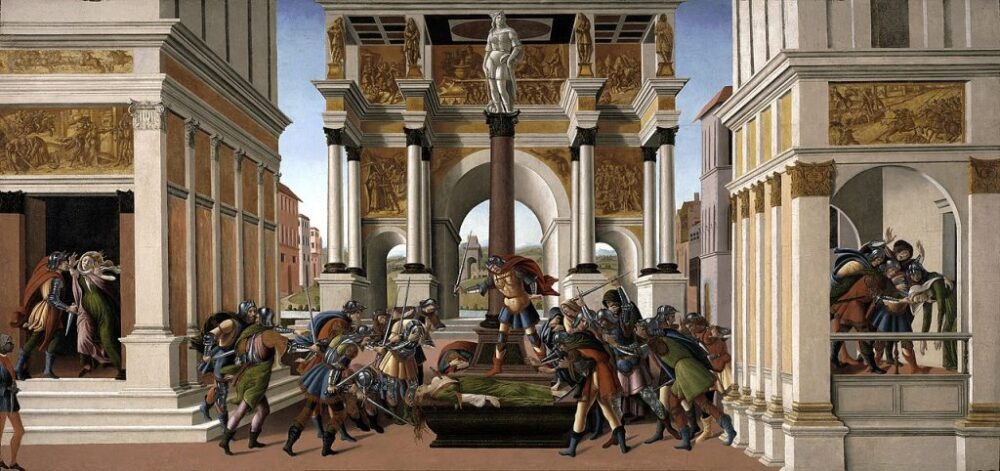
Our image of ‘kingship’ in Rome is shaped by a more or less uniform version of the beginnings of the city and the history of the res publica, which can be found in Cicero, Livy, Tacitus and Florus: After its foundation by Romulus and the reign of a total of six ‘good’ kings, the monarchy turned into a tyranny under Tarquinius Superbus. The tragedy surrounding Lucretia, who was ravished by the king’s son Sextus Tarquinius, was the trigger for the oppressed Romans to defend themselves against escalating violence and arbitrary rule and, under Brutusʼ leadership, expelled all members of the gens Tarquinia from the city. Afterwards, the citizens of the now free polity, traumatized by the previous despotism, swore an oath never to tolerate a king in their city again. This odium regni, sworn for all eternity, was to prove to be a constitutive characteristic of the newly founded res publica, whose internal and external policies were determined by the Romans’ collective hostility to everything associated with kingship and royal rule: “[T]he last Tarquin had given the name of king an evil ring to Roman ears for all time; rex and regnum were opprobrious terms”. This collective national Roman trauma triggered by Tarquinius Superbus was fueled in the 3rd and 2nd centuries BC by military conflicts with hostile kings of the East (Philip V, Antiochus III, Perseus), came to a head from the Gracchi onwards through the polemical use of the term ‘rex’ as a political invective in domestic power struggles and led to the assassination of C. Julius Caesar on March 15, 44 BC, who allegedly wanted to become king of Rome after his victory over Pompey. Octavian, who also emerged from the turmoil of a civil war as sole ruler a few years later, learned from the fate of his adoptive father and attempted to conceal the monarchical character of his reign by referring to himself not as rex but as princeps in consideration of the odium regni. However, this common image of the Romans’ hatred of kings contrasts with numerous positive uses of the terms ‘rex’ and ‘regnum’ in Roman literature as well as references to kings and kingship in political culture. This ambivalence, which had already been pointed out by Republican authors of the 1st century BC, has been demonstrated in research on individual phenomena: for example, attention has been drawn to the fact that the six ancient Roman kings before Tarquinius Superbus were always honored for their services to the genesis of Rome. The literature painted an extremely positive picture of foreign rulers (such as Cyrus or Hieron II) and even bitter enemies (for example Pyrrhus) and held them up as exemplary models. The terms ‘rex’ and ‘regnum’ were not only used to refer to the person(s) sitting in front of the drinking party, but a patron was also reverentially addressed as ‘king’ by his clients – like the parasite’s brother in ancient Latin comedies – without this form of address being offensive. The traditional divine apparatus of the Romans, headed by rex Iuppiter, also seems to contradict the theory of the odium regni, but like the positively connoted reminiscences of kingship in the sacred sphere (rex nemorensis, rex sacrorum, regia), it should be excluded insofar as old concepts (here: from the royal era) often persist unchanged in cult traditions despite changed circumstances (here: in Republican Rome). Furthermore, the Romans cooperated with reges socii and often (again) appointed ‘vassal kings’ to represent the interests of the Roman people in conquered territories. What is particularly remarkable, however, is that Roman senators were very close to Hellenic kings in many respects. Even Caesar’s assassination in 44 BC, the highest expression and culmination of the Romans’ rejection of the ‘monarchy’ form of government, did not detract from the many positive ways in which it was used. For example, the ‘Augustan’ poets only used terms from the word family ‘reg-‘ in a pejorative sense in the rarest of cases, and the attitude of the Romans towards the subject of ‘kingship’ was evidently far more differentiated than the image of blanket hatred of kingship would suggest.
From Königtum’ in der politischen Kultur des spätrepublikanischen Rom Christian Sigmund, De Gruyter 2014
I give today’s politics a wide berth, it is still authoritarian paternalism and there is no real dialogue anyway. In a democracy, everyone would be a politician, but when people have no time day in, day out because they have to spend their lives doing repetitive work that they themselves have nothing to gain from, for people they don’t even know just to pay for the same concrete box and the same car time and time again, then they simply don’t have the time and energy to study current issues in depth themselves and form their own opinions and statements. In the absence of their own insights, all that remains is to adapt one of the prefabricated opinions, to choose between democrats or republicans. People are not being brought up to be emancipated at all. You could encourage participation in political debates every 2-3 weeks from an early age, actively involve them in politics and give them time off from work and commitments accordingly, so that politically educated people would be brought up. At the age of 6, children are put in a penitentiary where they are told to sit still and keep quiet, in school and education it is completely irrelevant what is correct, the only thing that matters is saying what they want to hear, it’s about obedience. You are taught that you can not, you are not taught that you can learn foreign languages with ease, but that it is tedious and difficult, that it requires expensive teachers and courses and, in short, that it is best to abandon the idea and go to work. Every child would love to study maths and build ingenious robots, vehicles or clever houses because it’s a pleasure if you are not de-graded, not penalized if you don’t perform “well enough”, but these are the really valuable things in life and are taken away from everyone from an early age. Want to develop your own vehicle or housing? No authorisation. Nobody voluntarily sells kebabs day in, day out in the street, people are broken as children and pressed into these moulds because this system needs cleaners and mechanics. Truth is these jobs are not actually mandatory for anybody to do all day, if people had to clean up their mess themselves instead of paying others to do it, then they would certainly make less mess and think about what’s actually worth it. Nobody would have to flip burgers at McDonalds all day if people could go there and do it themselves. We could also automate and abolish a lot of the jobs, Ford developed the conveyor belt and the automated factory and thus mass production, we wanted to develop these machines to do the work for us, but that benefit was never handed down to the people, instead the factory owner, the capitalist, the corporation keeps it to themselves, that’s their profit. Now that it is no longer really necessary for everyone to spend their lives working (and in fact never was), billions are literally burnt in pointless wars because the citizen has to work for the money that the national banks print. Likewise, nobody would use their free time to examine eczema every day or write expert opinions, be it doctor, lawyer or carpenter, everybody needs to buy almost everything because they themselves know almost nothing, they aren’t even a doctor, but only an ENT, especially of politics they have no clue, only real politicians can do this, they need to let others decide in their stead, they need to be governed. What that means is you haven’t even accomplished Marx’ idea yet and that’s while it’s 160 years old. Why doesn’t Marxism work? Because those who profit from the established system do not want the workers to rise up, free themselves from their chains and take their capital and their rights into their own hands. Paradise is possible, that’s where we come from, but then we forget all the negative things, the problems and difficulties of life and open the door to them, Marxism is not a miracle solution and therefore not a utopia.
When, in the course of the French Revolution, His Most Serene Highness the King of France Louis XVI was only a “citoyen Capet”, a citizen at the tribunal, this meant that even the highest nobility suddenly had to deal with civil rights and ideas. The aristocratic dynasties cant be squeezed into the petty-bourgeois idea of the nation state; they defined themselves through their widely ramified kinships at the international courts. What happened with the revolution dealt a blow to the aristocracy of the whole of Europe, it was clear that it would repeat itself in the Holy Roman Empire of German Nation and so it was pre-empted by making the nobody, the blank slate from Corsica emperor against all class differences and thus dissolving the HRE, he marched on Paris to fanfare and ended the revolution and waged wars across Europe to fight back the forthcoming changes.
[…] with the subjugation of the working class, accomplished in the days of February and March, 1848, the opponents of that class – the bourgeois republicans in France, and the bourgeois and peasant classes who were fighting feudal absolutism throughout the whole continent of Europe – were simultaneously conquered; that the victory of the “moderate republic” in France sounded at the same time the fall of the nations which had responded to the February revolution with heroic wars of independence; and finally that, by the victory over the revolutionary workingmen, Europe fell back into its old double slavery, into the English-Russian slavery. The June conflict in Paris, the fall of Vienna, the tragi-comedy in Berlin in November 1848, the desperate efforts of Poland, Italy, and Hungary, the starvation of Ireland into submission – these were the chief events in which the European class struggle between the bourgeoisie and the working class was summed up, and from which we proved that every revolutionary uprising, however remote from the class struggle its object might appear, must of necessity fail until the revolutionary working class shall have conquered; – that every social reform must remain a Utopia until the proletarian revolution and the feudalistic counter-revolution have been pitted against each other in a world-wide war. In our presentation, as in reality, Belgium and Switzerland were tragicomic caricaturish genre pictures in the great historic tableau; the one the model State of the bourgeois monarchy, the other the model State of the bourgeois republic; both of them, States that flatter themselves to be just as free from the class struggle as from the European revolution.
Frederick Engels
Wars are a much more suited to suppress and control one’s own population than foreign enemies, war is always the same class struggle and so it is clear that the last two major wars were about nothing else. Emperor Wilhelm wanted to end the November Revolution in 1918 by marching on Berlin like Napoleon did on Paris, but what stopped him was the extremely bloody deposition of the tsars by the Russian revolutionaries. The fact that he then retreated to his villa in Doorn was seen as desertion by the old nobility and never forgiven, they said he had better died heroically for the empire. The lower nobility were hit particularly hard after 1918, many now had to work as gas station attendants or secretaries or were even dependent on donations from the DAG and accordingly were angry about the defeat and especially the republic, they radicalized themselves towards the national right. Although the high nobility also had to accept losses, they continued to enjoy enormous wealth and possessions; of course, they hated the Republic no less, but they were able to fight the battle on a completely different level, they were able to bring committees of lawyers and doctors who were able to stop the dissolution of the Fideikommisse, for example, and were of course well represented in all important positions in the Republic and the Third roman-german Reich; Hindenburg’s family could certainly live carefree.
A few impressive passages from Stephan Malinowski’s dissertation/book from 2003 Vom König zum Führer:
According to the information passed on to the exiled emperor’s “house minister” by the Reich Defence Minister Werner v. Blomberg, who was present, Hitler had made vague but far-reaching promises: “As the conclusion of his work, [Hitler] sees the monarchy,” it said in the minutes of the meeting. However, only the Hohenzollern monarchy would come into question; a restoration of the thrones in the federal states was to be rejected. However, the time for restoration had not yet come and the monarchy was only conceivable as the result of a victorious war.
In October 1933, retired Lieutenant General August v. Cramon had written a memorandum to the Reich President proposing the reinstatement of Wilhelm II to his royal rights, as a kind of present for his 75th birthday in January 1934. Wisdom and dignity of age would now be added to the “hereditary wisdom of the lineage”. The “Führer concept” must inevitably end “in immortal leadership, the hereditary monarchy” and Hitler would help with this: “Adolf Hitler himself is, as far as is known, a monarchist.”
A grotesque variant of aristocratic attempts to direct the ubiquitous desire for leadership towards themselves is provided by a speech from 1930, in which Wilhelm II lamented the inflation of the leadership concept in Doorn:
To be a leader! Everyone wants that nowadays. Leaders present themselves everywhere. Many people pose as leaders […]. And yet the cry for leaders is omnipresent!
In a strange mixture of Christian and neo-right-wing motifs, Wilhelm II renewed his claim to leadership. The idea of leadership was first ‘revealed’ by God to the Sumerians. King Hammurabi was given the “leadership profession” by God 5,000 years ago, his own ancestors 500 years ago. “Only to these leaders is the leader Jesus Christ!” Spatially and mentally far removed from all political realities, the exiled emperor appointed Jesus as the otherworldly “leader” and himself as the earthly “leader”. The imperial leader referred to himself in the preceding passage from the Gospel of John, which had given the speech its title: “I am the vine; you are the branches. If a man remains in me and I in him, he will bear much fruit; apart from me you can do nothing.”
A “mobile” interface was created by the activities of Wilhelm II’s second wife, Princess Hermine v. Reuß, who socialised in the most important circles of the political right during her visits to Germany. She apparently made contact with the NSDAP leadership in 1929, on the fringes of the Nuremberg Party Congress. The date of her first meeting with Hitler is unclear, but a meeting with Hitler in the salon of Baroness Tiele-Winckler in November 1931 is well documented. In the presence of the “Empress”, Göring and the aristocratic chief advisors of Wilhelm II, Hitler held a monologue lasting several hours in which he explained his intention to have “all November criminals […] publicly strangled”. The lecture delighted the hostess and guests alike, and the Kaiser’s wife spoke favourably of the “likeable” Hitler, “also about his good and straight facial expression and his good eyes and their expression without falseness.” Pleased with the outcome of the meeting, Magnus v. Levetzow summarised his impressions of Hitler in a letter to Prince v. Donnersmarck: “He was good on the plate, by golly.”
etc, the book contains a wealth of intriguing source material. See Books
The Republic was thus hated and so once again a nobody, a blank slate, was brought in to eliminate it. It had to be a nobody who had no connections to existing powerful structures, otherwise old alliances and rivalries would make effective action impossible. The Republic as an enemy may have been a common front of the high nobility, but old ties and rivalries were far from forgotten:
In agreement with his Westphalian peers, Abbot Augustinus von Galen, a brother of the later famous bishop, described the monarchy problem in 1926 as a cura posterior and considered the claims of the House of Habsburg to be justified in contrast to those of the Hohenzollerns: ,,As far as the Hohenzollerns were concerned, their emperorship had not the slightest thing to do with that of the old empire […]. The Hohenzollerns were therefore in no way the legal successors of the old emperors and from this point of view, they could therefore absolutely not be considered as favoured candidates for the future crown.”
For the south-west German nobility association, which maintained friendly relations with the Bavarian associations, Attila Graf v. Neipperg explained to a fellow Bavarian that the nobility in the south-west was also monarchist, but unlike in Bavaria, which was loyal to Wittelsbach, their loyalty only partly belonged to the houses of Württemberg and Zähringen, while many West German nobles had not forgotten the “sins” of the princes from the Napoleonic era. The monarchism that Count Neipperg outlined here also resembled a vague basic attitude rather than a practicable programme: “These people are fully Holy Roman Empire of the German Nation. And to a certain extent, cum grano salis, I am also with this side. Our stance is that we want to show and prove that the nobility is necessary in the republic, even more necessary than in the monarchy, where everything went its more or less regular course. But officially we are not monarchists.”
As late as the 1930s, Churchill said that the Russians were the greatest threat to Europe, so it may have been unthinkable before the war for the Allies and Russians to forge an alliance. When they faced each other after the war without a common enemy, the old antipathy broke out again, but the peace treaties that had now been signed made further warfare impossible and so it smouldered instead as a Cold War, which was fought preferentially on the loser country, Germany (and other puppets): it was torn apart into the Allied West and the Russian East. How the story ended is now well known: today everything in Germany is English-American, American banks and corporations as far as the eye can see. The first changes after the war included things like removing the Brothers Grimm from the classroom as “too German” (“anti-Semitic”, throughout all editions of Grimms Fairy Tales three of 200 tales contain Jews, the Christian is not shelt at all, on the contrary) and that newspapers and press agencies had to request their concessions from the occupying forces. In this way, education and news were made allied and, accordingly, historiography and politics today are allied, in which the German is the absolute enemy, the Nazi, about whom there can be nothing good. Yet the political constellation of a nationalist, socialist German workers’ party (NSDAP) in and of itself has nothing to do with anti-Semitism or dictatorship. In fact, the system of nation states is nationalism, that is the New World Order that has also created new elites. Under international pressure and competition, nationalism shows its problematic facets, such as a tendency towards xenophobia, because the state puts its own citizens before all foreigners. The state is a covenant of people that excludes others, strangers; the highest covenant today is the covenant with oneself, so freedom for individuality tends towards egoism that puts oneself before all others. In the past, the covenant with God was the highest, the Lord is more important than one’s own life, Christians are martyrs, servants of their masters, that is why religions have been spread so readily, Islam literally means submission, submitting to Allah the Lord. The “immortal leadership” mentioned in the quote earlier indicates an important facet of the nobles’ self-image: they are “immortal” through their bloodline as long as it continues to exist, “the king is dead, long live the king”, while the testament of the common people is that their lives and their achievements are inherited by the Lord and not by themselves.
The world of the stories of Holy Scripture is not content with the claim to be a historically true reality – it claims to be the only true world, the world destined for sole dominion. … The stories of Scripture do not court our favor, as Homer’s do, they do not flatter us in order to please and charm us – they want to subjugate us, and if we refuse, we are rebels”. The belief in the one God who reveals himself to the world in Israel’s fate is imperious and exclusive.
Otto Kaiser – Zwischen Athen und Jerusalem
The people of the Christian state is only a non-people, which no longer has a will of its own, but possesses its true existence in the head to which it is subject, which, however, is originally and by its nature alien to it, i.e. given to it by God and has come to it without its own intervention.
Bruno Bauer, On The Jewish Question, 1843
The only man who counts, the king, is a being specifically different from other men, and is, moreover, a religious being, directly linked with heaven, with God.
Karl Marx, On The Jewish Question, 1844
By its very nature, the Christian state is incapable of emancipating the Jew; but, adds Bauer, by his very nature the Jew cannot be emancipated. So long as the state is Christian and the Jew is Jewish, the one is as incapable of granting emancipation as the other is of receiving it.
Karl Marx, On The Jewish Question, 1844
To have a thought about how it all began, another book: This is an international lecture series at the University of Heidelberg
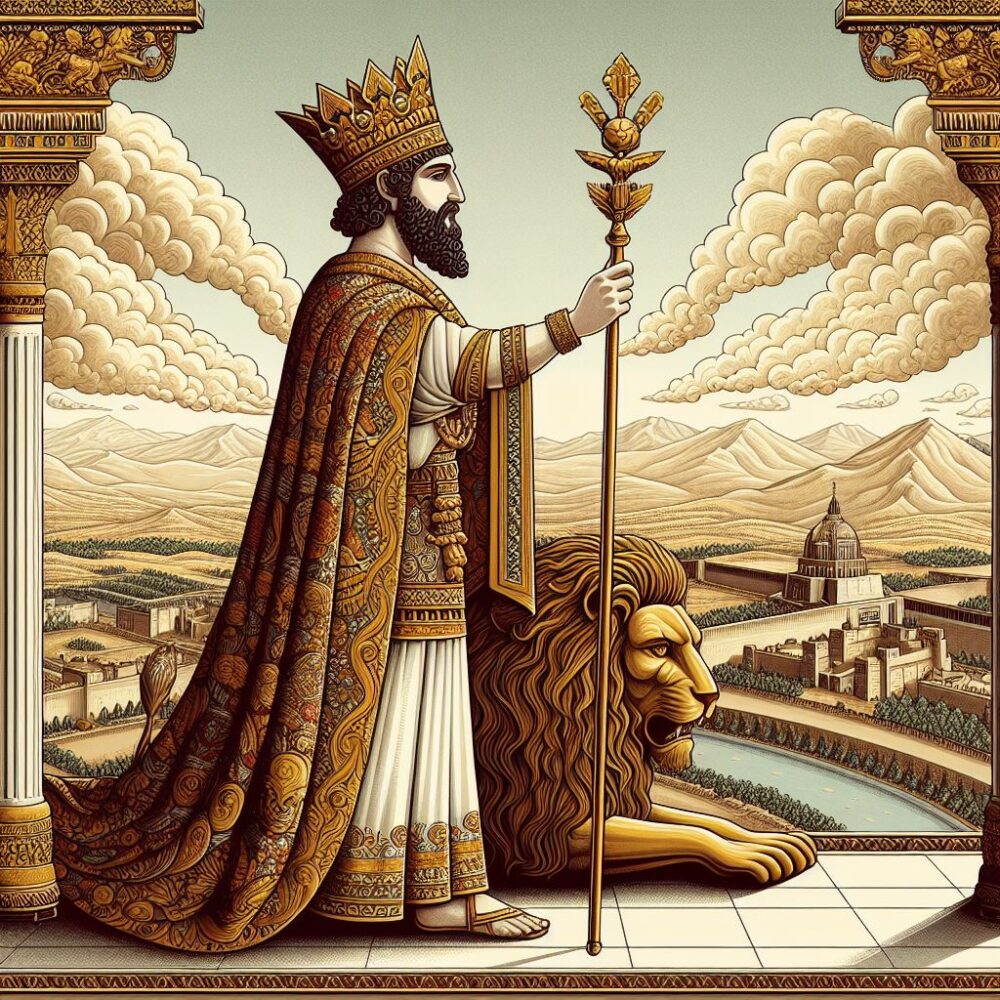
I (am) Darius the great king, king of kings, king of Persia, king of the countries, the son of Hystaspes, the grandson of Arsames, an Achaemenid. Proclaims Darius, the king: my father (is) Hystaspes; the father of Hystaspes (is) Arsames; the father of Arsames (was) Ariaramnes; The father of Ariaramnes (was) Teispes; the father of Teispes (was) Achaemenes. Proclaims Darius, the king: For this reason we are called Achaemenids; from ancient times we are noblemen; from ancient times our family has been kings. Proclaims Darius, the king: (There are) eight in my family who formerly have been kings; I (am) the ninth; (thus altogether) nine, now as ever, are we kings.
(Schmitt 1991: 49 lines 1–11)
This genealogy is particularly significant because Darius, like Cyrus, claims that his right to the throne is based on his family line. Also, like Cyrus, he claims that his family had been kings for a long period of time, in succession. What can one make of these statements? There are conspicuous absences in this genealogy, including Cyrus and Cambyses. Herodotus comments in a story concerning Cambyses in Egypt that Darius was a member of Cambyses’ guard and a “man of no great importance” (III.139–40). Thus, according to Herodotus, Darius was not in line for the throne, although he was of noble birth. Yet David Stronach argues that Darius’s ancestors may have had control of certain areas of Fars, and thus he was from a family of monarchs (2003: 256). Hence, his claim is not necessarily a lie. What then is Darius attempting to do in his genealogy? There are clear examples of usurpers who did not attempt to create a genealogy in order to justify their right to the throne. The classic case is the Neo-Assyrian ruler, Sargon II, who never provides a genealogy to support his right to the throne. Yet Darius did not claim that he had no royal pedigree but, rather, justifies his right to the throne through his family. Still, he provides no specifics except for family names. Unlike Cyrus, he gives no geographical location for his ancestors’ supposed kingdom. Hence, Darius attempted to redefine what it meant to be the rightful monarch through the use of his genealogy. Briant observes, “It was not because he was Achaemenid (in the clan sense) that Darius achieved power; it was his accession to royalty that allowed him to redefine the reality of what it meant to be ‘Achaemenid’” (2002: 111).
Judah and the Judeans in the Achemenid Period – Negotiating Identity in an International Context
It was also Darius and Darius II who called themselves Aryan and their homeland the land of the Aryans (Iran). It is early human history and Wilhelm was probably not far from the truth with his chronological and geographical classification of the origins of kingship. Genesis mentions Nimrod as the first to become mighty, the first of all Kings (in the Hebrew perception), he can’t be clearly identified but was probably either a King of Babylon or Assyria. These ancient actors had a decisive influence on the further course of history and shaped the concepts and structures that prevailed for a long time, the later nobility may have made up something about the “Aryan” origin of their ruling caste and, as a reaction to the new sciences such as the biological-zoological theory of heredity, postulated a racial one that was supposed to confirm the superiority of their own descent. If they were actually convinced of this is another question, as mentioned in the quote above, it was also about “proving that the nobility is necessary in the republic”, so they were aware of the changing times and wanted to preserve their own position as an elite by redefining themselves as leaders, with programs such as “New nobility of blood and soil” and “The nobility its right”.
Upon blood and soil the Führer is building his Reich. We have understood blood selection for seven centuries and have wisely chosen to build and continue our bloodstream on the basis of age-old race and culture. […] All the great ideals that the Führer has set for the German people stem from ancient Germanic heritage and not least from the deepest treasuries of the German nobility. Thus the German aristocracy is fundamentally akin to National Socialism in nature and origin. At the time of the red governments, the motto was: down with the aristocracy, we all want to be proletarians. Now it is the other way: the common man from the people should rise up, and we all want to meet again on the level of a true aristocracy. […] What the future will bring us, we leave in the hands of God and the enlightenment of the leader. But we know one thing. Our old lineage is not a foreign body in the Third Reich, rotting and decaying, it is a load-bearing block in the building, hardened over centuries. […] Sieg Heil! Sieg Heil! Sieg Heil!
Friedrich v. Bulöw, 1935
In 1921, an Pan-German (Alldeutsch) baron saw the EDDA project as the deliberate continuation of the […] selective breeding […] that has always been practised by the nobility through the cultivation of pedigree and genealogy […]. The aristocracy’s attitude towards the idea of selection and race breeding is therefore not a new goal for the nobility, but actually a self-evident one.
Stephan Malinowski
I can breed pugs, and I can breed dachshunds, but if the malör (sic) happens to me and I get a basket full of young dachshund pugs, they will be drowned with good reason. This is neither anti-pug nor anti-dachshund, but a realization of the centuries-old experience that all bastards are inferior.
Börries Frhr. v. Münchhausen
There are other interesting paradigm shifts in the course of the modern era. You can only call someone wealthy compared to someone who has less, there can only be rich if there are poor, they have too much that is lacking elsewhere. The powerful were only powerful when they were above others, for the mighty require the oppressed, the formulation that their power comes from the people is the very idea of republic and democracy. It can be seen that it is merely a paradigm shift, that what changes is merely people’s attitude towards the subject matter, that politics is merely a set of instruments that can vary. In reality, every one *is* a politician and influences the course of society with his decisions every day, whether this is recognized and promoted in the political apparatus or not. In the same way, socialism and communism are much more a quantity than a decision, no one can live their life alone, everyone draws from society and what they do with their life is what they give back, whether this can be quantified depends on the value system used.
So to jump from the ancient era in which claims to rulership by descent were established to the time of ancient Judaism discussed in the article, I quote the book again:
Von Rad suggested a three-part structure for the Priestly Document. He differentiated between “three big concentric circles . . . which move from the outside inwards towards the salvific mystery of God—the circle of the world, the circle of Noah, and the Abrahamic circle” (“drei mächtige konzentrische Kreise . . . die von außen nach innen fortschreitend in das Heilsgeheimnis Gottes einführen: der Weltkreis, der Noahkreis und der abrahamitische Kreis”).
[…]
The circle of Abraham includes “the Abrahamic household,” consisting of the Arabs (“Ishmael”), Israel (that is, “Samaria”) and Judah (“Jacob”), and Edom (“Esau”).
[…]
This Abrahamic circle is defined by the Abrahamic covenant of Genesis 17, which promises the participating covenant partners fruitfulness, land inheritance (which seems to imply a right to use rather than to possess), and proximity to God. The circle of Israel narrows the focus down to the nation of God alone. It is generally concerned with the establishment of the sanctuary, which enables the sacrificial cult of Israel. This sacrificial cult alone is what allows Israel to achieve atonement. The sanctuary and the implementation of the cult seem to function as the partial restoration of the initial creation, in the sense of a second “creation within creation.” The circle of Israel is not established by its own covenant because the foundational promise of the presence of God (“I will be your God”) was already given in Gen 17:7 (cf. Exod 6:7, 29:45–46).
[…]
Whether the Priestly writer’s Abraham is aware of it or not, what he asks is that Ishmael become Yhwh’s priest; and it is that request that is denied to Ishmael and offered instead to the yet to be born Isaac. In this whole exchange (vv. 18–21), the question therefore is not whether Ishmael will be allowed to live in the land of Canaan—the right of Ishmael to live in Canaan has been settled once and for all in v. 8—but the question is only whether there is a need for a further son, i.e. for a further category among Abraham’s multi-nation descendants. And the answer to that question is yes. Sarah’s son Isaac will beget those descendants of Abraham who are destined to become Yhwh’s priestly nation.
Judean Identity abd Eucumenicity, Konrad Schmid
A further striking feature of the book of Esther is the virtual absence of God in the book. This has, of course, given rise to manifold speculation about hidden references, double entendres, and so on. On the other hand, it is incorrect to view the apparent “secular” nature of the book as an indication of the book’s being of lesser quality. I think, if we approach the Esther story with the remarks about God in mind that were made above when dealing with Genesis 20, some light will be shed on the issue. The personal God of the patriarchs was changed in Genesis 20 into a universal divine being to whom Israelites and pagans can speak and to whose universal laws even apparently foreign kings can adhere. This change from a personal to a universal God is taken a step further in Esther. Because none of the actions that lead to an endangerment of the Jews in Persia are explicitly linked to the religious factor, the absence of any direct divine intervention might be understandable. Only in passing can we mention that the apparent noninvolvement of Persia in the religious affairs of its subject people makes Persia an ideal setting for the legitimation of a new festival, which seems to defy the common notions of biblical festivals. For any issues of religion, the conflict between Mordecai and Haman reported in Esth 3:1–15 is often interpreted by drawing attention to Exod 20:1–5. True, חוה is used in the stipulation of Exod 20:5, but nothing in the text of Esther suggests that Haman had any divine quality, and only the Targum adds this aspect by stating that Haman wore a portrait of an idol on his clothes. [The motif of Haman’s divinity only occurs in Judg 3:8, where Nebuchadnezzar claims divine honors: “And he destroyed all of their sanctuaries and ravished their cultic groves. He was given the order to extinguish all the gods of the earth so that all people of the earth serve Nebuchadnezzar alone and all tongues and tribes should worship him alone as god”] Despite Mordecai’s statement that he is a Jew (Esth 4:4bβ), we have instances in the Hebrew Bible in which it is perfectly acceptable to bow down before another man (see Gen 23:7, 27:29; 1 Kgs 1:31). The combination of the Hebrew verbs חוה and כרע is normally reserved for God (Ps 22:30, 95:6; 2 Chr 7:3), “but if idolatry is the cause of Mordecai’s noncompliance, the text is strangely silent about this. In addition it is difficult to see why the king commands that an underling be treated as god when he himself is not.” Esth 3:4bβ (כי הגיד להם אשר הוא יהודי ) seems to look forward to Esth 3:8–15 rather than serving as an adequate reason why Mordecai refuses to bow down.
The Absent Presence, Anselm C. Hagedorn
To judge a story’s historicity by its degree of realism is to mistake veri-similitude for historicity.
Adele Berlin
What are fairy tales and myths to us today were the only real reality for our ancestors. There is no doubt that the light bulb, medicine, hygiene and education defeated the devil, and yet even if you think he is a figment of the imagination (the beast and the animal in man are hardly a figment of the imagination) he had an enormous influence on human history. The world we see through our eyes is an image in our head, we experience our own senses, our own perception, not an external world “in itself” (Kant). Nature, the animal and plant world cannot adhere to the borders that we print on a map because they do not exist, in the world there are neither speed vectors nor meters or minutes. They are concepts of the human mind. Logic is a discipline of philosophy, mathematics is a discipline of logic, this is the Greek school and the origin and fundament of ours, therefore it is clear and easy for us to understand when the ancient Greeks speak of cosmos and chaos, order and disorder, but when the Jewish Kabbalah speaks of the Sephiroth or the Vedantas speak of Brahman, this is not logical and therefore not correct, because right or wrong is a very specific logical operation. So in order to understand foreign and ancient cultures, you have to be able to detach yourself from your own world view. We always like to assume that we are superior to all past people, after all we have all their experiences behind us, in reality this is a fallacy, nobody has had all the experiences, we rely on the statements of others in almost everything. Progress is preached today as a mantra, forgetting that too rapid growth cannot be sustained or that something is lost at the other end, so a lot of things have fallen by the wayside in the course of history, such as closeness to nature. “It’s not weapons that kill people, it’s people who kill people”, technology is only superficial, much more causal and therefore more important are the more fundamental, simpler things and so the earliest questions of mankind are also the longest lasting and our “superiority” over our ancestors is also just one that we would like to confirm to ourselves.
While royal genealogies could serve to legitimize a line that was already established, like that of Cyrus, they could also give rise to new claims. This is manifest with Darius, who was not directly in line for the throne. The Behistun Monument clearly illustrates this in that he formulates a six-generation lineage back to the eponymous founder, Achaemenes.
I (am) Darius the great king, king of kings, king of Persia, king of the countries, the son of Hystaspes, the grandson of Arsames, an Achaemenid. Proclaims Darius, the king: my father (is) Hystaspes; the father of Hystaspes (is) Arsames; the father of Arsames (was) Ariaramnes; The father of Ariaramnes (was) Teispes; the father of Teispes (was) Achaemenes. Proclaims Darius, the king: For this reason we are called Achaemenids; from ancient times we are noblemen; from ancient times our family has been kings. Proclaims Darius, the king: (There are) eight in my family who formerly have been kings; I (am) the ninth; (thus altogether) nine, now as ever, are we kings.
(Schmitt 1991: 49 lines 1–11)
This genealogy is particularly significant because Darius, like Cyrus, claims that his right to the throne is based on his family line. Also, like Cyrus, he claims that his family had been kings for a long period of time, in succession. What can one make of these statements? There are conspicuous absences in this genealogy, including Cyrus and Cambyses. Herodotus comments in a story concerning Cambyses in Egypt that Darius was a member of Cambyses’ guard and a “man of no great importance” (III.139–40). Thus, according to Herodotus, Darius was not in line for the throne, although he was of noble birth. Yet David Stronach argues that Darius’s ancestors may have had control of certain areas of Fars, and thus he was from a family of monarchs (2003: 256). Hence, his claim is not necessarily a lie. What then is Darius attempting to do in his genealogy? There are clear examples of usurpers who did not attempt to create a genealogy in order to justify their right to the throne. The classic case is the Neo-Assyrian ruler, Sargon II, who never provides a genealogy to support his right to the throne. Yet Darius did not claim that he had no royal pedigree but, rather, justifies his right to the throne through his family. Still, he provides no specifics except for family names. Unlike Cyrus, he gives no geographical location for his ancestors’ supposed kingdom. Hence, Darius attempted to redefine what it meant to be the rightful monarch through the use of his genealogy. Briant observes, “It was not because he was Achaemenid (in the clan sense) that Darius achieved power; it was his accession to royalty that allowed him to redefine the reality of what it meant to be ‘Achaemenid’” (2002: 111). Christopher Tuplin questions Briant’s interpretation, adding that Darius may not have been intentionally lying about his descent from Achamenes but rather is speaking in “symbolic terms” (2005: 230). Whether Darius is giving a faithful rendering of his family line or lying is unclear. But it is apparent that through the use of his genealogy, Darius, in essence, is undoing Cyrus’s rightful claim to the throne by taking his genealogy to the founder of the dynasty, Achaemenes, whereas Cyrus only connects himself to Teispes. Wilson adds that, in the case of the Achaemenid kings, “many . . . were engaged either in expanding the Persian Empire or protecting it from the threat of internal political chaos” (1977: 70). Darius felt the need to construct this genealogy, whether real or imaginary, in order to show his family’s past claims to power.
In the biblical material, certain royal and priestly genealogies may point to periods when legitimizing one’s genealogy was particularly important. There are two examples of this, 1 Chr 3:1–24, the Davidic genealogy, and 1 Chr 8:33–40, the so-called Saulide genealogy. Both lineages focus on monarchs who had long been out of power. In the example of the Davidic genealogy in 1 Chr 3:1–24, this extensive genealogy continues for 26 generations in the MT, from David to the seven sons of Elioenai. It also builds on the Judahite genealogy in 1 Chronicles 2, which also connects David to Judah, Jacob, and beyond. 1 Chr 3:1–24 employs both linear and segmented formats that continue for over 600 years. The Davidic lineage begins with a segmented genealogy highlighting all of the first-born sons born to him in Hebron by his six wives and then moving on to the sons born to him in Jerusalem by Bath-shua. A linear genealogy is employed from the time of Solomon to Josiah (16 generations). The genealogy returns to a segmented format from the period of Josiah until the sons of Elioenai. But this is not simply a genealogy of David’s dynastic line. It continues long past the Exile and Return, through the family line of Zerubbabel and down to the sons of Elioenai. Thus, the Davidic genealogy focuses on one line and its endurance and survival, even after the destruction of the Kingdom of Judah. Although the power of this family had long ago diminished, it is clear that this genealogy is attempting to position one branch of the Davidic family in line for power. And thus, in a period when they had long been out of power, as Gary Knoppers points out, the “careful demarcation of continuity among the descendants of David throughout periods of tremendous change demonstrates the dynasty’s resiliency and importance” (2004: 335–36). The genealogy functions as a way of authorizing one family line within the larger Davidic lineage to a position of power, if the occasion ever arose where power could be bestowed on them. Another example of a royal genealogy found within the lineage of the Benjaminites is the so-called Saulide genealogy (1 Chr 8:33–40), which is really the Jeielite genealogy because it begins with Saul’s grandfather Jeiel. The Chronicler’s interest in the family of Saul acknowledges his earlier importance as well as his descendants’ continued importance during the postexilic period. The importance of Saul’s family is carried through Chronicles, where Saul and David are the two royal lines within the narrative of the monarchy. Unlike the Davidic genealogy, which highlights one particular family line, 1 Chronicles 8 highlights the importance of the Benjaminite clan and their position in their different territories, including Jerusalem and Gibeon. Saul’s genealogy, which begins in v. 29 with his grandfather Jeiel and continues for 17 generations, ends with the phrase “all these were from the descendants of Benjamin” (8:40), thus concluding the Benjaminite genealogy with Saul’s descendants. Saul’s family clearly endures long after the loss of the monarchy, and the Benjaminite genealogy does not hide the character of Saul but rather honors him and his sons and holds them in a position of esteem, ending the lengthy Benjaminite genealogy with Saul’s particular family line of the Benjaminites. As a consequence of the antique Jeielite and Saulide genealogy, the tribe of Benjamin gained prominence. Further, the Benjaminites were an important tribe within postexilic Yehud and, for the Chronicler, a loyal subject of the Davidic monarchy. They were also an integral member of Yehud during the Achaemenid era, and thus past events or the genealogy legitimized their place in the Second Commonwealth by recourse to the ancient past through Jeiel and Saul, their most famous members.
Long genealogies were fairly uncommon in nonroyal material, save a few notable exceptions. One such example appears in Herodotus’s Histories. In book two, Herodotus recounts his visit to Thebes (Karnak), where he tells a story about Hecataeus of Miletus, the sixth-century historian (550–490 b.c.e.), who wrote works on geography, enumerating different regions of the known world, and also genealogies, in which he attempted to order the stories of gods and heroes (of these works, there are extant some 35 fragments). Hecataeus is also credited with revising a map of the world first created by Anaximander. Herodotus states that Hecataeus “had studied his own lineage and had traced his family history back to a divine ancestor in the sixteenth generation” (II.143). He continues his narrative, stating that the priests at Thebes did not believe Hecataeus’s claim that one could descend from the divine, and took him into the Temple of Amun and showed him the statues of the high priests, each representing a generation. The position was passed down from father to son. In the end, the priests showed Hecataeus 345 statues and claimed “that every one of the figures represented a piromis descended from a piromis [in Greek this would be a “man of rank”] . . . they did not connect any of them to either god or a hero” (II. 143). Herodotus questions this notion that one could trace a genealogy back to the gods, and indeed Herodotus states that he does not have a genealogy of his own family and thus this practice seems strange to him. This story is noteworthy because this is the only real evidence for the creation of long genealogies during this period in the Ionian world.”