His Eminence and Highness, the Prince and 77th Grand Master of the Order, Fra’ Angelo de Mojana di Cologna, to whom this study is submitted with respect and devotion, was the kind patron of this work. The author owes his respectful thanks to His Most Excellent Obedience Grand Cross Bailli Quintin Jermy Gwyn, the Grand Chancellor of the Order, and to His Serene Highness, the Prince Grand Prior of the Grand Priory of Austria, Bailli Fra’ Friedrich A. Kinsky von Wchnitiz und Tettau, for their pioneering and supportive discussions on the structure and law, spirituality, and the spiritual-childared self-image of the research object in a technologically changing world. His Most Excellent Ambassador Count Robert de Billy and the immortalized Minister-Conseiller at the Order’s Embassy to the Republic of Austria, Dr. Leopold Hayden, whom the author had the privilege of assisting in diplomatic service, conveyed to him, during countless encounters, the unmistakable nobility-Melitsian spirit and familiarized him with the old and new imperatives of the eight-pointed Maltese Cross in our time.
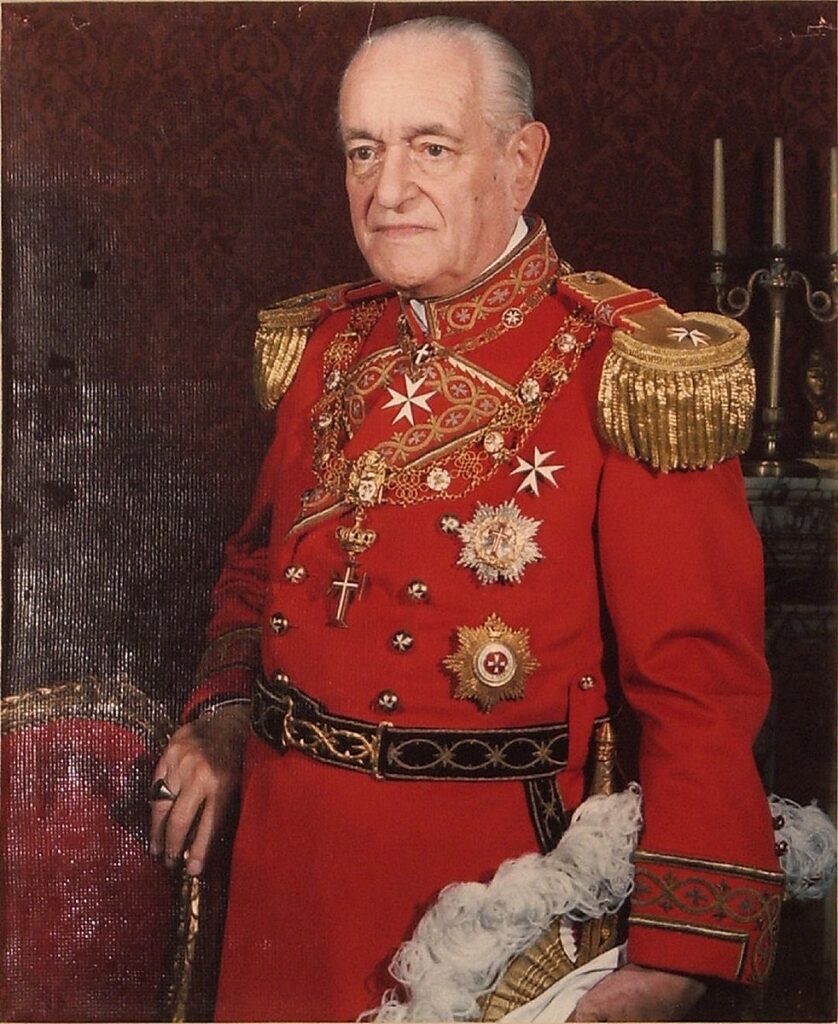
The Director of the Vienna Diplomatic Academy, His Excellency Ambassador Baron Dr. Arthur Breycha-Vauthier de Baillamont, a member of the Magistral Commission for Foreign Affairs and Social Assistance of the Order, has, in a spirit of personal friendship, graciously and helpfully made his extensive private archives and his many years of experience of life in the Order of Malta available to the author. He also personally took the trouble to validate and correct the manuscript of this work, for which he is expressed his sincere gratitude. The author owes sincere and lifelong gratitude to his esteemed teachers, Prelate Emeritus Professor Dr. h. c. mult. Dr. Johannes Messner and the Nestor of International Law, Emeritus Professor Dr. h. c. mult. Dr. Alfred Verdross, from whom he was able to experience and receive insights into and inspiration for understanding the “bonum commune humanitatis” from a natural law and Christian perspective. The author remains equally sincerely grateful to the directors of the Institute for International Law and International Relations at the University of Vienna: Prof. Dr. Karl Zemanek and former Ambassador Prof. Dr. Stefan Verosta shared their knowledge of international law with him and accepted this study as a contribution to academic research.
Retired Senator Dr. Johannes Broermann, the owner of the publishing house Duncker & Humblot, and the Austrian Federal Minister of Science and Research, Dr. Hertha Firnberg, have made the publication of this study possible with their understanding and openness. In accordance with the spiritual intentions of the “Sovereign Order of Malta” as a subject of international law, this academic work is placed under the auspices of Saint John the Baptist, who gave this religious, noble, and socially hospital, worldwide community its original and still primarily binding name.
Now the question arises: does the noble character of the Order and its knights today “only” consist of the oft-cited “noble disposition,” or does the Order partially adhere to a blood nobility?
Both, as well as. For admission to the 1st and 2nd classes of the Order, certain nobility tests are required, which will not be described in detail in this work. However, some branches of the third class bear a special characteristic that corresponds to Melitian internal law: their members are “cavalieri die grazia magistrale,” that is, knights “by the grace of the Grand Master,” in the internal sense of personal “Melitian nobility” within the Order, without, however, receiving predicates, heraldic rights, or inheritance rights linked to this.
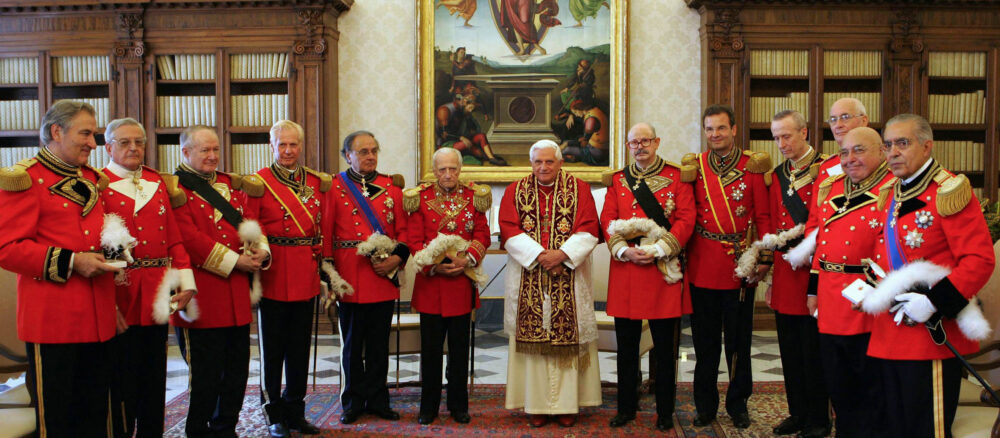
Without a doubt, the Order benefits from its “religious dependence” on the Holy See, as the latter accredits it on the basis of its international prestige and a priori relieves it of any suspicion of religious separation, social isolation, even schism and the existence of a religious sect. The Holy See grants the Order a spiritual credential by connecting it directly to the lifestream of the universal Catholic Church, keeping it bound, and feeding its religious channels. It is therefore only natural that, even in the secular-diplomatic sphere, the missions of the Holy See and the Order—namely, nunciatures and embassies, internuntiatures and legations, apostolic delegations, and Melitensian delegations—cooperate in the best possible way. For the Order of Malta is more “ecclesiastical” than any other subject of international law besides the Catholic Church, or rather the Holy See. R. A. Graham considers the Order of Malta to be one of those states (including those subjects of international law that are not states) in which there is no “separation of church and state”.
From Malteserorden und Völkergemeinschaft (Robert Prantner, 1974)
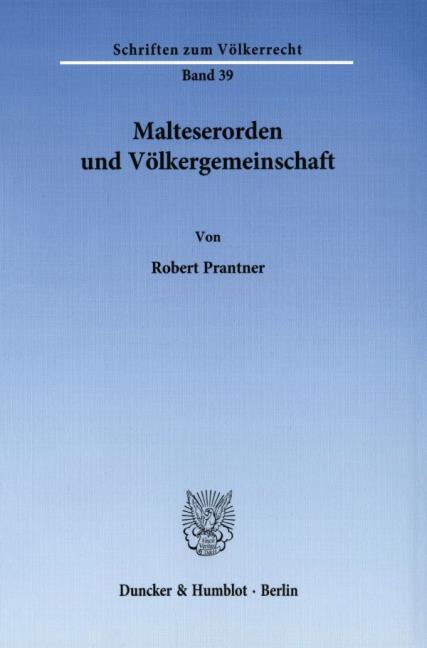
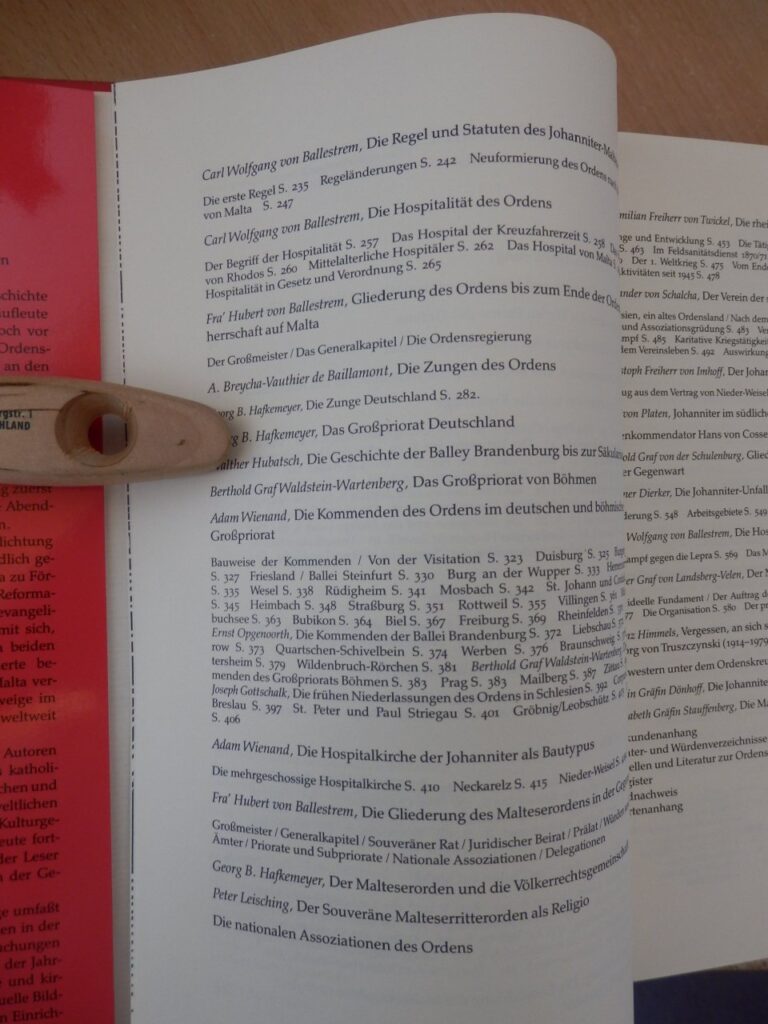
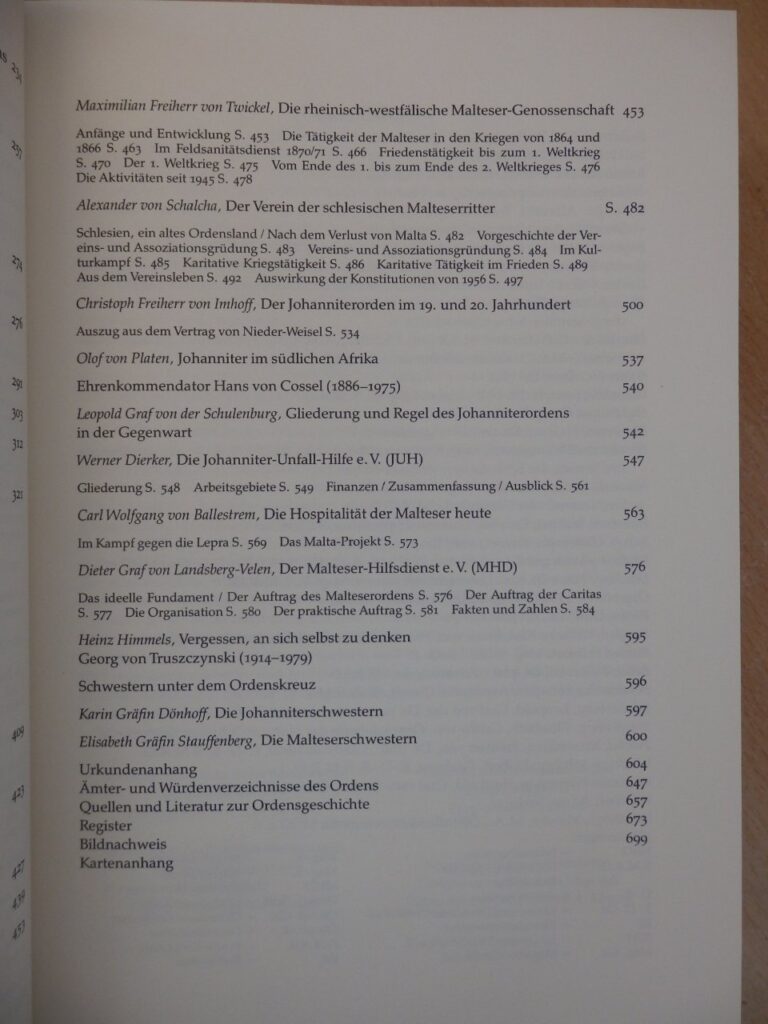
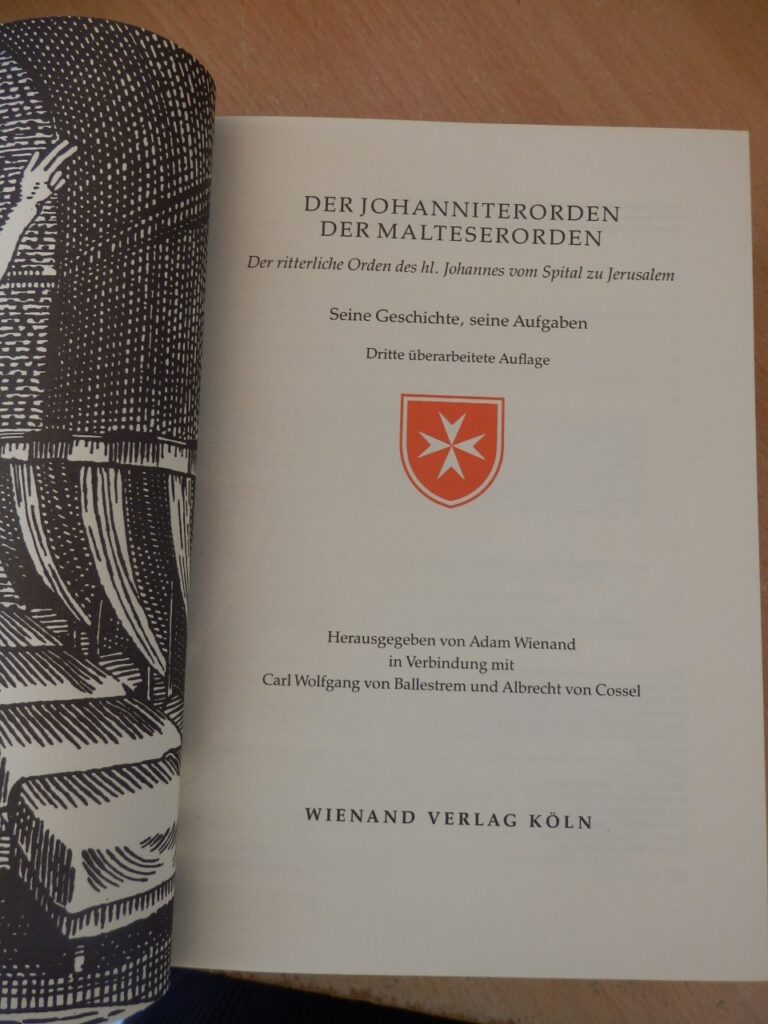
The work continuously cites for sources a book authored by the Order themselves at a publisher specialized on arts and museums. Numerous aristocratic members of the order are the authors of the chapters and they are cited individually by Prantner as if to appear like they are independent sources.
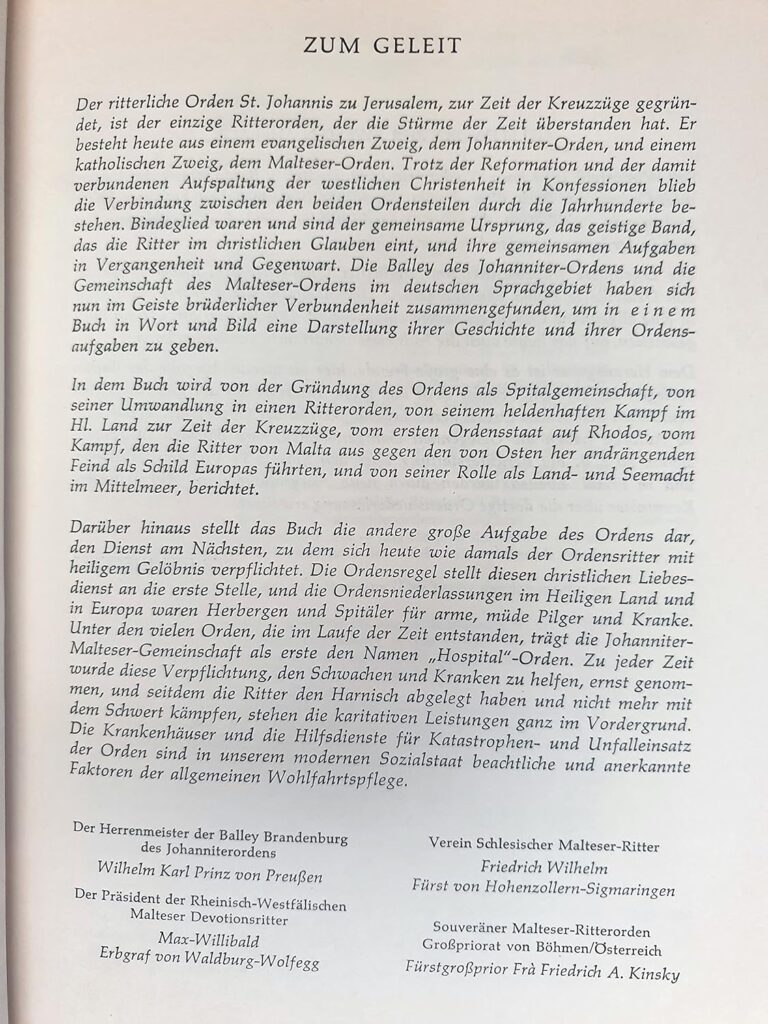
Robert Prantner later received the Papal Pontifical Equestrian Order of St. Gregory the Great.
From Der Malteserorden (Alexander Krethlow) https://rjkg.de/ojs/index.php/rjkg/article/download/58004/57891/57946
Since the 1830s, the Order received offers to take on hospital duties and suggestions of the opportunity for increased charitable work, particularly from members of the Austrian Arch-House. However, the high regard for knightly-military splendor and prestige held by the Order’s leadership meant that this opportunity was either not seized or was seized too late. Indeed, the Knights of the Order, especially those who had served in Malta, did not like to see themselves working in a second-rate hospital in Modena or auditing the accounts of a medical institute. They much preferred to provide service befitting their status, but of only limited use, to the noble guard of the respective duchy or to the papal court. Therefore, another organization filled the gap in the market for military medical services. In 1863, the Swiss Henry Dunant (1828-1920) founded the International Committee of Relief Societies for the Care of the Wounded, whose symbol, the Red Cross, soon monopolized systematic military nursing. By remaining committed to the principle of social inequality and its often inherited aristocratic traditions with its discriminatory admission regulations, the Order of Malta missed a significant opportunity.
Until 1914, a Knight of the Order had an almost 50 percent chance of becoming a Commander and benefiting from the revenues of a commandery, which further improved their standard of living. Individual noble families successfully managed to retain the succession to the administration of the lucrative commanderies through multiple representation in the legal ranks and thus in the provincial chapter.
The motivations for membership as a Knight of Honor or Dame of Honor were broader. In the religious sphere, the Order created the opportunity for Catholic noblemen to fulfill their religious duties in an environment befitting their status. Political motivations for membership are also evident. Since traditional elites and the Catholic Church were preferred targets of liberal and socialist criticism throughout Europe, the Order of Malta served the clergy and the nobility as a transnational platform for demonstrating shared values. At the national level, honorary membership was also an expression of political commitment. For a long time, in the Grand Priory of Rome, it represented a special bond with the Pope and a relative distance from the Savoy royal house. This honorary membership in the Rhenish-Westphalian Order of Malta, which had a strong ultramontane orientation, indicated a political position just as clearly as that of parts of the former Polish nobility, who expressed anti-Prussian, anti-Russian, or anti-Austrian tendencies by belonging to a particular Grand Priory.
Until the last third of the 19th century, however, one could hardly speak of serious charitable work. The Order offered a befitting framework for charitable work, especially for women. The Knights of the Right, as the core group of the community, were little involved in the active hospitality of the Order. Active service to fellow human beings in need was partly left to institutions outside the Order. However, individual Knights of Honor gladly assumed the organizational and responsible leadership of charitable missions. Caritas thus served to provide the order with a contemporary justification for its existence in the public eye. In this way, the charitable activity fulfilled a task of central political importance for the order.