Posted in Other

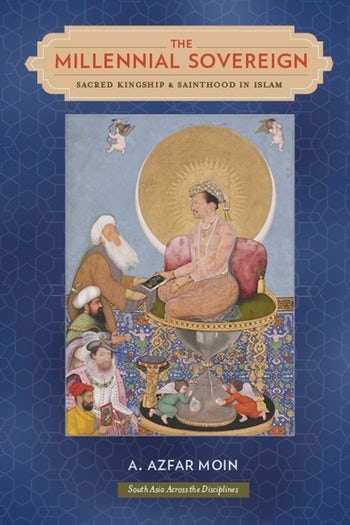
The Millenial Sovereign

This book brings into dialogue two major fields of scholarship that are rarely studied together: sacred kingship and sainthood in Islam. In doing so, it offers an original perspective on both. In historical terms, the focus here is on the Mughal empire in sixteenth-century India and its antecedents and parallels in Timurid Central Asia and Safavid Iran. These interconnected milieus offer an ideal window to explore and rethink the relationship between Muslim kingship and sainthood. For it was here that Muslim rulers came to express their sovereignty and embody their sacrality in the manner of Sufi saints and holy saviors.
The Mughal dynasty of India (1526–1857) and the Safavid one of Iran (1501–1722) exemplified this mode of sacred kingship. The early and foundational monarchs of these two lineages modeled their courts on the pattern of Sufi orders and fashioned themselves as the promised messiah.
In their classical phases, both the Mughals and the Safavids embraced a style of sovereignty that was “saintly” and “messianic.” Neither a coincidence nor a passing curiosity, this similarity resulted from a common pattern of monarchy based upon Sufi and millennial motifs. There developed in this period an ensemble of rituals and knowledges to make the body of the king sacred and to cast it in the mold of a prophesied savior, a figure who would set right the unbearable order of things and inaugurate a new era of peace and justice—the new millennium. Undergirded by messianic conceptions and rationalized by political astrology, this style of sovereignty attempted to bind courtiers and soldiers to the monarch as both spiritual guide and material lord.

A. Azfar Moin – The Millenial Sovereign

The Millenial Sovereign
Posted in Other

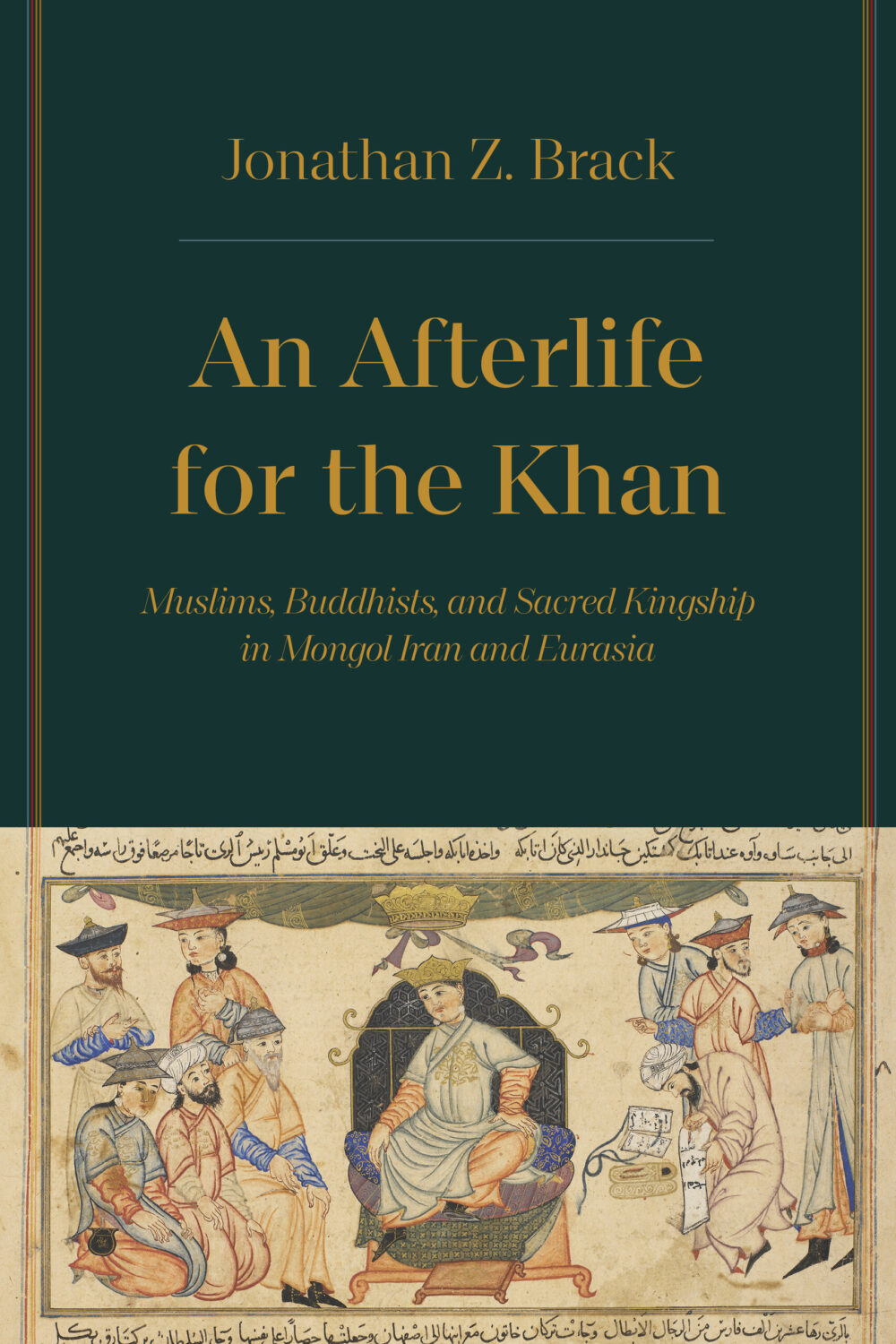
An Afterlife for the Khan

In 1254, after a long and anxious wait at the Mongol Empire’s capital of Qaraqorum, the Flemish friar and missionary William of Rubruck (ca. 1220–ca. 1293), finally got his wish to preach in person to the Mongol Qa’an Möngke (r. 1251–59). Before meeting the emperor, however, there was one final obstacle to overcome: outperforming his Muslim and Buddhist contenders in an interreligious debate. This multilateral court disputation was the first documented debate of its kind that included Christians (both Catholics and Nestorians), Muslims, and Buddhists. For William and for the Catholic Church more broadly, the encounter with Buddhism was entirely new. For the Muslim debaters, it was by no means the first interaction with Buddhists: Islam and Buddhism had a prolonged history of religious, intellectual, and commercial encounters and exchanges, but one that was fraught with friction and rivalry as well.
From our historical hindsight, however, this 1254 exchange in Mongolia can be seen as marking a new page in Muslim-Buddhist relations, not in the eastern territories of the Mongol Empire (China and Mongolia), but rather further west, at the other end of Mongol-dominated Eurasia, in Iran, which would shortly become the seat of the independent Mongol state of the Ilkhanate (1260–1335). Established by Chinggis Khan’s (r. 1206–27) grandson, Hülegü (r. 1260–65) in Iran, Iraq, and Azerbaijan—areas with a predominantly Muslim population—the Ilkhanate would become a destination for Buddhist monks from across Eurasia. These Buddhist experts would travel great distances to spread the Dharma and take advantage of the opportunities of patronage that the new Mongol rulers of Iran, the Ilkhans, offered.
In the late 1280s, some thirty years after William’s visit to Qaraqorum, the Ilkhanid court in Iran experienced the height of interfaith exchanges. Learned monks gathered at the court of Buddhist enthusiast Ilkhan Arghun (r. 1284–91), and debated with Muslims and possibly others. It is against this backdrop that this book’s protagonist, Rashid al-Din (d. 1318), then still a court physician and an up-and-coming bureaucrat, found himself embroiled in a disputation with one of the Mongol king’s cherished monks.
Rashid al-Din describes his exchange in a treatise written nearly two decades after the event, and under very different circumstances. He was at the height of his tenure as vizier, the most powerful civil servant in the Ilkhanid state, and Islam had already prevailed over Buddhism to become the official religion of the Ilkhanid rulers. Rashid al-Din does not name his contender and refers to him only as a bakhshī, Buddhist priest. The Buddhist asked Rashid al-Din the following question in Arghun’s presence: “What came first, the bird or the egg?” Rashid al-Din notes that this was a “famous fable” among the Buddhists. The monk indeed evoked a well-known Buddhist enigma that appeared in the “Questions of Mellinda,” a Pali dialogue between a Buddhist sage and the Greek king Menander of Bactria, probably composed between 150 BC and 100 AD. Rashid al-Din writes that while the monk believed that he would fail to solve the riddle, he was confounded by it for only a moment before God divulged to him the answer. He does not tell us what answer he ended up providing nor whether the Buddhist offered a rebuttal. Instead, Rashid al-Din downplays his Buddhist rival, dismissing the monk as ignorant of the true meaning of his own riddle. Yet he does not disregard the question itself as a catalyst of a theological inquiry. Rashid al-Din is “inspired” by it, and in the remainder of this treatise, he proceeds to contemplate Islamic philosophical points regarding issues such as the createdness of Adam and the divine source of primordial human knowledge.
Rashid al-Din’s account of this debate certainly differs from the Flemish friar William’s report to the Pope about his multilateral debate at Möngke’s court in Mongolia. For one, William provides more detail about how the debate with the Chinese Buddhist representative evolved and about the type of arguments that each party employed. We know they debated the existence and unity of God and the cause of evil. The differences between the Persian Muslim’s and the Flemish Christian’s accounts notwithstanding, there are also striking parallels between the two. Both downplay the intellectual fortitude of their Buddhist opponents. And both emphasize their recourse to their own scholastic traditions of rational argumentation to overcome the challenges mounted by their Buddhist contenders, rather than relying on Muslim or Christian scriptures. Whereas both might have underscored cultural and linguistic disparities, whether explicitly or implicitly, their accounts ultimately give the impression of a common vocabulary—that of rational argumentation.
Scholastic disputation indeed emerges from their reports as a shared currency enabling a certain exchange of ideas. Yet how far did such exchanges go? William’s account suggests that the debates went beyond the exchange of riddles and parables and could include hefty theological arguments. It also gives the impression, however, that the two parties remained ingrained in their own scholastic traditions. Rashid al-Din’s account, on the other hand, leaves more to the imagination. He gives the impression that few meaningful intellectual exchanges between Muslims and Buddhists took place under Mongol rule in Iran. And this impression is amplified by the general dearth of Muslim Ilkhanid descriptions of such exchanges, as well as the complete absence of any Buddhist textual documentation from the Ilkhanate.
Yet it is hard to reconcile this impression with what we know of the prevalence of Buddhism and the flourishing of the Buddhists during the Ilkhanate’s first four decades. As this book shows, a thorough examination of the Ilkhanid vizier Rashid al-Din’s extensive theological works demonstrates that Buddhist, Muslim, and Mongol exchanges have left deeper and more consequential impressions than the silence of contemporaneous Muslim authors implies. Muslims at the court were exposed to and made a considerable effort to respond to Buddhist concepts. These might not have been the finer points of the Dharma, but rather, as we will see, Buddhist methods of engaging with political authorities and conversion strategies.
An Afterlife for the Khan explores the Ilkhanid court of the late thirteenth and early fourteenth century as an arena of interreligious exchange and rivalry, where the conceptual differences and equivalences between various Eurasian structures of power and sacrality—Islamic, Buddhist, and Mongol—were debated and deployed. It unearths the various subtle ways in which cultural and religious agents employed their religious and political resources to accommodate, translate, manipulate, and subvert the symbols and structures of the religious Other.
Focusing on the theological-philosophical works of a Persian Muslim vizier active in the intellectual scene of the Ilkhanid court at the turn of the fourteenth century, An Afterlife for the Khan shows how the Persian-Muslim experience of Buddhism and its system of karmic-righteous kingship, on the one hand, and the accommodation of and resistance to the Mongol model of divinized kingship, on the other, generated and informed processes of creative experimentation in new modes of Islamic sacral kingship. Buddhists marketed concepts and models of karmic kingship as means of translating, reaffirming, and converting their Chinggisid patrons’ claims to deified kingship. The Islamic challenge entailed, therefore, not only winning their Ilkhanid patrons to the Muslim faith or cementing their commitment to Islam in the case of the Mongols who had already converted, but also uprooting their previous Buddhist education.
Jewish convert, Persian vizier, historian, and Muslim theologian Rashid al-Din stood at the center of the Muslim conversion efforts. In his theological and historical writings, invigorated by the lively atmosphere of an intellectually rigorous and religiously competitive royal court, Rashid al-Din not only engaged in the translation and assimilation of Buddhist narratives and concepts, or painstakingly attempted to dispute and disprove the Buddhist doctrine of reincarnation. He was also inspired and informed by his Buddhist competitors and their strategies of conversion and domestication of the Chinggisid rulers. To this end, he experimented with a model of Mongol-Muslim kingship that paralleled Buddhism’s structure of karmic-righteous rulership.
This book argues that Rashid al-Din’s Buddhist- and Mongol-informed experimentation in Islamic theological discourses formed a crucial, intermediate stage between the two more dominant frameworks for legitimizing Islamic, sultanic authority—the pre-Mongol phase of a restrictive, legalistic, and genealogical-based caliphal structure, and the post-Mongol independent model of universal and sacral Islamic rulership buttressed by saintly and messianic discourses. The Mongol occupation of Baghdad and the consequent elimination of the ʿAbbasid caliphate in 1258 represented a dramatic event that shattered the religiopolitical foundation of the Sunni majority’s world. This cataclysm inaugurated an era of unprecedented constitutional crisis that exacerbated after the collapse of the Ilkhanid state in 1335. In subsequent centuries, new strategies for legitimizing sultanic authority were formulated to resolve this crisis. To that end, Muslim intellectuals increasingly made use of and elaborated on an innovative, comprehensive, and compelling vocabulary of sovereignty that effectively shifted the discourse of sultanic legitimacy away from the pre-Mongol restrictive genealogical and juridical parameters of Sunni authority. In its place, there emerged a new discursive realm of universal Islamic kingship that referenced and interlinked a variety of intellectual fields—from philosophy and theology to astrology, mysticism, and the occult. Rashid al-Din’s works marked the end of caliphal authority and the beginning of this new age of Islamic authority. In the remainder of this introduction, we first explore the central theoretical foundation of this research into sacred kingship and the strategies of religious agents with the Mongol rulers.

Jonathan Z. Brack – An Afterlife for the Khan

Posted in Other

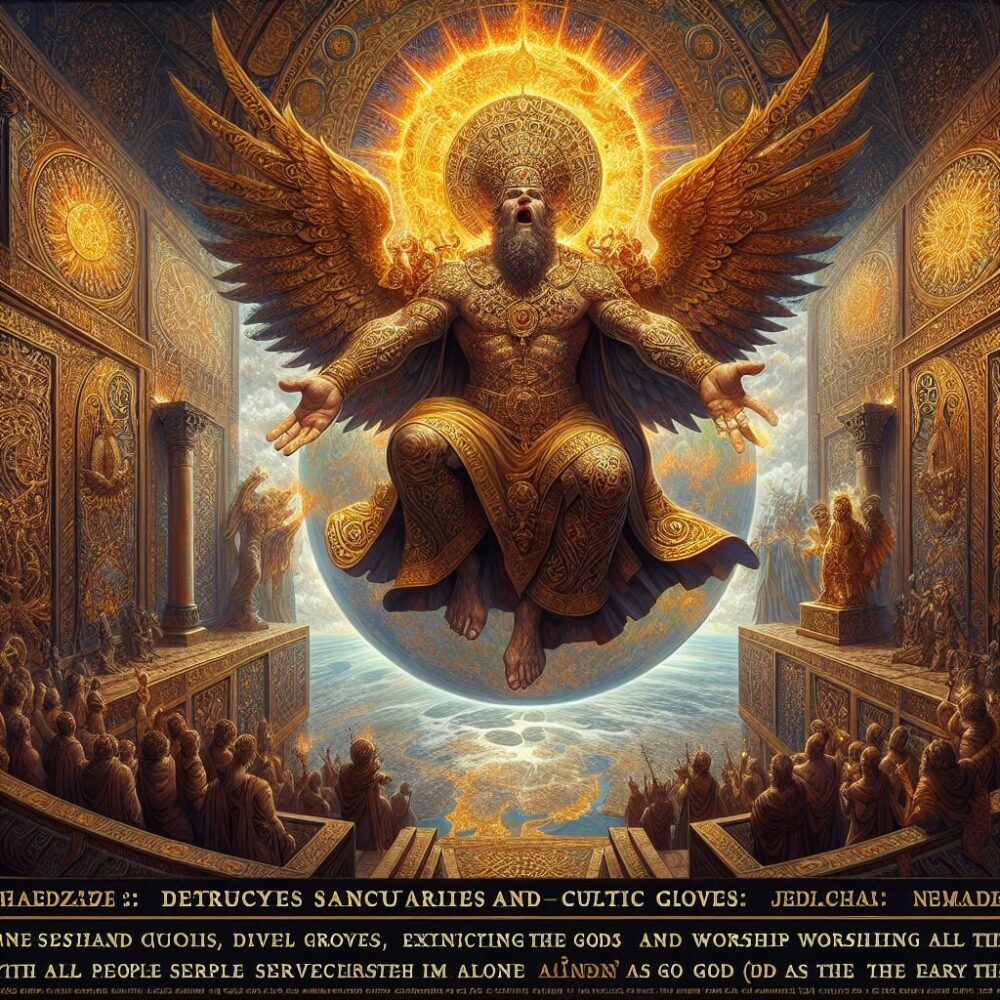
God’s Kingship

Leuenberger, Martin, Art. Kingship of God (OT), in: Das Wissenschaftliche Bibellexikon im Internet (www.wibilex.de), 2012

The earthly kingship in Israel and Judah as well as the kingship of Yhwh form a section of ancient oriental concepts of rule and can only be understood historically or in terms of the history of religion and theology against this background or within these concepts. […]

King Hammurabi thus sees himself as “the shepherd appointed by Enlil” in parallel with the appointment of the god Marduk to an “eternal kingship (šarrūtum darītum)” (Hammurabi Stele 1:21) by Anu and Enlil (1:1ff) […]

In the wake of the global political rise of the Persian king Cyrus, Deutero-Isaiah visionarily proclaims the imminent, definitive, “eschatological” fulfillment of salvation for Israel in the near future. The (original) book gradient leads to Isa 52,7-10*, where the phrase “your [sc. Zion’s] God has become king and reigns” (מָלַךְאֱלֹהָיִךי mālakh ‘älohājikh; qatal-x) emphasizes the dawning of the kingship of Yhwh (at least in the divine world), which will now inevitably lead earthly events to their goal.
In the process, Yhwh’s “Messiah” Cyrus (Isa 45:1) inherits the worldly kingship of the Davidids, which is thus boldly globalized in the course of Deutero-Isaiah’s confrontation with the Babylonian dominant culture – in correspondence with the worldwide kingship of Yhwh over all “gods” (whose divinity is famously disputed) and all peoples. […]

[Deutero-Isaiahs] integration into the book of Isaiah results in a new dynamic: the exilic problematization is caught up in literary terms by the sequence of the present kingship of Yhwh (Isa 6) and the eschatological (new) dawn (Isa 40-52*). The same applies to the earthly level, when the royal texts Isa 7; Isa 9; (Isa 11), historicized in the course of the book to the Davidides, are continued through Isa 45 with the Messiah Cyrus. […]

[In the apocalyptic literature] the theme is never explicitly at the center, but Yhwh is not infrequently dubbed king and the (secular) enforcement of his kingship is consistently maintained against secular resistance of very different kinds – ultimately for the sake of God’s divinity (see in detail Camponovo, 1984, 230ff; Lindemann, 1986, 196ff; Collins, 1987, 88ff). […]

[In book of Daniel] God allows his “everlasting kingship (מַלְכוּת עלַם malkhût ‘ālam)” (Dan 3:33) to be realized in the succession of time by changing (world) rulers (see especially Kratz, 1991, 148ff; Seow, 2004). Only in the following (Hebrew) book redactions do eschatological-apocalyptic upheavals take place, which bring the earthly and divine kingship into an intensifying opposition (see Dan 2:44; Dan 7:14.18; Dan 10-12). […]

Finally, the Psalter, which was successively formed in the post-exilic period, is conceptually characterized by the kingship of Yhwh in its younger two theocratic books IV-V as well as in the present final composition (see Leuenberger, 2004, 392f [lit.]; Janowski, 2010, 301ff). Various conceptions can be distinguished, which locate Jhwh’s kingship in the course of the book in cosmic (natural order), large-scale political (world of nations / legal order), priestly (cultic legal order) and finally everyday (elementary salvation and provision in Ps 101-150) areas of experience; the spatial and temporal universality of Jhwh’s kingship is also spelled out in detail. The theological climax and final accent of the Psalter is then reached in the artfully constructed hymn Ps 145:

V. 1 I will exalt you, my God and King, / and praise your name forever and ever. (…) V.13 Your “kingdom” is a “kingdom” for all time, / and your reign lasts from generation to generation.

Ps 145

A historical analysis of the Yhwh-related מלך * mlk statements (king) in their literary (near) contexts brings to light a quite extensive field of words and concepts of “kingship of Yhwh”: on the one hand, there are more or less close parallel terms to מלך * mlk “to be / become king” or מֶלֶךְ mælækh “king” or the abstracts for “kingship” such as משׁל mšl “to rule”, שׁפט špṭ “to judge / rule”, Aramaic שׁלט šlṭ “to rule” or מוֹשׁל môšel “ruler”, מָשִׁיחַ māšîaḥ “anointed one” (Messiah), שֹׁפֵט šofeṭ “judge”, רֹעֵה ro’eh “shepherd”, רֹאשׁ ro’š “head”, נָגִיד nāgîd “prince” resp. מֶמְשָׁלָה mæmšālāh and Aramaic מָשִׁיחַ šālṭān “rule” etc. On the other hand, there are also numerous royal or imperious attributes (such as גֵּאוּת ge’ût “majesty”, הוֹד hôd “majesty”, הָדָר hādār “splendor”, עֹז ‘oz “power”, אַדִּיר ‘addîr “mighty” [s. especially the superiority over the chaos waters] etc.), functions (e.g. ישׁב jšb “to throne / dwell”, עלה ‘lh “to ascend / be exalted”) and conceptual elements (e.g. כִּסֵּא kisse’ “throne”, סוֹד sôd “throne council” [council of the gods], אַרְמוֹן ‘armôn “palace”, הֵיכָל hêkāl “temple / palace” and more) should be included: They all characterize Yhwh – admittedly in different forms and accentuations – as king. […]

3) brk ∙ jhw[h …] (4) brk ∙ bgj[m … j]mlk … (6) brk ‘dn[j] jh … (3) Blessed is / be Jhw[h …,] (4) Blessed is / be he among the nations who reigns / will reign as king. … (6) Blessed is / be the Lord; jh[…]”

Inscription from En Gedi

The Lord Yhwh is thus blessed (lines 3/6), whom the central statement (line 4) describes in a nationwide perspective (cf. ‘šr “Assur” line 1)[…]

The following should be mentioned: mlkj(h)w “(my) king is Jh(wh)” or jhwmlk “Jh(wh) is king” (cf. parallel formations such as mlkj’l “king is God” or ‘dnmlk “the Lord is king”). In addition, there are semantically related ruler names of the type “name of God + ruler terminus”, i.e. above all jh(w) “Yhwh”, ‘l “God” or ‘dn “Lord” with rwm “to rise / to be exalted”, qwm “to rise / to be high” or ‛lj / ‛lh “to ascend / to be high”, whereby the order of the two elements can change.


Hermisson, Hans-Jürgen, Art. Deutero-Isaiah, in: Das Wissenschaftliche Bibellexikon im Internet (www.wibilex.de), 2017

One of the elements of the promise of help is the mention of the redemption of Israel. The term comes from family law and refers to the redemption of clan members from debt slavery (redeemer / ransom); in DtIsa it is used exclusively as a predicate of Yahweh: Yahweh is Israel’s “redeemer”, now therefore from the Babylonian exile. However, the idea is significantly modified: Israel’s “ransom” does not, after all, mean that Yahweh pays a ransom to the previous overlord Babylon. Isa 43:3 comes closest to the conventional idea: Yahweh pays “Egypt, Cush and Sheba” as a ransom for Israel, but not to the previous owner, but to the future owner, to Cyrus, the conqueror of Babylon. It is different in Isa 44:22, where the word of Israel’s “redemption” follows the statement of the redemption of its sin and guilt: Admittedly, “redeem” there also means specifically to free from Babylonian captivity, but this is a consequence of Israel’s guilt towards its God. The payment of a ransom to Cyrus or Babylon is disputed by later authors (Isa 45:13bβ; Isa 52:3), but that is not DtIsa’ problem: it is concerned with the analogy of the familial relationship and the resulting duty to liberate: Yahweh has declared such a relationship to his people with the word of redemption. […]

Here we must speak of the earthly agents of Yahweh with DtIsa. There is Cyrus, addressed in two oracles of calling: In Isa 45:1-7 he is to conquer Babylon as Yahweh’s “anointed one”, in Isa 42:5-8* he is to release the captives.
This is the earthly-concrete form of the divine victory over Babylon and the repatriation of the “spoils” after the final part of the prologue: Cyrus is commissioned and authorized by Yahweh to do so. […]

The great “imperative poem” in Isa 51,9-10.17-23; Isa 52,1-2, which is linked to the text of the jubilantly welcomed entry of Yahweh into his city in Isa 52,7-10 and the concluding call to the exiles in Isa 52,11f. The plaintive call to Yahweh’s arm to wake up and prove his power in Israel’s favor, as he once did at the Exodus, at the Red Sea (Isa 51:9f.), is answered with the counter-call to the woman Jerusalem / Zion to rise in her turn (Isa 51:17), to rise from the dust, put on her festive garments and sit on the throne (Isa 52:1-2). Zion is drawn here in contrast to the woman Babylon, who loses her throne (Isa 47), but unlike Babylon, she is not Yahweh’s rival: she receives her royal role as the wife of King Yahweh, who now moves into Jerusalem and begins his world reign there: “Yahweh has bared his holy arm in the sight of all nations, and all the ends of the earth see the salvation of our God” (Isa 52:10).[…]

DtIsa’s message is presented in a wealth of vivid images that cannot all be set off against each other, but which in essence amount to the same thing. They can be summarized in a few sentences. The prophet proclaims the liberation of Yahweh’s people from exile and their return through the desert to the land of promise as a Yahweh miracle, in which Yahweh proves his saving creative power as the only God before all peoples. He needs three earthly agents for this: the chosen, created in the womb and called prophet. The chosen prophetic servant of God, created and called in the womb, who brings the despondent and unbelieving Israel to faith and on the way, as his “active witness”, the chosen servant of God Jacob / Israel, created and called in the womb, who then sets off and allows the miracles to happen to him, as the (initially) “passive witness”, and Cyrus, called and created by Yahweh, as his “shepherd” and “anointed one”, whom he “raised up” for the warlike conquest of the world empire of Babylon and thus for the liberation of the exiled people of Yahweh. All three are portrayed as royal figures with similar predicates. The triumph of Cyrus also serves as an example in which Yahweh proves his uniqueness as God, because he brings it about through his word of creation, which he had previously given to the world through his prophetic servant. In the end, Yahweh will reign from Jerusalem as King of Israel and King of the world, and all nations will confess him as the only God who saves: Thus, in the sum of his message, the prophet proclaims an eschatological event.

The fourth servant song after the death of the prophet goes beyond this by seeing the whole event as initiated by the suffering and death of the prophetic servant and by the miracle of Yahweh in his deceased servant (servant of God).