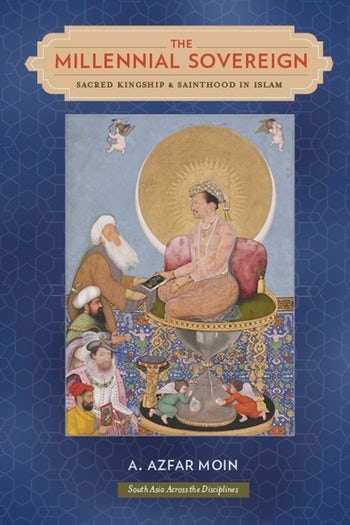
This book brings into dialogue two major fields of scholarship that are rarely studied together: sacred kingship and sainthood in Islam. In doing so, it offers an original perspective on both. In historical terms, the focus here is on the Mughal empire in sixteenth-century India and its antecedents and parallels in Timurid Central Asia and Safavid Iran. These interconnected milieus offer an ideal window to explore and rethink the relationship between Muslim kingship and sainthood. For it was here that Muslim rulers came to express their sovereignty and embody their sacrality in the manner of Sufi saints and holy saviors.
The Mughal dynasty of India (1526–1857) and the Safavid one of Iran (1501–1722) exemplified this mode of sacred kingship. The early and foundational monarchs of these two lineages modeled their courts on the pattern of Sufi orders and fashioned themselves as the promised messiah.
In their classical phases, both the Mughals and the Safavids embraced a style of sovereignty that was “saintly” and “messianic.” Neither a coincidence nor a passing curiosity, this similarity resulted from a common pattern of monarchy based upon Sufi and millennial motifs. There developed in this period an ensemble of rituals and knowledges to make the body of the king sacred and to cast it in the mold of a prophesied savior, a figure who would set right the unbearable order of things and inaugurate a new era of peace and justice—the new millennium. Undergirded by messianic conceptions and rationalized by political astrology, this style of sovereignty attempted to bind courtiers and soldiers to the monarch as both spiritual guide and material lord.
A. Azfar Moin – The Millenial Sovereign