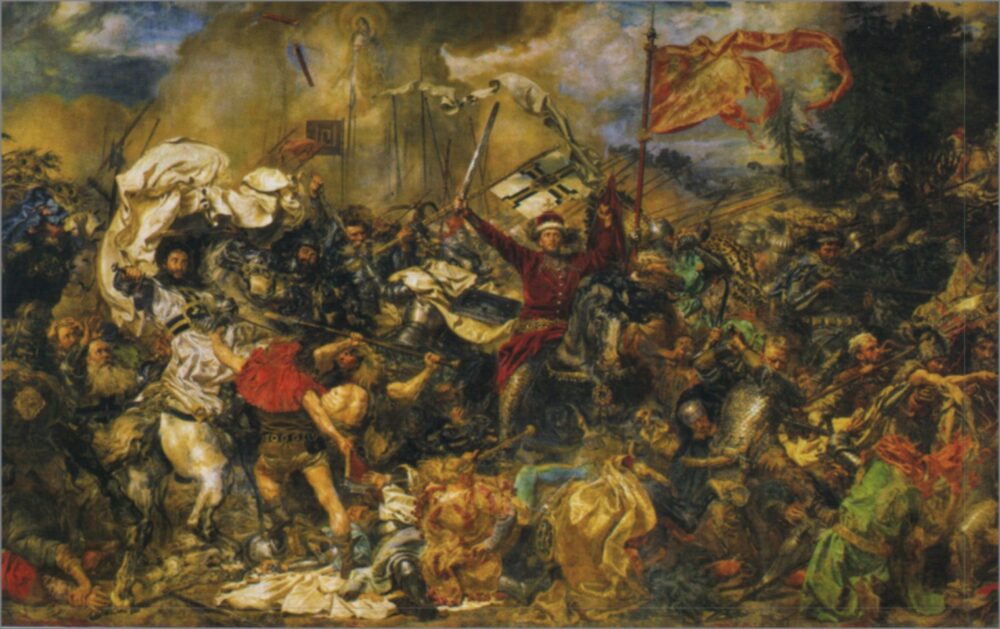
The knightly formula “to Ostland we shall ride” could be incorporated into the propaganda of the National Socialist plans for conquest and settlement and could count on broad support among the nobility. Ewald v. Kleist-Schmenzin had emphasised the potential benefits for the East Elbe landed gentry in a prominent position in 1926:
It needs no explanation what a fountain of youth colonial land acquired east of our border with unlimited settlement possibilities would be.
What Kleist formulated as a vague hope was realised in very pragmatic attempts at profit sharing from the beginning of the war at the latest. As is well known, the career options that emerged in the East went far beyond curiosities such as the post of “Managing Director of the Sheep Breeding Association Ukraine”.
After 1939, members of the high and low, rich and poor nobility made enquiries to the SS leadership about the option of acquiring estates in the looted areas. Nobles recognised the unique opportunity here to secure the family’s land supply for generations to come. Corresponding letters to Heinrich Himmler and high SS authorities document the extremely tangible interests that existed in the various aristocratic groups in the acquisition of large estates in the “Ostland”. Very specific requests for loot were also formulated in applications from the high nobility: “Dear Mr Himmler! I have submitted three applications for the granting of entailment for my inherited Holstein family estate; two applications have already been approved, while the decision on the third application is still pending. As I have a total of 6 sons, I would like to acquire further property for the younger sons. I would be very grateful if you would let me know briefly whether it will be possible for me to purchase larger estates in the East after the end of the war. […] With warmest regards and Heil Hitler […]”.
This form of modern robber barony had little to do with the much-praised solidarity with the plaice, but much to do with the myths surrounding the colonisation of the East. In 1940, a Baltic author praised the “Führer’s” project of recalling the Baltic nobility from their “seven hundred and fifty years of faithful vigilance on advanced post” in order to “transplant them to the regained German eastern region on the Vistula and thus assign them a new, enormous and marvellous task”. After the attack on the Soviet Union, the writer Ottfried Graf v. Finckenstein became chairman of an artists’ association called Kulturwerk Deutsches Ordensland, which was to meet in Marienburg and recall that
around 700 years ago, the light of the German spirit and German morality was carried into the Slavic region, never to be extinguished again
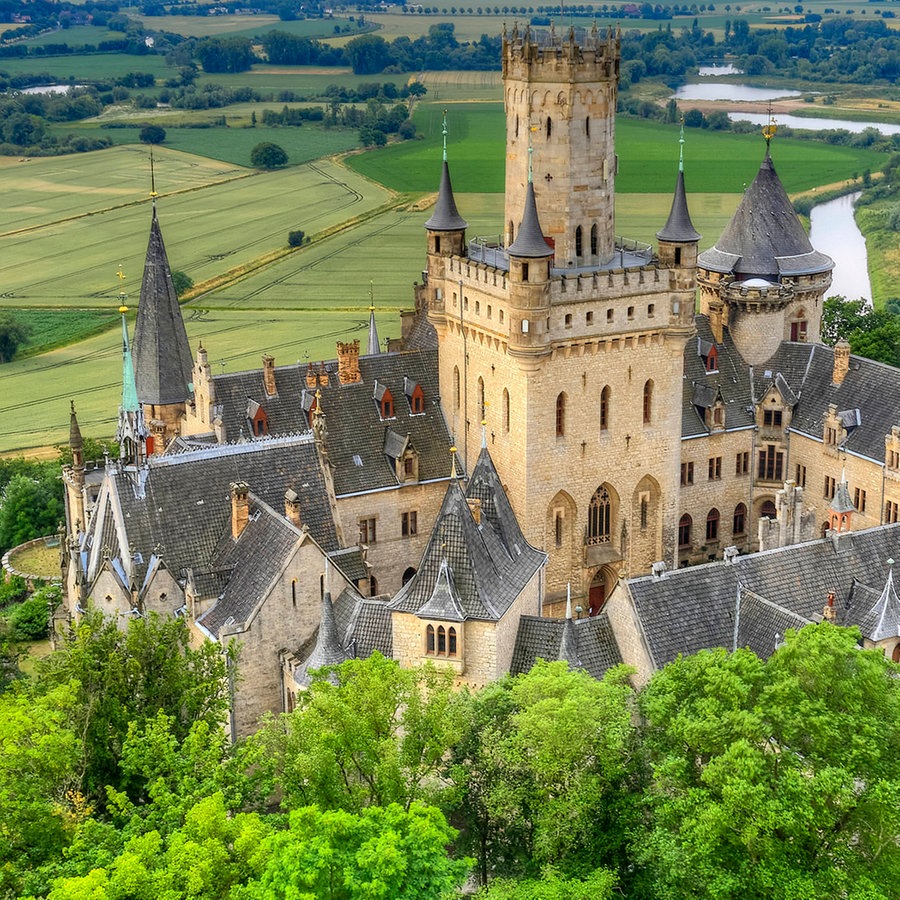
Now the German was once again “the most important cultural carrier in the front line of Germanness”. At around the same time, Fritz-Dietlof Graf v. d. Schulenburg spoke of the imminent decision “whether the people will finally fall victim to urban civilisation or take root once again here in the East and renew itself by its own strength”. With other motives than Schulenburg, who was personally incorruptible and energetically opposed to the “rampant” corruption, the predatory war in the East was welcomed with particular fervour, especially by aristocrats who had lost their estates after 1918 as part of the German territorial cessions. Referring to the estates lost by her Baltic German mother, Heinrich v. Bismarck’s wife contacted the Volksdeutsche Mittelstelle just a few weeks after the invasion of Poland with the enquiry “whether there would also be a possibility for us to acquire an inherited farm or the like in the conquered […] territories, preferably between our countrymen”. They had long dreamed of settling – “preferably in the east” – but so far the land within the Reich had been too expensive. A similar attempt by SS leader Ludolf v. Alvensleben, who in September 1940 stretched out his hands for the loot and approached Himmler directly, was brusquely rejected by the latter. Himmler’s reply to the expropriated and ruined landowner stated that he could not stand in for “all the business failures of National Socialists with the estate’s land”. “All in all, I did not like your intention to regain possession of this estate without a penny of money. […] You can apply for a settlement after the war, like all other Germans in the Reich.”
In 1933, countless minor aristocrats who had had steeply negative careers after 1918 harboured the justified hope that their early involvement in the movement could now pay off. In March 1933, a typical letter of petition for a member of the v. Bülow family who had been dismissed as a first lieutenant in 1920 stated: “The poor man is in very bleak circumstances, despite his formerly so rich […] relatives. He is a party comrade and a strong supporter of the movement. Perhaps, Mr President, it is possible for you to provide a poor Pg. (party comrade) with work and earnings.” In the petty aristocracy, as in other social classes, the status of the old fighter could be worth its weight in gold after 1933, or to be more precise, could greatly promote social (re-)advancement.
However, the Third Reich also opened up career opportunities in the traditional aristocratic professions regardless of demonstrable commitment to the “movement”. With the reintroduction of compulsory military service in March 1935, career opportunities in the military, which had been extremely reduced by the Treaty of Versailles, were suddenly increased. In appeals, aristocratic officers admonished the youth of the nobility that there was now no reason to pursue a ‘bourgeois’ profession, “instead of – the hell with it! – following the inner voice, […] which must now call to arms like a fanfare within everybody who bears an old name.” When the fatherland calls, the young nobility, as always, “belongs in the first wave of attack.” Calls of this kind did not go unheard. Within two years, the number of active aristocratic officers had more than doubled, which meant securing around 1,300 additional military careers for aristocratic men. Added to this were the career opportunities offered by the SA and then the SS, which had already been heavily utilised by the nobility before 1933. The nobility recognised “expansion as an opportunity for the future” early on and consistently, which was reflected not least in their strong commitment to the SS.
In the SS in 1938, 8.4% of Standartenführer, 14.3% of Brigadeführer, 9.8% of Gruppenführer and 18.7% of Obergruppenführer belonged to the nobility
In percentage terms, these proportions fell sharply in the lower ranks and after the expansion of the SS apparatus; in absolute terms, however, there was considerable potential for career opportunities in the SS, which aristocrats utilised in parallel with the improved opportunities in the Wehrmacht.
