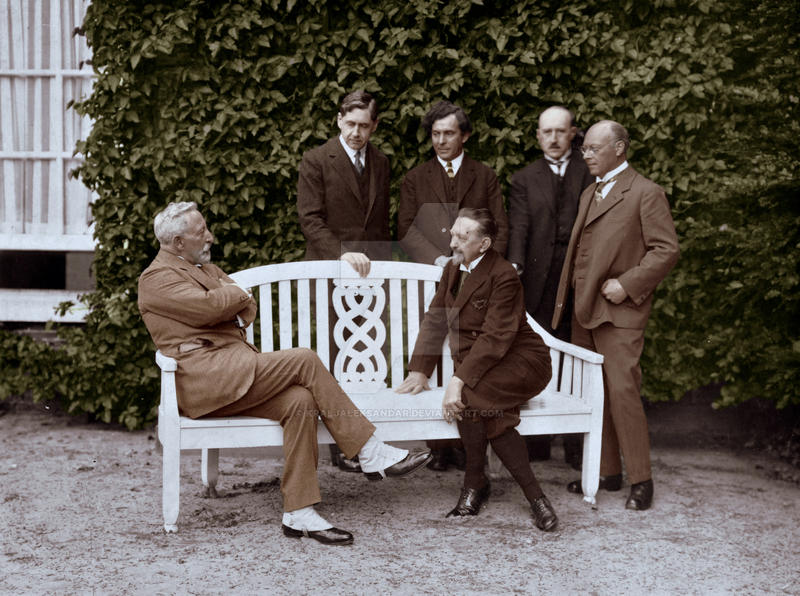
The idea that the aristocracy could successfully feed into the general longing for leadership by drawing on its thousand years of experience of rule can be found wherever aristocrats debated the opportunities opened up by the Nazi movement. In Mein Kampf, Hitler had spoken about the difficulties of recruiting suitable leaders, emphasising the importance of the individual personality and the “aristocratic principle” according to which the leadership of his movement was structured. In the aristocracy, the habitual conviction of their own superiority suggested that the Nazi movement should be seen as a force characterised by the petty bourgeoisie and proletariat, which had taught the “masses” to think in terms of leaders and followers, but which itself suffered from a chronic lack of leaders. The first phase of self-confident mockery of this lack was followed from around 1930 by a second phase of sceptical consideration of how the aristocracy could fill this gap itself. A grotesque variant of aristocratic attempts to direct the ubiquitous desire for leadership towards themselves is provided by a speech from 1930, in which Wilhelm II lamented the inflation of the leadership concept in Doorn:
To be a leader! Everyone wants that nowadays. Leaders present themselves everywhere. Many people pose as leaders […]. And yet the cry for leaders is omnipresent!
In a strange mixture of Christian and neo-right-wing motifs, Wilhelm II renewed his claim to leadership. The idea of leadership was first ‘revealed’ by God to the Sumerians. King Hammurabi was given the “leadership profession” by God 5,000 years ago, his own ancestors 500 years ago. “Only to these leaders is the leader Jesus Christ!” Spatially and mentally far removed from all political realities, the exiled emperor appointed Jesus as the otherworldly “leader” and himself as the earthly “leader”. The imperial leader referred to himself in the preceding passage from the Gospel of John, which had given the speech its title: “I am the vine; you are the branches. If a man remains in me and I in him, he will bear much fruit; apart from me you can do nothing.”
