Posted in From King to Führer

The nobility in NS-Salons

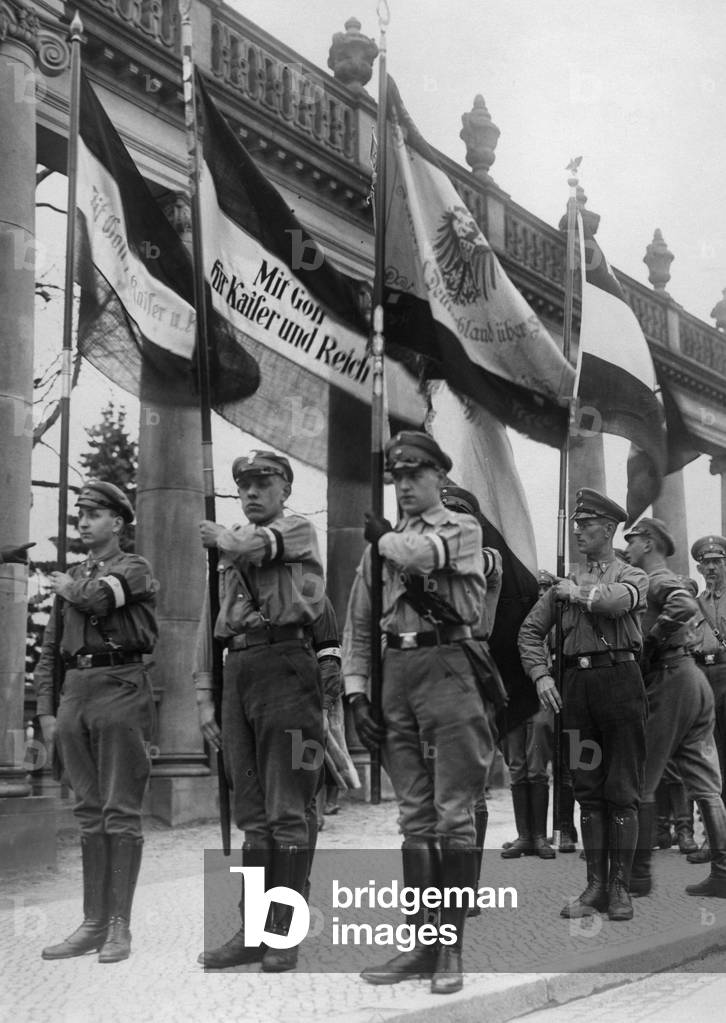
The intertwining of the aristocracy and the Nazi movement in the countryside had an important counterpart in the big cities in the form of a number of salons. The “colourful mixture of cuts and SS uniforms” and the scenes known from mocking descriptions, in which Hitler awkwardly kisses hands and excitedly chops at members of the German aristocracy close to the Nazis, had been rehearsed in these places long before 1933.

Hitler’s own contacts with aristocratic and upper-class members of the bourgeoisie had already been established in the homes of individual patrons at the beginning of his political career. In addition to the family of the piano manufacturer Bechstein, Hitler made such connections, including the momentous meeting with Emil Kirdorf, in the parlour of Elsa Bruckmann. The wife of Munich publisher Hugo Bruckmann was Princess Cantacuzène by birth and came from a family of Romanian high nobility. When the Bruckmanns’ parlour became “worried about the psychological impact of the success on Hitler”, he had long since withdrawn from the control that they had wished for. Karl Prinz zu Löwenstein, the chairman of the radical right-wing National Club, had played a role as an intermediary for the contact between Hitler and Kirdorf. The Bechsteins’ Berlin house remained important until the transfer of power – Helene Bechstein, who had also supported Hitler financially during his years as a “drummer boy”, hosted the aforementioned meeting in January 1931, at which Hitler met a circle of fifteen people with large landowners from renowned Prussian families.

Prominent National Socialists created further connections to the nobility, including Hermann Göring, who as the former commander of the famous Richthofen fighter squadron had contacts to the aristocracy up to the Prussian crown prince, which were considerably increased by his first wife. In August 1931, a two-hour lecture by Hitler at Göring’s home fascinated the audience of Rüdiger Graf v. d. Goltz, Leopold v. Kleist, Hjalmar Schacht and Magnus v. Levetzow to such an extent that “the circle remained in silence for a while, moved and impressed. Göring and the Strasser brothers again socialised in the salon that Oskar v. Amim-Burow ran with his bourgeois wife from a wealthy Frankfurt family in Berlin’s Dahlmannstrasse.

By 1930 at the latest, the salon of a new aristocrat became the perhaps most important “social” interface between the old aristocracy and National Socialism: the v. Dirksen house in Berlin-Tiergarten. Viktoria Auguste v. Dirksen, daughter of a noble Danzig family, was the second wife of the envoy Willibald v. Dirksen, who died in 1928, and mother-in-law of the antisemite diplomat Herbert v. Dirksen, who held ambassadorial posts in Moscow, Tokyo and London between 1928 and 1939. The salon in the pompous palace that the family owned in Berlin’s Margaretenstrasse was a meeting place for Potsdam and Berlin court society even before 1918. After the war, a significant proportion of the “old society” gathered in this salon, which always retained a political, fiercely anti-republican orientation. In the late 1920s, the widow, who had already supported Hitler in 1923, opened her house to the leaders of the NSDAP, who successfully wooed prominent representatives from the lower and higher nobility there. “The old lady has taken a special fancy in me and wants me to convert the whole world,” noted Joseph Goebbels in February 1930. These endeavours were not without success. The minutes of a meeting held in November 1931 give an impression of the unification achieved here.

Among those present were Hermann Göring, Joseph Goebbels, Marie Adelheid Princess zur Lippe (NSDAP member since 1 May 1930), Viktor Prinz zu Wied and his wife (party members since 1 January 1932), the DAB leader Walther Eberhard Frhr. v. Medem, the party comrades August Wilhelm Prinz v. Preußen, the banker August Frhr. v. d. Heydt and retired Colonel Leopold v. Kleist as representatives of Wilhelm II. Members of the old aristocracy met with the most prominent Nazi leaders in this salon, which insiders in Berlin society regarded as the “social centre of the National Socialist movement”. Hitler, Göring and Goebbels spoke here with the Berlin SA chief Wolf Heinrich Graf v. Helldorf and members of the Hohenzollern dynasty. Prince “Auwi” presented himself at the Dirksen house in his brown uniform; where he and his son Alexander – also a party comrade – were “introduced to Hitler’s teachings”.

For years, the widow, whose brother Karl August v. Laffert was a member of the SS, mediated “between the National Socialists and the old court party”. By the end of 1933, the salon of the “old witch”, as she was now called, had evidently lost its former significance, which had grown again in the crucial months of the transfer of power between August 1932 and January 1933. Salons of this kind provided a suitable forum for the chess moves of individuals in the proverbial “camarilla” around Hindenburg. The Dirksens’ house still played a role in linking individuals, for example in the arrangement of the momentous meeting between Hitler and the “son of the Reichspresident not provided for in the constitution” on 22 January 1933.

In addition to their function of connecting two socially largely separate worlds, the Nazi salons also fulfilled another function. Bella Fromm describes the attempt to sound out and pass on the moods and knowledge of the ruling elite via mostly female Nazi supporters in the salon discussions as “salon espionage”. It is quite obvious that aristocratic confidants were often chosen for this task.

A “mobile” interface was created by the activities of Wilhelm II’s second wife, Princess Hermine v. Reuß, who socialised in the most important circles of the political right during her visits to Germany. She apparently made contact with the NSDAP leadership in 1929, on the fringes of the Nuremberg Party Congress. The date of her first meeting with Hitler is unclear, but a meeting with Hitler in the salon of Baroness Tiele-Winckler in November 1931 is well documented. In the presence of the “Empress”, Göring and the aristocratic chief advisors of Wilhelm II, Hitler held a monologue lasting several hours in which he explained his intention to have “all November criminals […] publicly strangled”. The lecture delighted the hostess and guests alike, and the Kaiser’s wife spoke favourably of the “likeable” Hitler, “also about his good and straight facial expression and his good eyes and their expression without falseness.” Pleased with the outcome of the meeting, Magnus v. Levetzow summarised his impressions of Hitler in a letter to Prince v. Donnersmarck: “He was good on the plate, by golly.”

The places where the entre-nous milieu of society opened up politically and stylistically to the far right became more numerous and larger. In December 1932, Bella Fromm described a “more colourful than distinguished society” that came together at the “Cecilenwerk” charity ball and brought together the aristocracy with Magdalena Goebbels. Fromm, who as a society columnist with an upper-class background knew her way around Berlin society very well, had personal contacts on the right as far as Schleicher and Papen and, as a Jew, observed the changes in the social fluid with particular acuity, captured the major upheavals in her diary in the form of vivid miniatures and snapshots. Alongside Count Helldorf and Prince “Auwi” in SA uniforms, members of the old aristocracy walked through the discussion groups of foreign diplomats and the old Potsdam society in an increasingly offensive display of their National Socialist sympathies. In her sketch of a collection of “small repulsions”, Fromm recorded in December 1932: “It was disheartening to see how many new friends National Socialism had made from the ranks of the old aristocracy.” Fromm’s descriptions are reminiscent of Hannah Arendt’s account of the receptions in the Paris salons at the time of the Dreyfus Affair. For the French capital of the fin-de-siecle, Arendt describes a pattern that “became the rule after the world war: The hero worship of gangsters on the part of the elite, the admiration of all cruelty, the alliance finally of all the declassed on the basis of resentment or despair” The external characteristics of this alliance included kowtowing, which was still being carried out in all aristocratic associations in 1933.


Parallel to the wave of people joining the NSDAP, which will be discussed in more detail later, a flood of aristocratic appeals to the new rulers swept across the country in 1933. Here too, the DAG provided the symbolic pinnacle of aristocratic ingratiation. The kowtowing that Prince Bentheim staged in the name of the DAG leadership was early and unconditional. The DAG leadership’s hope of being able to integrate the DAG as a state-recognised ‘elite’ formation into the leading bodies of the new state was presented to Hitler personally by Prince Bentheim in June 1933. Bentheim wanted the DAG to be recognised as a public corporation. State bodies were to exert pressure on non-members of the nobility and DAG membership was to be legally established as an indispensable prerequisite for membership of the nobility. Hitler had raised Bentheim’s hopes by making extremely vague promises, which Bentheim later presented to the “state leaders” and Prince Löwenstein in an embellished form, and which were later repeated by his state secretaries.

Bentheim believed that “[the great] goal that has been lost to us for a hundred years” was within reach: “that the nobility would once again become a political status.” Bentheim solemnly promised Hitler that after a major “cleansing operation” he would make the “purified German nobility” “available to the Nazi state without restriction”

The tightening of the Aryan paragraph described above came into force on 12 September 1933 with an amendment to the statutes and led to the “expulsion” of well over 100 members from the ranks of the DAG. At the same time, five prominent National Socialists who held high and top SA ranks were added to the DAG main board. The DAG thus formed the symbolic tip of a broad movement among the nobility, which in turn became part of the attempt to “work towards the Führer”, which was now gaining momentum everywhere. For the DAG leadership, the speed and radicalism of this self-alignment was no more surprising than the sycophantic notes that Bentheim sent to Hitler after the Röhm murders and the assassination attempt of 20 July 1944. The naivety with which the men of the DAG leadership “licked Hitler’s boots”, as Erwein Frhr. v. Aretin put it, was the consistent continuation of the course that had been steered for years – the only astonishing thing here is that this attitude did not undergo any recognisable correction until 1945.

Posted in From King to Führer

His Most Serene Highness

The dizzying sums that Christian Ernst Prince zu Stolberg-Wernigerode distributed for charitable purposes in 1921, compared to the budgets of the DAG regional departments, give an idea of the immense social distance that existed between the richest and poorest groups of the nobility. A glance at the internal accounts of the Princes of Thurn und Taxis illustrates the width of the gap between the ruined lesser nobility, who needed support by the aristocratic organisations with donations of linen, and the pinnacles of aristocratic wealth.

Before the First World War, the hereditary prince of the Princely House received an annual allowance of around 42,000 marks, which was increased to 60,000 marks in 1916. Together with other allowances, including for cars, riding horses, valets and bodyguards, the Hereditary Prince had a sum of around 136,000 marks “at his free disposal” for the year 1930. Shortly before the start of the Second World War, Prince Albert was once again able to increase his eldest son’s allowance. In 1939, “His Most Serene Highness, on the occasion of His Most Serene Birthday, had decided” to increase the annual payment to 84,000 marks per year.

In most of the grand seigneurs’ families, it was still possible to pay them bonuses, which also made the sons and daughters born after them wealthy aristocrats who were unimaginably rich in comparison to the DAG standards described above. According to bourgeois understanding, it was the respective heads of aristocratic and noble houses who benefited from the continued existence of the considerable, often enormous fortunes within the high nobility. Representation, splendour and the preservation of the economic and symbolic capital of an aristocratic house were primarily guaranteed by the respective head. The idea of luxurious lifestyles in spacious castles with free disposal of enormous assets is therefore initially appropriate for the heads of the family even for the period after 1918 – despite considerable losses.

However, it has to be put into perspective for the sons born later and especially for the widows and daughters of even the wealthiest families. In the above-mentioned example of the Stolberg-Wernigerode family, the princely wealth seems only partially suitable for assessing the social situation of the agnates, especially the daughters. Around 1930, when the house was experiencing great financial difficulties, they had no financial resources at their disposal that would have enabled them to live in line with their status, despite a well-funded family foundation. In Bavaria, Karl Friedrich Prince of Öttingen-Wallerstein was still able to guarantee his wife the considerable sum of 30,000 marks per year in 1928, but did not feel able to distribute any further “gifts”. The estate passed into the hands of his younger brother.

[…]

The fact that a prince was able to spend almost 1 million marks on charitable causes in 1921 points to the immense wealth retained by individual family (heads) of the high nobility and demonstrates the continued existence of princely social benefits within the sphere of action and influence of the old rulers. The bulging folders in which princely archives kept the petitions of socially disadvantaged people who turned to their princes in confidence even after 1918 bear witness to the factual and dreamed-of continued existence of such social support organisations. Wealthy families from the high nobility and other grand seigneurs remained important local charities even after 1918, supporting both needy individuals and organisations of all kinds in their area.

The support files of the Princely House of Thurn and Taxis list more than 600 individual clubs, associations and societies that had – mostly successfully – applied for donations from the princely portfolio: from charitable organisations of the Catholic Church to singing, carnival, gymnastics, hunting, blind, literary, bowling, motor sports, officers’, art, student, horse and rabbit breeders to colonial and naval associations. In addition, there were at least 300 individuals who were supported with regular or temporary payments.

Posted in From King to Führer

Noble blood and soil

Friedrich v. Bülow demonstrated how aristocratic and National Socialist ideals could, with some effort, be presented as having the same essence in his speech at the Bülow Family Day in the summer of 1935. Bülow, retired senior president in Poznan, presided over one of the largest German family associations, at whose family days a growing group of young Nazi supporters had already attracted attention before 1933. The metaphorically charged presentation of alleged commonalities that the 66-year-old speaker offered his family circle here provides one of the most vivid proofs of the thesis that the aristocracy’s rapprochement with National Socialism must be written not least as the history of a misunderstanding:

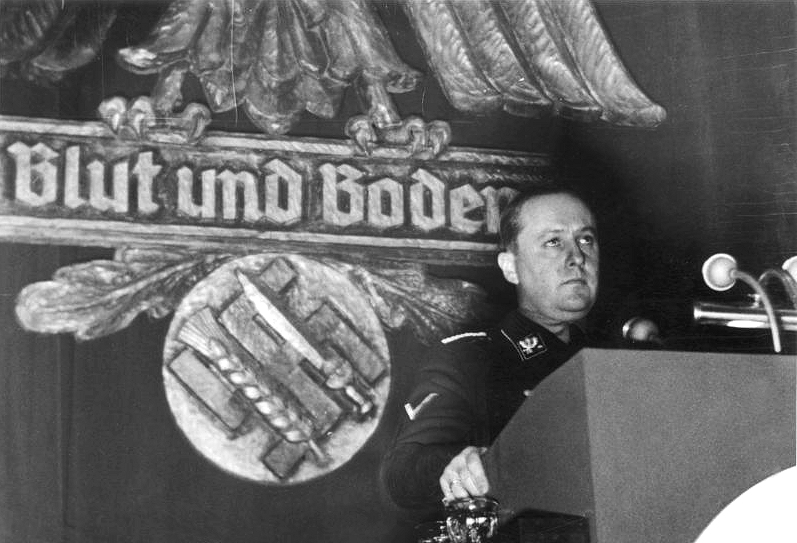
Upon blood and soil the Führer is building his Reich. We have understood blood selection for seven centuries and have wisely chosen to build and continue our bloodstream on the basis of age-old race and culture. […] All the great ideals that the Führer has set for the German people stem from ancient Germanic heritage and not least from the deepest treasuries of the German nobility. Thus the German aristocracy is fundamentally akin to National Socialism in nature and origin. At the time of the red governments, the motto was: down with the aristocracy, we all want to be proletarians. Now it is the other way: the common man from the people should rise up, and we all want to meet again on the level of a true aristocracy. […] What the future will bring us, we leave in the hands of God and the enlightenment of the leader. But we know one thing. Our old lineage is not a foreign body in the Third Reich, rotting and decaying, it is a load-bearing block in the building, hardened over centuries. […] Sieg Heil! Sieg Heil! Sieg Heil!

[…]


As the most important heir to folk traditions and as a political force that was close to neo-aristocratic thinking in some respects, National Socialism had not abandoned the aristocracy either as an idea or as a concept. What remained were the concept and individual elements of aristocratic tradition, which could be bent and misused. “Nobility” remained an institution valued and needed by National Socialism – but only in the form of the mutations that Hitler, Günther, Darre, the SA and, above all, the SS leadership wanted and produced as “nobility”. Conversely, a large part of the nobility believed that they recognised a modern version of their own traditions in the guiding concepts and goals of the Nazi movement. As shown, the supposed closeness through the common talk of “blood” and “race” proved to be a fatal misinterpretation. In 1921, an Pan-German baron saw the EDDA project as

the deliberate continuation of the […] selective breeding […] that has always been practised by the nobility through the cultivation of pedigree and genealogy […]. The aristocracy’s attitude towards the idea of selection and race breeding is therefore not a new goal for the nobility, but actually a self-evident one.

The absurd perception of the Nazi movement as a contemporary continuation of the “best” aristocratic traditions was found everywhere in the aristocracy; its basis was the common use of key terms that were phonetically, but not semantically, identical. “We can only thank Adolf Hitler,” said an appeal in 1932, “if today the views corresponding to our best traditions have been reawakened in the widest circles of the people: Personality and race, habitation and down-to-earth mentality, warriordom and the will to fight for the honour and freedom of the nation.”

[…]


The Würzburg university lecturer Ernst Mayee defined the “conscious and associative unification of the nobility and the educated” as the most important goal; a union that the society’s conferences explicitly sought to promote. From the “political storms”, a “comprehensive new German nobility would emerge, in the oldest German sense nothing other than the lovingly leading elders of all the younger brothers in the entire German nation, conscious and yet supple, brave and finely educated, economically not depressed but also not opulent.” Regardless of all educational patents, however, German Jewry would have no place in the future “German upper class”. With a reference to the inbreeding of the French nobility, which led to decadence, and using the vampire metaphor typical of the time in nationalist jargon, the jurist recommended that the old nobility bring in “fresh blood from other classes” to supplement the “departures”. Here, too, there was a positive reference to the “elasticity” of the English gentry. Self-confidently emphasising his own abilities, the educated citizen Mayer called for the “relentless training” of the future upper class, from which all members who could not withstand the “sharp” educational selection were to be “mercilessly” expelled.

It was also DAB editor Walter v. Bogen who, a few months after this debate, naively and openly presented the concept of the new aristocracy, which was to prove indigestible for the entire old aristocracy and probably the most important conceptual challenge to aristocratic claims to leadership: Richard Walther Darre’s work “Neuadel aus Blut und Boden” (New Aristocracy of Blood and Soil), published in 1930. In his astonishingly positive review of the book, v. Bogen Darres praised the breeding fantasies of a newly created, racially pure and land-loving nobility as an endeavour that came very close to the aspirations of the aristocratic cooperative. In his reading of the book, v. Bogen had overlooked Darre’s extremely sharp criticism of the old aristocracy as well as the highlight of Darre’s concept, for Darre claimed nothing less than the necessity of replacing the old aristocracy with a new one. Although Darre also praised the old aristocracy as purveyors of certain ideals and individual leaders, Darres categorised the old aristocracy as a whole as useless, superfluous and in need of replacement as far as the necessary creation of a leadership of the future was concerned. The aristocracy’s dispute with Darres’ concept, which began a little later, must be discussed in more detail in connection with the differences between the aristocracy and the Nazi movement. Suffice it to say that Darre’s book had been a politically relevant concept for a new aristocracy since 1930, which had once again sharpened the völkisch-racist criticism of the aristocracy, as reflected in the Semi-Gotha, among other things, and transformed it into a detailed blueprint for an alternative aristocracy. In January 1933, the Adelsblatt reopened the debate on the new aristocracy with a völkisch article by the Pan-German baron Leopold v. Vietinghoff-Scheel. In the subsequent contributions to the discussion, however, only the familiar arguments were repeated. The concluding words of the editorial board once again laid down the line of the DAG – with the exception of members who were not “racially pure”, the entirety of the old nobility was to be retained as the crystallisation point of the future ruling class. Education, professional competence and material independence were thus once again rejected as indispensable criteria for membership of the “ruling class”. Ten days before the transfer of power, the DAB editorial board had found a formula that was at least compatible with Darres and other National Socialist elite concepts: “A nationalist state needs a ruling class that is racially pure, connected to the soil, rooted in its own ethnicity [… and] seeks the welfare of its people.”

The core content of the debates on the new nobility described in this chapter contained three different, often varied and differently weighted demands on the old nobility: education, property and (“pure”) blood. The first two terms referred to the actual and decisive weaknesses of the petty nobility, but were (or therefore) successively suppressed from the debate within the nobility. In contrast, the demand for racial purity adopted from the imaginative realms of völkisch thought came increasingly to the fore, further blocking a realistic assessment of the aristocracy’s chances of power in the modern age and soon proving to be an argumentative boomerang. Without going into the consequences of this development at this point, an example from 1924 will show that the idea of a “racial” improvement of the aristocracy as a substitute for an actual reform of the nobility was already being openly debated before the political breakthrough of the Nazi movement.

Six years before the horse breeding specialist Walther Darre published his fantasies of aristocratic breeding, the writer and castle owner Börries Frhr. v. Münchhausen, who was extremely prominent among the nobility and decorated with two doctorates, summarised the raison d’être of nobility in a simple formula: “If nobility is to have a meaning and value that goes beyond the external adornment of names, it can only be this: Human breeding.” Straightforward the writer compared the breeding work on the “well-built natural breed” of English thoroughbred horses with selecting a female partner as motivated by “breeding”. With the affirmative adoption of the “golden words” from Hans F. K. Günther’s “delicious” book and the guiding ideas of the Nordicist theory of race, the baron bid farewell to the centuries-old criteria of aristocratic principles of equality in cheerfully formulated sentences: “There is only one equality at all, and that is that of pure Nordic blood. The mixed-blood nobleman, for example, is not racially equal to a pure-blood Nordic peasant daughter. If nobility is to regain a racial sense, then the education of Nordic racial purity is assigned to it as its first task.” In future, young people would have to “recognise without immediatly: This is a Mongolian nose, that a Nordic figure, that an Eastern soft mouth. Only in this way can we understand and fulfil Nietzsche’s command: You should propagate yourself not only onward but upward. Non-“purebred” aristocrats, he demanded, should relinquish their aristocratic titles, as marriages between Jews and “Aryans” always produced “bastards”. The linguistic climax of the contribution, which also marked an intellectual low point in the aristocratic debates, stated:

I can breed pugs, and I can breed dachshunds, but if the malör (sic) happens to me and I get a basket full of young dachshund pugs, they will be drowned with good reason. This is neither anti-pug nor anti-dachshund, but a realization of the centuries-old experience that all bastards are inferior.

The baron made a clear statement regarding the criteria according to which a ruling class was to be built up: the “pure-bloodedness of the nobility [is] to be regarded as the most important question of each individual and of the entire estate, but beyond that: of our entire people.”

Posted in From King to Führer

To Ostland we shall ride

The knightly formula “to Ostland we shall ride” could be incorporated into the propaganda of the National Socialist plans for conquest and settlement and could count on broad support among the nobility. Ewald v. Kleist-Schmenzin had emphasised the potential benefits for the East Elbe landed gentry in a prominent position in 1926:

It needs no explanation what a fountain of youth colonial land acquired east of our border with unlimited settlement possibilities would be.

What Kleist formulated as a vague hope was realised in very pragmatic attempts at profit sharing from the beginning of the war at the latest. As is well known, the career options that emerged in the East went far beyond curiosities such as the post of “Managing Director of the Sheep Breeding Association Ukraine”.

After 1939, members of the high and low, rich and poor nobility made enquiries to the SS leadership about the option of acquiring estates in the looted areas. Nobles recognised the unique opportunity here to secure the family’s land supply for generations to come. Corresponding letters to Heinrich Himmler and high SS authorities document the extremely tangible interests that existed in the various aristocratic groups in the acquisition of large estates in the “Ostland”. Very specific requests for loot were also formulated in applications from the high nobility: “Dear Mr Himmler! I have submitted three applications for the granting of entailment for my inherited Holstein family estate; two applications have already been approved, while the decision on the third application is still pending. As I have a total of 6 sons, I would like to acquire further property for the younger sons. I would be very grateful if you would let me know briefly whether it will be possible for me to purchase larger estates in the East after the end of the war. […] With warmest regards and Heil Hitler […]”.

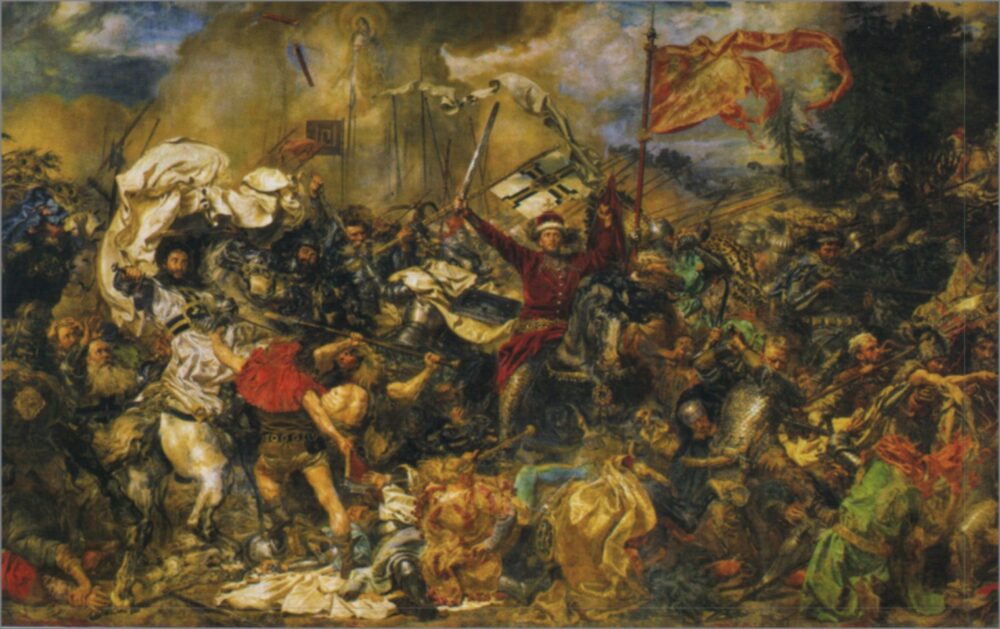
This form of modern robber barony had little to do with the much-praised solidarity with the plaice, but much to do with the myths surrounding the colonisation of the East. In 1940, a Baltic author praised the “Führer’s” project of recalling the Baltic nobility from their “seven hundred and fifty years of faithful vigilance on advanced post” in order to “transplant them to the regained German eastern region on the Vistula and thus assign them a new, enormous and marvellous task”. After the attack on the Soviet Union, the writer Ottfried Graf v. Finckenstein became chairman of an artists’ association called Kulturwerk Deutsches Ordensland, which was to meet in Marienburg and recall that

around 700 years ago, the light of the German spirit and German morality was carried into the Slavic region, never to be extinguished again

Ordensburg Marienburg Castle of the Teutonic Order Malbork

Now the German was once again “the most important cultural carrier in the front line of Germanness”. At around the same time, Fritz-Dietlof Graf v. d. Schulenburg spoke of the imminent decision “whether the people will finally fall victim to urban civilisation or take root once again here in the East and renew itself by its own strength”. With other motives than Schulenburg, who was personally incorruptible and energetically opposed to the “rampant” corruption, the predatory war in the East was welcomed with particular fervour, especially by aristocrats who had lost their estates after 1918 as part of the German territorial cessions. Referring to the estates lost by her Baltic German mother, Heinrich v. Bismarck’s wife contacted the Volksdeutsche Mittelstelle just a few weeks after the invasion of Poland with the enquiry “whether there would also be a possibility for us to acquire an inherited farm or the like in the conquered […] territories, preferably between our countrymen”. They had long dreamed of settling – “preferably in the east” – but so far the land within the Reich had been too expensive. A similar attempt by SS leader Ludolf v. Alvensleben, who in September 1940 stretched out his hands for the loot and approached Himmler directly, was brusquely rejected by the latter. Himmler’s reply to the expropriated and ruined landowner stated that he could not stand in for “all the business failures of National Socialists with the estate’s land”. “All in all, I did not like your intention to regain possession of this estate without a penny of money. […] You can apply for a settlement after the war, like all other Germans in the Reich.”

In 1933, countless minor aristocrats who had had steeply negative careers after 1918 harboured the justified hope that their early involvement in the movement could now pay off. In March 1933, a typical letter of petition for a member of the v. Bülow family who had been dismissed as a first lieutenant in 1920 stated: “The poor man is in very bleak circumstances, despite his formerly so rich […] relatives. He is a party comrade and a strong supporter of the movement. Perhaps, Mr President, it is possible for you to provide a poor Pg. (party comrade) with work and earnings.” In the petty aristocracy, as in other social classes, the status of the old fighter could be worth its weight in gold after 1933, or to be more precise, could greatly promote social (re-)advancement.

However, the Third Reich also opened up career opportunities in the traditional aristocratic professions regardless of demonstrable commitment to the “movement”. With the reintroduction of compulsory military service in March 1935, career opportunities in the military, which had been extremely reduced by the Treaty of Versailles, were suddenly increased. In appeals, aristocratic officers admonished the youth of the nobility that there was now no reason to pursue a ‘bourgeois’ profession, “instead of – the hell with it! – following the inner voice, […] which must now call to arms like a fanfare within everybody who bears an old name.” When the fatherland calls, the young nobility, as always, “belongs in the first wave of attack.” Calls of this kind did not go unheard. Within two years, the number of active aristocratic officers had more than doubled, which meant securing around 1,300 additional military careers for aristocratic men. Added to this were the career opportunities offered by the SA and then the SS, which had already been heavily utilised by the nobility before 1933. The nobility recognised “expansion as an opportunity for the future” early on and consistently, which was reflected not least in their strong commitment to the SS.

In the SS in 1938, 8.4% of Standartenführer, 14.3% of Brigadeführer, 9.8% of Gruppenführer and 18.7% of Obergruppenführer belonged to the nobility

In percentage terms, these proportions fell sharply in the lower ranks and after the expansion of the SS apparatus; in absolute terms, however, there was considerable potential for career opportunities in the SS, which aristocrats utilised in parallel with the improved opportunities in the Wehrmacht.

Posted in Marx On the Jewish Question

The Christian State

The so-called Christian state is the Christian negation of the state, but by no means the political realization of Christianity. The state which still professes Christianity in the form of religion, does not yet profess it in the form appropriate to the state, for it still has a religious attitude towards religion – that is to say, it is not the true implementation of the human basis of religion, because it still relies on the unreal, imaginary form of this human core. The so-called Christian state is the imperfect state, and the Christian religion is regarded by it as the supplementation and sanctification of its imperfection. For the Christian state, therefore, religion necessarily becomes a means; hence, it is a hypocritical state. It makes a great difference whether the complete state, because of the defect inherent in the general nature of the state, counts religion among its presuppositions, or whether the incomplete state, because of the defect inherent in its particular existence as a defective state, declares that religion is its basis. In the latter case, religion becomes imperfect politics. In the former case, the imperfection even of consummate politics becomes evident in religion. The so-called Christian state needs the Christian religion in order to complete itself as a state. The democratic state, the real state, does not need religion for its political completion. On the contrary, it can disregard religion because in it the human basis of religion is realized in a secular manner. The so-called Christian state, on the other hand, has a political attitude to religion and a religious attitude to politics. By degrading the forms of the state to mere semblance, it equally degrades religion to mere semblance.

In order to make this contradiction clearer, let us consider Bauer’s projection of the Christian state, a projection based on his observation of the Christian-German state.

“Recently,” says Bauer, “in order to prove the impossibility or non-existence of a Christian state, reference has frequently been made to those sayings in the Gospel with which the [present-day] state not only does not comply, but cannot possibly comply, if it does not want to dissolve itself completely [as a state].” “But the matter cannot be disposed of so easily. What do these Gospel sayings demand? Supernatural renunciation of self, submission to the authority of revelation, a turning-away from the state, the abolition of secular conditions. Well, the Christian state demands and accomplishes all that. It has assimilated the spirit of the Gospel, and if it does not reproduce this spirit in the same terms as the Gospel, that occurs only because it expresses this spirit in political forms, i.e., in forms which, it is true, are taken from the political system in this world, but which in the religious rebirth that they have to undergo become degraded to a mere semblance. This is a turning-away from the state while making use of political forms for its realization.” (p. 55)

Bauer then explains that

the people of a Christian state is only a non-people, no longer having a will of its own, but whose true existence lies in the leader to whom it is subjected, although this leader by his origin and nature is alien to it – i.e., given by God and imposed on the people without any co-operation on its part.

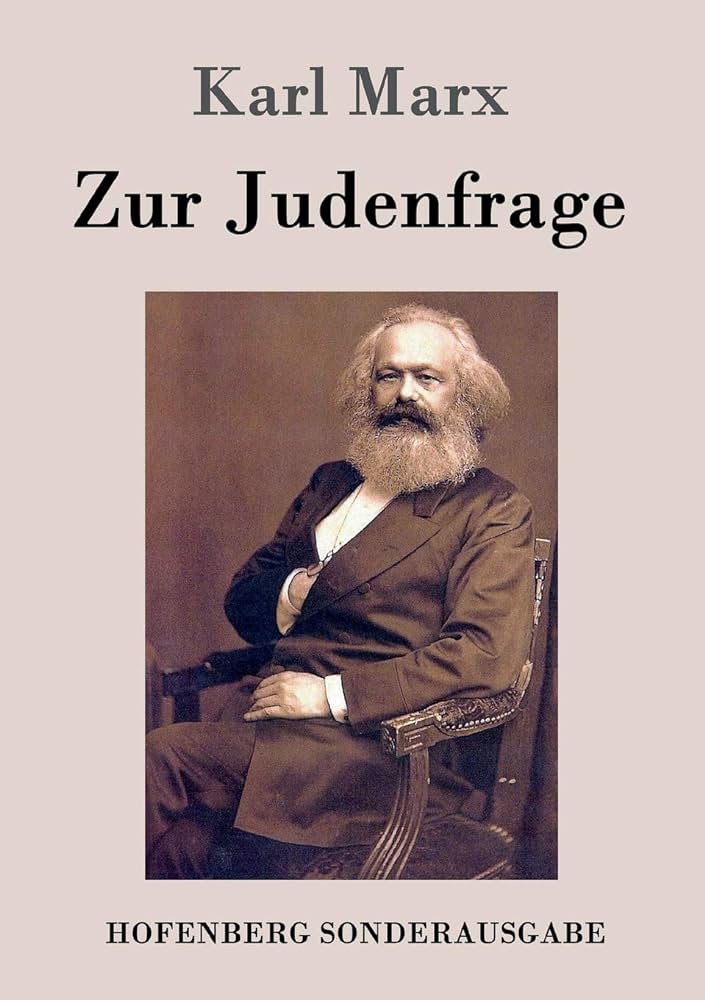
From Karl Marx – On the Jewish Question

Posted in Marx On the Jewish Question

Political Emancipation

The political emancipation of the Jew, the Christian, and, in general, of religious man, is the emancipation of the state from Judaism, from Christianity, from religion in general. In its own form, in the manner characteristic of its nature, the state as a state emancipates itself from religion by emancipating itself from the state religion – that is to say, by the state as a state not professing any religion, but, on the contrary, asserting itself as a state. The political emancipation from religion is not a religious emancipation that has been carried through to completion and is free from contradiction, because political emancipation is not a form of human emancipation which has been carried through to completion and is free from contradiction.

The limits of political emancipation are evident at once from the fact that the state can free itself from a restriction without man being really free from this restriction, that the state can be a free state [pun on word Freistaat, which also means republic] without man being a free man.

Bauer himself tacitly admits this when he lays down the following condition for political emancipation:

“Every religious privilege, and therefore also the monopoly of a privileged church, would have been abolished altogether, and if some or many persons, or even the overwhelming majority, still believed themselves bound to fulfil religious duties, this fulfilment ought to be left to them as a purely private matter.” [The Jewish Question, p. 65]

It is possible, therefore, for the state to have emancipated itself from religion even if the overwhelming majority is still religious. And the overwhelming majority does not cease to be religious through being religious in private.

But, the attitude of the state, and of the republic [free state] in particular, to religion is, after all, only the attitude to religion of the men who compose the state.

It follows from this that man frees himself through the medium of the state, that he frees himself politically from a limitation when, in contradiction with himself, he raises himself above this limitation in an abstract, limited, and partial way. It follows further that, by freeing himself politically, man frees himself in a roundabout way, through an intermediary, although an essential intermediary. It follows, finally, that man, even if he proclaims himself an atheist through the medium of the state – that is, if he proclaims the state to be atheist – still remains in the grip of religion, precisely because he acknowledges himself only by a roundabout route, only through an intermediary. Religion is precisely the recognition of man in a roundabout way, through an intermediary. The state is the intermediary between man and man’s freedom. Just as Christ is the intermediary to whom man transfers the burden of all his divinity, all his religious constraint, so the state is the intermediary to whom man transfers all his non-divinity and all his human unconstraint.

[…]

Man emancipates himself politically from religion by banishing it from the sphere of public law to that of private law. Religion is no longer the spirit of the state, in which man behaves – although in a limited way, in a particular form, and in a particular sphere – as a species-being, in community with other men. Religion has become the spirit of civil society, of the sphere of egoism, of bellum omnium contra omnes. It is no longer the essence of community, but the essence of difference. It has become the expression of man’s separation from his community, from himself and from other men – as it was originally. It is only the abstract avowal of specific perversity, private whimsy, and arbitrariness. The endless fragmentation of religion in North America, for example, gives it even externally the form of a purely individual affair. It has been thrust among the multitude of private interests and ejected from the community as such. But one should be under no illusion about the limits of political emancipation. The division of the human being into a public man and a private man, the displacement of religion from the state into civil society, this is not a stage of political emancipation but its completion; this emancipation, therefore, neither abolished the real religiousness of man, nor strives to do so.


From Karl Marx – On the Jewish Question

Posted in Marx On the Jewish Question

Christian state and Jews

By its very nature, the Christian state is incapable of emancipating the Jew; but, adds Bauer, by his very nature the Jew cannot be emancipated. So long as the state is Christian and the Jew is Jewish, the one is as incapable of granting emancipation as the other is of receiving it.

The Christian state can behave towards the Jew only in the way characteristic of the Christian state – that is, by granting privileges, by permitting the separation of the Jew from the other subjects, but making him feel the pressure of all the other separate spheres of society, and feel it all the more intensely because he is in religious opposition to the dominant religion. But the Jew, too, can behave towards the state only in a Jewish way – that is, by treating it as something alien to him, by counterposing his imaginary nationality to the real nationality, by counterposing his illusory law to the real law, by deeming himself justified in separating himself from mankind, by abstaining on principle from taking part in the historical movement, by putting his trust in a future which has nothing in common with the future of mankind in general, and by seeing himself as a member of the Jewish people, and the Jewish people as the chosen people.

[…]

The most rigid form of the opposition between the Jew and the Christian is the religious opposition. How is an opposition resolved? By making it impossible. How is religious opposition made impossible? By abolishing religion. As soon as Jew and Christian recognize that their respective religions are no more than different stages in the development of the human mind, different snake skins cast off by history, and that man is the snake who sloughed them, the relation of Jew and Christian is no longer religious but is only a critical, scientific, and human relation. Science, then, constitutes their unity. But, contradictions in science are resolved by science itself.


From Karl Marx – On the Jewish Question

Posted in Marx On the Jewish Question

Charter of the Christian state

The separation of the “spirit of the Gospel” from the “letter of the Gospel” is an irreligious act. A state which makes the Gospel speak in the language of politics – that is, in another language than that of the Holy Ghost – commits sacrilege, if not in human eyes, then in the eyes of its own religion. The state which acknowledges Christianity as its supreme criterion, and the Bible as its Charter, must be confronted with the words of Holy Scripture, for every word of Scripture is holy. This state, as well as the human rubbish on which it is based, is caught in a painful contradiction that is insoluble from the standpoint of religious consciousness when it is referred to those sayings of the Gospel with which it “not only does not comply, but cannot possibly comply, if it does not want to dissolve itself completely as a state.” And why does it not want to dissolve itself completely? The state itself cannot give an answer either to itself or to others. In its own consciousness, the official Christian state is an imperative, the realization of which is unattainable, the state can assert the reality of its existence only by lying to itself, and therefore always remains in its own eyes an object of doubt, an unreliable, problematic object. Criticism is, therefore, fully justified in forcing the state that relies on the Bible into a mental derangement in which it no longer knows whether it is an illusion or a reality, and in which the infamy of its secular aims, for which religion serves as a cloak, comes into insoluble conflict with the sincerity of its religious consciousness, for which religion appears as the aim of the world. This state can only save itself from its inner torment if it becomes the police agent of the Catholic Church. In relation to the church, which declares the secular power to be its servant, the state is powerless, the secular power which claims to be the rule of the religious spirit is powerless.

It is, indeed, estrangement which matters in the so-called Christian state, but not man.

The only man who counts, the king, is a being specifically different from other men, and is, moreover, a religious being, directly linked with heaven, with God.

The relationships which prevail here are still relationships dependent of faith. The religious spirit, therefore, is still not really secularized.


From Karl Marx – On the Jewish Question

Posted in Historic, Other

Roman Emperors

From Niccolò Macciavelli The Prince, Chapter 19

There is first to note that, whereas in other principalities the ambition of the nobles and the insolence of the people only have to be contended with, the Roman emperors had a third difficulty in having to put up with the cruelty and avarice of their soldiers, a matter so beset with difficulties that it was the ruin of many; for it was a hard thing to give satisfaction both to soldiers and people; because the people loved peace, and for this reason they loved the unaspiring prince, whilst the soldiers loved the warlike prince who was bold, cruel, and rapacious, which qualities they were quite willing he should exercise upon the people, so that they could get double pay and give vent to their own greed and cruelty. Hence it arose that those emperors were always overthrown who, either by birth or training, had no great authority, and most of them, especially those who came new to the principality, recognizing the difficulty of these two opposing humours, were inclined to give satisfaction to the soldiers, caring little about injuring the people.

Which course was necessary, because, as princes cannot help being hated by someone, they ought, in the first place, to avoid being hated by every one, and when they cannot compass this, they ought to endeavour with the utmost diligence to avoid the hatred of the most powerful.

Therefore, those emperors who through inexperience had need of special favour adhered more readily to the soldiers than to the people; a course which turned out advantageous to them or not, accordingly as the prince knew how to maintain authority over them.

From these causes it arose that Marcus, Pertinax, and Alexander, being all men of modest life, lovers of justice, enemies to cruelty, humane, and benignant, came to a sad end except Marcus; he alone lived and died honoured, because he had succeeded to the throne by hereditary title, and owed nothing either to the soldiers or the people; and afterwards, being possessed of many virtues which made him respected, he always kept both orders in their places whilst he lived, and was neither hated nor despised.

But Pertinax was created emperor against the wishes of the soldiers, who, being accustomed to live licentiously under Commodus, could not endure the honest life to which Pertinax wished to reduce them; thus, having given cause for hatred, to which hatred there was added contempt for his old age, he was overthrown at the very beginning of his administration. And here it should be noted that hatred is acquired as much by good works as by bad ones, therefore, as I said before, a prince wishing to keep his state is very often forced to do evil; for when that body is corrupt whom you think you have need of to maintain yourself—it may be either the people or the soldiers or the nobles—you have to submit to its humours and to gratify them, and then good works will do you harm.

But let us come to Alexander, who was a man of such great goodness, that among the other praises which are accorded him is this, that in the fourteen years he held the empire no one was ever put to death by him unjudged; nevertheless, being considered effeminate and a man who allowed himself to be governed by his mother, he became despised, the army conspired against him, and murdered him.

Turning now to the opposite characters of Commodus, Severus, Antoninus Caracalla, and Maximinus, you will find them all cruel and rapacious-men who, to satisfy their soldiers, did not hesitate to commit every kind of iniquity against the people; and all, except Severus, came to a bad end; but in Severus there was so much valour that, keeping the soldiers friendly, although the people were oppressed by him, he reigned successfully; for his valour made him so much admired in the sight of the soldiers and people that the latter were kept in a way astonished and awed and the former respectful and satisfied. And because the actions of this man, as a new prince, were great, I wish to show briefly that he knew well how to counterfeit the fox and the lion, which natures, as I said above, it is necessary for a prince to imitate.

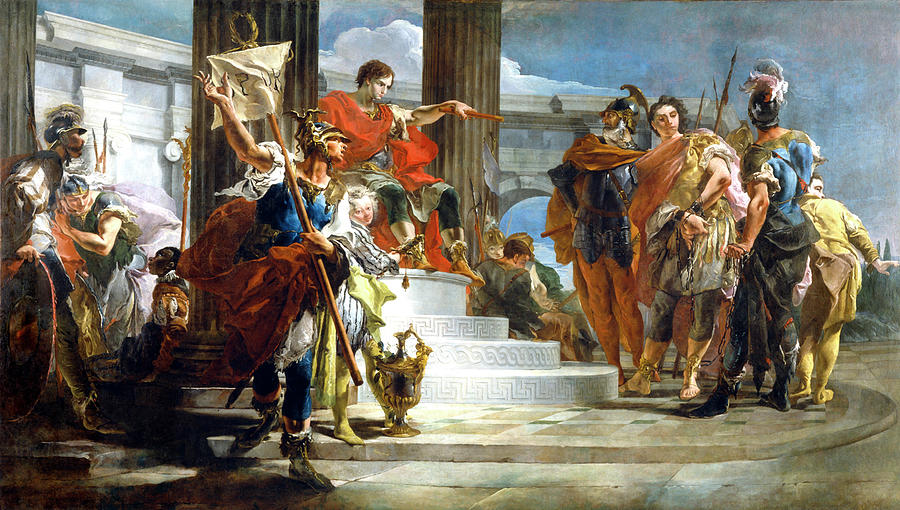
Knowing the sloth of the Emperor Julian, he persuaded the army in Sclavonia, of which he was captain, that it would be right to go to Rome and avenge the death of Pertinax, who had been killed by the praetorian soldiers; and under this pretext, without appearing to aspire to the throne, he moved the army on Rome, and reached Italy before it was known that he had started. On his arrival at Rome, the Senate, through fear, elected him emperor and killed Julian. After this there remained for Severus, who wished to make himself master of the whole empire, two difficulties; one in Asia, where Niger, head of the Asiatic army, had caused himself to be proclaimed emperor; the other in the west where Albinus was, who also aspired to the throne. And as he considered it dangerous to declare himself hostile to both, he decided to attack Niger and to deceive Albinus. To the latter he wrote that, being elected emperor by the Senate, he was willing to share that dignity with him and sent him the title of Caesar; and, moreover, that the Senate had made Albinus his colleague; which things were accepted by Albinus as true. But after Severus had conquered and killed Niger, and settled oriental affairs, he returned to Rome and complained to the Senate that Albinus, little recognizing the benefits that he had received from him, had by treachery sought to murder him, and for this ingratitude he was compelled to punish him. Afterwards he sought him out in France, and took from him his government and life. He who will, therefore, carefully examine the actions of this man will find him a most valiant lion and a most cunning fox; he will find him feared and respected by every one, and not hated by the army; and it need not be wondered at that he, a new man, was able to hold the empire so well, because his supreme renown always protected him from that hatred which the people might have conceived against him for his violence.

But his son Antoninus was a most eminent man, and had very excellent qualities, which made him admirable in the sight of the people and acceptable to the soldiers, for he was a warlike man, most enduring of fatigue, a despiser of all delicate food and other luxuries, which caused him to be beloved by the armies. Nevertheless, his ferocity and cruelties were so great and so unheard of that, after endless single murders, he killed a large number of the people of Rome and all those of Alexandria. He became hated by the whole world, and also feared by those he had around him, to such an extent that he was murdered in the midst of his army by a centurion. And here it must be noted that such-like deaths, which are deliberately inflicted with a resolved and desperate courage, cannot be avoided by princes, because any one who does not fear to die can inflict them; but a prince may fear them the less because they are very rare; he has only to be careful not to do any grave injury to those whom he employs or has around him in the service of the state. Antoninus had not taken this care, but had contumeliously killed a brother of that centurion, whom also he daily threatened, yet retained in his bodyguard; which, as it turned out, was a rash thing to do, and proved the emperor’s ruin.

But let us come to Commodus, to whom it should have been very easy to hold the empire, for, being the son of Marcus, he had inherited it, and he had only to follow in the footsteps of his father to please his people and soldiers; but, being by nature cruel and brutal, he gave himself up to amusing the soldiers and corrupting them, so that he might indulge his rapacity upon the people; on the other hand, not maintaining his dignity, often descending to the theatre to compete with gladiators, and doing other vile things, little worthy of the imperial majesty, he fell into contempt with the soldiers, and being hated by one party and despised by the other, he was conspired against and was killed.

It remains to discuss the character of Maximinus. He was a very warlike man, and the armies, being disgusted with the effeminacy of Alexander, of whom I have already spoken, killed him and elected Maximinus to the throne. This he did not possess for long, for two things made him hated and despised; the one, his having kept sheep in Thrace, which brought him into contempt (it being well known to all, and considered a great indignity by every one), and the other, his having at the accession to his dominions deferred going to Rome and taking possession of the imperial seat; he had also gained a reputation for the utmost ferocity by having, through his prefects in Rome and elsewhere in the empire, practised many cruelties, so that the whole world was moved to anger at the meanness of his birth and to fear at his barbarity. First Africa rebelled, then the Senate with all the people of Rome, and all Italy conspired against him, to which may be added his own army; this latter, besieging Aquileia and meeting with difficulties in taking it, were disgusted with his cruelties, and fearing him less when they found so many against him, murdered him.

Niccolò Macciavelli – The Prince (PDF) 🇬🇧 :

Niccolò Macciavelli – Das Buch vom Fürsten (PDF) 🇩🇪 :

Posted in From King to Führer

Wilhelms sending

The idea that the aristocracy could successfully feed into the general longing for leadership by drawing on its thousand years of experience of rule can be found wherever aristocrats debated the opportunities opened up by the Nazi movement. In Mein Kampf, Hitler had spoken about the difficulties of recruiting suitable leaders, emphasising the importance of the individual personality and the “aristocratic principle” according to which the leadership of his movement was structured. In the aristocracy, the habitual conviction of their own superiority suggested that the Nazi movement should be seen as a force characterised by the petty bourgeoisie and proletariat, which had taught the “masses” to think in terms of leaders and followers, but which itself suffered from a chronic lack of leaders. The first phase of self-confident mockery of this lack was followed from around 1930 by a second phase of sceptical consideration of how the aristocracy could fill this gap itself. A grotesque variant of aristocratic attempts to direct the ubiquitous desire for leadership towards themselves is provided by a speech from 1930, in which Wilhelm II lamented the inflation of the leadership concept in Doorn:

To be a leader! Everyone wants that nowadays. Leaders present themselves everywhere. Many people pose as leaders […]. And yet the cry for leaders is omnipresent!

In a strange mixture of Christian and neo-right-wing motifs, Wilhelm II renewed his claim to leadership. The idea of leadership was first ‘revealed’ by God to the Sumerians. King Hammurabi was given the “leadership profession” by God 5,000 years ago, his own ancestors 500 years ago. “Only to these leaders is the leader Jesus Christ!” Spatially and mentally far removed from all political realities, the exiled emperor appointed Jesus as the otherworldly “leader” and himself as the earthly “leader”. The imperial leader referred to himself in the preceding passage from the Gospel of John, which had given the speech its title: “I am the vine; you are the branches. If a man remains in me and I in him, he will bear much fruit; apart from me you can do nothing.”