Posted in Judeans in the Achemenid Period

Judean Identity and Ecumenicity

The Political Theology of the Priestly Document (P)

[…]

Von Rad suggested a three-part structure for P. He differentiated between “three big concentric circles . . . which move from the outside inwards towards the salvific mystery of God—the circle of the world, the circle of Noah, and the Abrahamic circle” (“drei mächtige konzentrische Kreise . . . die von außen nach innen fortschreitend in das Heilsgeheimnis Gottes einführen: der Weltkreis, der Noahkreis und der abrahamitische Kreis”).

[…]

The circle of Abraham includes “the Abrahamic household,” consisting of the Arabs (“Ishmael”), Israel (that is, “Samaria”) and Judah (“Jacob”), and Edom (“Esau”). Intermarriage within this circle is allowed: according to P, Esau marries—illegitimately (Gen 26:34, 27:46)—two “Hittite women” (Gen 26:34). Subsequently, Jacob receives advice from his parents to marry a woman from among his kin in Paddan Aram (Gen 27:46, 28:1–5). In response, Esau marries another woman, one of the daughters of his uncle Ishmael (Gen 28:6–9). Therefore, it can be concluded with de Pury that “according to P Jews are permitted to intermarry with Ishmaelite and Edomite women, but not with ‘Hittite’ or ‘Canaanite’ women.’” P furthermore records the genealogy of Ishmael’s descendants (Gen 25:12–18) as well as Esau’s (Gen 36:4–14), who possess a qualified theological nearness to Israel through this ethnic proximity. This Abrahamic circle is defined by the Abrahamic covenant of Genesis 17, which promises the participating covenant partners fruitfulness, land inheritance (which seems to imply a right to use rather than to possess), and proximity to God.
The circle of Israel narrows the focus down to the nation of God alone. It is generally concerned with the establishment of the sanctuary, which enables the sacrificial cult of Israel. This sacrificial cult alone is what allows Israel to achieve atonement. The sanctuary and the implementation of the cult seem to function as the partial restoration of  the initial creation, in the sense of a second “creation within creation.” The circle of Israel is not established by its own covenant because the foundational promise of the presence of God (“I will be your God”) was already given in Gen 17:7 (cf. Exod 6:7, 29:45–46). Nevertheless, the establishment of the sanctuary concretizes the presence of God specifically for Israel by locating God’s ׁ שכינה in the midst of his people (cf. Exod 29:45–46).

[…]

Whether the Priestly writer’s Abraham is aware of it or not, what he asks is that Ishmael become Yhwh’s priest; and it is that request that is denied to Ishmael and offered instead to the yet to be born Isaac. In this whole exchange (vv. 18–21), the question therefore is not whether Ishmael will be allowed to live in the land of Canaan—the right of Ishmael to live in Canaan has been settled once and for all in v. 8—but the question is only whether there is a need for a further son, i.e. for a further category among Abraham’s multi-nation descendants. And the answer to that question is yes. Sarah’s son Isaac will beget those descendants of Abraham who are destined to become Yhwh’s priestly nation.

[…]

The promises of fertility given to Abraham as a “covenant” and to Ishmael as a “blessing”, when considering their concrete arrangements, are drawn up quite similarly and seem nearly equivalent.
Therefore, it is much more likely that the function of vv. 19–21 is not the exclusion of Ishmael but rather in the inclusion of Isaac in the Abrahamic covenant. Ishmael’s inclusion in the covenant is clearly stated in Gen 17:7–8. Additionally, this section highlights the fact that the covenant with Abraham and his descendants, to which Ishmael belongs without a doubt, is an “eternal covenant.”
The need for an explicit inclusion of Isaac in vv. 19, 21 can be explained its position in the narrative, namely, that at the time of Genesis 17 Isaac had not yet been born. This makes the double appearance of “covenant” terminology in vv. 19, 21, with reference to Isaac, plausible: an extension of the covenant to a person who did not yet exist is a bold enterprise and therefore needs special terminological emphasis.
Nevertheless, the conclusion remains that Ishmael is not the same type of partner in the covenant of God as Isaac is. They are equal with re-gard to fertility and land holdings (in the sense of an ,אחוזה Israel will then signify its land in Exod 6:8 as ) מור ׁ שה  within the greater region of the “whole land of Canaan.” But they are not equal with regard to the possibility of cultic proximity (“living before God,” Gen 17:18b).
This proximity—as the narrative of the Priestly Document goes on to show—only belongs to Israel by means of the foundation of the sanctuary and is explicitly denied to Ishmael.

[…]

In Genesis 17, the Priestly Document apparently attempts to balance the theological prerogative of Israel with the political reality of Persian-period Judah: Judah lives in a modest province within “ecumenical” proximity to its neighbors. Perhaps the specific outline of Genesis 17, the creation of an “Abrahamic ecumenicity”, as Albert de Pury has put it, has to do with the fact that Abraham’s tomb of Hebron, which was in all likelihood venerated by Judeans, Arabs, and Edomites, was probably not part of Achaemenid Judah but part of Idumea as Ernst Axel Knauf and Detlef Jericke have convincingly argued. This means that P had to include Judeans, Arabs, and Edomites in a privileged position and therefore developed the notion of an “Abrahamic” covenant of the peoples living in the “whole land of Canaan.”

Posted in Judeans in the Achemenid Period

What Do Priests and Kings Have in Common?

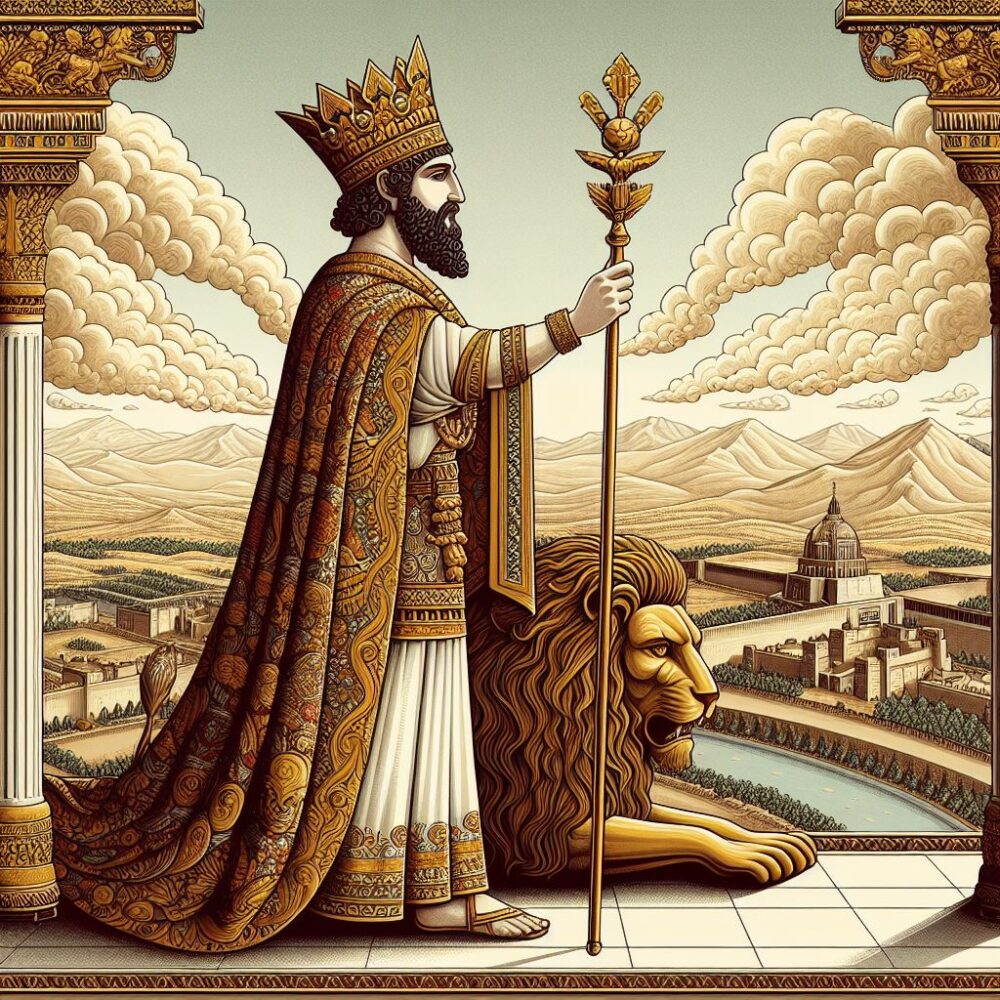
While royal genealogies could serve to legitimize a line that was already established, like that of Cyrus, they could also give rise to new claims. This is manifest with Darius, who was not directly in line for the throne. The Behistun Monument clearly illustrates this in that he formulates a six-generation lineage back to the eponymous founder, Achaemenes.


I (am) Darius the great king, king of kings, king of Persia, king of the countries, the son of Hystaspes, the grandson of Arsames, an Achaemenid. Proclaims Darius, the king: my father (is) Hystaspes; the father of Hystaspes (is) Arsames; the father of Arsames (was) Ariaramnes; The father of Ariaramnes (was) Teispes; the father of Teispes (was) Achaemenes.
Proclaims Darius, the king: For this reason we are called Achaemenids; from ancient times we are noblemen; from ancient times our family has been kings. Proclaims Darius, the king: (There are) eight in my family who formerly have been kings; I (am) the ninth; (thus altogether) nine, now as ever, are we kings.

(Schmitt 1991: 49 lines 1–11)


This genealogy is particularly significant because Darius, like Cyrus, claims that his right to the throne is based on his family line. Also, like Cyrus, he claims that his family had been kings for a long period of time, in succession. What can one make of these statements? There are conspicuous absences in this genealogy, including Cyrus and Cambyses. Herodotus comments in a story concerning Cambyses in Egypt that Darius was a member of Cambyses’ guard and a “man of no great importance” (III.139–40). Thus, according to Herodotus, Darius was not in line for the throne, although he was of noble birth. Yet David Stronach argues that Darius’s ancestors may have had control of certain areas of Fars, and thus he was from a family of monarchs (2003: 256).
Hence, his claim is not necessarily a lie. What then is Darius attempting to do in his genealogy? There are clear examples of usurpers who did not attempt to create a genealogy in order to justify their right to the throne. The classic case is the Neo-Assyrian ruler, Sargon II, who never provides a genealogy to support his right to the throne. Yet Darius did not claim that he had no royal pedigree but, rather, justifies his right to the throne through his family. Still, he provides no specifics except for family names. Unlike Cyrus, he gives no geographical location for his ancestors’ supposed kingdom.
Hence, Darius attempted to redefine what it meant to be the rightful monarch through the use of his genealogy. Briant observes, “It was not because he was Achaemenid (in the clan sense) that Darius achieved power; it was his accession to royalty that allowed him to redefine the reality of what it meant to be ‘Achaemenid’” (2002: 111). Christopher Tuplin questions Briant’s interpretation, adding that Darius may not have been intentionally lying about his descent from Achamenes but rather is speaking in “symbolic terms” (2005: 230). Whether Darius is giving a faithful rendering of his family line or lying is unclear. But it is apparent that through the use of his genealogy, Darius, in essence, is undoing Cyrus’s rightful claim to the throne by taking his genealogy to the founder of the dynasty, Achaemenes, whereas Cyrus only connects himself to Teispes. Wilson adds that, in the case of the Achaemenid kings, “many . . . were engaged either in expanding the Persian Empire or protecting it from the threat of internal political chaos” (1977: 70).
Darius felt the need to construct this genealogy, whether real or imaginary, in order to show his family’s past claims to power.


In the biblical material, certain royal and priestly genealogies may point to periods when legitimizing one’s genealogy was particularly important. There are two examples of this, 1 Chr 3:1–24, the Davidic genealogy, and 1 Chr 8:33–40, the so-called Saulide genealogy. Both lineages focus on monarchs who had long been out of power. In the example of the Davidic genealogy in 1 Chr 3:1–24, this extensive genealogy continues for 26 generations in the MT, from David to the seven sons of Elioenai. It also builds on the Judahite genealogy in 1 Chronicles 2, which also connects David to Judah, Jacob, and beyond. 1 Chr 3:1–24 employs both linear and segmented formats that continue for over 600 years. The Davidic lineage begins with a segmented genealogy highlighting all of the first-born sons born to him in Hebron by his six wives and then moving on to the sons born to him in Jerusalem by Bath-shua. A linear genealogy is employed from the time of Solomon to Josiah (16 generations). The genealogy returns to a segmented format from the period of Josiah until the sons of Elioenai.  But this is not simply a genealogy of David’s dynastic line. It continues long past the Exile and Return, through the family line of Zerubbabel and down to the sons of Elioenai. Thus, the Davidic genealogy focuses on one line and its endurance and survival, even after the destruction of the Kingdom of Judah. Although the power of this family had long ago diminished, it is clear that this genealogy is attempting to position one branch of the Davidic family in line for power. And thus, in a period when they had long been out of power, as Gary Knoppers points out, the “careful demarcation of continuity among the descendants of David throughout periods of tremendous change demonstrates the dynasty’s resiliency and importance” (2004: 335–36). The genealogy functions as a way of authorizing one family line within the larger Davidic lineage to a position of power, if the occasion ever arose where power could be bestowed on them.
Another example of a royal genealogy found within the lineage of the Benjaminites is the so-called Saulide genealogy (1 Chr 8:33–40), which is really the Jeielite genealogy because it begins with Saul’s grandfather Jeiel. The Chronicler’s interest in the family of Saul acknowledges his earlier importance as well as his descendants’ continued importance during the postexilic period. The importance of Saul’s family is carried through Chronicles, where Saul and David are the two royal lines within the narrative of the monarchy. Unlike the Davidic genealogy, which highlights one particular family line, 1 Chronicles 8 highlights the importance of the Benjaminite clan and their position in their different territories, including Jerusalem and Gibeon. Saul’s genealogy, which begins in v. 29 with his grandfather Jeiel and continues for 17 generations, ends with the phrase “all these were from the descendants of Benjamin” (8:40), thus concluding the Benjaminite genealogy with Saul’s descendants.
Saul’s family clearly endures long after the loss of the monarchy, and the Benjaminite genealogy does not hide the character of Saul but rather honors him and his sons and holds them in a position of esteem, ending the lengthy Benjaminite genealogy with Saul’s particular family line of the Benjaminites. As a consequence of the antique Jeielite and Saulide genealogy, the tribe of Benjamin gained prominence. Further, the Benjaminites were an important tribe within postexilic Yehud and, for the Chronicler, a loyal subject of the Davidic monarchy. They were also an integral member of Yehud during the Achaemenid era, and thus past events or the genealogy legitimized their place in the Second Commonwealth by recourse to the ancient past through Jeiel and Saul, their most famous members.


Long genealogies were fairly uncommon in nonroyal material, save a few notable exceptions. One such example appears in Herodotus’s Histories. In book two, Herodotus recounts his visit to Thebes (Karnak), where he tells a story about Hecataeus of Miletus, the sixth-century historian (550–490 b.c.e.), who wrote works on geography, enumerating different regions of the known world, and also genealogies, in which he attempted to order the stories of gods and heroes (of these works, there are extant some 35 fragments). Hecataeus is also credited with revising a map of the world first created by Anaximander. Herodotus states that Hecataeus “had studied his own lineage and had traced his family history back to a divine ancestor in the sixteenth generation” (II.143). He continues his narrative, stating that the priests at Thebes did not believe Hecataeus’s claim that one could descend from the divine, and took him into the Temple of Amun and showed him the statues of the high priests, each representing a generation. The position was passed down from father to son. In the end, the priests showed Hecataeus 345 statues and claimed “that every one of the figures represented a piromis descended from a piromis [in Greek this would be a “man of rank”] . . . they did not connect any of them to either god or a hero” (II. 143). Herodotus questions this notion that one could trace a genealogy back to the gods, and indeed Herodotus states that he does not have a genealogy of his own family and thus this practice seems strange to him. This story is noteworthy because this is the only real evidence for the creation of long genealogies during this period in the Ionian world.”

Posted in Judeans in the Achemenid Period

The Absent Present

Cultural Responses to Persian Presence in the Eastern Mediterranean

[…]

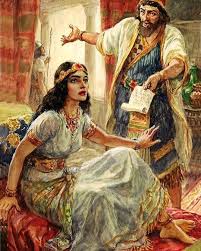
Throughout the book, the continued existence of Jewish communities in Persia is never questioned. Also, a return to the homeland is never debated and we encounter a cosmopolitan Judaism in Esther where—just as in Genesis 20—ethnic identity is no longer tied to the land. This, however, does not preclude any connection to Palestine. The ties of the Diaspora community at Susa with the people in Palestine and especially in Jerusalem are emphasized in the figure of Mordecai, who is introduced as a Benjaminite who had been exiled from Jerusalem in the group that was carried into exile with king Jeconiah of Judah, who had been driven into exile by Nebuchadnezzar, king of Babylon (Esth 2:5–6). Taken literally, Mordecai would then have been roughly 115 years old and hardly able to have a very beautiful niece. As in the case of Sarah in Genesis 20, too close a reading blinds us to the literary intention and purpose of the narrative. The genealogy of Mordecai stresses that he is both a יהודי and a member of the tribe of Benjamin and it is precisely this connection to which we need to draw our attention. In the book of Ezra (Ezra 1:5, 4:1), Judah and Benjamin (together with Levi) represent the continuation of the Southern Kingdom of Judah and are regarded as the only true community. This means by the parameter set by the book of Ezra, Mordecai is an authentic Jew of the Exile. With his genealogy, he fits the description of other prominent members of the Diaspora, because both Daniel (Dan 2:25) and Tobit (Tob 1:1–2) are described as being exiled from Judah or Israel. As is common in Diaspora discourse, status and identity are related to the level of connection with the homeland as well as with a certain expression of “cosmopolitanism.” As far as Jewish identity is concerned, we find a curious interplay between concealing and revealing one’s lineage. It starts with Mordecai’s order given to Esther to conceal her ethnic identity (Esth 2:10; cf. Esth 2:20), and she must have done it remarkably well, because the Persian king appears oblivious to the fact that he has taken a Jewish wife. When she finally reveals her identity (Esth 7:4), the king is untroubled by the fact. In contrast to Genesis 20, the authors of the book of Esther can imagine that a Jewish woman would have intercourse with someone outside her own ethnic group (the fact that Esther is unmarried might have helped here). All in all, the reader gets the impression that religion as an ethnic marker does not seem to matter anymore— this fact is clearly a cultural response to the (proposed) Persian setting, where theology is only the starting point for an otherwise secular political economy.
A further striking feature of the book of Esther is the virtual absence of God in the book. This has, of course, given rise to manifold speculation about hidden references, double entendres, and so on. On the other hand, it is incorrect to view the apparent “secular” nature of the book as an indication of the book’s being of lesser quality. I think, if we approach the Esther story with the remarks about God in mind that were made above when dealing with Genesis 20, some light will be shed on the issue. The personal God of the patriarchs was changed in Genesis 20 into a universal divine being to whom Israelites and pagans can speak and to whose universal laws even apparently foreign kings can adhere. This change from a personal to a universal God is taken a step further in Esther. Because none of the actions that lead to an endangerment of the Jews in Persia are explicitly linked to the religious factor, the absence of any direct divine intervention might be understandable. Only in passing can we mention that the apparent noninvolvement of Persia in the religious affairs of its subject people makes Persia an ideal setting for the legitimation of a new festival, which seems to defy the common notions of biblical festivals. For any issues of religion, the conflict between Mordecai and Haman reported in Esth 3:1–15 is often interpreted by drawing attention to Exod 20:1–5. True, חוה is used in the stipulation of Exod 20:5, but nothing in the text of Esther suggests that Haman had any divine quality, and only the Targum adds this aspect by stating that Haman wore a portrait of an idol on his clothes. [The motif of Haman’s divinity only occurs in Judg 3:8, where Nebuchadnezzar claims divine honors: “And he destroyed all of their sanctuaries and ravished their cultic groves. He was given the order to extinguish all the gods of the earth so that all people of the earth serve Nebuchadnezzar alone and all tongues and tribes should worship him alone as god”]
Despite Mordecai’s statement that he is a Jew (Esth 4:4bβ), we have instances in the Hebrew Bible in which it is perfectly acceptable to bow down before another man (see Gen 23:7, 27:29; 1 Kgs 1:31). The combination of the Hebrew verbs חוה and כרע is normally reserved for God (Ps 22:30, 95:6; 2 Chr 7:3), “but if idolatry is the cause of Mordecai’s noncompliance, the text is strangely silent about this. In addition it is difficult to see why the king commands that an underling be treated as god when he himself is not.” Esth 3:4bβ (כי הגיד להם אשר הוא יהודי ) seems to look forward to Esth 3:8–15 rather than serving as an adequate reason why Mordecai refuses to bow down.

Posted in Vatican, Church & Italian aristocracy

Fear of God

The first article of the omnipotence of the Creator produces a childlike fear of God, the second of the only begotten Son produces love for God, receiving the Holy Spirit produces shame and horror of sin, being born of the Virgin produces chastity and serious practice of virtue, suffering produces a willing endurance of all repugnance. The question: How did Pontius Pilate come to be included in the symbol? They had pointed to him as the head of the government in the Holy Land, had spoken of his alleged homeland of Pontus and much more. The pious man of the 15th century refrains from all this unfruitful scholarship. To him it simply says: Under Pontius Pilate, the right obedience to all men is worked in us. The historical note therefore means nothing other than Paul’s words: Let everyone be subject to the authorities who have authority over him.
Furthermore, the crucifixion causes us to turn away from the world and its evil lust, the death of Jesus causes us to die to all sins, vices and our own nature. His burial brings us peace of heart without all strife, his descent into hell the right brotherly love, by means of which we come to the aid of all men and diligently remember in our prayers the souls in purgatory as well as the people on earth.
Christ has risen from the dead: so we rise from all evil habits and the influence of the stars and direct our three spiritual powers towards God and useful things. He ascended to heaven and thereby made it possible for us to live a life of true vision. In the detailed way in which the five degrees of vision are described, the special interest of the mystic is clearly revealed. The thought of Christ’s return for judgement educates us to righteousness. We owe to the article on the Holy Spirit a purity of heart by virtue of which we wont become bad again, nor can we become bad again.

The pious man knows nothing of a holy Catholic Church, whose world-embracing power other expositors prefer to contrast with the limited conventicles of the heretics. He only knows a holy Christianity whose goods consist in our becoming children of God, brothers of Jesus Christ, disciples of the Holy Spirit and comrades of the apostles. The article on eternal life fills us with hope and longing for the hereafter, protects us from the sorrows of this life and makes us willing to part from it. With the Amen, however, we surrender ourselves to God’s will to want what he wants from us.

It will not be difficult to prove all these sentences from Eckart or other mystical writers of the 14th century.

Posted in Other

Assassins

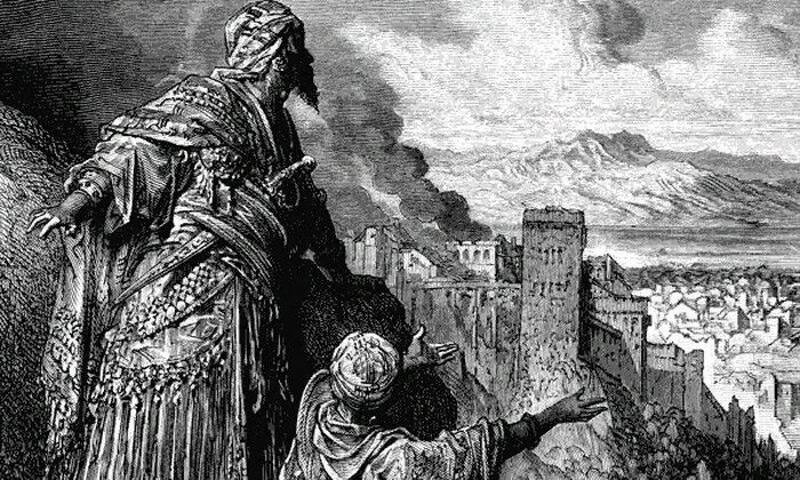
The Assassins were a special factor in the external relations of the Kingdom of Jerusalem in northern Syria. They were members of an ismāʿīlī Shiite sect known today as Nizārīya, which, under its Persian founder and leader Ḥasan-i Ṣabbāḥ, sought to spark a religious revolution in the Sunni ʿAbbāsid caliphate of Baghdad in the years 1078-1094 in the name of the Fāṭimid caliph al-Mustanṣir. After al-Mustanṣir, who had been revered as the only legitimate imam with a claim to spiritual and temporal supremacy over the entire Muslim world, died in 1094 and his rightful successor Nizār was deposed, they broke away from the new leadership in Cairo. In the following decades, the sect’s leaders constructed the legend that a grandson of the deceased imam, represented by them, was hiding in their headquarters, the fortress of Alamūt in north-east Persia, waiting for the appropriate time for his return.
Early on, the sect focussed on missionary work (daʿwa) in order to assert its own authority, which gave it a growing following, especially among the rural population, who lived scattered in numerous settlement areas between Persia and northern Syria. However, these converts, who were regarded as heretics, were usually met with rejection by the majority Sunni population, which was reflected at irregular intervals in the form of spontaneous pogroms, but sometimes also those organised by the respective ruling elite. As the sect had only a few regular armed forces, which were mainly deployed as garrisons of the fortresses, it was unable to defend itself against the persecution by conventional military means, which is why its leaders mostly sought to reach an understanding with the political and religious authorities of the Sunni-dominated ruling complexes. If this failed, however, they used targeted assassinations as a means of exerting pressure to strengthen their negotiating position. They trained elite fighters (fidāʾiyyūn) for this task, promising them eternal rewards in paradise, and smuggled them into the target’s environment as confidants. If these were high dignitaries such as the caliphs and viziers of Cairo or Baghdad, the assassins sometimes had to spend several years gaining their trust before they finally received the order to attack from the imam. The possibility of a surprise attack, combined with their religious determination and intensive training in the use of weapons, gave them a high success rate. This and the widespread effect that the sudden assassination of a publicly known leading figure usually had, caused fear of the sect to grow, which contributed significantly to ensuring its continued existence. The assassins were soon surrounded by an aura of invincibility and deadlyness, which became increasingly legendary over time. They were said to carry out their attacks under the influence of hashish (Arabic ḥašīš), especially in the later Latin-European reception, which was strongly influenced by Marco Polo’s travelogue (ca. 1254-1324), and their Arabic name was attributed to this in various variants of the word ḥašīšīya (singular ḥašīšī). This assumption prevailed in the Western world over the following centuries and is still sometimes found in popular culture today, but according to current research it is probably unfounded. In fact, the effect of hashish would have been extremely counterproductive for the execution of the attacks, as they required the utmost concentration, readiness to react and the ability to realistically assess the situation. The Arabic terms do not necessarily have to be attributed to the name of the drug either, but can also refer to a metaphorical term used in a derogatory sense as “rabble of the lower class” or “unbelieving outsiders of society”.

The missionary work in northern Syria, commissioned from Persia, had already begun at the turn of the 12th century and had fallen on fertile ground due to the social and political upheavals caused by the first crusades, the territorial fragmentation of the Muslim world into individual dominions and the resulting constant military conflicts. Nevertheless, despite intensive attempts, it was only in the years after 1132 that the sect succeeded in gaining permanent control over several fortresses and the area in between on the western Syrian mountain massif of Ǧabal Bahrāʾ (today also known as Ǧibāl al-Anṣārīya) north of the Lebanon Mountains, the headquarters of which was the castle of Maṣyāf on the south-eastern edge, conquered in 1141. With reference to this, the later Latin chroniclers in particular often referred to the leader of the sect as “Old Man of the Mountain” (Vetus de Montanis), while the early sources only wrote of senex or vetulus and thus literally translated the Arabic title of honour šaiḫ, which is still in use today. The exact extent of their territory and influence as well as the size of their followers can hardly be determined, but William of Tyre attributed ten fortresses and more than 60,000 believers to them in the 1180s in a quite realistic estimate. The growth of their settlement area took place in the immediate neighbourhood of the northern crusader states of Antioch and Tripoli and partly spilled over into them, but relations with the Franks initially remained friendly. Most recently, in 1148, Prince Raimund of Antioch (1136-1149) and the Assassin leader ʿAlī b. Wafāʾ had formed an alliance against Nūr ad-Dīn and died together in the Battle of Ināb in June of the following year. It was only when Count Raimund II of Tripoli transferred the border region around Tortosa to the Knights Templar in 1152 that violent border disputes apparently arose, as a result of which the sect had him and two of his companions murdered in the same year as the first known non-Muslims. This was followed by violent pogroms against the sect, similar to the Sunni-dominated societies of the Islamic ruling complexes, but after some time relations normalised again and the Assassins paid the order 2,000 Byzantines annually as compensation for controlling a territory claimed by the order. There is also little information from the following years about the relations between the crusader states and their Nizārītic neighbours, who, after the conquest of Damascus in 1154, were among the last Muslim actors independent of the Zengīds in the immediate vicinity. Although troops from all three crusader states besieged the ruins of Šaizar occupied by the sect at the end of 1157, the endeavour was as unsuccessful as it was inconsequential.

[…]

According to the chronicler’s account, which should of course be viewed with caution, the Master of the Assassins had made the [aforementioned] renunciation of the “false doctrine” of Islam on his own initiative after he had recognised Christianity as the only true religion by reading the Gospel and had decided to prepare the conversion of his followers to Christianity. In a next step, he sent a trusted follower named Abū ʿAbd Allāh (Boaldelle) as an envoy with a secret message to King Amalrich, whose main concern was the request to cancel the “tribute” of 2,000 gold pieces imposed by the Knights Templar for the settlement areas of the Assassins. In return, William continued, he offered to have himself and his followers baptised and converted to Christianity for good. The king was naturally delighted at the prospect of new Christian allies and immediately agreed to pay the annual payments to the Order of Knights from his own income. After extensive talks, he sent the messenger back north with his own envoy as personal escort to finalise the negotiations with Sinān. When the duo had already travelled beyond Tripoli and were about to cross into Assassin territory, they were suddenly ambushed by Templars from nearby Tortosa. They immediately attacked and killed the Assassin messenger regardless of his royal commission and escort. When the king became aware of this, outraged by the act, which he also considered a personal insult, he summoned the Haute Cour to discuss the necessary sanctions. It was agreed that this open sabotage of an imperial affair could not go unpunished, as it had violated the royal auctoritas, discredited the fides and constantia of Christianity and lost the growth of the Church, which had already seemed certain. Two envoys, Soherius of Memedeo and Gottschalk of Torhout, were now sent to the Master of the Order, Odo of St Amand in Sidon, to demand the extradition of the main culprit, allegedly a one-eyed knight named Walter of Maisnil (Mesnil). The master refused, citing the fact that the order was subject to papal jurisdiction alone, and informed the king that he had already fined the culprit and would send him to the papal curia for further judgement. King Amalrich then travelled to the city in person, had the wanted man forcibly removed from the Templar quarters and imprisoned in Tyre. He sent a new envoy to the Master of the Assassins to protest his regret and innocence, which was supposedly believed. However, no further progress was made either in the negotiations with the sect or in the proceedings against the Templars, against whom, according to the chronicler, he planned to take extensive action, as the king fell seriously ill shortly afterwards and died in July 1174.

Posted in Other

The Wild Hunt

The Wild Hunt is a folklore motif occurring across various northern European cultures. The leader of the hunt is often a named figure associated with Odin in Germanic legends, but may variously be a historical or legendary figure like Theodoric the Great, the Danish king Valdemar Atterdag, the dragon slayer Sigurd, the Welsh psychopomp Gwyn ap Nudd, biblical figures such as Herod, Cain, Gabriel, or the Devil, or an unidentified lost soul either male or female.

wikipedia

Poem by Johannes Carsten Hauch

Original danish Den vilden Jagt from his publication Lyriske Digte og Romancer (“Lyrical Poems and Romances”), the second half of which is about Valdemar Atterdag

When they thought that Denmark’s king
Soundly in the graveyard slumbered,
Words incredible, unnumbered,
Through the land crept whispering.

Rumor said: “The king hunts nightly
Stag and doe on Sjaelland’s isle
With a company unsightly
Through the country mile on mile.”

They saw the Childe at the head of his hosts;
In the moonlight they heard the racket
Of his train of terrible shadows and ghosts
With the hawk and the sable brachet.

Fables deep in Time’s abyss
From oblivion resurrected,
Champions in their rest ejected
From the dim necropolis,

Women from their hidden prison,
Heathen kings from the sepulchre,
All (the peasants said) had risen
Forth to ride with Valdemar.

Like wings the sound over woods was borne,
In terror the dwarf dug deeper,
While overhead a mad hunting-horn
Aroused the horrified sleeper.

Volmer’s eyes with anguish blazed,
Never found he rest and quiet;
Ever in this awful riot
Must he hurry on half-crazed.

Nearest him, of all the shadows
Coursing over lake and glade
Through the night-mist of the meadows,
Was a pale and slender maid.

Her long hair flickered in the midnight blast,
She sighed with sighs inhuman;
On snow-white horse she galloped fast,
The fairest of all women.

Over castle and lofty house,
Falcon, raven, birds of evil,
Unknown fowl from Night primeval,
Fat, enormous flittermouse,

Over forests, fields, and ditches,
Clustering pallid flare on flare,
Wolves with hundred feet, and witches
Sailed the river of the air.

The hunters’ shouts, the thunders’ crash,
Roared high in the lust of slaughter,
Through horses’ whinnies, the snap of the lash,
Above the livid water.

Just before them, roe and hart
Flew as if on hidden pinions
From the ghost-king and his minions,
Cleaving the slow mists apart.

At their head there flitted, leading,
Tall and white, a wounded hind
Stuck with many arrows, bleeding,
Shaking, in the midnight wind.

The peasants who saw the chase sweep by
Swore, to all who would hear it,
That out of the hunted hind’s wild eye
There peered Queen Helvig’s spirit.

As in an enchanted space,
Trees stood in the vapor rootless,
While the stag flew onward, footless
Yet unwearied by the chase.

Then the black snake coursed the meadow,
The red dragon rose unwombed,
While the storm wailed like a shadow
To eternal anguish doomed.

The full moon, like a bleeding troll,
Unheeding the earth’s ire,
Cruelly charmed each tortured soul
From out the Abyss’s fire.

Often when the autumn brought
Wheeling gusts of phosphorescence
In this dismal chase, the peasants
Whispered, pallid and distraught:

“Save us, Christ and Maid of Heaven,
From this evil by thy grace !
Save us from the infernal levin;
Save us: ’tis King Volmer’s chase!”

They thought that his doom was sealed for aye,
By no prayers to be diminished:
To hunt until the last Judgment Day,
Till World and Time were finished.

Posted in Historic, Other

Roman Emperors

From Niccolò Macciavelli The Prince, Chapter 19

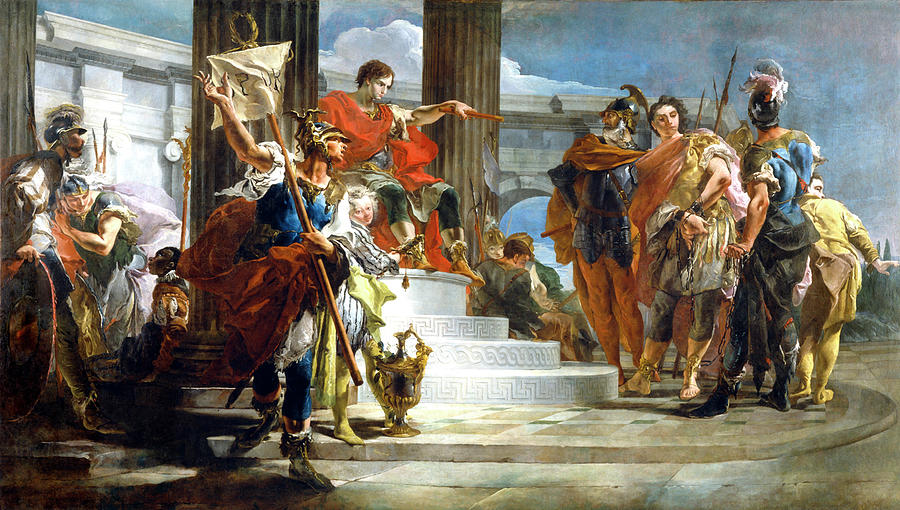
There is first to note that, whereas in other principalities the ambition of the nobles and the insolence of the people only have to be contended with, the Roman emperors had a third difficulty in having to put up with the cruelty and avarice of their soldiers, a matter so beset with difficulties that it was the ruin of many; for it was a hard thing to give satisfaction both to soldiers and people; because the people loved peace, and for this reason they loved the unaspiring prince, whilst the soldiers loved the warlike prince who was bold, cruel, and rapacious, which qualities they were quite willing he should exercise upon the people, so that they could get double pay and give vent to their own greed and cruelty. Hence it arose that those emperors were always overthrown who, either by birth or training, had no great authority, and most of them, especially those who came new to the principality, recognizing the difficulty of these two opposing humours, were inclined to give satisfaction to the soldiers, caring little about injuring the people.

Which course was necessary, because, as princes cannot help being hated by someone, they ought, in the first place, to avoid being hated by every one, and when they cannot compass this, they ought to endeavour with the utmost diligence to avoid the hatred of the most powerful.

Therefore, those emperors who through inexperience had need of special favour adhered more readily to the soldiers than to the people; a course which turned out advantageous to them or not, accordingly as the prince knew how to maintain authority over them.

From these causes it arose that Marcus, Pertinax, and Alexander, being all men of modest life, lovers of justice, enemies to cruelty, humane, and benignant, came to a sad end except Marcus; he alone lived and died honoured, because he had succeeded to the throne by hereditary title, and owed nothing either to the soldiers or the people; and afterwards, being possessed of many virtues which made him respected, he always kept both orders in their places whilst he lived, and was neither hated nor despised.

But Pertinax was created emperor against the wishes of the soldiers, who, being accustomed to live licentiously under Commodus, could not endure the honest life to which Pertinax wished to reduce them; thus, having given cause for hatred, to which hatred there was added contempt for his old age, he was overthrown at the very beginning of his administration. And here it should be noted that hatred is acquired as much by good works as by bad ones, therefore, as I said before, a prince wishing to keep his state is very often forced to do evil; for when that body is corrupt whom you think you have need of to maintain yourself—it may be either the people or the soldiers or the nobles—you have to submit to its humours and to gratify them, and then good works will do you harm.

But let us come to Alexander, who was a man of such great goodness, that among the other praises which are accorded him is this, that in the fourteen years he held the empire no one was ever put to death by him unjudged; nevertheless, being considered effeminate and a man who allowed himself to be governed by his mother, he became despised, the army conspired against him, and murdered him.

Turning now to the opposite characters of Commodus, Severus, Antoninus Caracalla, and Maximinus, you will find them all cruel and rapacious-men who, to satisfy their soldiers, did not hesitate to commit every kind of iniquity against the people; and all, except Severus, came to a bad end; but in Severus there was so much valour that, keeping the soldiers friendly, although the people were oppressed by him, he reigned successfully; for his valour made him so much admired in the sight of the soldiers and people that the latter were kept in a way astonished and awed and the former respectful and satisfied. And because the actions of this man, as a new prince, were great, I wish to show briefly that he knew well how to counterfeit the fox and the lion, which natures, as I said above, it is necessary for a prince to imitate.

Knowing the sloth of the Emperor Julian, he persuaded the army in Sclavonia, of which he was captain, that it would be right to go to Rome and avenge the death of Pertinax, who had been killed by the praetorian soldiers; and under this pretext, without appearing to aspire to the throne, he moved the army on Rome, and reached Italy before it was known that he had started. On his arrival at Rome, the Senate, through fear, elected him emperor and killed Julian. After this there remained for Severus, who wished to make himself master of the whole empire, two difficulties; one in Asia, where Niger, head of the Asiatic army, had caused himself to be proclaimed emperor; the other in the west where Albinus was, who also aspired to the throne. And as he considered it dangerous to declare himself hostile to both, he decided to attack Niger and to deceive Albinus. To the latter he wrote that, being elected emperor by the Senate, he was willing to share that dignity with him and sent him the title of Caesar; and, moreover, that the Senate had made Albinus his colleague; which things were accepted by Albinus as true. But after Severus had conquered and killed Niger, and settled oriental affairs, he returned to Rome and complained to the Senate that Albinus, little recognizing the benefits that he had received from him, had by treachery sought to murder him, and for this ingratitude he was compelled to punish him. Afterwards he sought him out in France, and took from him his government and life. He who will, therefore, carefully examine the actions of this man will find him a most valiant lion and a most cunning fox; he will find him feared and respected by every one, and not hated by the army; and it need not be wondered at that he, a new man, was able to hold the empire so well, because his supreme renown always protected him from that hatred which the people might have conceived against him for his violence.

But his son Antoninus was a most eminent man, and had very excellent qualities, which made him admirable in the sight of the people and acceptable to the soldiers, for he was a warlike man, most enduring of fatigue, a despiser of all delicate food and other luxuries, which caused him to be beloved by the armies. Nevertheless, his ferocity and cruelties were so great and so unheard of that, after endless single murders, he killed a large number of the people of Rome and all those of Alexandria. He became hated by the whole world, and also feared by those he had around him, to such an extent that he was murdered in the midst of his army by a centurion. And here it must be noted that such-like deaths, which are deliberately inflicted with a resolved and desperate courage, cannot be avoided by princes, because any one who does not fear to die can inflict them; but a prince may fear them the less because they are very rare; he has only to be careful not to do any grave injury to those whom he employs or has around him in the service of the state. Antoninus had not taken this care, but had contumeliously killed a brother of that centurion, whom also he daily threatened, yet retained in his bodyguard; which, as it turned out, was a rash thing to do, and proved the emperor’s ruin.

But let us come to Commodus, to whom it should have been very easy to hold the empire, for, being the son of Marcus, he had inherited it, and he had only to follow in the footsteps of his father to please his people and soldiers; but, being by nature cruel and brutal, he gave himself up to amusing the soldiers and corrupting them, so that he might indulge his rapacity upon the people; on the other hand, not maintaining his dignity, often descending to the theatre to compete with gladiators, and doing other vile things, little worthy of the imperial majesty, he fell into contempt with the soldiers, and being hated by one party and despised by the other, he was conspired against and was killed.

It remains to discuss the character of Maximinus. He was a very warlike man, and the armies, being disgusted with the effeminacy of Alexander, of whom I have already spoken, killed him and elected Maximinus to the throne. This he did not possess for long, for two things made him hated and despised; the one, his having kept sheep in Thrace, which brought him into contempt (it being well known to all, and considered a great indignity by every one), and the other, his having at the accession to his dominions deferred going to Rome and taking possession of the imperial seat; he had also gained a reputation for the utmost ferocity by having, through his prefects in Rome and elsewhere in the empire, practised many cruelties, so that the whole world was moved to anger at the meanness of his birth and to fear at his barbarity. First Africa rebelled, then the Senate with all the people of Rome, and all Italy conspired against him, to which may be added his own army; this latter, besieging Aquileia and meeting with difficulties in taking it, were disgusted with his cruelties, and fearing him less when they found so many against him, murdered him.

Niccolò Macciavelli – The Prince (PDF) 🇬🇧 :

Niccolò Macciavelli – Das Buch vom Fürsten (PDF) 🇩🇪 :